At the end of the Second Age, Middle-earth stands at a moment of enormous consequence.
Gil-galad, the last High King of the Noldor in Middle-earth, falls in single combat with Sauron. The Dark Lord is overthrown. The One Ring is cut from his hand. The Last Alliance of Elves and Men has won its greatest victory.
The world is saved—but something else ends with it.
The High Kingship of the Elves.
There is no announcement.
No debate.
No successor crowned.
The office simply vanishes.
And that silence is not accidental.
Standing beside Gil-galad throughout the war is Elrond—his herald, his standard-bearer, and one of the most respected Elves remaining east of the Sea. Elrond survives the war. His authority is unquestioned. His lineage is extraordinary. His wisdom is already legendary.
Yet he never claims the crown.
There is no continuation of Elven rule in Middle-earth, and no attempt to preserve it.
To understand why, we need to understand what the High Kingship actually represented—and why it could not survive into the Third Age.
The High Kingship Was Already Fading
The High King of the Noldor was never merely a political ruler.
In the First and Second Ages, the High Kingship symbolized something far older and far deeper: the active presence of the Eldar shaping the fate of the world. High Kings led great migrations, founded kingdoms, waged wars against cosmic evil, and stood openly against powers that threatened all of Arda.
But by the time the Second Age draws to a close, that role is no longer sustainable.
Most of the Noldor have already departed Middle-earth.
The great realms of the First Age—Gondolin, Nargothrond, and others—are long destroyed.
What remains of Elven power is scattered, diminished, and increasingly inward-looking.
Gil-galad’s realm in Lindon is not the beginning of something new. It is the last echo of something old.
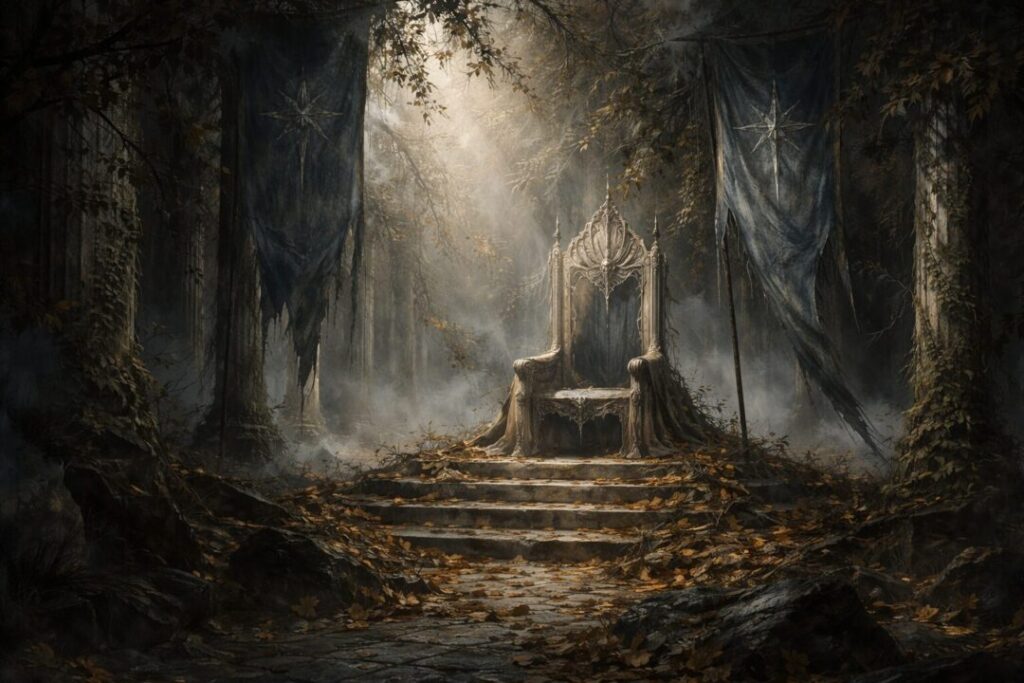
When Gil-galad falls, the High Kingship does not collapse from lack of heirs or leadership. It collapses because the conditions that made it meaningful no longer exist.
An age has already passed. The crown simply acknowledges it.
Elrond Had the Right—But Not the Illusion
Elrond’s lineage alone would have justified his claim.
Through his father, Eärendil, Elrond descends from the royal houses of the Noldor, including the line of Fingolfin and Finwë. Through his mother, Elwing, he is bound to the Sindar and to the ancient royal line of Doriath. Few beings in Middle-earth embody so many threads of Elven history.
If kingship were a matter of blood alone, Elrond would stand unrivaled.
But Elrond has lived through the consequences of Elven ambition.
He has seen kingdoms founded in defiance fall in ruin.
He has witnessed pride turn wisdom into tragedy.
He has learned that even the greatest authority cannot halt what Tolkien calls the “long defeat.”
Unlike many of his people, Elrond does not confuse survival with victory.
He understands that claiming the High Kingship would not restore the power of the Eldar—it would merely preserve the illusion that such power still belongs in Middle-earth.
And Elrond does not live by illusions.
The Long Defeat and the Acceptance of Change
One of the most important ideas shaping Elrond’s choice is the Elvish understanding of history itself.
For the Elves, history is not a steady march toward improvement. It is a slow decline from an original fullness that can never be recovered within the world. Each age loses something that cannot be reclaimed.
This does not lead Elrond to despair—but it does lead him to clarity.
The High Kingship belongs to an age when Elves shaped the world openly. By the end of the Second Age, that time is already gone. Clinging to its symbols would only deepen the sorrow of its loss.
Elrond’s wisdom lies in knowing when to let go.
A New Role for the Elves
By the Third Age, the role of the Elves has fundamentally changed.
They are no longer meant to rule Middle-earth.
They are no longer meant to dominate its history.
Their task is preservation rather than expansion.
This shift is visible everywhere Elrond shapes.
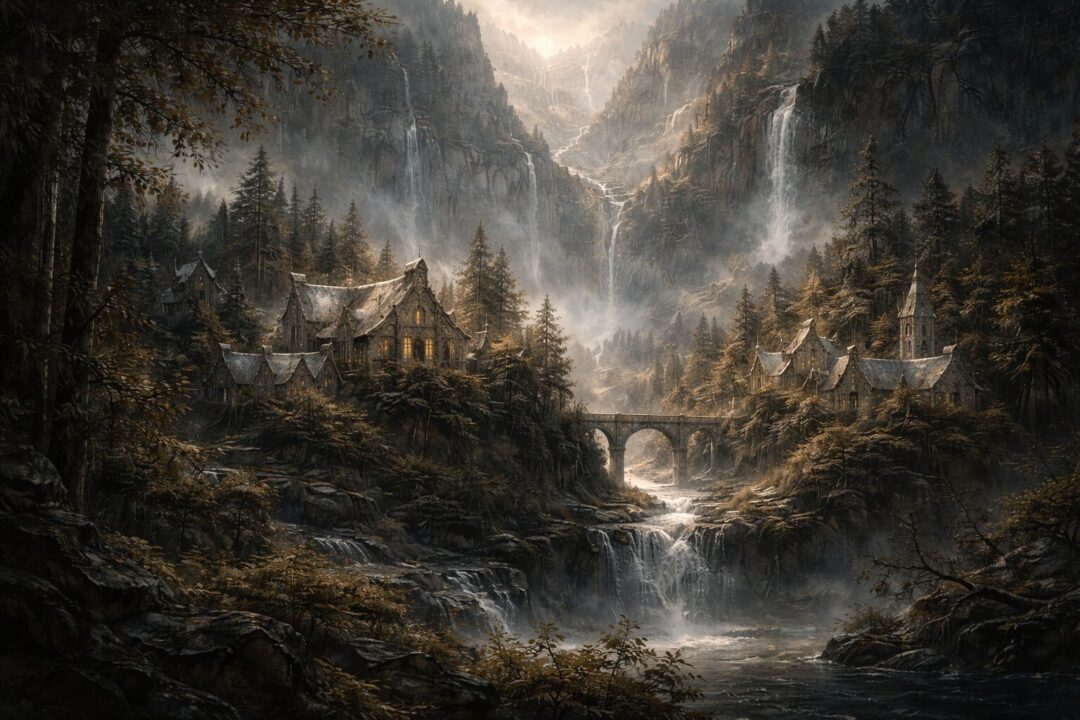
Rivendell is not a capital.
It is not fortified like a kingdom.
It issues no decrees and commands no armies.
It is a refuge.
A place of healing, memory, and counsel.
A place where the knowledge of older days is preserved rather than imposed.
Elrond becomes a healer rather than a king.
A counselor rather than a commander.
A witness rather than a ruler.
Claiming kingship would have contradicted everything his role had become.
Why Elrond Lets Men Rise Instead
There is another truth Elrond understands more clearly than most: Middle-earth no longer belongs to the Elves.
The future belongs to Men.
This is not a failure. It is the natural unfolding of history.
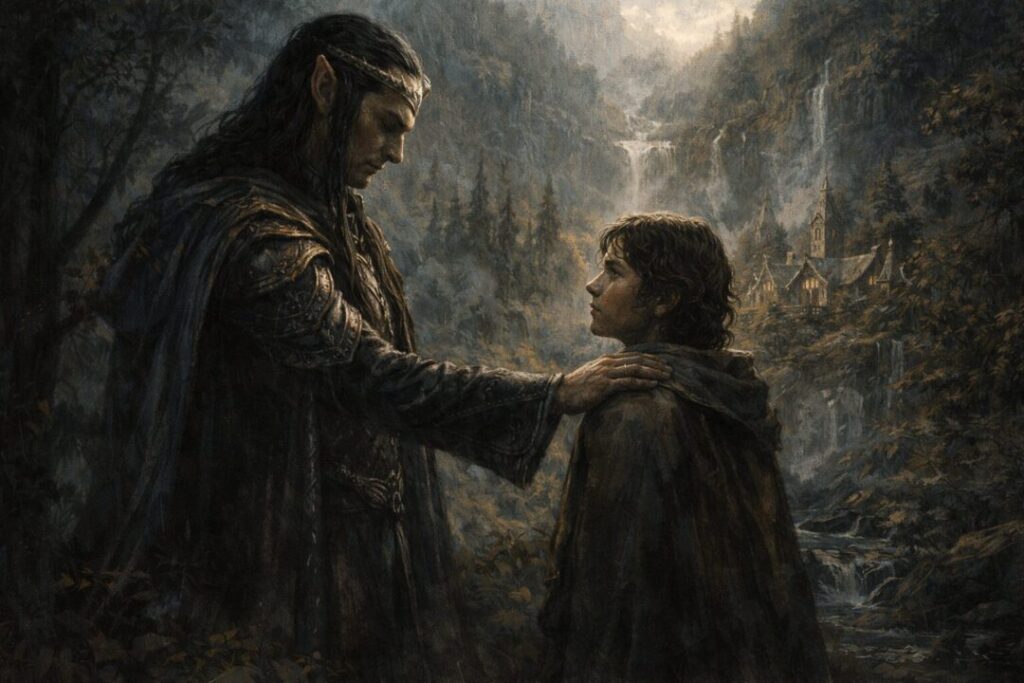
Elrond supports the heirs of Isildur not because he lacks ambition, but because he sees where the world is going. He shelters Aragorn, raises him in secrecy, and prepares him for a kingship that Elrond himself will never claim.
This is not resignation.
It is stewardship.
Elrond knows that the time of Elven rule has ended, but the time of Elven guidance has not. By stepping aside, he allows the next age to begin without bitterness or resistance.
The High Kingship does not pass to Elrond because it is not meant to pass at all.
It ends where it must.
The Silence Is the Point
One of the most striking aspects of this moment is how little Tolkien explains it directly.
There is no speech where Elrond refuses the crown.
No scene of debate among Elven lords.
No formal declaration ending the High Kingship.
The title simply disappears from the story.
This silence mirrors the way the Elves themselves fade—not through catastrophe, but through quiet withdrawal. Their power diminishes not because it is taken from them, but because they choose not to wield it any longer.
Elrond’s refusal is consistent with this pattern.
He does not dramatize the end of Elven rule.
He allows it to pass naturally, without resistance.
The Wisdom of Refusal
In Tolkien’s world, the refusal of power is often more meaningful than its seizure.
Gandalf refuses the Ring.
Galadriel rejects it.
Faramir will not take it.
Elrond belongs to this same moral tradition.
His greatest strength is not that he could rule—but that he knows when not to.
By refusing kingship, Elrond preserves the moral balance of Middle-earth. He prevents the Elves from clinging to a fading age and allows the Third Age to unfold as it must: shaped by humility, endurance, and the courage of those who do not seek dominion.
Elrond does not become king because kingship itself has passed beyond him.
And that quiet understanding—unspoken, uncelebrated, and unrecorded in ceremony—may be the clearest proof of his wisdom.