At first glance, the answer seems obvious.
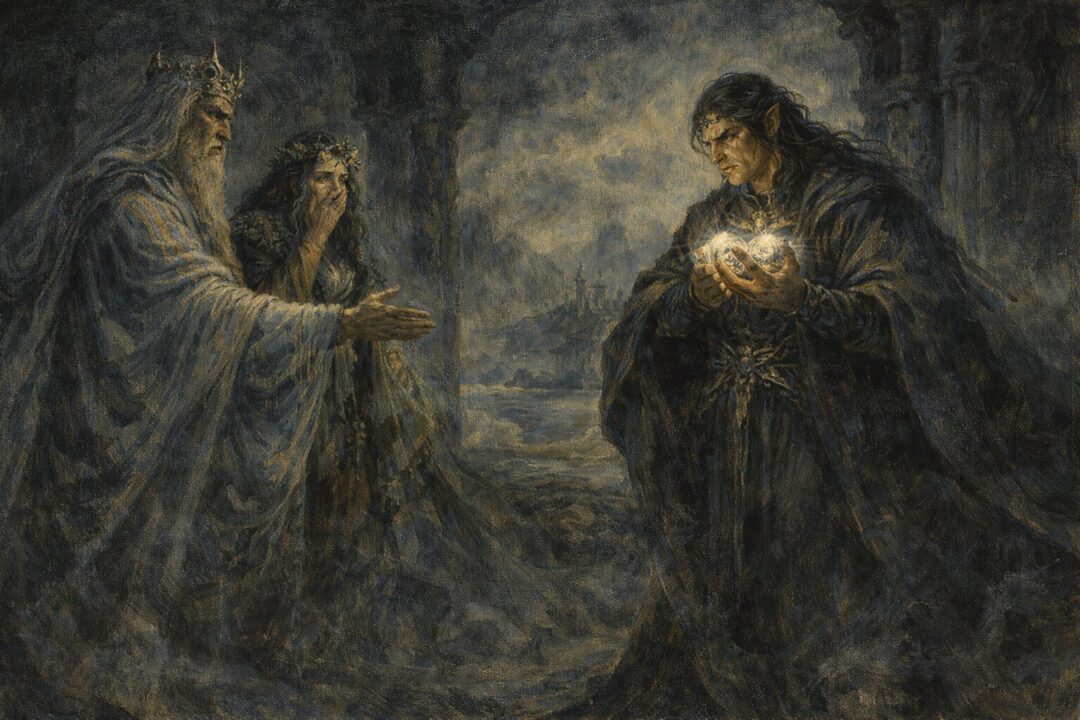
Fëanor forged the Silmarils because he was the greatest craftsman among the Noldor, and the greatest work of the greatest craftsman was bound to be something unmatched. That is true as far as it goes. The texts consistently place him at the height of Elvish skill and subtlety, and the making of the Silmarils stands above all his other works.
But that answer is still too shallow.
Because the Silmarils are not just masterpieces. They become the center of the entire tragedy of the Elder Days. Kingdoms rise and fall around them. Oaths are sworn for them. Kinslayings follow them. Morgoth covets them, Fëanor clings to them, Thingol is drawn into their doom, and even at the very end Maedhros and Maglor cannot leave them behind.
So the deeper question is not only why Fëanor made them.
It is why these jewels became impossible for almost anyone to hold rightly.
Fëanor did not begin with darkness
One of the easiest mistakes is to treat the Silmarils as if they were always sinister.
They were not.
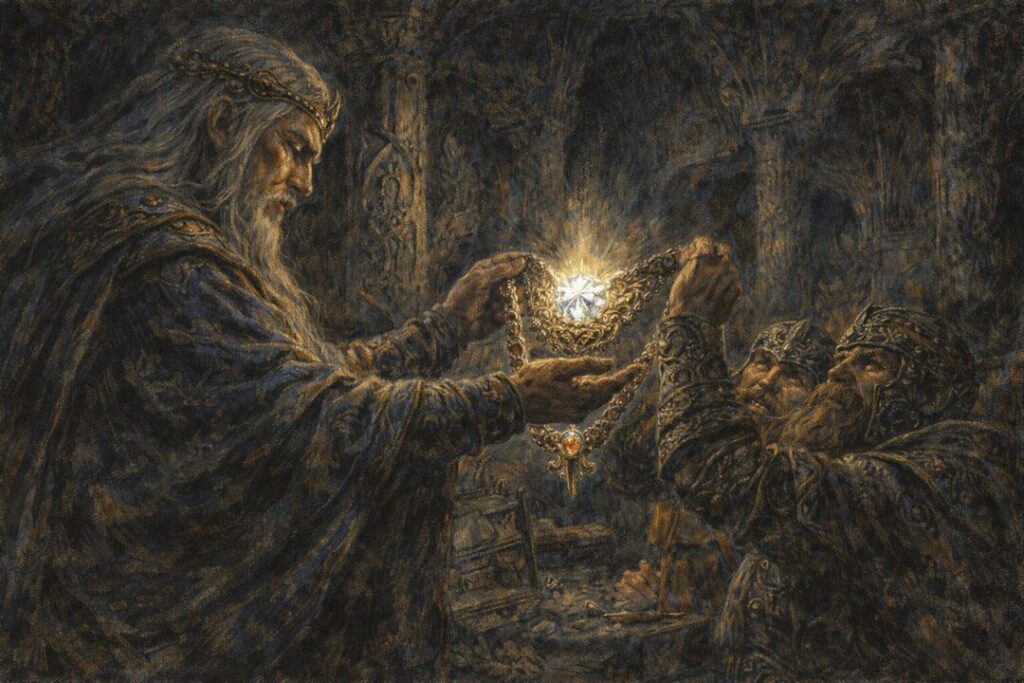
The texts present them first as a wonder. Fëanor devised their outer substance himself, and within them he enclosed the blended light of the Two Trees of Valinor. Varda then hallowed them, and Mandos foretold that the fates of Arda lay locked within them. In other words, the Silmarils begin not as instruments of domination, but as uniquely radiant works bound up with the light of the Blessed Realm itself.
That matters because it changes the whole moral shape of the story.
The One Ring is evil in origin and purpose. The Silmarils are not. They are holy enough that evil hands are burned by them. Morgoth himself bears them only in torment once they are set in the Iron Crown.
So if disaster gathers around the Silmarils, it is not because they were made as traps.
It is because beauty itself can become the center of possessiveness, pride, and destruction when fallen hearts refuse to release it.
The motive was preservation, not mere ornament
The clearest clue to why Fëanor forged the Silmarils lies in the tradition that he was moved by a desire to preserve the light of the Trees imperishably. Tolkien Gateway’s summary of the relevant passage states that he was filled with a new thought, perhaps even a shadow of foreknowledge, and pondered how that light might be preserved forever.
That motive is more important than it first appears.
Fëanor is not simply decorating Valinor. He is trying to hold something passing before it is lost. The Two Trees are not ordinary lamps. Their light defines the bliss of Valinor itself. To preserve that light is, in a sense, to resist transience. It is to make beauty endure beyond its natural moment.
This is where the greatness and the danger of Fëanor begin to meet.
The impulse to preserve beauty is not presented as wicked. In fact, it is one of the most understandable motives in the whole legendarium. But in Fëanor that desire becomes inseparable from possessiveness. The famous line that his heart was fast bound to the things he himself had made shows that the work did not remain a gift once completed. It became part of himself.
And once that happens, surrender becomes almost unthinkable.
Why Fëanor would not give them up
The real test comes when the Trees are destroyed.
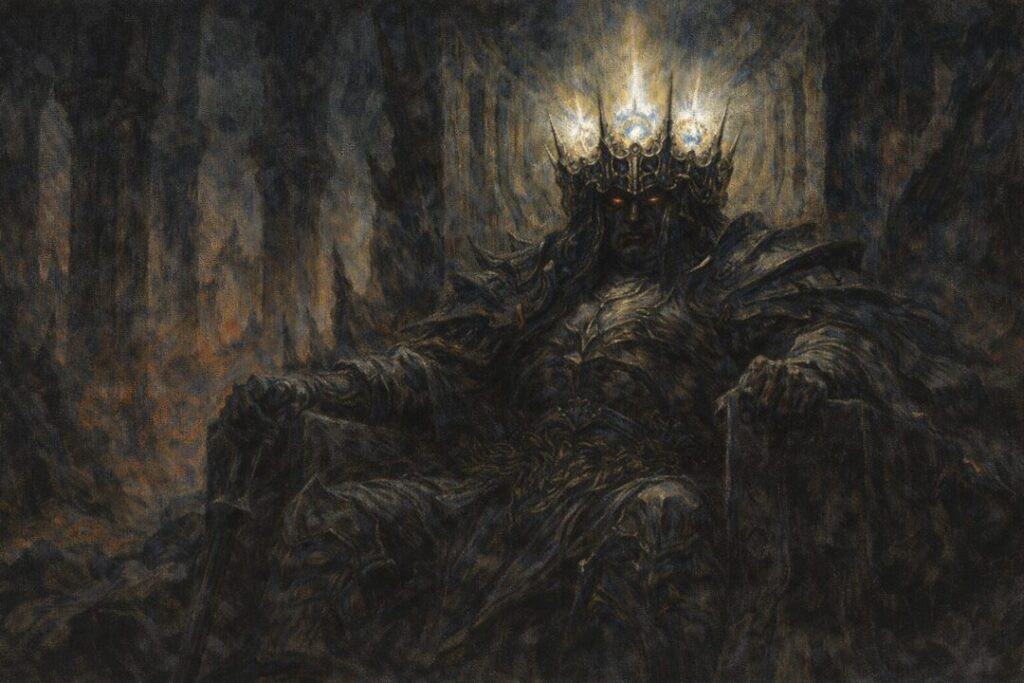
Yavanna says their light now survives only in the Silmarils and that only by their power can the Trees be restored. Manwë asks Fëanor to yield them for that purpose. He refuses. He says he will not give them up of his own free will, and if the Valar force him, they will be no better than Melkor.
This moment explains nearly everything that follows.
Fëanor is being asked to unmake his greatest work so that the source of its beauty may live again. In moral terms, the right choice seems clear. Yet Fëanor cannot do it.
Why not?
Part of the answer is fear. Some traditions imply that the Silmarils could not be remade if broken, because the secret of their making was known only to him. Part of the answer is pride, because he sees the jewels not merely as useful objects but as an extension of his own unmatched being. And part of the answer is possessive love so intense that he experiences the demand almost as a violation.
This is important: the text does not force us to choose only one motive.
Fëanor’s refusal is tragic precisely because several things are true at once. He loves beauty. He fears loss. He is proud of his work. He does not trust others with what is most his. And all of those elements harden together in the instant when sacrifice is required.
Then, almost immediately, the Silmarils are stolen and Finwë is slain. The chance to surrender them freely is gone forever.
The Silmarils are not the Ring
This distinction has to be kept clear.
It is tempting to say the Silmarils “corrupt” whoever desires them. But that risks flattening an important difference in Tolkien’s world. The One Ring actively works to dominate and betray. The Silmarils are never described that way. They are hallowed, and their light remains pure.
So why does everyone fall into ruin around them?
Because the Silmarils gather into themselves too many justified claims.
They are Fëanor’s greatest work.
They preserve the last light of the Trees.
They become a symbol of Finwë’s murder.
They become the stated object of an irrevocable oath.
Later, when one is recovered, it becomes a sign of triumph, legitimacy, and unmatched beauty again.
That is what makes them so dangerous.
Nearly everyone who reaches for a Silmaril can tell a story in which their desire is reasonable.
Fëanor can say he made them.
The sons of Fëanor can say they are oath-bound.
Thingol can say one has been lawfully won for his realm through Beren’s quest.
The Dwarves of Nogrod can appeal to the craftsmanship of the Nauglamír and their own greed dressed as claim.
Even Morgoth wants them not as tools, but as trophies of his triumph over light itself.
The Silmarils do not have to whisper like the Ring.
The hearts around them are already doing the work.
Why nobody could let them go
The strongest in-world explanation comes from the pattern of the narrative itself.
Once a Silmaril enters a story, it rarely remains a possession. It becomes a test.
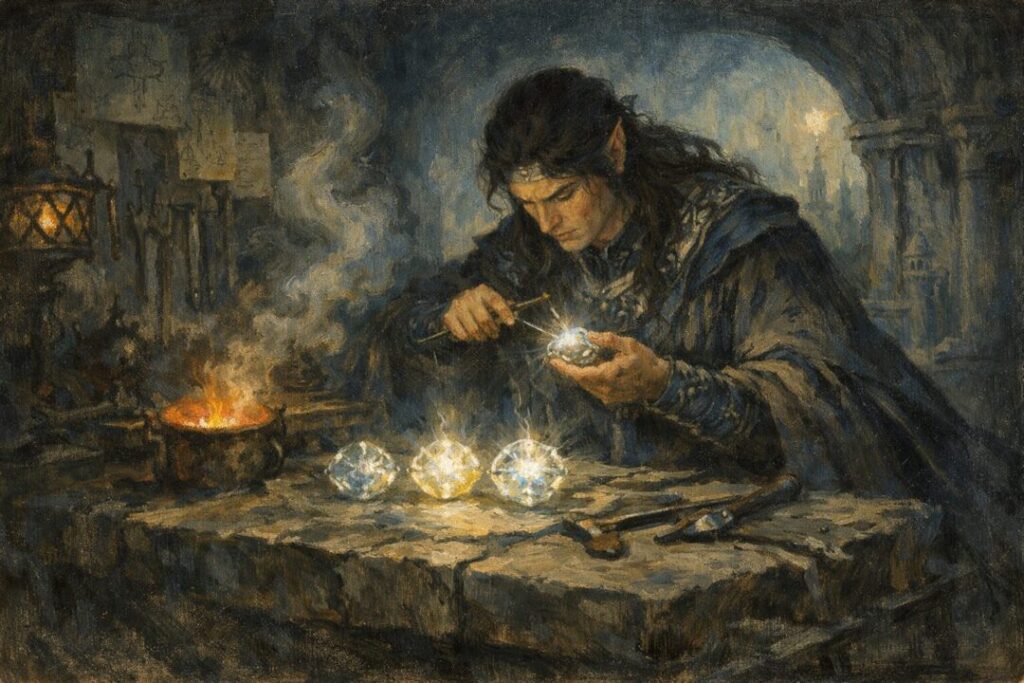
Morgoth steals them and sets them in his crown, even though their hallowed light burns him. That image is crucial: he would rather endure pain than surrender the trophies. His desire is not practical. It is possessive and symbolic.
Fëanor refuses to break them even to restore the Trees, then swears the terrible Oath after their theft. That Oath extends the problem beyond one person’s pride into a whole dynastic doom. Finrod later warns Beren that even naming the Silmarils in desire stirs a terrible power, because the sons of Fëanor will ruin kingdoms rather than suffer another to possess them.
Thingol, who once had no part in the making of the Silmarils at all, is eventually drawn into the same pattern. After Beren and Lúthien win a Silmaril from Morgoth’s crown, a desire arises in Thingol to set it into the Nauglamír, uniting two of the greatest treasures in the world. That desire ends in his death and the ruin of Doriath.
At the end of the First Age, even after the ruin caused by the Oath is unmistakable, Maedhros and Maglor still steal the remaining Silmarils from Eönwë’s camp. Yet when they finally hold them, the jewels burn their hands because of their deeds. One casts himself into a fiery chasm; the other throws his Silmaril into the sea.
That ending matters.
They wanted the Silmarils for so long that the desire outlived any rightful ability to keep them.
The tragedy is about possessive love
The Silmarils are beautiful, but beauty alone is not the point.
The point is that they become the object of a love that refuses release.
This is why the line about Fëanor’s heart being bound to his own making matters so much. It is not just biography. It is the pattern the rest of the Silmaril-history repeats in larger and bloodier forms. Morgoth binds his pride to them. The sons of Fëanor bind their identity to them through oath. Thingol binds royal prestige and desire to them. Others see in them not merely gems, but the final concentration of lost light, ancient glory, and personal claim.
And once a thing has become that symbolically dense, letting it go feels like losing more than an object.
It feels like yielding memory.
Yielding justice.
Yielding honor.
Yielding self.
That is why “nobody could let them go” is true in practice, even if the reasons differ from character to character.
What Fëanor actually set in motion
Fëanor did not only create three jewels.
He created a form of impossible attachment.
To forge the Silmarils was to preserve the light of the Trees. But once that light had been enclosed in things that could be possessed, guarded, stolen, inherited, claimed, and fought over, beauty entered history in a new form. It became concentrated enough to awaken greed, pride, rivalry, and doom on an almost mythic scale.
That does not mean Fëanor intended all that followed. The texts support his pride and possessiveness, but not a simple theory that he knowingly forged the ruin of kingdoms. The better reading is more tragic. He made something pure and unsurpassable in a world where hearts were already vulnerable to possessiveness and where Melkor was ready to exploit every fracture.
So why did Fëanor forge the Silmarils?
Because he wanted to preserve light before it was lost.
And why could nobody let them go?
Because once beauty, grief, right, memory, and pride were all fused into the same treasure, surrender no longer felt like surrendering a jewel.
It felt like surrendering everything.