The Woses arrive in the story the way certain truths arrive in real life: late, inconvenient, and absolutely necessary.
They do not appear in the great councils. They do not stand in the gleaming ranks of Gondor. They do not ride with banners. Most readers meet them only when everything is already burning and time has almost run out.
Yet in that narrow space—between Théoden’s decision to ride and the dawn of the Pelennor—the Woses expose a quiet failure shared by two kingdoms that consider themselves the last strongholds of the West.
They were living on Gondor’s doorstep.
And Rohan was hunting them.
A meeting shaped by ignorance
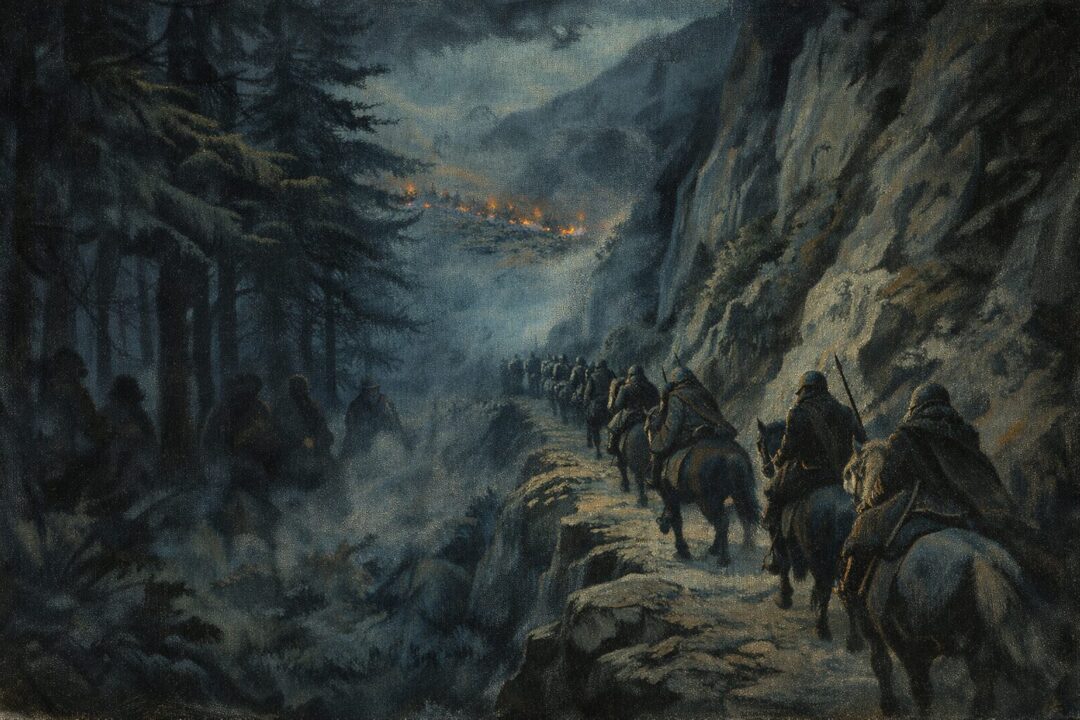
In The Return of the King, Théoden’s riders enter the Drúadan Forest and feel watched. The air changes. The trees feel like a boundary rather than a shelter.
Then Ghân-buri-Ghân comes.
His speech is strange to the Rohirrim—simple, blunt, and weighted with a kind of counting wisdom. He speaks Westronimperfectly, but clearly enough to do something that matters more than eloquence:
He tells the truth about the road.
The enemy is ahead. The host is being observed. If they ride on as planned, they will be delayed, surrounded, and bled down before they ever reach the City.
And then he offers the alternative: a way through secret paths that only his people know.
It is, from one angle, a classic bargain scene—help in exchange for reward.
But the reward Ghân-buri-Ghân names is not a treasure. It is not even safety from Mordor.
It is a request aimed directly at Rohan’s culture: stop hunting us.
That line is one of the most revealing sentences attached to the Woses anywhere in The Lord of the Rings, because it establishes something uncomfortable.
The misunderstanding is not ancient, solved, and forgotten.
It is active.
Even as the Shadow gathers, the Rohirrim still treat the Woses as creatures to be pursued “like beasts.” Ghân-buri-Ghân’s demand only makes sense if that practice is recent enough to matter—recent enough that a promise from a king could change it.
Théoden agrees. He swears friendship. He promises they will not be hunted.
And the Woses lead them.
Why the Woses don’t “join” the War
Here is the second detail many readers feel but don’t always name: the Woses never become part of the heroic pageant.
They do not ride into Minas Tirith. They do not fight at the Pelennor. They do not seek songs.
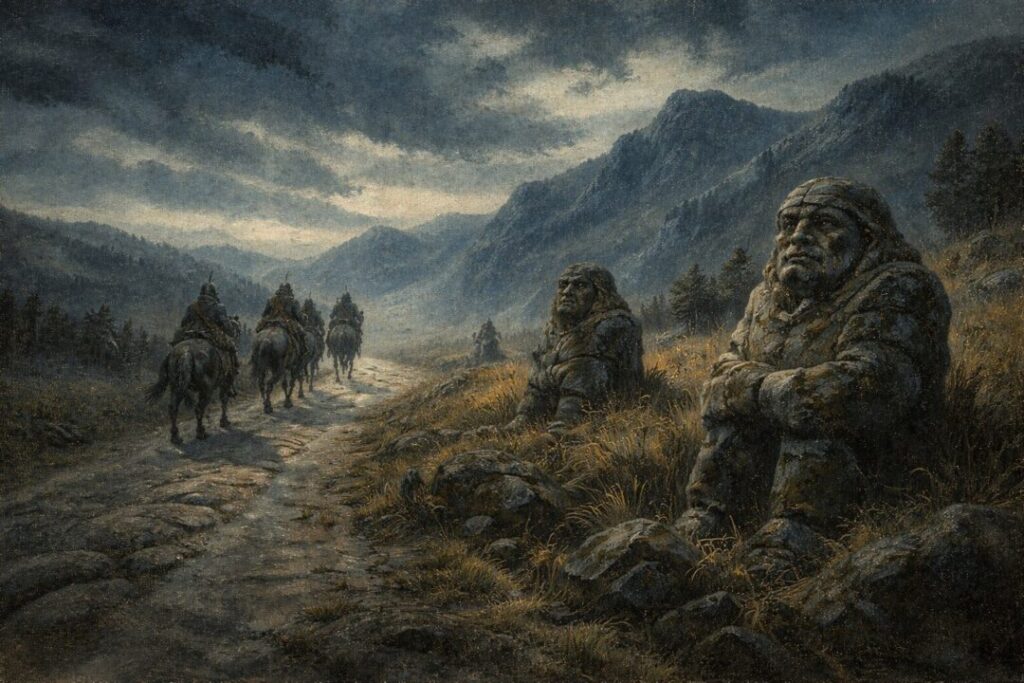
Ghân-buri-Ghân is explicit that his people will not go to the great battle. They guide, they vanish, and they return to the wood.
This is not cowardice in the text. It reads more like a survival rule.
The Woses are a small people living beside the machinery of larger kingdoms. They know what happens when they are drawn into the wars of others—especially the wars of those who have never fully recognized them as equals.
So their help is intensely focused: we will get you there.
And then they disappear.
That choice alone hints at the deeper issue. Even their greatest act of assistance is shaped by distance. They save Rohan, and yet remain outside Rohan’s story.
Gondor knew the forest, but not its people
If Rohan’s failure is loud—hunting—Gondor’s failure is quiet.
Because the Drúadan Forest is not some uncharted wilderness at the edge of the map. It lies in Anórien, north of Minas Tirith, close enough to matter in the defense of the City. The beacon-hills stand near and within that region, and the movements of armies and messengers run through its shadow.
Gondor knows the land exists.
But knowing a forest is not the same as knowing the people who live inside it.
The Woses are described as secretive, hard to find, and deeply resistant to being absorbed into anyone else’s order. In the text, even when they speak, they do so in a way that feels like translation across a gap—not only of language, but of worldview.
Ghân-buri-Ghân does not frame the world in the political terms of Gondor and Rohan—fiefs, oaths, titles, inherited claims. He frames it in paths, watchers, numbers, and boundaries.
He calls the Gondorians “Stonehouse-folk.” That name matters.
It is not insulting, exactly. It is observational—like naming a creature by its shell.
To the Woses, Gondor is not a lineage of kings. Gondor is a people who live in stone.
And that suggests why Gondor never “truly understood” them: the relationship, such as it was, never moved beyond the surface.
Names that shrink a people
The third problem is the one the West rarely escapes in Middle-earth: naming.
Rohan calls them “Wild Men of the Woods,” and the older word “Woses” carries the same idea—something half-outside the circle of the civilized.
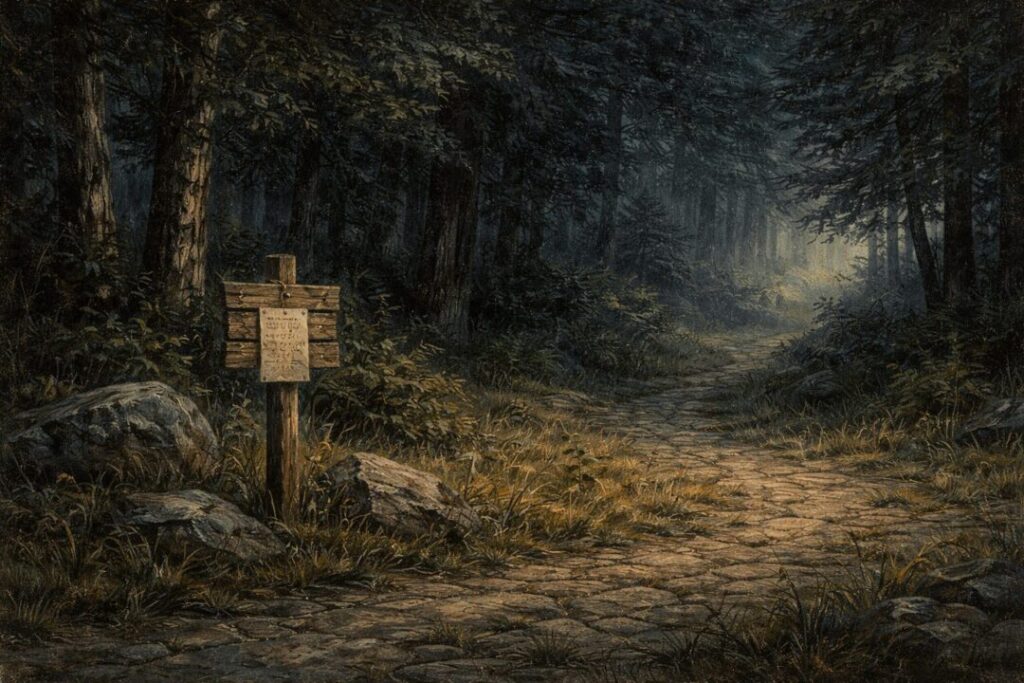
Gondor (and the Rohirrim by inheritance) also preserve another name in the landscape: Púkel-men, a term attached to the ancient stone images that stand on the road to Dunharrow.
The Lord of the Rings itself does not fully explain those images. It gives you atmosphere: silent figures, uncanny faces, old fear. The Rohirrim treat them as warnings and relics—signs of a dead and dangerous past.
Later writings identify the Púkel-men with the Drúedain, linking the stone-figures to the same kind of folk as Ghân-buri-Ghân.
That connection is important not because it adds a new “fact” to the battle story, but because it shows what the Rohirrim inherited: not knowledge, but dread.
A people becomes a superstition.
A living community becomes a roadside omen.
Once that happens, “understanding” becomes nearly impossible. You do not negotiate with an omen. You do not learn the language of a warning carved in stone.
You either ignore it—or fear it—or hunt what you think it represents.
The bargain that reveals the real distance
Look again at what Ghân-buri-Ghân asks for.
He does not request a treaty with Gondor. He does not ask for trade, intermarriage, shared borders, seats at councils, or a place in the rebuilding of the realm.
He asks the Rohirrim to stop doing harm.
That is the smallest possible political demand.
And it suggests the Woses do not expect anything larger.
When Théoden promises friendship “for ever,” it is a noble moment. But it is also a moment bounded by the realities of the world: a king promising restraint to a people his own riders have treated as prey.
In that light, the help the Woses give is almost painfully generous.
They save the host that has feared them. They rescue the riders who have hunted them. They do it without asking to be celebrated.
And then they go back into the trees.
If you want a single sentence that captures why the kingdoms never truly understood them, it may be this:
The West only learns the Woses are people when it needs them.
A king’s recognition—and what it can’t fix
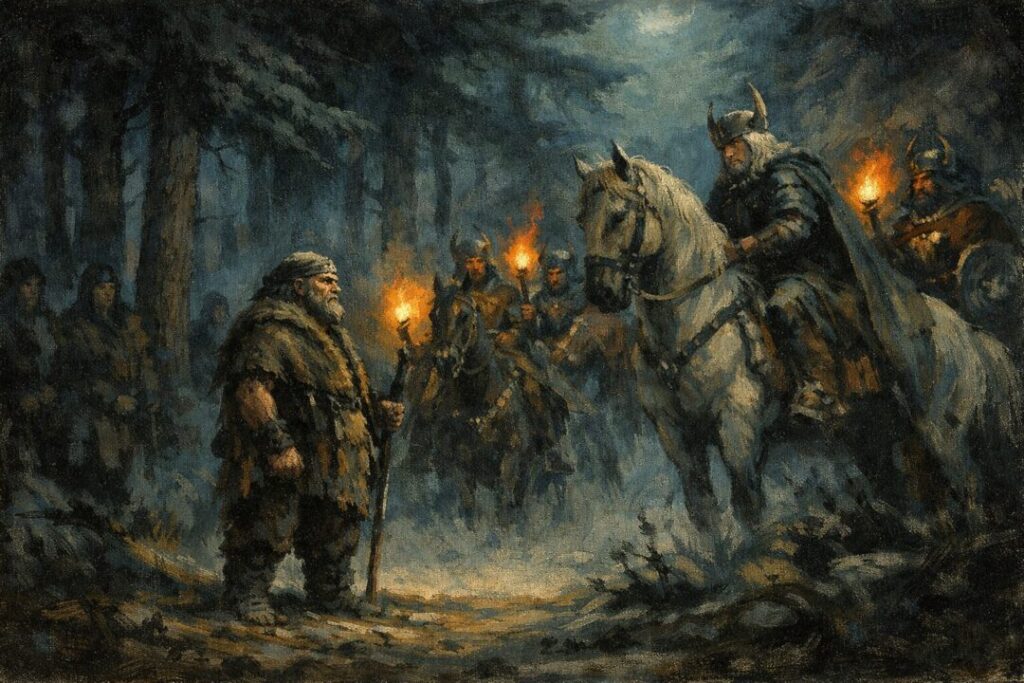
After the War, the texts do not leave the Woses entirely in shadow. In the Appendices, we’re told that the Drúadan Forest is granted to Ghân-buri-Ghân and his folk, and that others are forbidden to enter without their leave.
That is real recognition.
It is also, notably, the kind of recognition that keeps distance intact.
The gift is not integration. It is protection through separation: this is yours; we will not trespass.
And in a way, that fits what the Woses asked for in the first place.
They did not ask to become part of Gondor or Rohan.
They asked to be left alive.
So yes—Gondor and Rohan learn enough to stop the worst harm. They learn enough to honor a debt.
But the deeper misunderstanding remains, because neither kingdom changes the frame.
The Woses are still treated as a small, strange remnant on the edge of someone else’s map.
Not as kin.
Not as an ancient people with their own memory of the land.
Not as the kind of community that could have been known, if anyone had tried to know them before desperation made it necessary.
What the Woses quietly expose about the West
The Woses are Men. They are not monsters. They are not a separate created race. They stand inside the category the West claims to defend.
And that is why they sting.
They reveal that “the West” is not a clean moral boundary between light and darkness. It is also a hierarchy—stone and horse and tower at the center, and the forest-folk on the margins, misnamed and feared.
When the crisis comes, the margins save the center.
But when the crisis passes, the center’s best response is: we will keep away.
Perhaps that is what the Woses wanted. Perhaps it is the only arrangement that could work.
But it is not understanding.
Understanding would have started much earlier—when the roads were still open, when riders still hunted in sport, when the beacons still burned for ordinary alarms and not the end of the world.
Ghân-buri-Ghân’s bargain is fulfilled.
Yet the larger question remains, hanging like a presence between the trees:
If a people can live within sight of Minas Tirith—and still be treated as legend, quarry, or warning—what else did the kingdoms of the West fail to see?
That is the unease the Woses leave behind.
Not because they are mysterious.
But because they are human—and were misunderstood anyway.