Heroism in Middle-earth often ends in death.
Boromir falls defending the Hobbits.
Théoden dies with victory in his grasp.
Even Frodo, broken beyond healing, survives long enough to leave the world behind.
But death is not the cruelest fate this world offers.
That distinction belongs to Húrin Thalion, the Steadfast.
Húrin is not remembered because he wielded a legendary blade, founded a kingdom, or reshaped the world by force of arms. He is remembered because he endured what no other hero was asked to endure: the complete destruction of his family, witnessed in full consciousness, without the mercy of death.
His tragedy is not swift.
It is not clean.
And it never truly ends.
Húrin at the Battle of Unnumbered Tears
Húrin’s legend begins at the Nirnaeth Arnoediad, the Battle of Unnumbered Tears—one of the most catastrophic defeats in the history of Elves and Men.
The battle is not merely lost. It collapses.
Allies turn traitor. Reinforcements never arrive. Entire hosts are annihilated in moments. What was meant to be a final stand against darkness becomes a slaughter so complete that hope itself seems extinguished.
When retreat is ordered, Húrin does not flee.
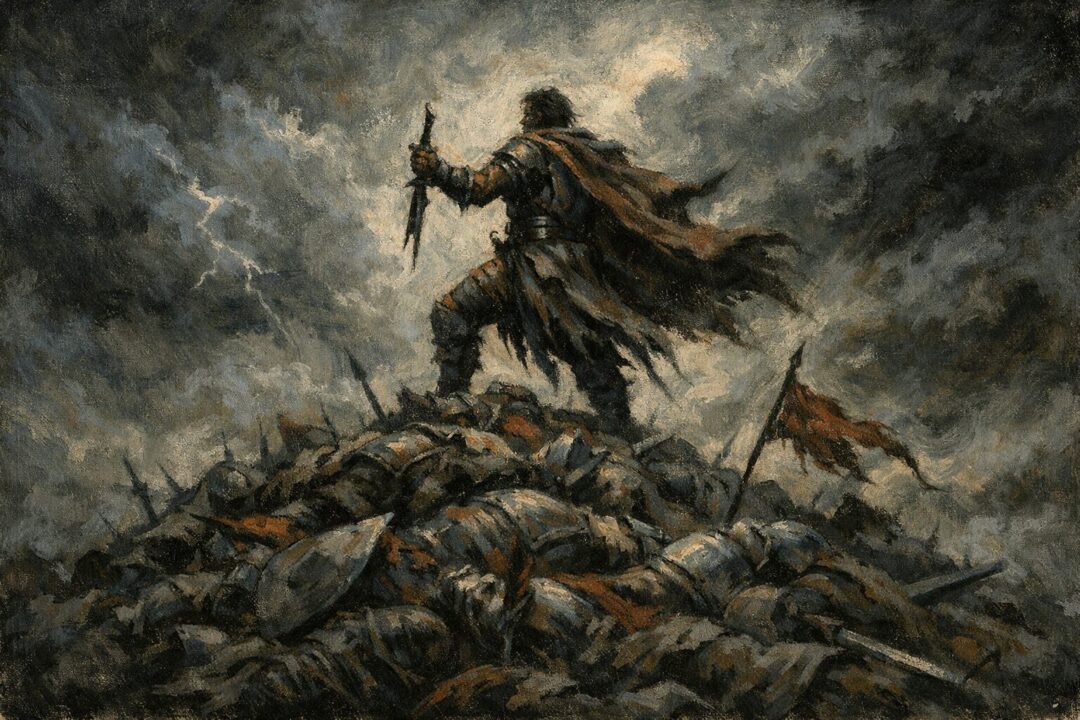
With his brother Huor slain and the rear guard crumbling, Húrin stands alone before the advancing enemy and holds the line so others may escape. He kills until his axe breaks. He fights until he is buried beneath bodies. And when he can no longer strike, he still does not yield.
“Aurë entuluva.”
Day shall come again.
It is not a promise of victory.
It is a refusal to surrender meaning.
Húrin knows he will lose. What he denies Morgoth is not defeat—but despair.
Morgoth’s Cruelty Is Patience
When Húrin is captured, Morgoth recognizes something crucial.
Killing Húrin would make him a martyr.
So instead, Morgoth chooses a slower weapon.
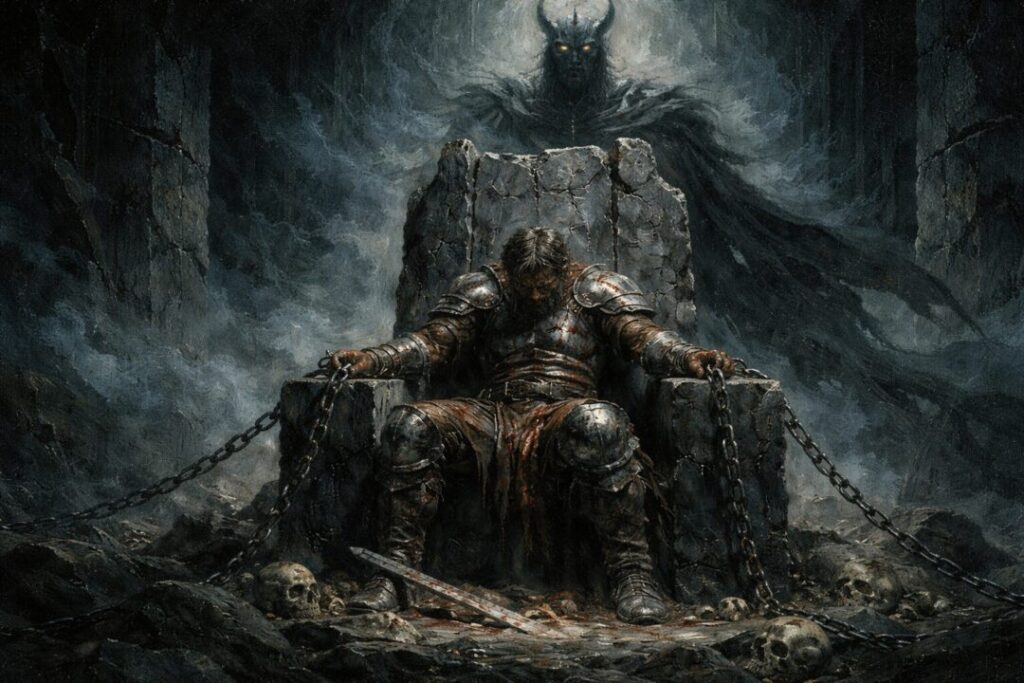
Húrin is chained to a stone chair upon Thangorodrim and cursed—not with immediate suffering, but with endurance. He is forced to watch the lives of his children unfold through Morgoth’s will. Not visions of possibility, but things that truly happen, stripped of context, hope, and mercy.
This distinction matters.
Morgoth does not invent Túrin’s flaws.
He does not fabricate Niënor’s fate.
He magnifies what already exists and ensures that clarity never arrives in time.
The curse does not compel failure.
It traps it.
Húrin watches his son become both a hero and a destroyer. He watches victories curdle into catastrophes. He watches every hard-earned success sow the seeds of a greater fall.
And through it all, he cannot speak.
He cannot warn.
He cannot intervene.
A Father Forced to Witness
Húrin’s greatest suffering is not physical torment. It is knowledge without agency.
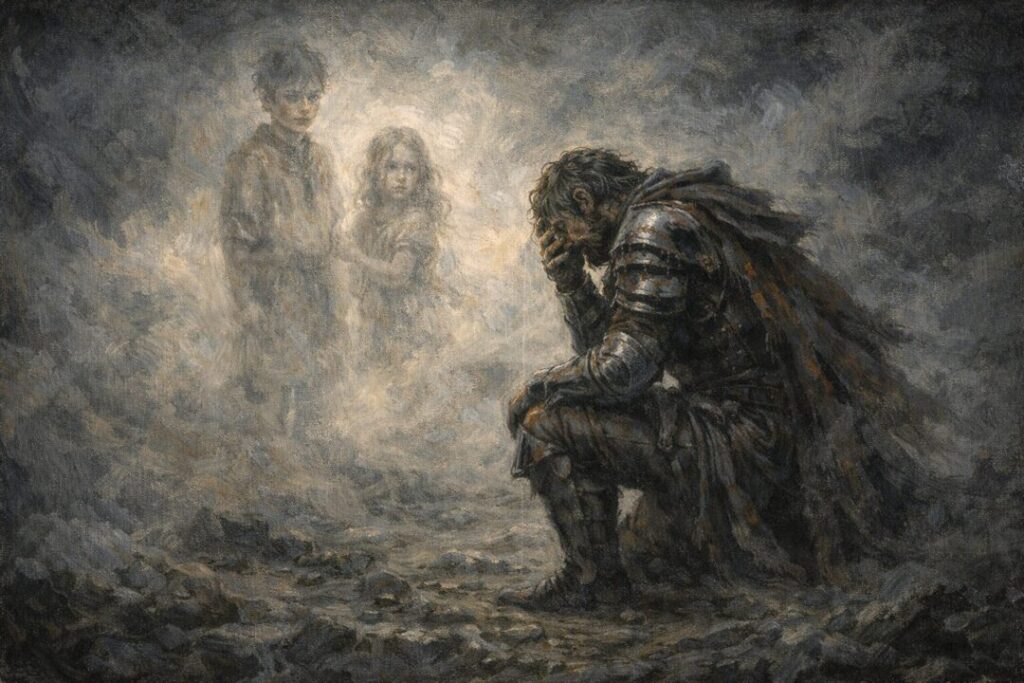
He sees Túrin grow proud, isolated, and increasingly shaped by wrath. He sees his son reject counsel, mistrust allies, and mistake defiance for destiny. He sees Túrin perform acts of undeniable courage—and then undo them through misjudgment and pride.
Worst of all, Húrin understands the pattern.
Each time Túrin escapes disaster, it comes at a greater cost later. Each triumph feeds the same traits that will ensure the next tragedy.
And then there is Niënor.
Húrin watches his daughter lose her memory, her name, and finally her life—unaware of who she is or what she has already lost. Her fate is not simply tragic. It is annihilating. Even her identity is taken from her before the end.
For a father forced to observe, this is cruelty beyond measure.
The Release That Is Not Mercy
When Morgoth finally releases Húrin, it is not forgiveness.
It is calculation.
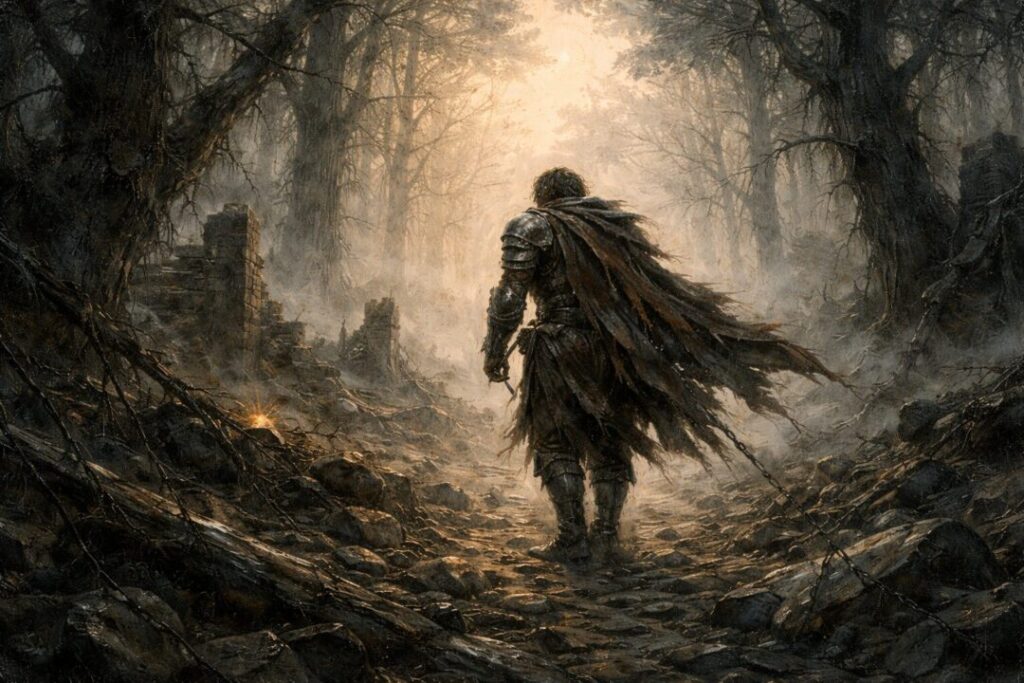
Húrin is sent back into the world burdened with grief, bitterness, and half-truths—armed with enough knowledge to mistrust everyone, but not enough to heal. Morgoth knows that a broken man can do more harm than a dead one.
And so he does.
Húrin’s words sow suspicion among the Elves. His bitterness poisons alliances already under strain. Even his attempt to reclaim the Nauglamír, meant as an act of restitution, sets in motion the downfall of Doriath.
This is the final cruelty of the curse.
Húrin is not allowed redemption without consequence.
Even when he seeks to do good, ruin follows.
Why Húrin Is More Tragic Than Túrin
Túrin’s tale is often remembered as the great tragedy of the First Age. And it is—vast, violent, and heartbreaking.
But Túrin is granted something his father is denied.
Ignorance.
Túrin does not fully understand the scale of what he does. He acts without knowing how deeply each choice ripples outward. His mistakes are catastrophic—but they are made in darkness.
Húrin sees everything.
He carries memory without relief, awareness without power. He understands consequences in advance and watches them arrive anyway. He is not shielded by fate or confusion.
That knowledge is what breaks him.
To see disaster coming and be unable to stop it is a suffering beyond death.
What Húrin Represents in Middle-earth
Húrin’s tragedy reveals something fundamental about the moral structure of Tolkien’s world.
Evil does not always win through domination.
Sometimes it wins through endurance.
Húrin proves that courage does not guarantee reward. That resistance does not ensure justice. That heroism, while meaningful, may still lead to unbearable loss.
And yet—this is crucial—Húrin never kneels.
Even in bitterness.
Even in error.
Even when his hope is gone.
He never serves Morgoth.
That refusal matters.
It is quiet. It is costly. And it changes nothing about his suffering—but it preserves something essential.
The Most Unsettling Truth
Húrin is tragic not because he is weak.
He is tragic because strength alone is not enough to defeat despair.
His story is a reminder that Middle-earth is not a place where virtue guarantees victory. It is a world where meaning is preserved through resistance, not success—and where some heroes are asked to endure far more than they are ever allowed to overcome.
Húrin’s fate is not glorious.
But it is steadfast.
And that may be the hardest kind of heroism Tolkien ever imagined.