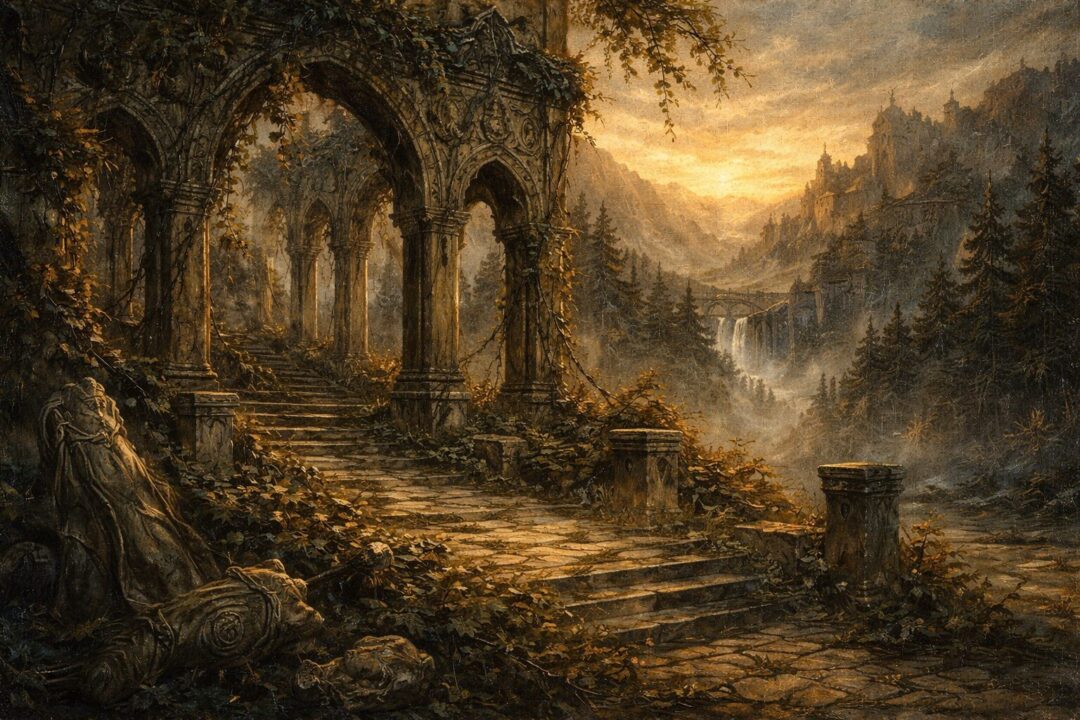
The destruction of the One Ring should feel like an ending filled with light.
The Dark Power that haunted the world for centuries is gone. The Shadow is lifted. Armies disband. Kings are crowned. Roads are reopened. Songs are sung again in places that had known only fear.
And yet, as The Lord of the Rings draws to a close, something feels unmistakably wrong.
Not broken.
Not ruined.
But gone.
The Elves depart Middle-earth.
The Rings lose their power.
Ancient magic withdraws from the world.
Even victory carries a quiet ache of loss.
For many readers, this emotional dissonance is confusing. Why does the end of the greatest victory in Middle-earth’s history feel like a farewell instead of a beginning?
This sense of fading is often dismissed as simple melancholy or nostalgia. But it is neither accidental nor merely emotional. It is one of the most deliberate, carefully constructed themes in the entire legendarium.
Middle-earth does not fade because evil damaged it beyond repair.
It fades because its time has passed.
The Ring Was Never the Only Thing Ending
The fall of the One Ring is the climax of the story—but it is not the true end of an age.
That ending began long before Frodo ever left the Shire.
By the time the story opens, Middle-earth is already living on borrowed time. The great wars are over. The wonders of earlier ages are rare. The world is quieter than it once was, and much of its former splendor exists only in memory.
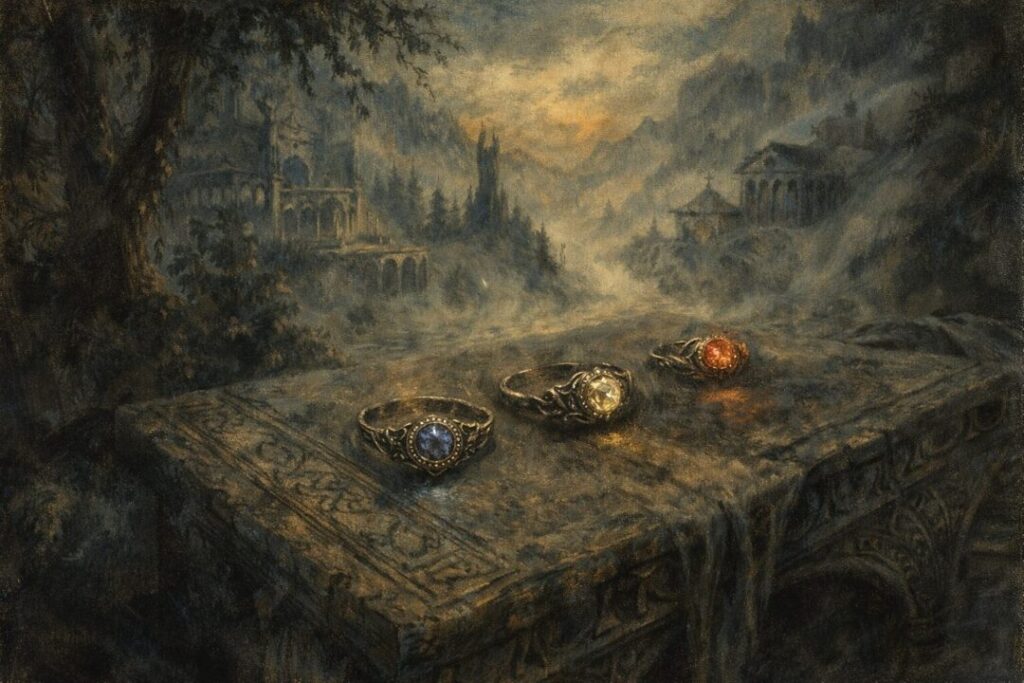
The Three Rings of the Elves were not tools of domination or creation. They were instruments of preservation. Their purpose was to hold decay at bay, to maintain beauty and memory in a world slowly slipping away from its beginnings.
They did not create a future.
They delayed an ending.
When the One Ring is destroyed, the Three lose their power as well. And with them fades the last meaningful resistance against time itself.
This is why Rivendell cannot remain as it was.
This is why Lothlórien does not collapse in fire or ruin, but simply grows still and empty.
Elvish realms do not fall.
They conclude.
The fading is not punishment.
It is release.
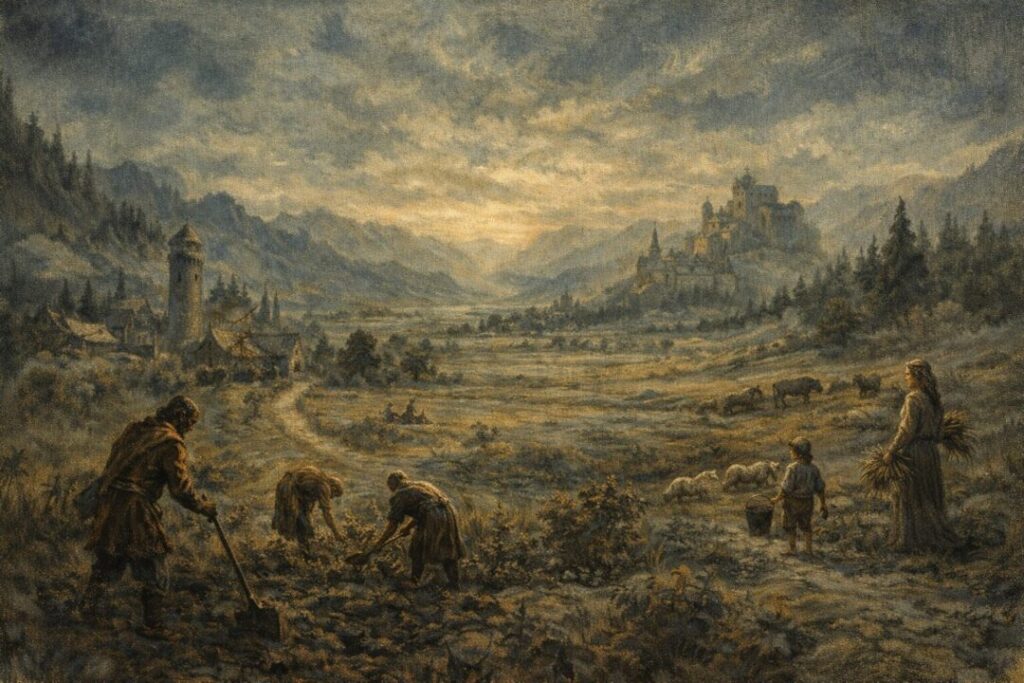
The Elves Were Always Temporary Stewards
The Elves are bound to the fate of the world in a way no other people are. They are immortal within it, tied to its lands and histories for as long as it endures.
But that does not mean they were meant to dominate its future.
Their role was to preserve beauty, memory, and craft through ages of violence and upheaval. They were guardians of continuity, living reminders of what the world once was—and what it could still be.
Once the Shadow is removed, that role diminishes.
This is why their departure feels sorrowful but peaceful.
They are not driven out.
They are not defeated.
They are not diminished.
They are finished.
The world they were preserving no longer needs preservation.
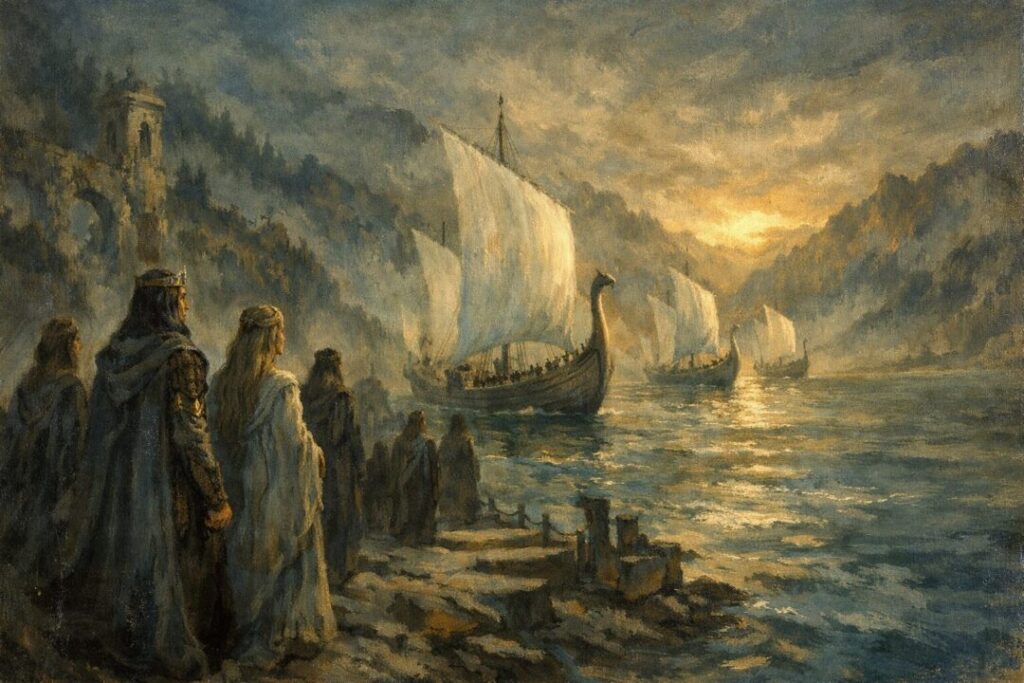
And so they depart from the shores of Middle-earth, sailing west from the Grey Havens, not in exile, but in fulfillment of their long task.
Why Magic Withdraws Instead of Growing Stronger
In much of modern fantasy, victory leads to escalation. When evil is defeated, magic flourishes, power increases, and the world grows more enchanted than before.
Middle-earth does the opposite.
Magic fades.
This is because magic in Middle-earth was never meant to be permanent infrastructure. It was not a renewable resource or a neutral tool. It belonged to a world still close to its creation—shaped directly by higher powers, guided openly by beings of immense spiritual authority.
As history progresses, that closeness diminishes.
The world becomes more ordinary.
More physical.
More dependent on mortal decision rather than divine correction.
This is not decay.
It is maturation.
Middle-earth does not lose magic because it is failing. It loses magic because it is growing up.
The Age of Men Is Not a Consolation Prize
The passing of the Elves is often read as pure tragedy—a loss from which the world never truly recovers.
But the coming of Men is not a lesser age.
It is a harder one.
It is an age without guardians.
An age where mistakes cannot be quietly undone by immortals.
An age where history is shaped by beings who do not get endless chances.
Meaning must now be created, not preserved.
The world becomes dangerous in a new way—not because darkness is stronger, but because responsibility is heavier.
This is the price of freedom.
Men inherit a world no longer watched over by ancient powers. What they build, they must maintain. What they break, they must answer for. What they become, they choose alone.
Why the Ending Feels Like Grief Instead of Triumph
The War of the Ring does not restore the past.
It makes the future possible.
And that future demands the letting go of everything that once held the world in balance.
The sadness at the end of the story is not the loss of safety.
It is the loss of certainty.
There will be no more hidden sanctuaries untouched by time.
No more Rings quietly holding decay at bay.
No more immortal guardians shaping events from the edges.
Middle-earth fades because it has succeeded.
It has survived long enough to no longer need miracles.
And that, quietly and profoundly, is the greatest victory of all.