By the time the Ring is discovered in the Shire, Middle-earth feels like a world under immediate threat. Armies are gathering. Shadows lengthen across borders that have held for centuries. Ancient evils stir once more, and rumors of war move faster than certainty.
To the characters living in it, this feels like the great crisis of their age.
But that feeling conceals a deeper and more unsettling truth.
Middle-earth is not facing its first great catastrophe. It is living in the long aftermath of many.
The War of the Ring does not decide whether Middle-earth remains whole, pure, or untouched by loss. That possibility vanished long before Frodo ever heard the word “Mordor.” What the Fellowship confronts is not the beginning of the world’s decline—but the question of whether anything meaningful can still endure at the end of it.
A World That Has Already Spent Its Strength
The defining struggles of Middle-earth do not occur in the Third Age at all. They belong to an earlier, more mythic time—when the world itself was younger and capable of bearing greater forces.
In the wars against Morgoth, entire civilizations are destroyed. Kingdoms of staggering beauty and power rise and fall within a single age. The land of Beleriand, once the heart of Elvish realms, is broken and swallowed by the sea. Victory comes—but it is catastrophic.
These wars are not simply battles between armies. They reshape the very substance of the world. Mountains are torn down. Rivers are redirected. The balance of creation itself is strained.
Each triumph costs something irreplaceable.
When Morgoth is finally defeated, the world is not healed. It is diminished. The greatest of the Elves depart or retreat. The light of earlier ages grows more distant. What remains is quieter, smaller, and less capable of sustaining wonders.
The Second Age repeats this pattern in a different form.
The rise of Númenor marks a brief resurgence of greatness. Mortal Men achieve unmatched knowledge, craftsmanship, and power. Their fleets span the seas. Their cities rival those of the Elves. For a time, it seems as though the decline might be reversed.
But Númenor does not fall in battle. It collapses under its own weight—through pride, fear of death, and the desire to grasp what was never meant to be taken.
Its destruction is sudden and absolute. An entire civilization is erased in a single moment, taking with it centuries of accumulated wisdom and restraint.
The Last Alliance that follows manages to defeat Sauron, but the victory is incomplete. The Ring survives. The leaders of the age fail at the crucial moment—not out of malice, but out of human limitation.
By the time of The Lord of the Rings, Middle-earth is no longer building toward greatness. It is preserving fragments of what once was.
The Illusion of Hope in the Third Age
From the outside, the Third Age still appears strong.
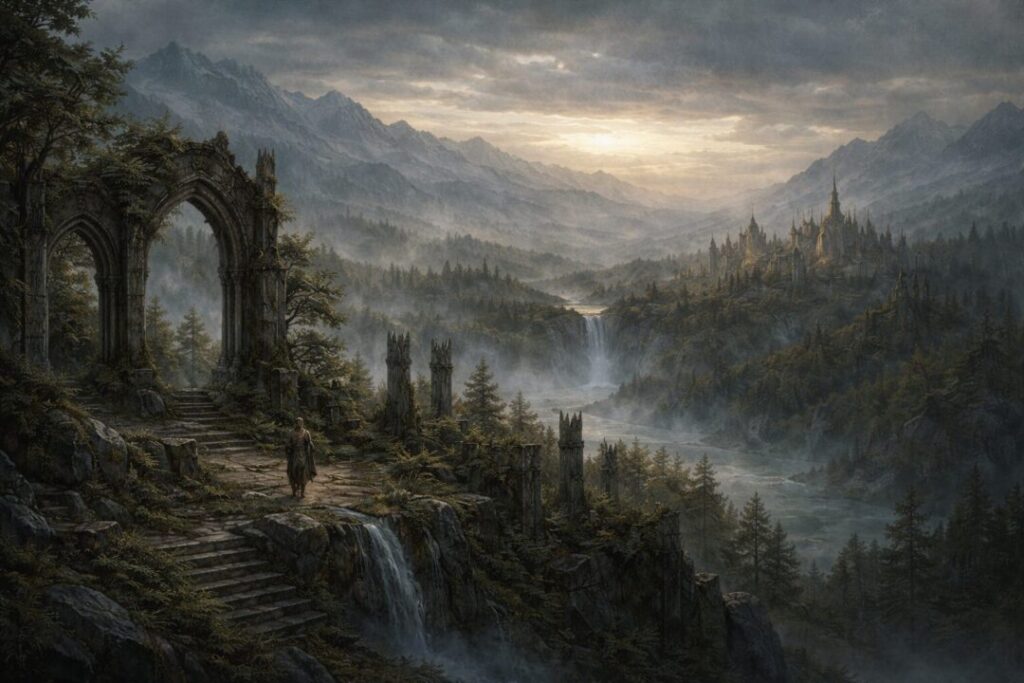
Rivendell remains a place of wisdom. Lothlórien shines with preserved beauty. Gondor holds its borders. Rohan still rides to war beneath green banners. These realms give the impression that the world’s strength endures.
But these are not signs of renewal.
They are acts of resistance against time itself.
The Elves are not dying in great numbers—they are fading. Their power is not being spent in battle, but slowly withdrawn from the world. They preserve what they can through memory, song, and guarded realms, but they do not expand or create anew.
The Dwarves grow increasingly inward, focused on maintaining what remains of their ancient halls rather than founding new ones. Their greatest works lie behind them.
The Númenórean line, once tall and long-lived, has thinned. Kings rule shorter lives, with less authority, less clarity, and less certainty than their forebears.
Even the Wizards—sent to oppose the rising Shadow—are deliberately constrained. They are forbidden from matching power with power, from reshaping the world through force. Their role is guidance, not domination.
Nothing new of equal magnitude is rising to replace what is passing away.
This is not a failure of imagination or effort.
It is the nature of the age.
Middle-earth is meant to move from myth into history—from a world shaped by immortal beings and world-altering powers into one governed by mortal choice, consequence, and limitation. The Third Age exists in that narrow space between wonder and disenchantment.
The Fellowship does not prevent this transition.
It only ensures that it happens without enslavement.
Why the Fellowship Is So Small
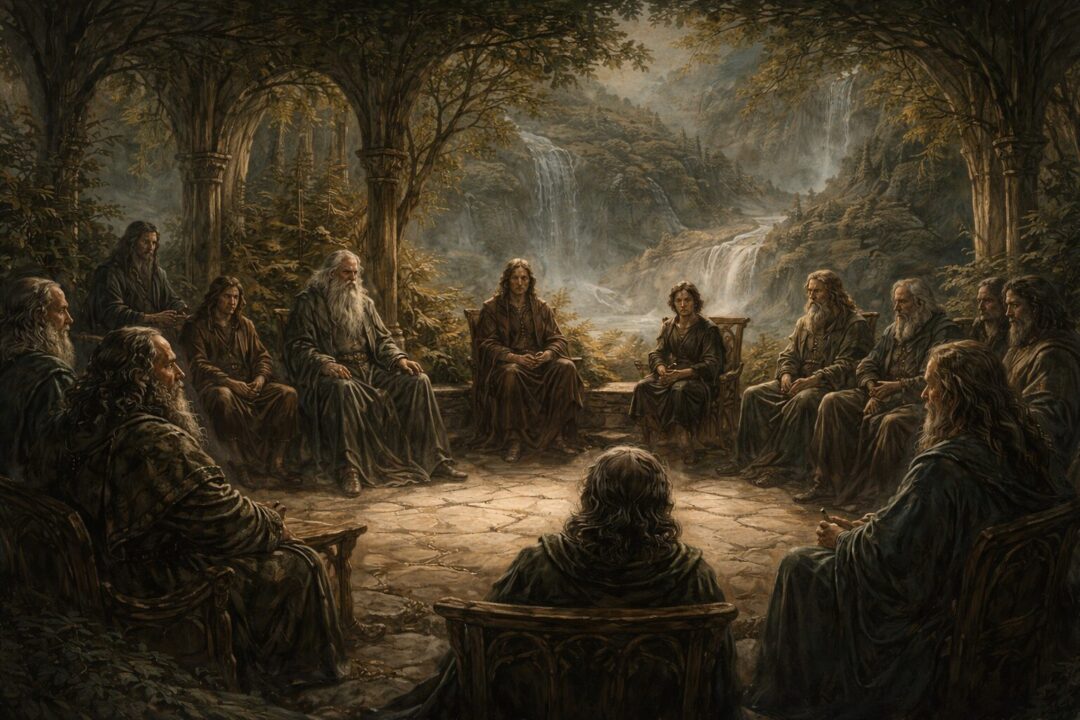
At the Council of Elrond, no one lacks strength or wisdom. Powerful beings are present. Ancient enemies are understood. Great armies could be summoned if the choice were made.
And yet, that choice is rejected.
The Fellowship is not small because larger forces are unavailable. It is small because every larger solution has already failed—again and again—across the history of the world.
Great powers fall to pride.
Wise rulers make fatal compromises.
Strength invites domination, even when used with good intent.
The Ring cannot be wielded safely—not by kings, not by warriors, not by the wise. Every attempt to confront absolute power with authority or force leads to the same outcome: corruption, tyranny, and eventual ruin.
So the Ring must be opposed quietly—or not at all.
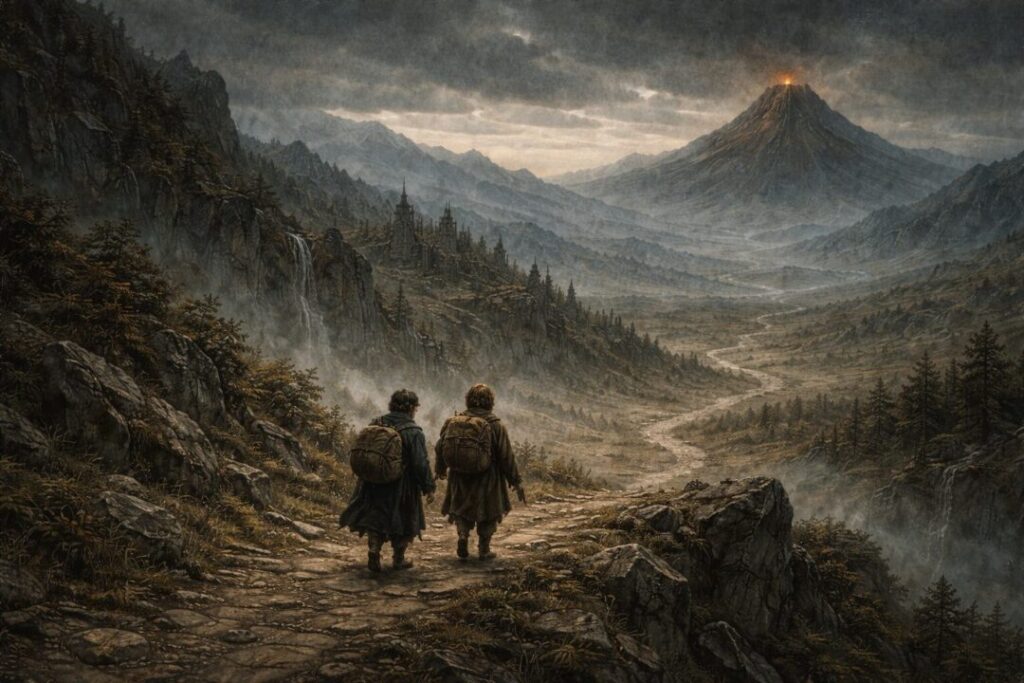
The task falls to Hobbits not because they are heroic in the conventional sense, but because they exist beneath the notice of the forces that have already exhausted the world. They do not seek mastery. They do not aspire to rule. They do not imagine themselves capable of reshaping history.
That smallness is not a weakness.
It is the last viable strategy left.
The Fellowship is not formed out of confidence in victory. It is formed out of refusal—a final rejection of domination as a solution to domination.
Victory Without Restoration
When the Ring is destroyed, Middle-earth is saved.
But it is not restored.
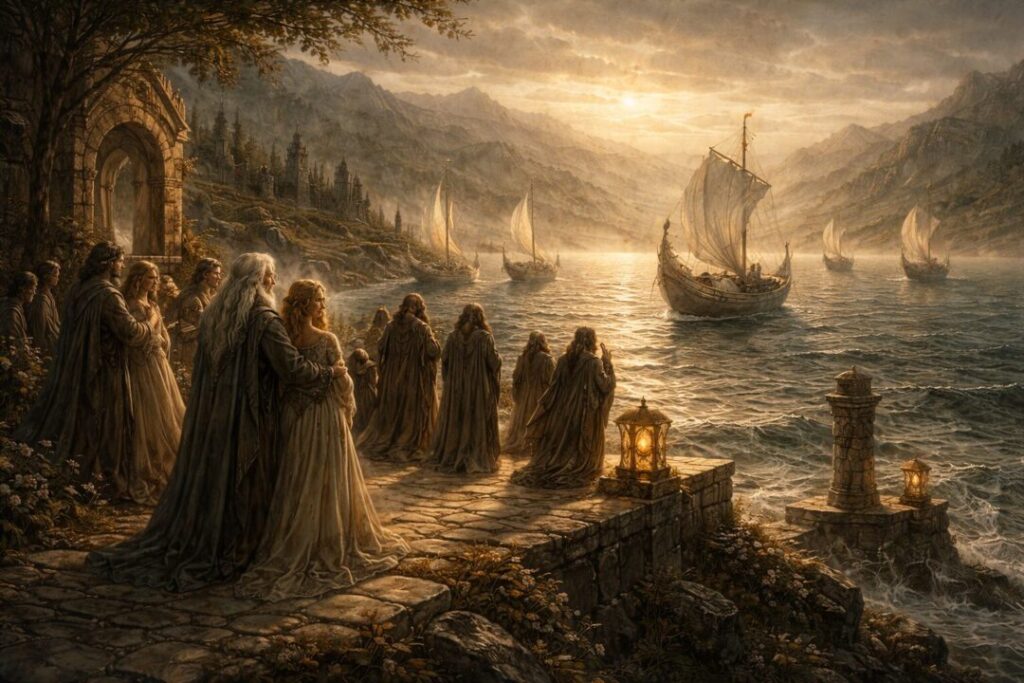
The Elves still depart across the sea, their time in the world complete.
Magic continues to fade, leaving behind memory rather than presence.
The age of Men begins—not triumphant, but uncertain, burdened with responsibility rather than wonder.
No golden age returns.
No ancient glory is renewed.
This is the true cost of history.
The Fellowship’s success does not reverse the world’s decline. It simply ensures that what comes next is shaped by choice rather than coercion, by freedom rather than fear.
Middle-earth survives—but as a world that must now live within its limits.
That is why the ending of the War of the Ring feels so deeply bittersweet. The victory is real, but it is not transformative in the way earlier victories once were. The world does not rise higher than before.
It merely avoids falling into something far worse.
What the Fellowship Was Really Fighting For
If Middle-earth was already fading beyond saving, then what were Frodo and the Fellowship truly fighting for?
Not restoration.
Not immortality.
Not a return to ancient power.
They were fighting for the right of the world to continue without chains.
For the possibility that the future—however diminished—would belong to those who must live in it.
For a final act of humility in a history shaped by ambition.
Middle-earth wins the War of the Ring not by reclaiming what was lost, but by accepting what it has become—and choosing to endure anyway.
That may be the most honest victory it was ever capable of achieving.