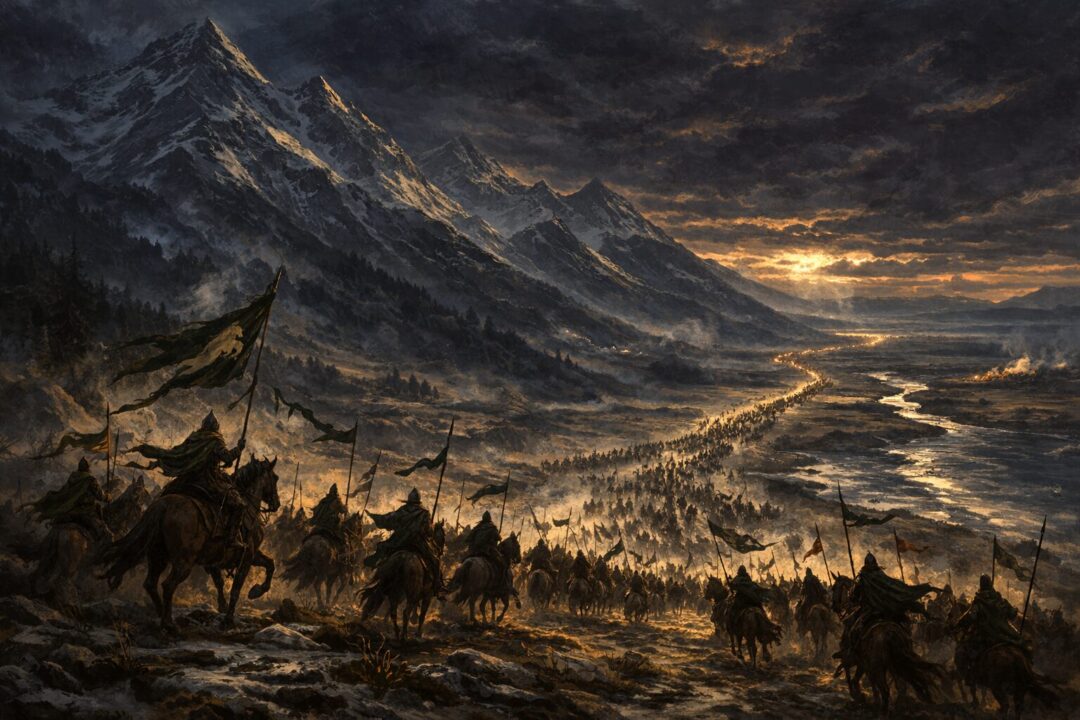
People often talk about Rohan’s “delay” as if it were a choice.
As if Théoden simply waited too long to act, too long to send word, too long to take the alliance seriously.
But the story on the page is tighter—and harsher—than that.
Because the question isn’t really why Rohan didn’t call Gondor sooner.
It’s when they realistically could have.
The first problem: Rohan’s war begins before Rohan is ready
Saruman’s attack does not begin with a neat declaration.
It begins with pressure at the Isen.
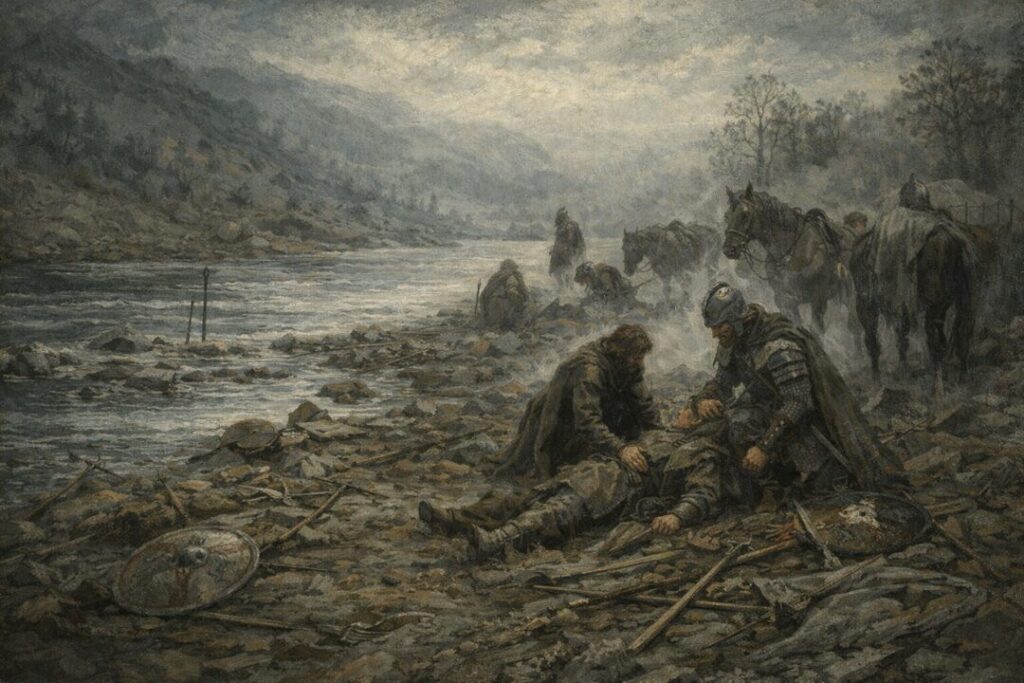
In Unfinished Tales, the conflict at the Fords is treated as a critical turning point: Théodred falls, command falters, and the West-mark is forced into emergency decisions. Erkenbrand’s requests for reinforcements are denied under the influence of Gríma’s counsel—exactly the kind of delay that quietly breaks a kingdom’s response time.
That detail matters because it shows the shape of Rohan’s first days:
Not “Rohan chooses not to act,” but “Rohan tries to act with half its voice taken away.”
And even after Théodred’s death, the fight at the Fords is not the end. A second assault follows.
So if you’re looking for the moment when Rohan might have sent riders south to ask Gondor for aid, you have to start by admitting something uncomfortable:
Rohan is already spending its riders.
Messengers in a crisis do not exist in a vacuum. Every horse and every fast man used to carry news is a horse and a man not holding a ford, not scouting a road, not escorting refugees, not gathering the éoreds scattered across a wide land.
And in those first days, Rohan is fighting for the right to keep its roads at all.
The second problem: the King’s court is a bottleneck
There is a reason the narrative puts such weight on Gríma.
His power is not a spell you can measure in sparks and smoke.
It is bureaucratic.
It slows decisions. It starves answers. It turns urgent requests into postponed ones.
The note that reinforcements were denied at Gríma’s urging is not a fan interpretation—it’s part of the recorded account of those Isen battles.
So when people ask, “Why didn’t Rohan call Gondor sooner?” one honest answer is:
For a long time, Rohan was not functioning like a kingdom that could send clean, decisive messages.
It was functioning like a house where the master’s word had to pass through a locked door.
And locked doors cost days.
The third problem: “Calling for aid” is not one thing in Middle-earth
A lot of readers blend the signals together:
Beacons.
Messengers.
Tokens.
In the text, these are distinct tools.
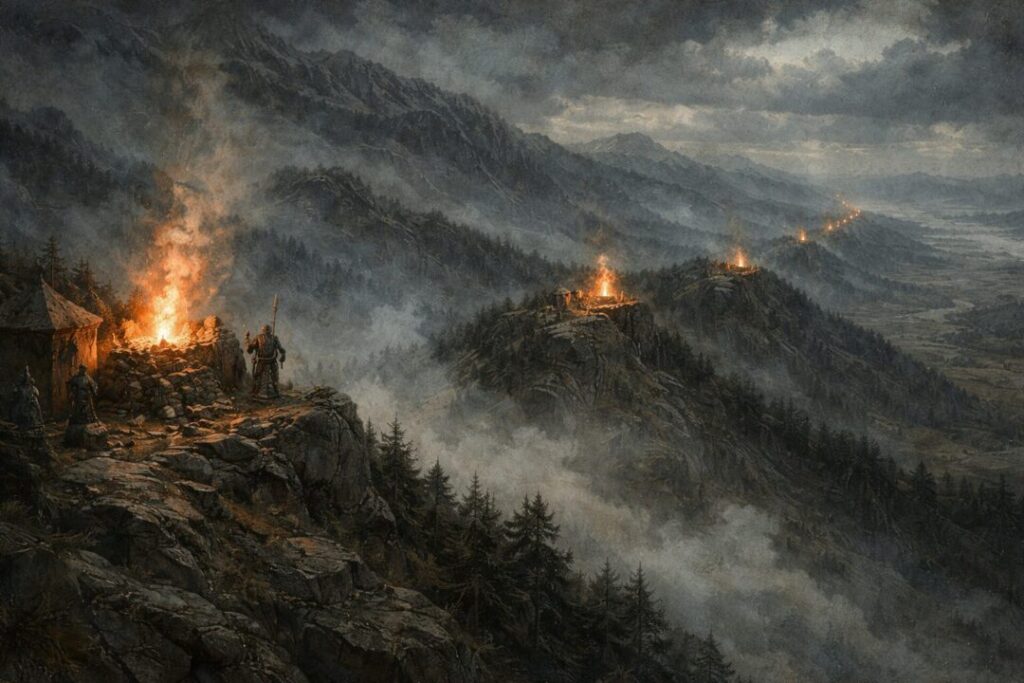
Gondor has the warning beacons—stations on outlying hills, with prepared fuel and watchers whose job is to raise alarm fast.
But Gondor also has something more personal when it comes to Rohan.
The Red Arrow.
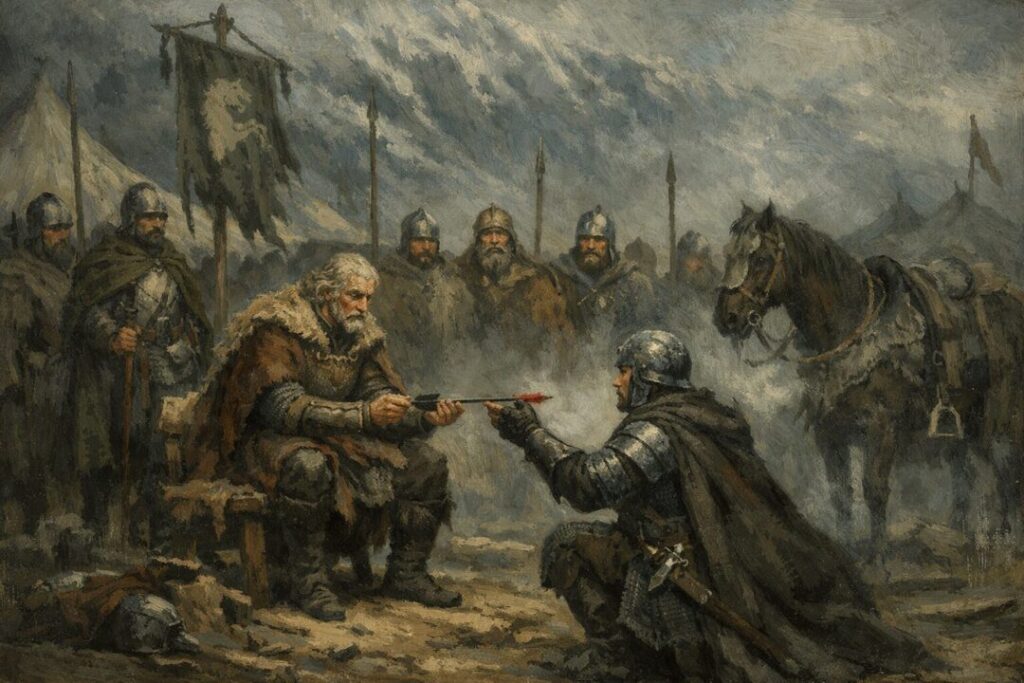
When Hirgon arrives, he does not come with a vague warning. He comes with a traditional token of war and a direct request for aid—“all your strength and all your speed.”
That matters because it tells you what “calling” looks like between these allies:
Not an abstract flare in the mountains.
A rider, a road, and a message meant for a king.
So if the question is “Why didn’t Rohan call Gondor sooner?” you have to decide what you mean by “call.”
If you mean “signal with beacons,” that system belongs to Gondor’s defenses and communications, not to Rohan.
If you mean “send riders with a formal appeal,” then you’re talking about the kind of mission Hirgon undertakes—long-distance, vulnerable to war, and only as fast as the roads allow.
Which brings us to the timeline.
The timeline Tolkien hides in plain sight
Appendix B is blunt in the way stories rarely are.
It tells you exactly when the Muster of Rohan rides from Harrowdale: March 10.
And it places the Rohirrim at key waypoints on the ride east:
- March 12: Théoden camps under Minrimmon.
- March 13: Théoden is in the Drúadan Forest.
- March 14: The Rohirrim come to the Grey Wood.
- March 15: The horns of the Rohirrim are heard at cockcrow, and the Battle of the Pelennor begins.
That is a hard, narrow run of days.
And Hirgon with the Red Arrow reaches Théoden on March 9.
So by the time Gondor’s formal appeal arrives, Rohan is already in motion toward Dunharrow—already gathering strength for the ride that will decide whether Minas Tirith falls.
Now look back at the days just before that.
If Rohan “called Gondor” earlier—meaning, if Théoden sent riders asking for help against Saruman—what would Gondor have been able to do?
Gondor is already kindling its own alarms.
Gandalf points out the beacons flaring westward: “the Halifirien on the borders of Rohan.”
That line is important for what it implies (and we should keep it conservative):
It shows Gondor is rousing help along its western line and that the warning system reaches the edge of Rohan’s borders.
It does not by itself prove that Gondor could spare men to ride to Helm’s Deep.
And that brings us to the heart of the matter.
The logistics problem: help that arrives too late is not help
Rohan’s war with Saruman is fast.
The Westfold is struck. The defense collapses toward Helm’s Deep. Rohan is forced into a fortress fight that cannot be postponed until allies gather.
If Rohan had sent riders to Gondor at the first shock of the Isen fighting, the message still has to travel.
Then Gondor has to decide.
Then men have to march—over distance, with supplies, through a world where Mordor is already moving.
And all of that would be happening while Rohan’s western defenses are burning.
The text never gives us a neat “travel time” number for a Gondorian relief host reaching Helm’s Deep, so we should not pretend we can compute it like a modern campaign timetable.
But we can say something the narrative supports:
Rohan did not have a spare week.
Even Théoden, when faced with Gondor’s desperate need, worries about arriving with strength enough to fight. That’s why he initially speaks of time needed—until the darkness of the Dawnless Day changes the urgency of everything.
This isn’t cowardice. It’s the cold arithmetic of endurance:
If you ride too hard, your army arrives broken.
If you ride too slowly, your ally dies.
And Rohan is forced to choose between two fires.
The political problem: Rohan is being attacked so Gondor will stand alone
Here is the strategic shape you can see without inventing anything new:
Saruman’s war pulls Rohan away from Gondor at the exact moment Gondor will need Rohan most.
That’s not a cinematic flourish.
It’s the reality shown by the calendar: while Rohan is fighting at home, Gondor is sliding toward siege, and within days the Red Arrow is sent and the beacons are burning.
So why didn’t Rohan call sooner?
Because the “sooner” people imagine is a luxury day that doesn’t exist on the page.
When Théodred falls and the Fords are threatened, Rohan is already in emergency defense.
While Gríma’s counsel still has weight, the court itself is slowing the kingdom’s responses.
By the time the immediate western crisis is contained, Gondor’s crisis has become immediate too—formalized in the Red Arrow on March 9, followed by the Muster riding on March 10.
And once the Muster rides, the window closes.
Not emotionally.
Logistically.
The detail most people miss: the alliance still worked—just not the way films train us to expect
The popular image is “a signal fire, and then an army appears.”
The text is less magical and more human.
Gondor signals along its beacon-hills and sends the Red Arrow by rider.
Rohan musters in the mountains, gathers scattered riders, and then commits to a brutal multi-day ride that ends at dawn on the Pelennor.
The alliance is not a switch you flip.
It is people and horses and roads, pressed until they almost break.
So if you’ve ever felt that Rohan waited too long, it may help to reframe it:
Rohan did not hesitate to honor Gondor.
Rohan was almost destroyed right before it was needed.
And that—more than any speech—explains why the “call” doesn’t come earlier.
Because the hidden logistics in the timeline reveal something quiet and grim:
There was barely time for Rohan to save itself… and still arrive in time to save Gondor.