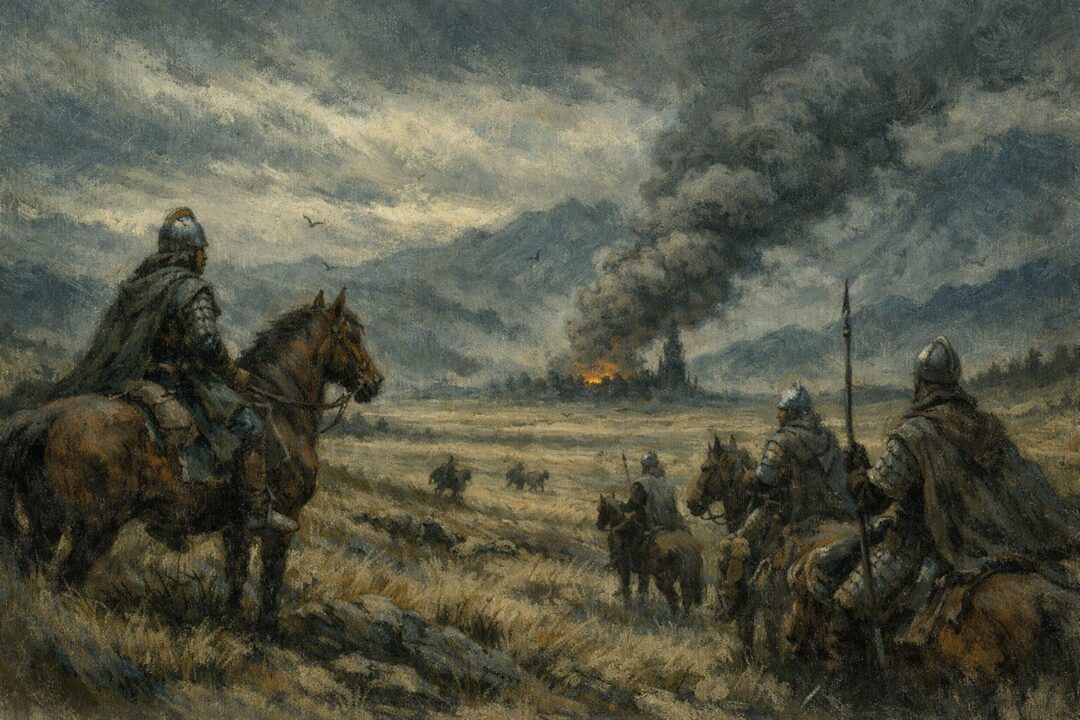
When readers think of the War of the Ring, attention naturally turns toward Gondor, Mordor, and the fate of the One Ring. The great siege of Minas Tirith, the march of Aragorn, and the final destruction of the Ring dominate the imagination.
But long before the White City is threatened, another kingdom is already fighting for survival.
Rohan.
By the time Saruman openly moves against it, Rohan is politically weakened, militarily strained, and dangerously isolated. Its king is impaired. Its leadership divided. Its riders scattered across wide lands. Enemies press from multiple directions—openly from Isengard, covertly through internal decay.
And yet, for a long time, no armies come to its aid.
Gondor does not send legions.
Rivendell does not dispatch Elf-lords.
No coalition rides to its borders in the early stages of Saruman’s war.
At first glance, this absence of help feels like neglect—perhaps even betrayal. But the narrative itself suggests otherwise.
This is not a gap in the story.
It is a deliberate situation created by the structure of the war itself.
Rohan’s Place in the Balance of Power
Rohan occupies a unique and precarious position in Middle-earth.
Unlike Gondor, it is not a realm defined by ancient stone cities, layered defenses, or inherited knowledge from Númenor. Unlike the Elvish realms, it does not possess hidden power, secrecy, or spiritual authority. Rohan is young by the standards of Middle-earth, and its strength lies almost entirely in its people.
Its culture is built around mobility, loyalty, and open warfare. The Rohirrim do not retreat behind impregnable walls by instinct. They ride out to meet danger in the open field.
This makes Rohan formidable—but also exposed.
Geographically, the kingdom sits between Isengard and Gondor. This position turns it into both a shield and a liability. As long as Rohan stands, it blocks Saruman’s forces from moving freely into Gondor’s northern regions. If it falls, Gondor’s western approaches are suddenly vulnerable.
Yet this same position also means that Rohan cannot easily be reinforced without consequences.
If Rohan collapses too quickly, Saruman gains momentum and access.
If Rohan is openly reinforced too early, Saruman’s war escalates immediately—and that escalation does not remain local.
Sauron is watching.
The texts never state that the Free Peoples consciously withheld aid as a formal strategy. There is no council decree sacrificing Rohan for the greater good. But the sequence of events strongly implies restraint rather than indifference.
Every major power waits.
Not forever—but long enough.
Gondor’s Silence Is Not Indifference
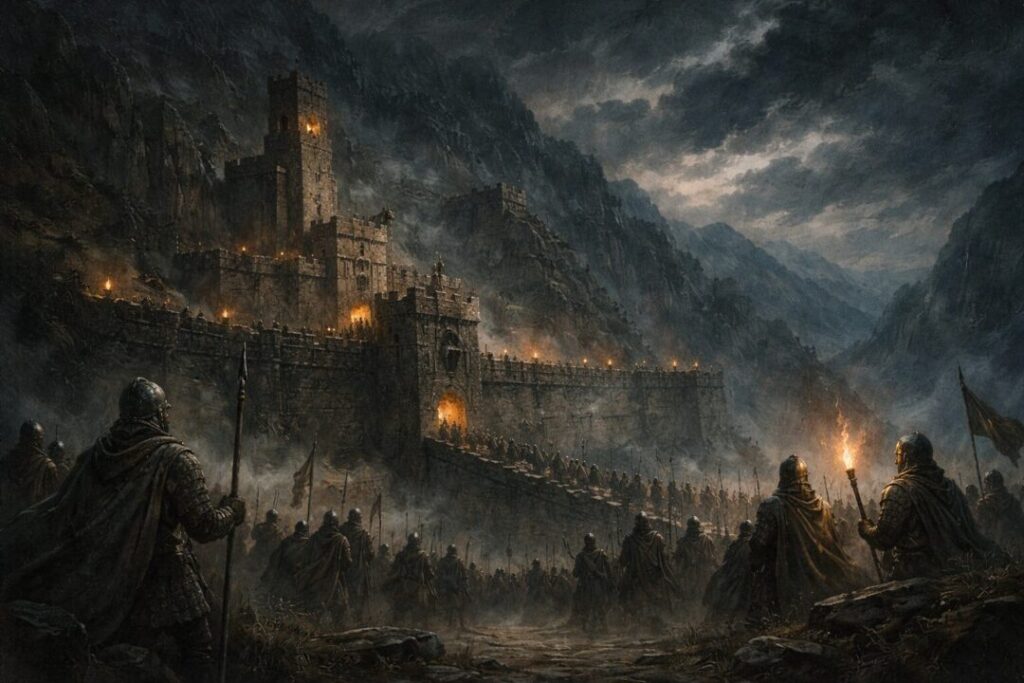
It is tempting to interpret Gondor’s lack of immediate aid as abandonment. After all, Rohan owes its land to Gondor, and their alliance is ancient and sworn. Riders have answered Gondor’s call before. The bond between the two realms is repeatedly emphasized.
But Gondor in this period is not a realm at leisure.
Its forces are already stretched thin across multiple fronts. Osgiliath is contested. Ithilien is under constant assault. Mordor applies unrelenting pressure along its borders. The Steward knows that a full-scale attack is inevitable—and soon.
Sending large forces northward prematurely would weaken Gondor at the very moment it must endure the greatest assault in its history.
This is not cowardice.
It is prioritization.
The texts show Gondor reacting only when the timing becomes unavoidable—when Rohan’s survival directly determines Gondor’s own. Only then are beacons lit, and oaths called due.
Until that moment, Gondor holds what it must hold.
This is not hesitation born of doubt.
It is triage in a war that cannot be won everywhere at once.
Saruman’s War and the Illusion of Containment
Another factor complicates Rohan’s isolation: Saruman himself.
For much of the story, Saruman’s war appears separate from Sauron’s. He operates through intermediaries, uses deception rather than open conquest, and cloaks his ambitions behind diplomacy and influence. His assault on Rohan begins subtly—through political manipulation, divided loyalties, and calculated attrition.
This creates the illusion that the conflict can be contained.
So long as Saruman’s actions appear localized, the larger powers of the West hesitate to respond with overt force. To do so too early would confirm Saruman’s alignment openly and risk accelerating Sauron’s broader campaign.
Rohan, caught in this gray zone, absorbs the pressure.
Gandalf’s Choice: Guidance Over Force
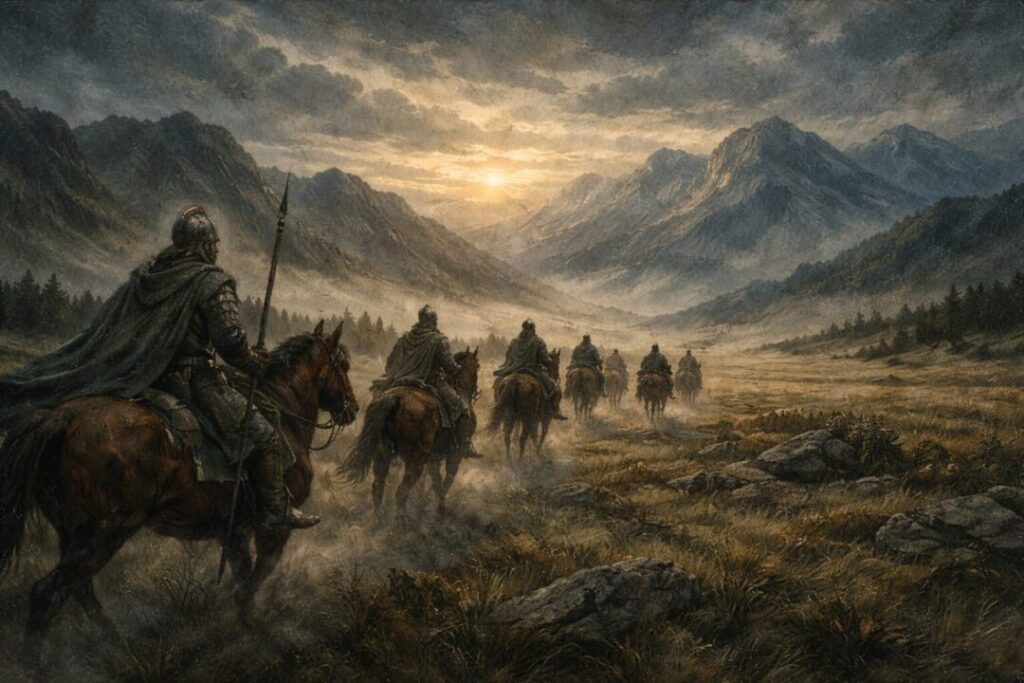
Perhaps the most revealing figure in Rohan’s ordeal is Gandalf.
He knows Rohan’s danger.
He understands Saruman’s strength.
He is fully aware that the kingdom stands on the edge of collapse.
And yet he does not arrive with armies.
Instead, he arrives with insight.
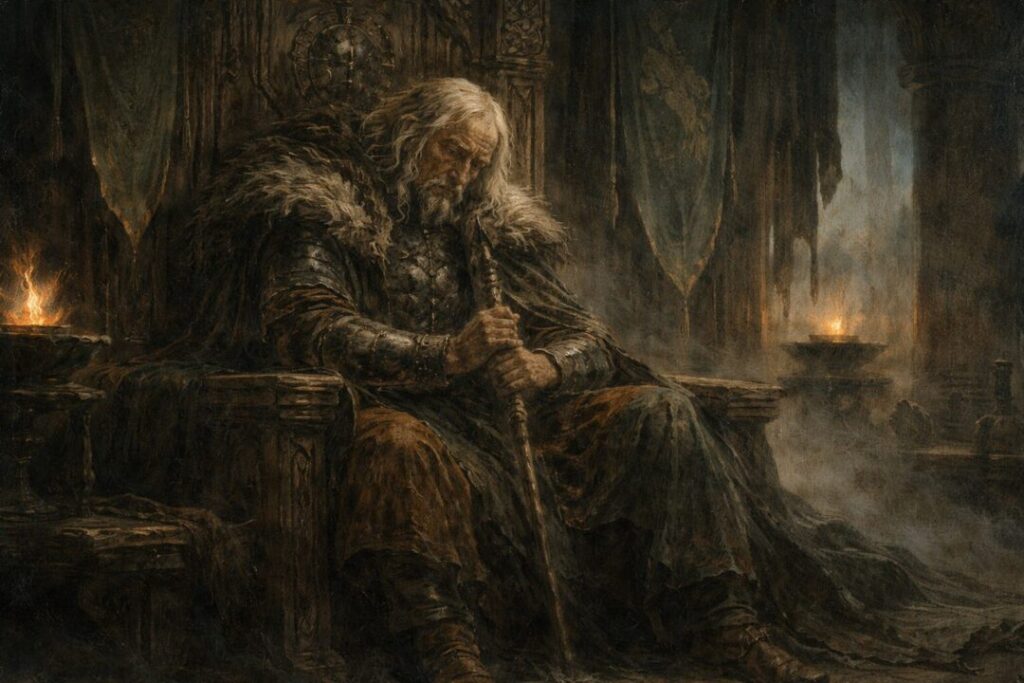
Gandalf’s intervention is precise and restrained. He focuses on restoring Théoden, not replacing Rohan’s strength with outside power. Once the king is healed, Rohan is expected to fight as itself—not as a proxy protected by stronger realms.
This choice aligns with Gandalf’s role throughout the War of the Ring. He coordinates, advises, warns, and prepares—but rarely commands overwhelming force directly. He consistently avoids solutions that would concentrate power too early or too visibly.
His actions suggest a belief that Rohan must choose to stand on its own before it can stand alongside others.
Was Rohan Meant to Stand Alone?
Tolkien never states outright that Rohan was deliberately left unaided as a test.
There is no passage declaring that its suffering was intentional or calculated. Any claim that Rohan was consciously sacrificed would go beyond what the texts support.
And yet, the narrative pattern is unmistakable.
Rohan is allowed to struggle.
Allowed to weaken.
Allowed to approach the brink of collapse.
Aid does not arrive preemptively. It arrives only when Rohan proves capable of acting decisively on its own behalf.
This is not cruelty. It reflects one of the story’s core principles: victory in Middle-earth does not come through rescue by higher powers alone, but through cooperation between peoples who can still choose to stand.
If Rohan collapses without resistance, the West is already lost—regardless of reinforcements.
Helm’s Deep and the Turning Point
Helm’s Deep marks the moment when Rohan’s isolation begins to break.
But even here, the nature of aid is telling.
No great Elvish host arrives in the text.
No Gondorian army rides in force to save the day.
What comes instead is timing, coordination, and leadership. Rohan’s own strength—its will to endure—is what carries it through the night.
Outside forces do not replace that strength. They complement it.
Rohan survives not because it is rescued, but because it holds long enough to rejoin the wider struggle.
Only after this moment does the war truly shift toward Minas Tirith, and only then do alliances fully activate.
Trust, Not Abandonment
The most unsettling implication of all is this:
Rohan was not ignored because it was weak.
It was trusted because it was strong.
The Free Peoples could not afford to shield every realm from danger. Some had to hold—alone—until the right moment arrived.
Rohan was one of them.
It bore the weight of delay, uncertainty, and isolation so that the larger war could unfold at the right time, on the right terms.
And because it endured, the West survived long enough for hope to matter.
Which leaves us with a final, unsettling question:
If Rohan had fallen sooner…
Would the War of the Ring have ended before it truly began?