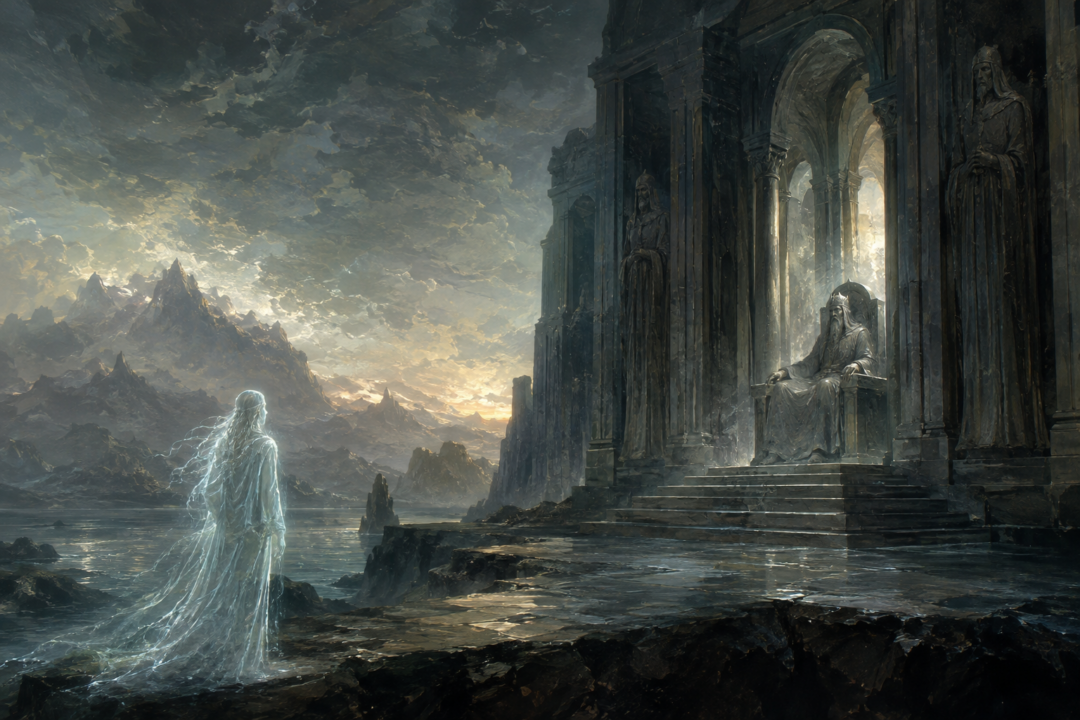
Death does not mean the same thing for an Elf that it means for a Man.
When an Elf is slain in Middle-earth, the body can be destroyed, but the spirit does not escape the world. The Elves are bound to Arda for as long as Arda endures. Their death is therefore a separation: the fëa, the spirit, is severed from the hröa, the body that had been its natural home.
Normally, the dead Elf is summoned to Mandos. There the spirit waits, undergoes judgment and healing, and may eventually be permitted to take bodily life again.
But there is a strange and easily overlooked qualification.
Permission to return is not the same as compulsion to return.
Even after Mandos has judged that an Elf may be released, the Elf can remain without a body. The Valar can withhold re-embodiment, but they do not simply force a healed spirit back into physical existence.
That distinction reveals something fundamental about Elvish immortality: restoration is offered as a grace, not imposed as a mechanism.
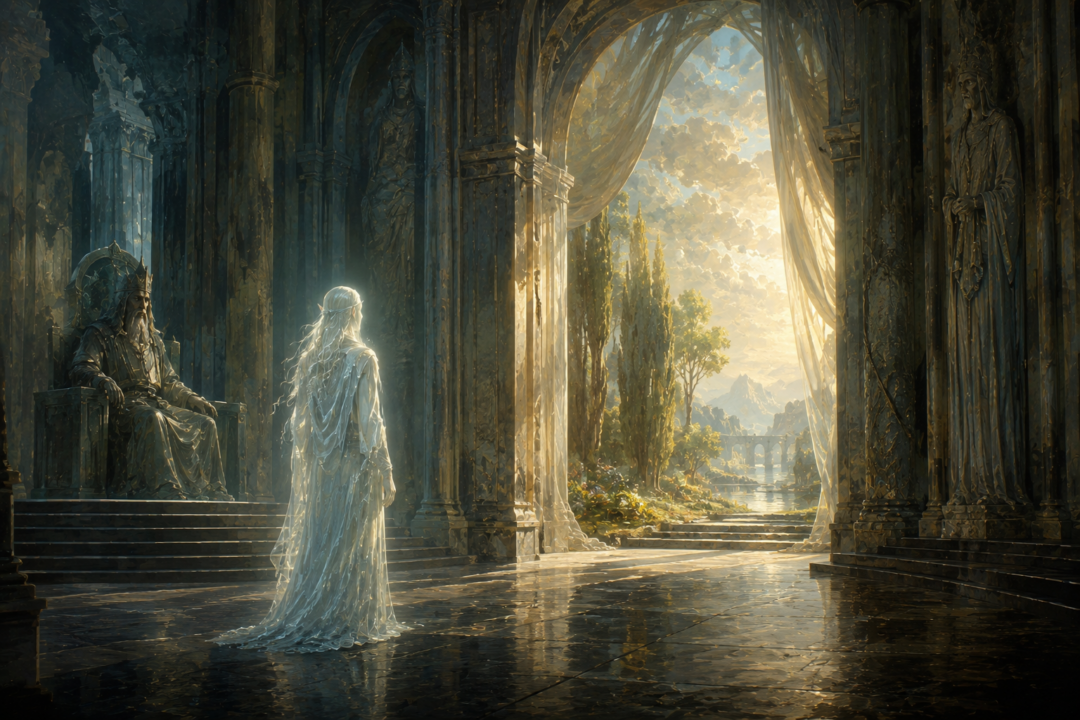
Elves Were Meant to Be Embodied
It is tempting to imagine an Elvish fëa as the Elf’s “real” self and the body as merely a temporary shell.
That is not the picture presented in the later writings concerning Elvish death.
Elves are naturally incarnate beings. Spirit and body belong together. Death—the violent separation of the two—is therefore an injury associated with the marring of Arda rather than the intended fulfillment of Elvish existence.
This is why the fate of dead Elves differs so sharply from that of Men.
Men ultimately leave the world. Elves do not. Their spirits remain bound to Arda, and the Valar possess authority, under Eru, to provide for their restoration.
The Halls of Mandos are therefore not simply an Elvish afterlife.
They are a place of waiting, judgment, recovery, and possible return.
Yet “possible” matters.
The restoration of the Elf involves both judgment and consent.
Mandos Judges Whether an Elf Is Ready
Death does not erase what an Elf became during life.
A fëa entering Mandos carries its memories, loves, wounds, guilt, anger, and moral history with it. Consequently, re-embodiment is not portrayed as an automatic process that occurs after a fixed period.
Mandos judges the dead.
An Elf whose life had become corrupted, or whose spirit remained dominated by hostility or wrongdoing, could be required to wait. The period of waiting allowed the fëa to recover from the griefs and disorders of its previous life.
In extreme circumstances, release could be withheld.
Fëanor provides the most famous example. The Silmarillion says that after his death his spirit went to Mandos and that he would not leave those halls until the end. Later writings likewise treat him as an exceptional case whose return is withheld.
His fate shows that Elvish immortality is not immunity from consequence.
An Elf may survive bodily death, but survival does not cancel judgment.
Yet there is another side to the process.
Mandos can determine that a spirit should not yet return. But once return becomes possible, the Elf’s own will still matters.
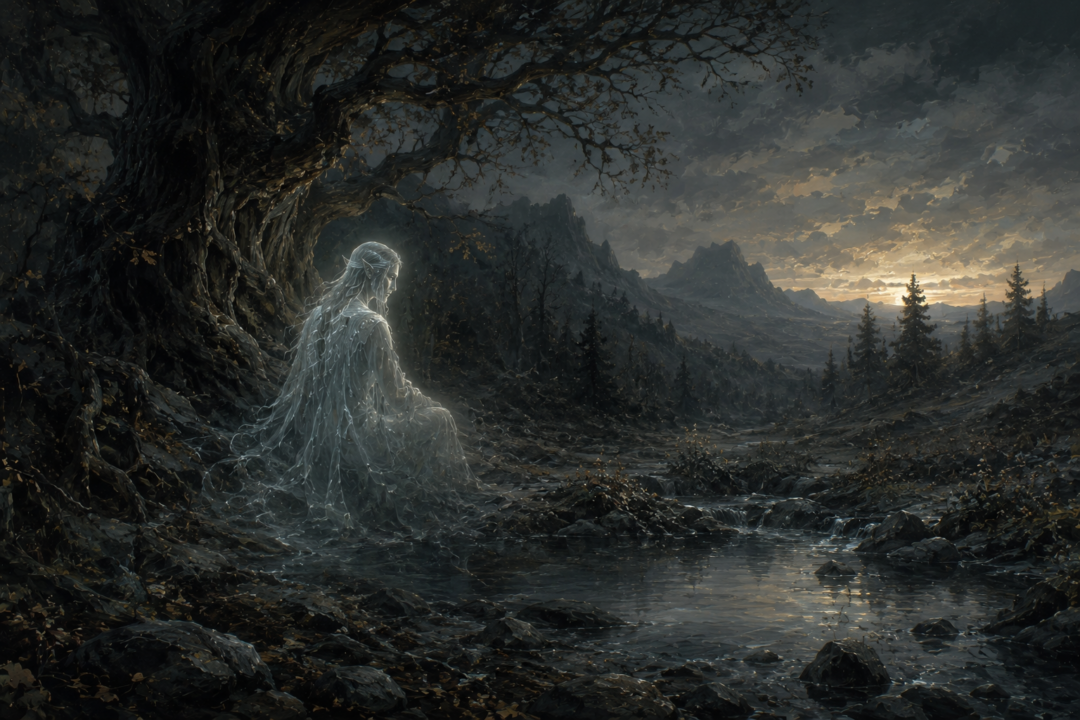
Judgment Does Not Cancel Free Will
The crucial principle is that the fëa cannot simply be treated as an object.
In the writings collected in Morgoth’s Ring, the Elvish spirit is described as ultimately resistant to external possession of its will. Even the original summons to Mandos after death can be refused.
That fact alone is remarkable.
Mandos possesses legitimate authority. His summons is not merely a suggestion from another Elf. Yet a dead fëa can resist it.
The Valar do not solve this resistance by seizing the spirit and dragging it into Mandos.
The same principle helps explain re-embodiment.
A spirit may remain without a body either because Mandos requires it to remain so or because the spirit itself does not wish to return. Later accounts of Elvish restoration explicitly preserve this distinction.
The Valar govern the lawful process of restoration, but the personal will of the Elf is not erased.
Thus an Elf may reach a point at which embodiment is permitted without embodiment becoming mandatory.
That is not a minor technical detail.
It is part of the moral architecture of Arda.
Why Would an Elf Refuse to Return?
Here the texts become more cautious.
There is no catalogue giving named Elves and detailed psychological explanations for every voluntary refusal after judgment. It would therefore be unsafe to claim that slain Elves commonly refused embodiment because of one particular emotion.
What the writings do establish is that some spirits remain unbodied by desire, while others remain so by command.
The possible emotional weight of such a choice is nevertheless understandable from what is said about the dead.
The Halls of Mandos are connected with recovery from the grief and disorder accumulated during life. An Elf could have endured ages of war, bereavement, exile, violence, or guilt before death.
Returning to embodiment means returning to active participation in Arda.
For a spirit that has suffered deeply, that may not be something it immediately desires.
This should not automatically be interpreted as rebellion. A voluntary continuation of disembodied waiting within the lawful order of Mandos is very different from rejecting Mandos altogether.
That difference is essential.
Refusing Embodiment Is Not the Same as Refusing Mandos
There are actually two very different refusals in the lore.
A dead Elf can refuse the summons to Mandos.
Or an Elf who has entered Mandos can remain unembodied rather than take up bodily life again.
These should not be confused.
The first is dangerous.
Some houseless spirits refuse Mandos and remain in Middle-earth. Later Elvish traditions describe such spirits as wandering without bodies, attached to places they once knew but unable properly to inhabit the physical world.
Refusal of Mandos is even described as a sign of spiritual taint.
During the domination of Morgoth and later Sauron, this condition could become especially perilous. Corrupted spirits that rejected the rightful summons could become vulnerable to the counter-summons and domination of the Shadow.
The lawful dead who remain within Mandos are in an entirely different condition.
They have not rejected the authority of the Valar. They remain within the appointed order for Elvish death and healing.
One refusal is resistance to restoration’s proper path.
The other can simply be a choice not yet to walk through its final door.
The Horror of the Houseless
The alternative helps explain why embodiment is normally desirable.
An Elf without a body is not portrayed as having achieved a higher spiritual existence.
The houseless fëa is profoundly limited.
The later writings describe such spirits as naturally solitary. Those wandering outside Mandos can linger around familiar places, but they cannot truly participate in embodied life as they once did.
Some become consumed by regret, bitterness, grievance, or envy.
Worse, some desire bodies without accepting the lawful means of restoration.
This produces one of the darkest corners of Middle-earth’s metaphysics.
Certain wicked houseless spirits may seek to invade or dominate the bodies of the living. Contact with such spirits is therefore presented as dangerous, and attempts to summon or control them belong to the practices associated with necromancy and the Shadow.
The contrast is deliberate.
True re-embodiment restores the proper relationship between spirit and body.
Darkness tries to imitate that restoration through possession and domination.
One respects the nature and freedom of persons.
The other consumes them.
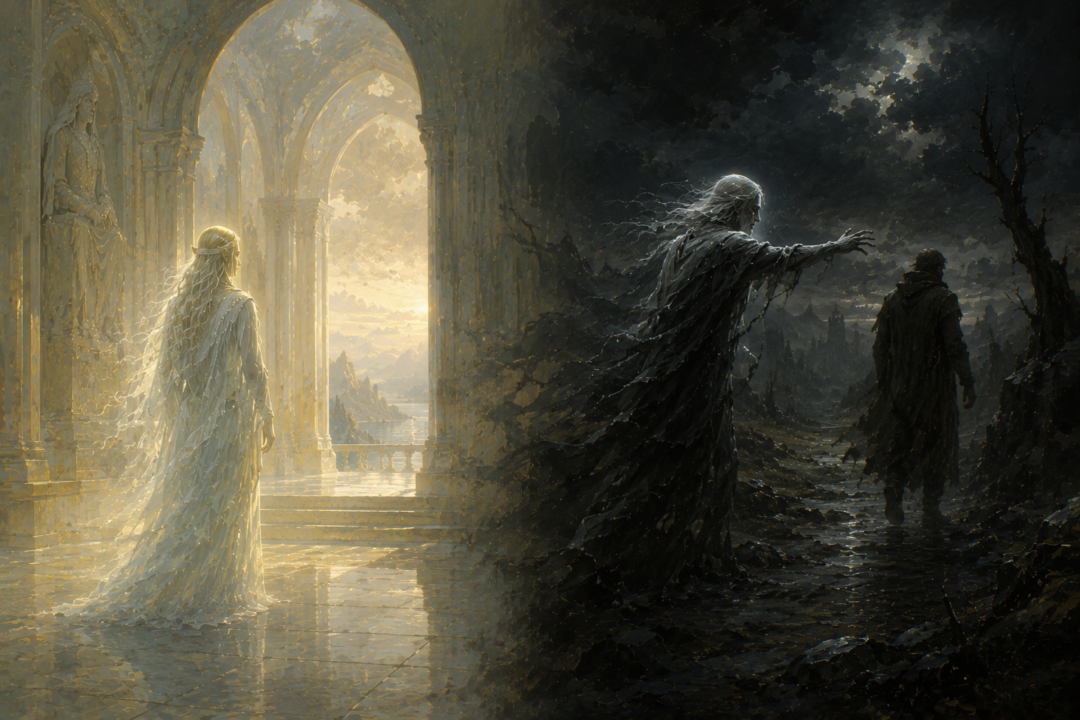
Why the Valar Cannot Simply Force Restoration
If embodiment is good for Elves, why not require it?
Because a good end does not justify violating the nature of the person being restored.
The Valar possess extraordinary authority within Arda, but they are not its absolute owners. Their authority exists beneath Eru, and the rational creatures of Arda are not merely pieces they can rearrange at will.
This becomes particularly clear in matters involving fëar.
The Valar may summon.
They may judge.
They may delay release.
They may provide the possibility of bodily restoration.
But the spirit itself remains a moral subject.
This helps explain why even the summons of Mandos can be rejected despite the terrible consequences of doing so.
Freedom remains possible even when the wiser choice appears obvious.
That principle runs through Middle-earth repeatedly: evil does not merely consist in choosing bad outcomes. It also consists in domination—the attempt to make other wills subordinate to one’s own.
The restoration of the dead cannot therefore be built upon the same logic used by the Enemy.
Re-Embodiment Is Grace, Not an Elvish Power
There is another limitation that prevents Elven immortality from becoming simple self-resurrection.
A dead Elf cannot manufacture a new body by force of will.
Re-embodiment depends upon a power entrusted to the Valar for the healing of Arda’s wounds. The fëa does not possess independent authority to rebuild itself whenever it wishes.
That creates a careful balance.
The Elf cannot demand embodiment as an inherent magical ability.
The Valar cannot simply impose embodiment against the Elf’s will.
Restoration therefore requires both rightful judgment and willing acceptance.
That is why death remains meaningful for Elves despite their immortality.
Their lives are not video-game lives endlessly reset after destruction. Death brings separation, judgment, memory, healing, and sometimes prolonged waiting.
Even when restoration comes, what happened before death still matters.
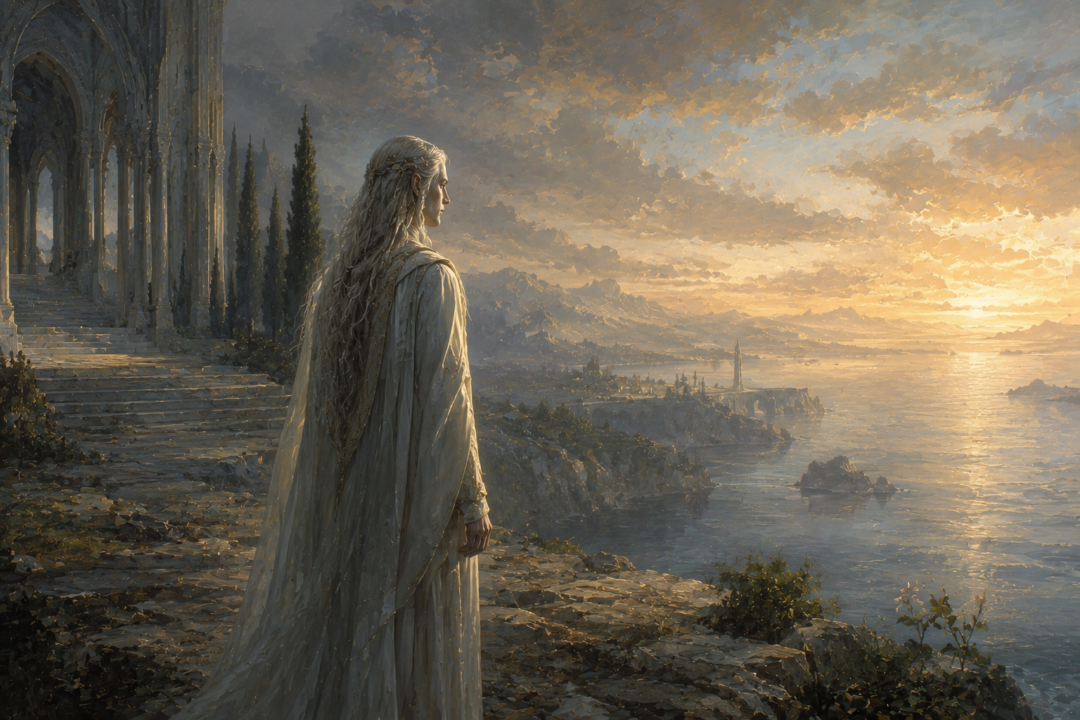
The Deeper Meaning of Elvish Immortality
Elvish immortality is often mistaken for freedom from death.
It is closer to an inability to escape Arda.
An Elf may live for ages. An Elf may be slain. An Elf may lose a body and later receive another. Yet the fëa remains tied to the life of the world until its end.
That can be beautiful.
It can also be exhausting.
The Elves remember.
They carry ancient victories and ancient disasters together. They watch kingdoms rise and disappear. They lose friends, homes, forests, languages, and whole landscapes while remaining themselves.
Seen from that perspective, the possibility of remaining for a time in Mandos becomes more understandable.
Embodiment is the natural state of an Elf, and restoration is ordinarily a blessing.
But restoration is not forced.
The slain Elf does not emerge from judgment as a repaired object handed back to the world. The same person who lived, chose, loved, suffered, and died must still willingly take up embodied life again.
That small qualification reveals one of the deepest rules beneath Middle-earth.
Healing can be offered by powers far greater than oneself.
Judgment can declare the road open.
But even the Valar do not turn restoration into domination.
The door back to life may be opened.
The Elf must still choose to pass through it.
Sources & Notes
- The Encyclopedia of Arda, “Elves” — https://www.glyphweb.com/arda/e/elves.html
- The Encyclopedia of Arda, “Halls of Mandos” — https://www.glyphweb.com/arda/h/hallsofmandos.html
- The Encyclopedia of Arda, “Glorfindel” — https://www.glyphweb.com/arda/g/glorfindel.html
Reference entries document the people, places, events, and objects directly discussed in this article.