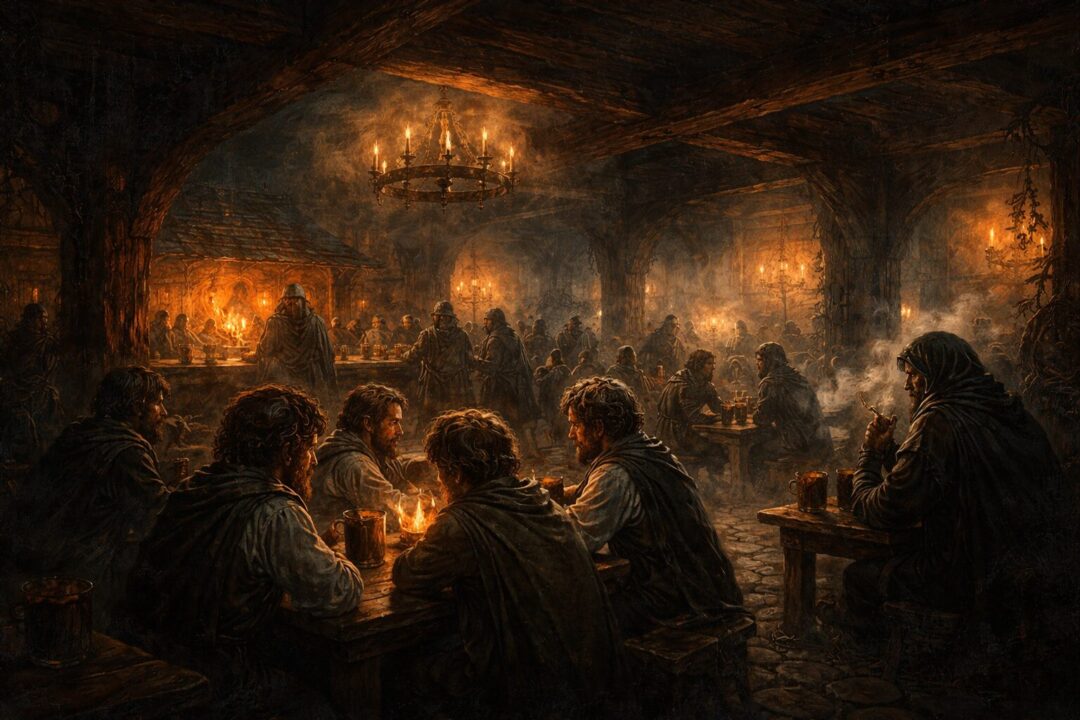
When readers first encounter Bree in The Fellowship of the Ring, it feels deceptively ordinary. A quiet settlement where Hobbits and Men share roads, stories, and mugs of ale. An inn with a creaking sign, a roaring hearth, and a keeper who worries more about unpaid tabs than ancient evils.
At first glance, Bree appears to be a place untouched by the great struggles of Middle-earth.
But that impression does not last.
Bree is not naïve. It only pretends to be simple.
Beneath its routines and comforts lies an understanding shaped by centuries of loss, rumor, and survival. This is a town that has learned—often painfully—that not all travelers bring trade, and not all dangers arrive with swords drawn.
Some things are unwelcome not because of written law, but because memory demands it.
Bree’s Location Is Its Curse
Bree does not sit safely within the borders of a great kingdom. It exists in the quiet vacuum left behind when power collapses.
To the east stretch the Weather Hills, where ancient watchtowers once guarded the realm of Arnor. Beyond them lie the broken remains of Fornost, once the proud seat of northern kings. Its fall was not sudden, nor was it clean. Arnor withered through war, division, and the slow pressure of darkness that never fully retreated.
The people of Bree may not recount this history with names and dates, but they live with its consequences.
Ruins dot the land. Old roads lead nowhere. Strange lights and sounds are sometimes reported from places no one farms anymore. Travelers vanish on stretches of road that look harmless in daylight.
This is not a village sheltered from history. It is one standing in the shadow of a broken age.
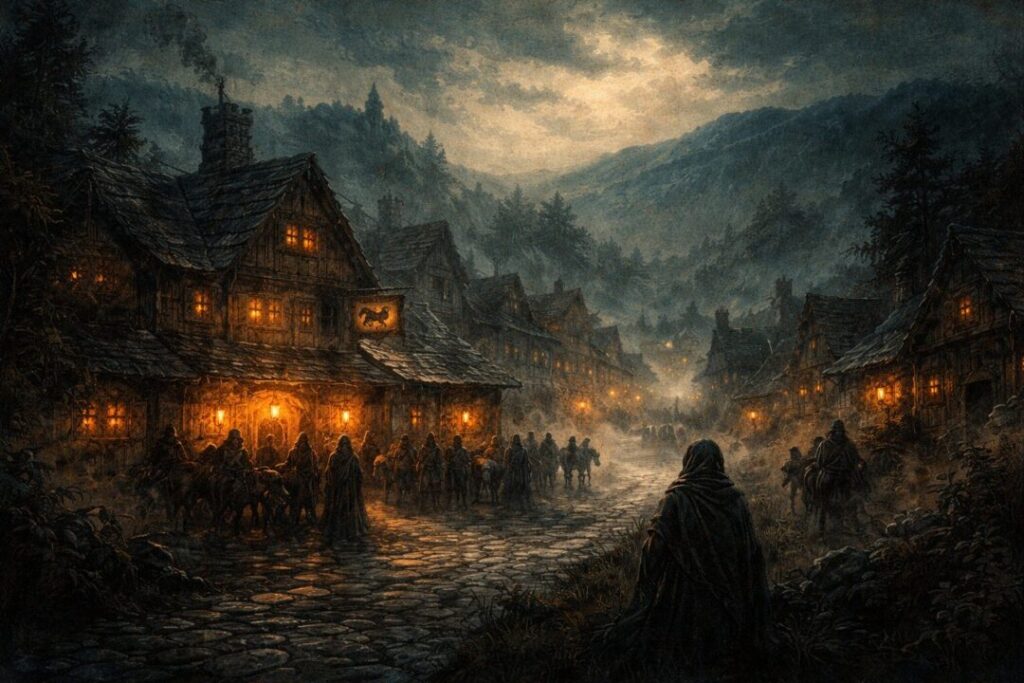
The Riders Are Not Legends Here
When Frodo Baggins overhears talk of Black Riders in Bree, the tone is not that of fireside storytelling. There is no excitement in the whispers, no bravado.
Only unease.
The Men of Bree have seen signs that cannot be dismissed easily. Horses refusing to go near certain roads. Dogs whining and refusing to sleep. Doors found open in the morning, though no thief was heard. Travelers who asked questions one evening and were never seen again.
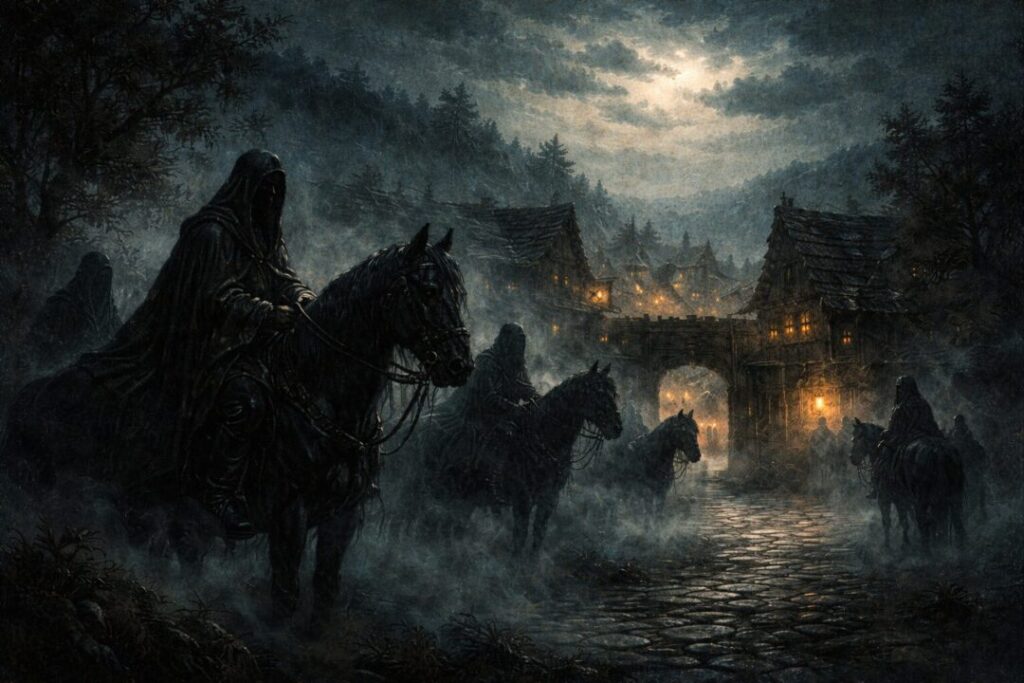
The Nazgûl are not named openly. Naming gives shape, and shape gives something to fight. Instead, they are spoken of vaguely—Riders, shadows, black figures on the road.
In Bree, people understand a simple truth:
some things do not belong in the light of a common room.
The Prancing Pony is meant for laughter, warmth, and human noise. Whatever follows in silence, whatever chills the air and stills conversation, has no place there.
Butterbur’s Fear Is Earned
Barliman Butterbur is not a coward, though he is often flustered. He manages the most important meeting place for miles in any direction. Dwarves pass through. Rangers linger. Messengers from distant lands stop for news.
Running the Prancing Pony requires patience, diplomacy, and a keen sense of when trouble is brewing.
Butterbur’s fear is not ignorance—it is experience.
He knows which travelers drink too quietly. Which ones listen too closely. Which ones ask questions that feel wrong. He may not understand the deeper forces at work, but he knows when his inn is being watched rather than visited.
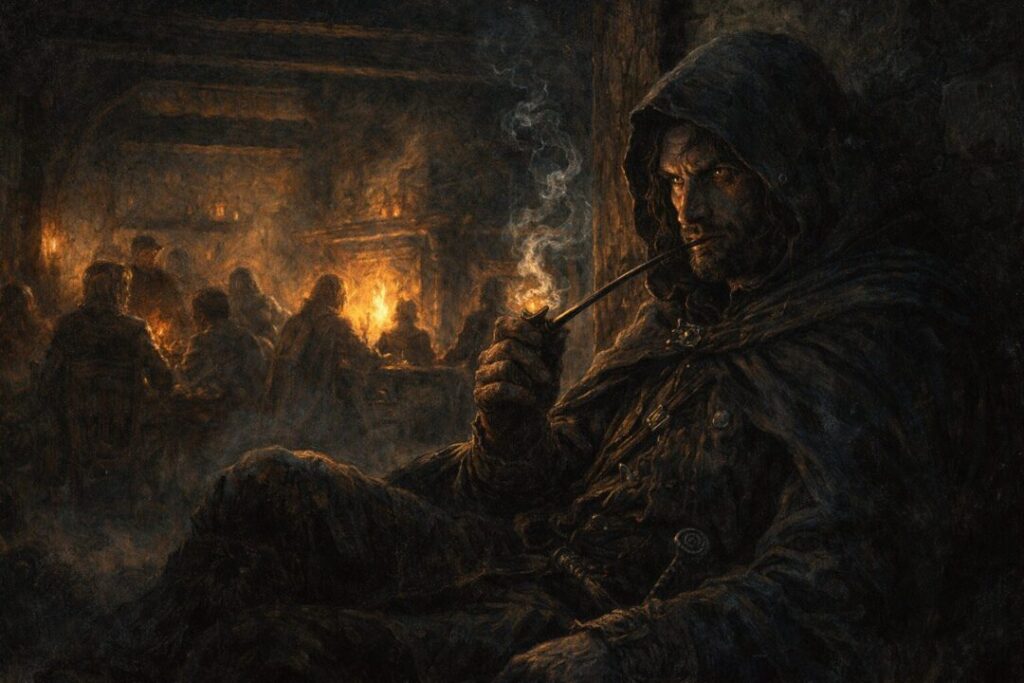
The Rangers, particularly Aragorn, are tolerated because they stand between Bree and the dangers beyond it. Even then, they are never fully trusted. The Rangers are reminders that threats still exist—that vigilance is necessary.
What Butterbur fears most are not armed men or drunken arguments. Those can be handled.
What he fears are presences that cannot be reasoned with, bribed, or frightened away. Things that pass through locked doors and leave fear behind like frost.
Why There Are No Rules—Only Silence
Bree has no posted laws about who may or may not enter its inns. No guards interrogate strangers at the gate. No official decrees are announced in the square.
Instead, there is something older and far more effective: shared memory.
People know when to bar their doors at night.
They know when to speak softly.
They know when to pretend not to see something moving at the edge of their vision.
When the Ringwraiths arrive, panic spreads without explanation. No one needs to shout a warning. Fear moves faster than words, because it is already waiting beneath the surface.
This is how Bree survives—not by confronting ancient evils, but by refusing to invite them inside.
The Prancing Pony as a Line of Defense
The Prancing Pony is more than an inn. It is the heart of Bree.
News flows through it. Warnings are shared quietly over ale. Travelers compare notes. Rangers listen from the corners.
Light matters here. Fire matters. Noise matters.
Laughter breaks tension. Music reminds people they are alive. Fellowship itself becomes a kind of shield.
Allowing certain presences inside would unravel that fragile balance. Silence would replace conversation. Fear would spread unchecked. The inn would become just another place people stopped avoiding.
That cannot be allowed.
Not Hatred—Survival
This is not prejudice. It is not cruelty. It is not ignorance.
It is the recognition that some forces exist only to dominate, consume, or destroy. They do not trade. They do not rest. They do not leave willingly.
Once invited in, they linger.
So the Prancing Pony remains warm, welcoming, and—quietly—guarded. A place where ordinary lives continue despite the long shadow of history.
Because in Middle-earth, survival often depends not on who you welcome…
…but on who you never let through the door.