Death in Middle-earth is not a single door that opens the same way for everyone.
It is a boundary—sometimes firm, sometimes fragile, and sometimes tragically incomplete.
To understand why certain spirits could never leave Middle-earth, we must abandon the modern assumption that death automatically brings peace. In this world, death is not merely an ending. It is a destiny. And like all destinies in Middle-earth, it can be fulfilled, delayed, corrupted, or outright rejected.
Fate matters here.
Purpose matters.
And above all, choice matters.
Some beings were bound to the world from the moment they were created. Others were meant to pass beyond it. And a few—through fear, pride, betrayal, or desperation—became trapped in between, lingering long after they should have gone.
These lingering spirits are not accidents. They are consequences.
The World That Does Not Forget
Middle-earth is unimaginably old.
Long before Hobbits tilled the Shire or the kingdoms of Men rose and fell, wars reshaped the land. Armies clashed, powers were broken, and entire peoples vanished. Yet the world itself did not reset when those ages ended.
It remembers.
The hills, rivers, forests, and ruins of Middle-earth are layered with memory. Ancient grief lingers in places untouched by living feet. The past is not buried—it presses upward, seeping into the present like groundwater.
This is why spirits appear where great wrongs occurred.
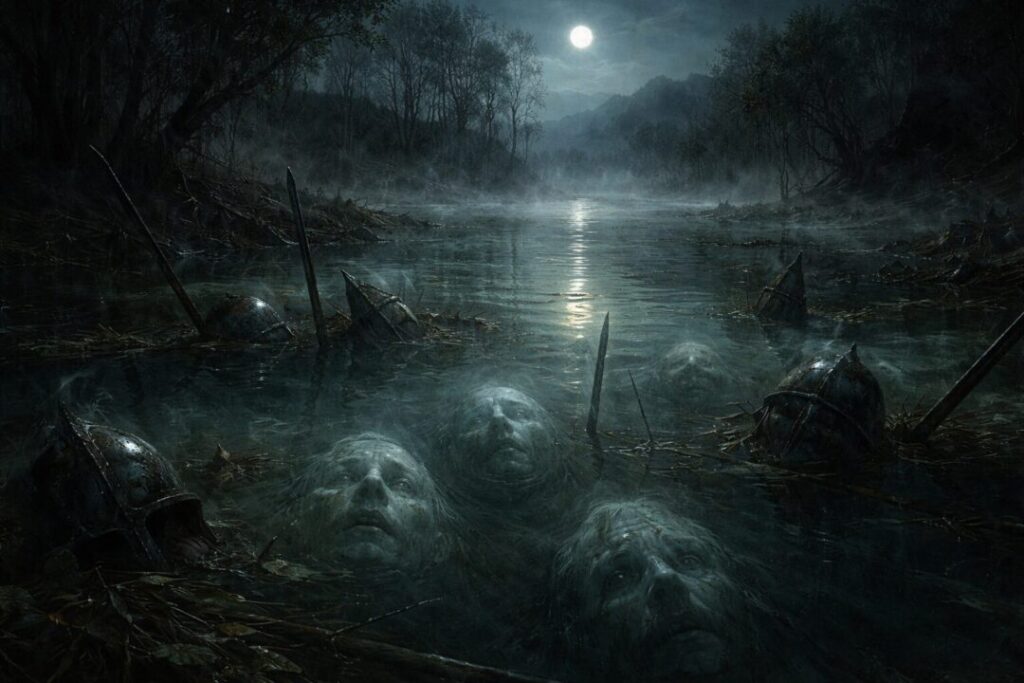
The Dead Marshes are not simply a battlefield grave. They are a wound in the world. Beneath their dark waters lie the faces of warriors who fell suddenly, violently, and without honor. No burial. No rites. No closure.
Their spirits remain suspended—neither alive nor released.
They do not speak. They do not act. They simply exist, caught in the moment of their death, endlessly replaying a fate that was never resolved.
They are not evil.
They are unfinished.
And that distinction matters.
Oaths That Outlived Death
Some spirits remained because they chose to.
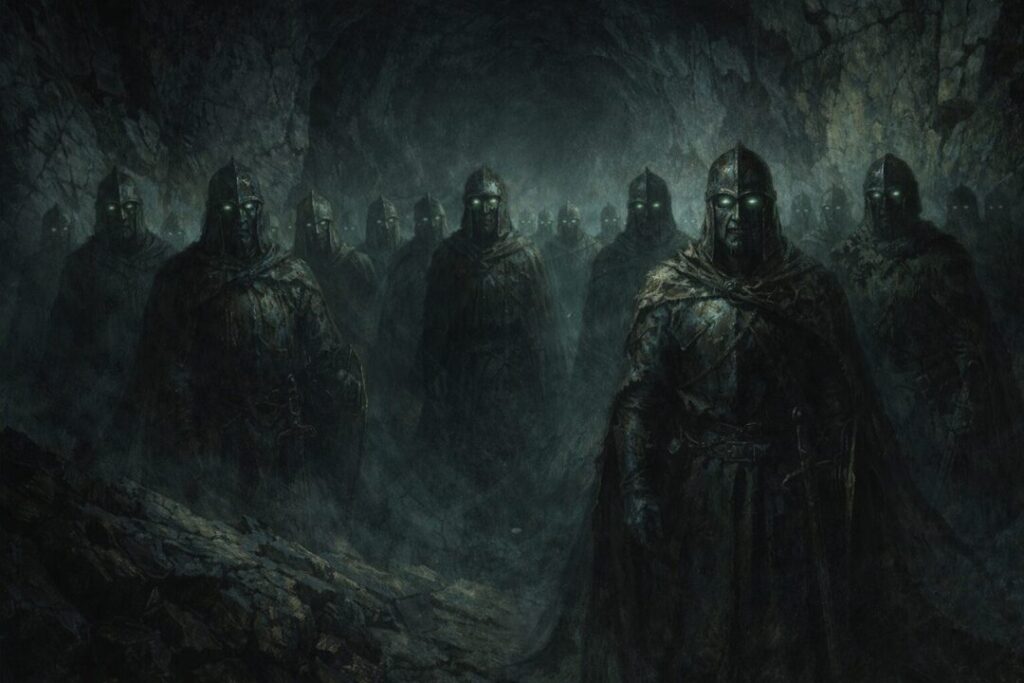
In Middle-earth, an oath is not a casual promise. It is a binding of the soul, sworn not merely before witnesses, but before the moral order of the world itself. To swear falsely is not only dishonorable—it is destabilizing.
Those who swore loyalty and then broke it did more than betray a king. They rejected the structure that gave their lives meaning. Death should have freed them.
Instead, it froze them.
Their lingering was not arbitrary. It was fitting.
They could not leave Middle-earth because they had not completed what they were meant to be. Their fate was fractured at the moment of betrayal, and until that fracture was healed, nothing could move forward.
Not time.
Not death.
Not mercy.
Only fulfillment—not punishment—released them.
This is a crucial pattern. In Tolkien’s world, lingering spirits are rarely freed by suffering. They are freed by completion. What binds them is not pain, but unfinished purpose.
The Horror of Refusing One’s Fate
More terrifying than broken oaths are those who rejected death entirely.
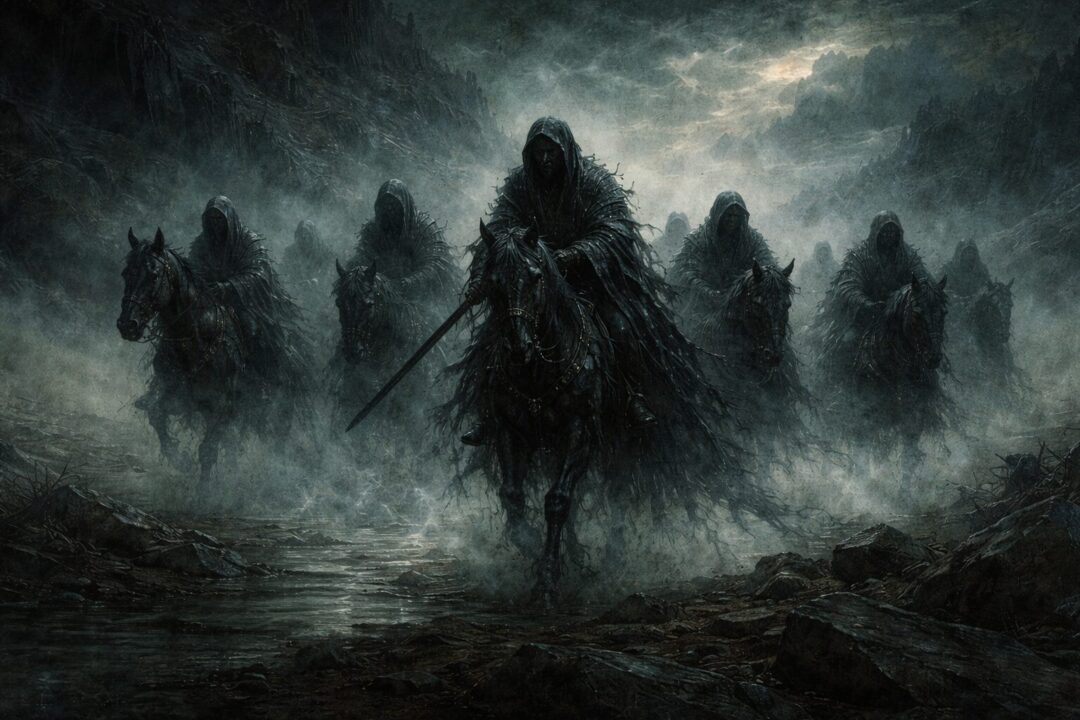
The Ringwraiths were never meant to endure. They were Men, and the Gift of Men—their mortality—was not a flaw. It was their destiny.
By clinging to power through the Rings, they attempted to escape that fate.
They did not succeed.
Instead, they stretched themselves thin across centuries, becoming shadows of what they once were. Their bodies faded. Their wills weakened. Their identities eroded.
They did not escape death.
They postponed it—and paid the price.
Over time, memory replaced self. Fear replaced will. Obedience replaced identity. They became bound not to the world, but to the thing that denied them release.
In Tolkien’s moral universe, this is among the greatest tragedies: not dying too soon, but not dying when one should.
The Ringwraiths linger not because they are strong, but because they are diminished beyond release. Their existence is not victory over death—it is decay without end.
Spirits Bound by Design
Not all lingering spirits are the result of failure or corruption.
Some were never meant to leave Middle-earth at all.
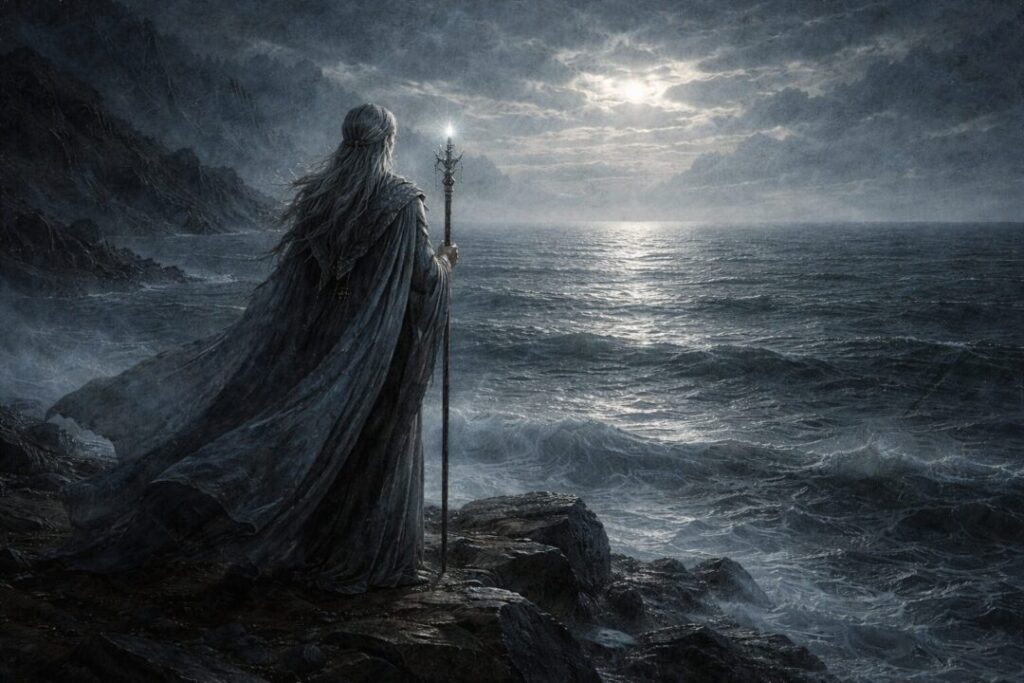
Elves are bound to the world until its end. Even when they die, their spirits remain connected to Arda, returning to life rather than passing beyond it. This is not a punishment, but it is not a gift without cost.
As ages pass, the world changes.
The seas move.
The lands diminish.
The dominion of Elves fades.
And they remain.
Their fading is not physical—it is spiritual. The world grows heavy around them. Joy becomes memory. Wonder becomes nostalgia. Eventually, most choose to depart, sailing west not because they are defeated, but because they no longer belong.
Those who remain do so knowingly.
And that knowledge is heavy.
They linger not because they are trapped, but because they are faithful—to places, to memories, to a world that is slowly passing beyond them.
A World Crowded With Echoes
By the Third Age, Middle-earth has become crowded with remnants of earlier ages.
Old evils are not fully gone. Ancient powers are diminished but present. Spirits haunt rivers, marshes, ruins, and forgotten roads. Even when unseen, they press upon the living.
This is why the world feels fragile.
Why courage feels costly.
Why hope feels earned.
Why victory always carries sorrow.
Middle-earth is not saved by erasing the past.
It is saved by acknowledging it—by allowing things to end when their time has come.
Lingering spirits are symptoms of imbalance. Each one represents something that should have concluded but did not: a life interrupted, an oath broken, a death denied, a destiny refused.
Why Letting Go Matters
The central lesson is quiet, but relentless.
Refusing one’s proper end damages the world.
Those who cling—to power, to oaths, to fear—become distortions. They weigh upon the land. They slow healing. They turn memory into burden.
Those who accept loss, however painful, restore balance.
This is why release is portrayed not as defeat, but as completion. It is why the passing of ancient powers feels sad, but necessary. Why endings in Middle-earth are rarely triumphant, but always meaningful.
Some spirits could never leave Middle-earth because they would not—or could not—let go.
And until they did, neither could the world.
That is the quiet tragedy beneath the songs and stories: not that death exists, but that sometimes, it is denied.
And when it is, Middle-earth remembers.