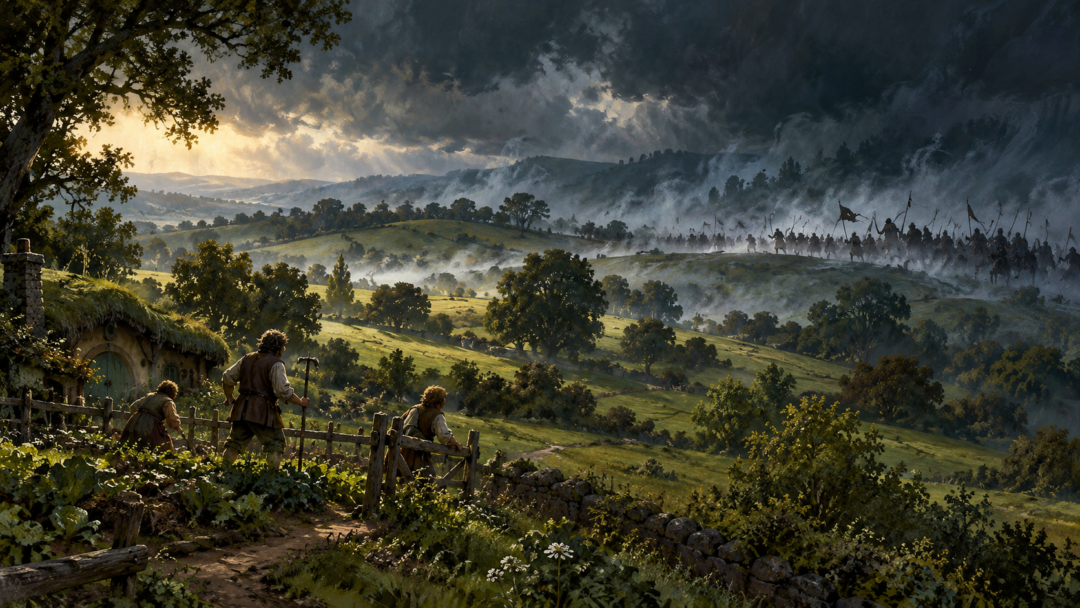
The Shire is remembered for its peaceful hills, comfortable hobbit-holes, and inhabitants who generally preferred a good meal to an adventure. Yet in the Northfarthing, a place called Greenfields carried the memory of something decidedly un-Hobbit-like: a battle against invading Orcs.
Long before Frodo Baggins carried the One Ring out of the Shire, Hobbits had already faced an enemy from the wider world. Their defender was Bandobras Took, better known as Bullroarer, whose extraordinary victory became one of the most memorable stories in Hobbit history.
The tale is famous for its absurd conclusion involving a goblin’s head and the invention of golf. But beneath that joke lies a more significant historical fact.
Greenfields was the site of the only battle fought within the Shire’s borders before the War of the Ring.
For the Northfarthing, this made an otherwise peaceful landscape part of Middle-earth’s larger history. It also preserved an uncomfortable truth: the Shire’s safety had not always been guaranteed.
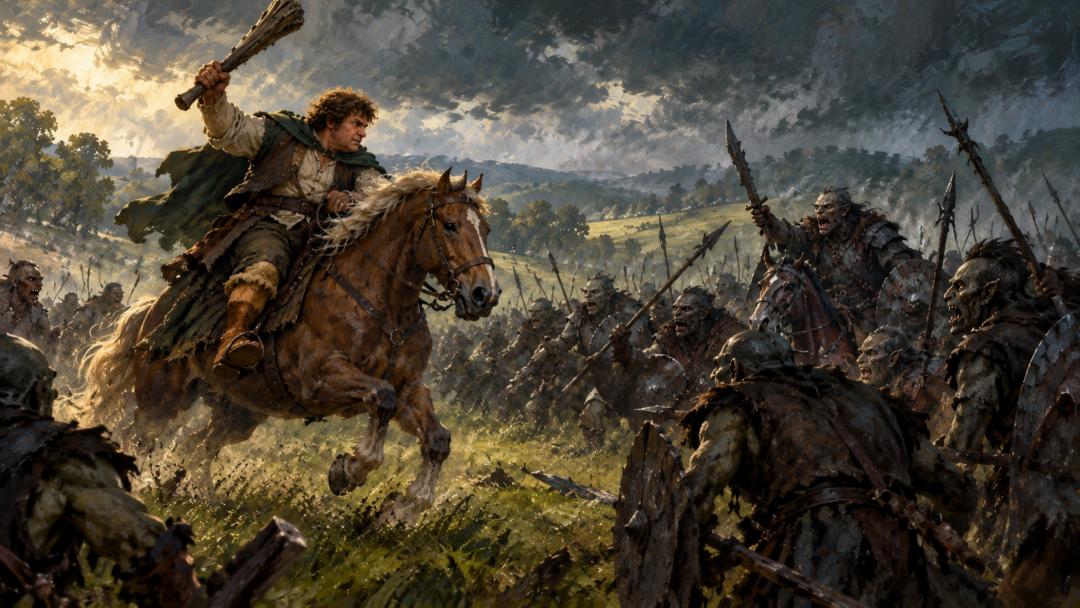
The Battle That Interrupted the Shire’s Peace
The Battle of Greenfields occurred in Third Age 2747, corresponding to the year 1147 in Shire-reckoning.
Its date matters because it places the event nearly two centuries before Bilbo Baggins departed with Thorin Oakenshield’s company in Third Age 2941.
By Bilbo’s time, the battle was already beyond living memory.
The Prologue to The Lord of the Rings, in its section concerning Hobbits, identifies Greenfields as the last battle before the events of the story and the only one previously fought inside the Shire’s boundaries.
This is a remarkable distinction.
The Hobbits had lived in the Shire since Third Age 1601, when Marcho and Blanco crossed the Brandywine and established their settlement. Their history was not entirely free from hardship, but organized warfare was extraordinarily rare within their homeland.
The Prologue also explains that Hobbits had once needed to defend themselves in a dangerous world. By Bilbo’s generation, however, such struggles seemed like ancient history.
Greenfields therefore occupied an unusual position.
It belonged to a violent past that ordinary Hobbits no longer experienced, yet it remained important enough to survive in their historical record.
The battle’s location made that memory particularly meaningful for the Northfarthing.
Why the Northfarthing Was More Than a Background Location
The Northfarthing was the northern quarter of the Shire, one of the four traditional divisions of Hobbit territory.
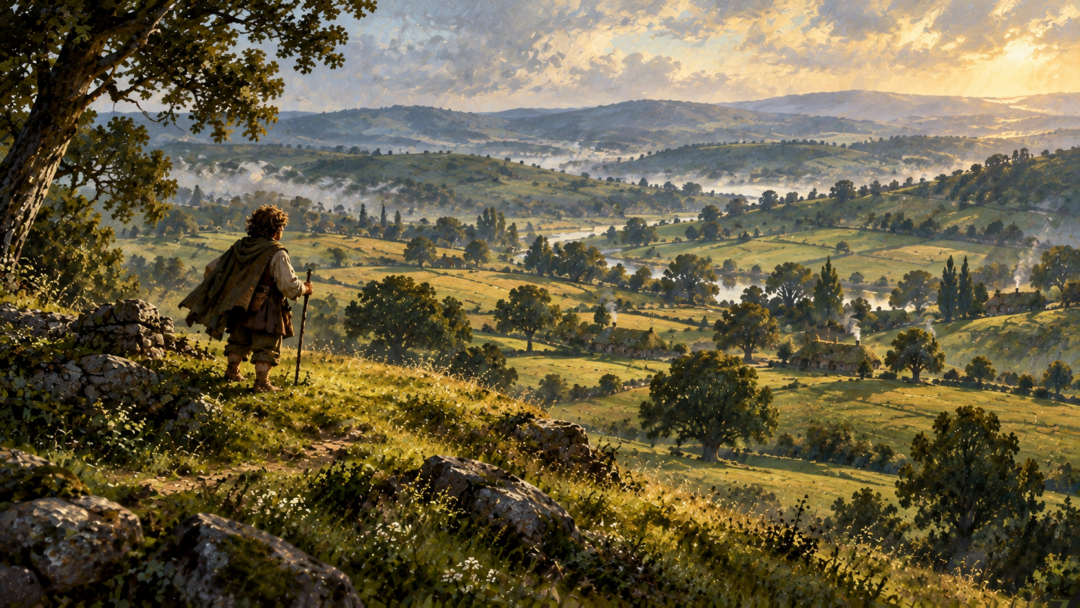
Greenfields lay within this region, in the northern part of a country more commonly associated with agriculture, villages, and quiet domestic life.
The location was not merely a convenient setting for a heroic story.
It established that the dangers troubling the lands beyond the Shire could reach directly into Hobbit territory.
According to Appendix B of The Lord of the Rings, Orcs began invading Eriador again in Third Age 2740. Seven years later, an Orc-band entered the Northfarthing and was defeated by Bandobras Took.
The attackers came from Mount Gram, a northern stronghold associated with the Orcs.
The Battle of Greenfields was therefore connected to a broader period of unrest in Eriador rather than being an entirely isolated encounter.
This distinction changes how the battle should be understood.
The Shire was not an independent world separated from the troubles of Middle-earth. It existed within the same geography and history as the northern kingdoms, the Misty Mountains, and the lands threatened by Orcs.
For the Northfarthing, Greenfields was the place where that wider danger became a local event.
One reasonable interpretation is that the remembered battlefield gave the region a distinctive historical identity: its ordinary landscape had once been the setting of an extraordinary defense.
The surviving texts do not describe a monument, commemorative ceremony, or continuing local tradition at Greenfields. Its importance as a focus of regional memory is therefore an interpretation of the recorded event, not evidence of a documented Northfarthing custom.
Nevertheless, the association between the place and the battle is firmly established.
Bandobras Took: The Hobbit Who Became a Warrior
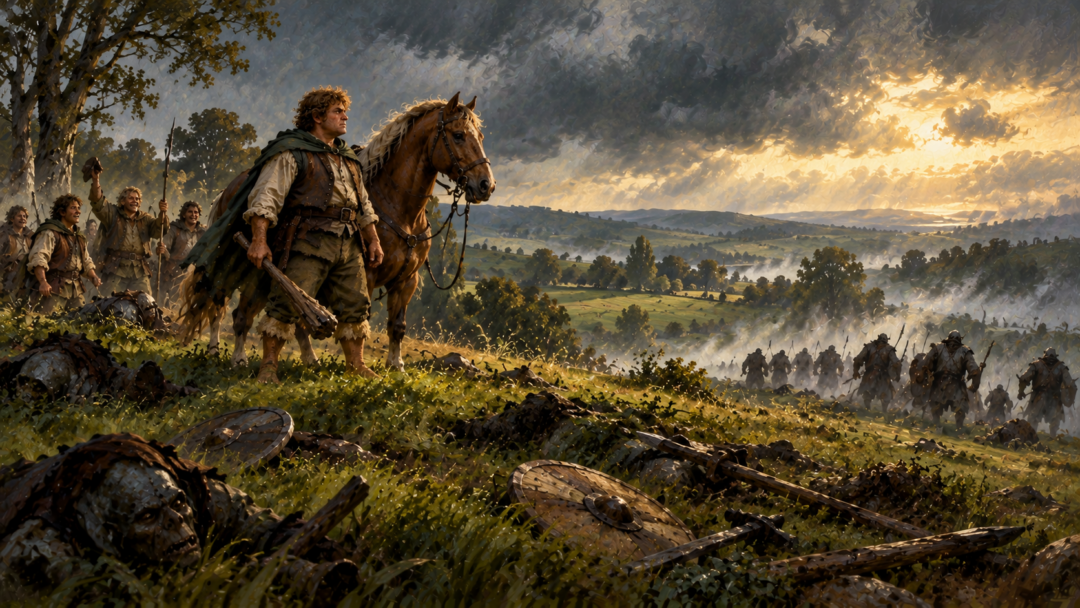
The central figure in the Greenfields story is Bandobras Took, called Bullroarer.
He was an exceptional Hobbit even before his famous victory.
The Prologue to The Lord of the Rings describes him as four feet five inches tall, unusually large for his people and capable of riding a horse.
His physical stature became part of his reputation, but his lasting importance came from what he accomplished.
In The Hobbit, the account of Bullroarer appears during the opening chapter, when Bilbo’s adventurous Took ancestry is being discussed.
The story describes Bandobras charging the goblins of Mount Gram and striking down their king, Golfimbul, with a wooden club.
The blow supposedly sent Golfimbul’s head flying through the air before it disappeared into a rabbit-hole.
The tale then delivers its famous comic conclusion: the battle was won, and golf was invented at the same moment.
The detail is unmistakably characteristic of Hobbit storytelling.
A violent victory becomes the explanation for a familiar recreational pastime.
Yet the humorous ending should not obscure the underlying event.
The Prologue and Appendix B preserve the essential historical claim without depending upon the golf anecdote: Bandobras defeated an Orc invasion of the Northfarthing.
The exact trajectory of Golfimbul’s head belongs to the colorful account in The Hobbit. The battle itself has a firmer place in the Shire’s recorded chronology.
This distinction is essential to understanding Bullroarer’s reputation.
He was not remembered merely because he performed an amusing feat.
He was remembered because he defended the Shire against an invading enemy.
The Difference Between a Family Legend and Historical Memory
The Greenfields story survives in two complementary forms.
In The Hobbit, it appears as a lively account of an extraordinary ancestor.
In The Lord of the Rings, it appears as part of the historical explanation of Hobbit society.
These presentations serve different purposes.
The first makes Bullroarer memorable as a personality. The second establishes his victory as a significant event in the history of the Shire.
Together, they show how a single incident could occupy both family tradition and wider historical memory.
Bullroarer belonged to the Took family, a lineage particularly associated with occasional departures from ordinary Hobbit expectations.
Bilbo’s connection to that family helps explain why the Bullroarer story appears when his own potential for adventure is being introduced.
But Greenfields was not simply a Took family achievement.
The battle was fought within the Shire, against an invasion threatening Hobbit territory.
Its significance therefore extended beyond Bandobras’s ancestry.
The Prologue’s preservation of the event suggests that the battle had become part of the Shire’s collective understanding of its past.
For the Northfarthing, the connection was especially direct.
The wider Shire remembered the warrior. The northern landscape supplied the location of his victory.
That relationship between person and place is what makes Greenfields more than a colorful footnote.
What the Battle Reveals About Hobbit Courage
Hobbits are frequently underestimated because they do not resemble the great warriors of Middle-earth.
They generally lack the physical stature of Men, the military traditions of Gondor, and the ancient martial history of the Elves.
But their peaceful habits should not be mistaken for an inability to resist danger.
The Greenfields battle provides an early example of this distinction.
Bandobras did not become significant through conquest or the pursuit of dominion.
His remembered achievement was the defeat of an invading force.
This places his story within a broader pattern that becomes increasingly important during the War of the Ring.
Hobbit courage often emerges when something familiar and beloved is threatened.
Bilbo discovers unexpected resilience during his journey. Frodo accepts a burden far beyond ordinary Hobbit experience. Sam continues through suffering because loyalty matters more to him than glory.
Merry and Pippin also discover abilities that their earlier lives had given them little reason to imagine.
Bullroarer’s battle should not be treated as an exact prediction of these later events. The circumstances and characters are different.
Nevertheless, the comparison reveals a consistent theme.
The apparent smallness of Hobbits does not determine the limits of their courage.
Greenfields demonstrates that this truth was already present in the Shire’s history long before the Ring-bearer’s journey.
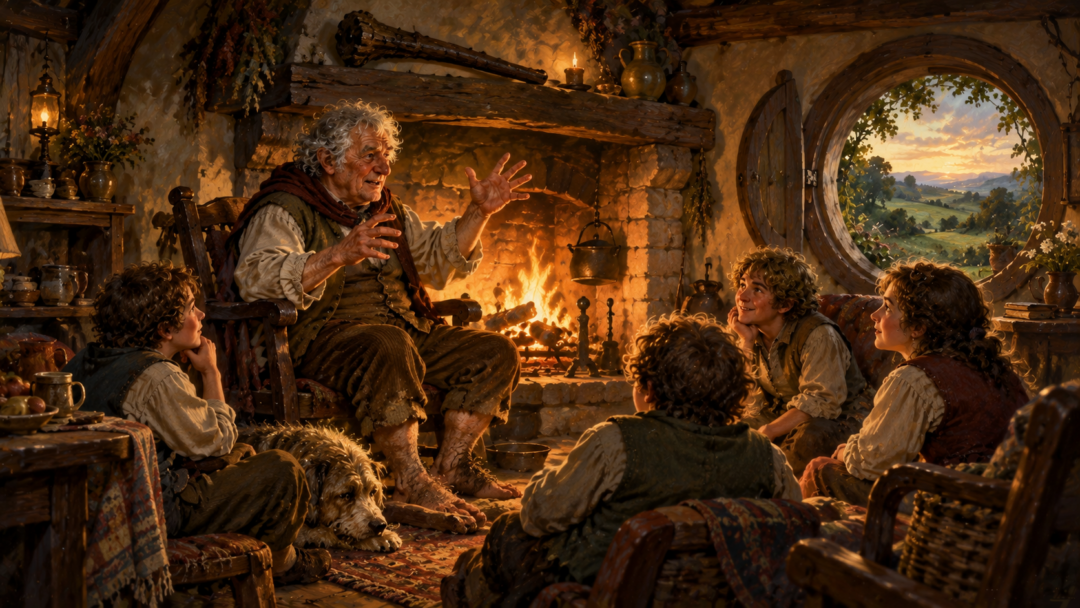
A Peaceful Country That Forgot Its Own Vulnerability
One of the most revealing passages in the Prologue concerns the security enjoyed by Hobbits in Bilbo’s time.
Their homeland had become so peaceful that old dangers seemed distant.
Even wolves descending from the North in terrible winters belonged increasingly to remembered tales.
Weapons still existed in the Shire, but many were treated as trophies or curiosities rather than instruments of immediate necessity.
This detail creates a striking contrast with Greenfields.
A country that once needed armed defenders had gradually become accustomed to safety.
Its inhabitants remembered the existence of danger without necessarily expecting its return.
The Prologue also makes clear that the Hobbits benefited from protection they scarcely understood, particularly through the vigilance of the Rangers in the surrounding lands.
The peace of the Shire was therefore not simply the natural condition of an isolated countryside.
It existed within a larger and more dangerous world.
Greenfields was evidence that the boundary between those worlds could be crossed.
For the Northfarthing, the remembered battle marked an occasion when the Shire’s vulnerability became unmistakable.
The irony is that the victory helped preserve the very peace that made such events seem increasingly remote.
Why the Battle of Bywater Changes the Meaning of Greenfields
The significance of Greenfields becomes even clearer when the War of the Ring reaches its conclusion.
In The Return of the King, the chapter “The Scouring of the Shire” describes the Hobbits’ resistance against the ruffians who have occupied their homeland.
The Battle of Bywater, fought in Shire-reckoning 1419, becomes the next great armed confrontation within the Shire.
The long interval between Greenfields and Bywater emphasizes how exceptional both events were.
They also share an important characteristic.
Neither concerns Hobbits attempting to conquer foreign territory.
Both involve the defense of their own country against hostile intruders.
Yet the two battles belong to different moments in Hobbit history.
At Greenfields, the remembered hero is an unusually large Hobbit whose physical strength dominates the traditional account.
At Bywater, the returning travelers help organize resistance among ordinary Shire-folk.
The later battle reveals courage not merely in an exceptional individual but across a community forced to defend itself.
This comparison gives Greenfields a deeper retrospective significance.
Bullroarer was not the last Hobbit capable of confronting a dangerous enemy.
He was an earlier example of a quality that the Shire would need again.
The Real Legacy of Greenfields
The surviving accounts do not tell us exactly how later Northfarthing inhabitants spoke about Greenfields.
They do not describe memorial stones, preserved weapons from the battle, or annual gatherings celebrating Bullroarer’s victory.
Inventing such details would make the story more elaborate, but not more faithful to the evidence.
What can be said is more restrained and, in some ways, more interesting.
The place was remembered by name.
The battle was assigned a date.
Its principal defender was identified.
Its outcome remained part of the Shire’s historical account.
And its exceptional status survived across generations.
That is already a substantial legacy.
Greenfields gave the Northfarthing a remembered connection to the struggles of the wider world. It showed that even a peaceful Hobbit region had once stood directly in the path of an Orc invasion.
The famous golf anecdote added humor and personality to the story, but it did not create the battle’s historical importance.
That importance rested on the defense of the Shire itself.
The deeper meaning of Greenfields is therefore not that Hobbits once produced an unusually formidable warrior.
It is that their peaceful homeland had a history worth defending, and that its inhabitants had proved capable of defending it.
Long before the Scouring of the Shire, the Northfarthing had already supplied an example of Hobbit courage.
And long after the immediate danger had passed, the name Greenfields remained attached to the moment when the wider world’s violence reached the Shire—and was turned back.
Sources & Notes
- Tolkien Gateway — Battle of Greenfields. https://tolkiengateway.net/wiki/Battle_of_Greenfields
- Tolkien Gateway — Bandobras Took. https://tolkiengateway.net/wiki/Bandobras_Took
- Tolkien Gateway — Northfarthing. https://tolkiengateway.net/wiki/Northfarthing
Primary text: The Hobbit, “An Unexpected Party”; The Lord of the Rings, Prologue and Appendix B. These references identify the battle, defender, and northern location. Regional memory is an interpretation; no monument or commemorative custom is attested.