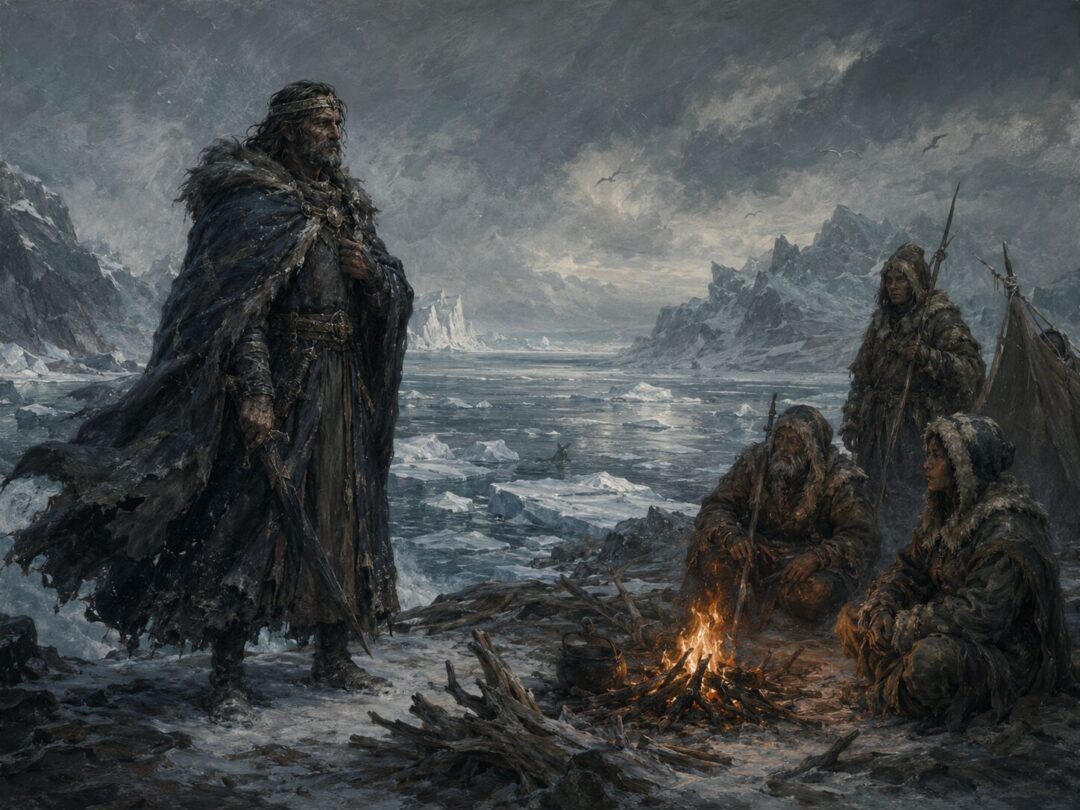
The story begins with a king, a ring, and a frozen shore.
Arvedui, last king of Arthedain, flees north after the fall of Fornost. Behind him lies the ruin of the North-kingdom; before him lies the Icebay of Forochel, a place so hostile to southern eyes that survival itself seems almost impossible. Yet people already live there. The Lossoth, the Snowmen of Forochel, know the ice, the cold, the hunger, and the long patience required by that land.
This is the hidden irony of the tale: Arvedui possesses royal blood, ancient heirlooms, the memory of Númenor, and the authority of a vanishing kingdom. The Lossoth possess none of those things. Yet when the test comes, they understand the world better than he does.
Their survival is not treated as glory in the usual heroic sense. It is quieter than that. They endure because they accept the limits of their environment. Arvedui dies because, at the crucial moment, he trusts rescue, rank, and seafaring confidence over the counsel of people who actually know where he is.
The Snowmen at the Edge of the Map
The Lossoth appear briefly in the history of the North-kingdom, but that brief appearance matters. They live in the far north, around the Icebay of Forochel, beyond the settled lands familiar to the Dúnedain. The texts do not give them long genealogies, royal houses, or elaborate political histories. They are described from outside, as a people of snow and cold, strange to those of warmer lands.
That outside perspective is important. We are not given the Lossoth as they might describe themselves. We see them at the edge of a Númenórean story: the fall of Arthedain, the flight of Arvedui, the loss of the palantíri, and the passing of the Ring of Barahir into unexpected hands.
Yet the Lossoth are not merely background figures. They shelter Arvedui and his companions. They help men who have come among them as refugees. They understand that winter in Forochel is not an inconvenience but a power. They know that ice, wind, and timing decide whether a man lives or dies.
In a world filled with kings, wizards, rings, and ancient bloodlines, the Lossoth represent another kind of wisdom: local knowledge, earned by living where others only pass through.
Arvedui’s Greatness Could Not Save Him
Arvedui is not a foolish man in the simple sense. His name means “last-king,” a name given with prophetic significance. He is a descendant of Elendil. He is connected by marriage to Gondor. He carries heirlooms of immense symbolic weight. When Arthedain falls, he is not merely one fugitive among many; he is the remnant of a kingdom.
That is what makes his end so tragic. His identity belongs to a grand historical pattern, but his death comes through a practical failure: he does not heed the people who understand the ice.
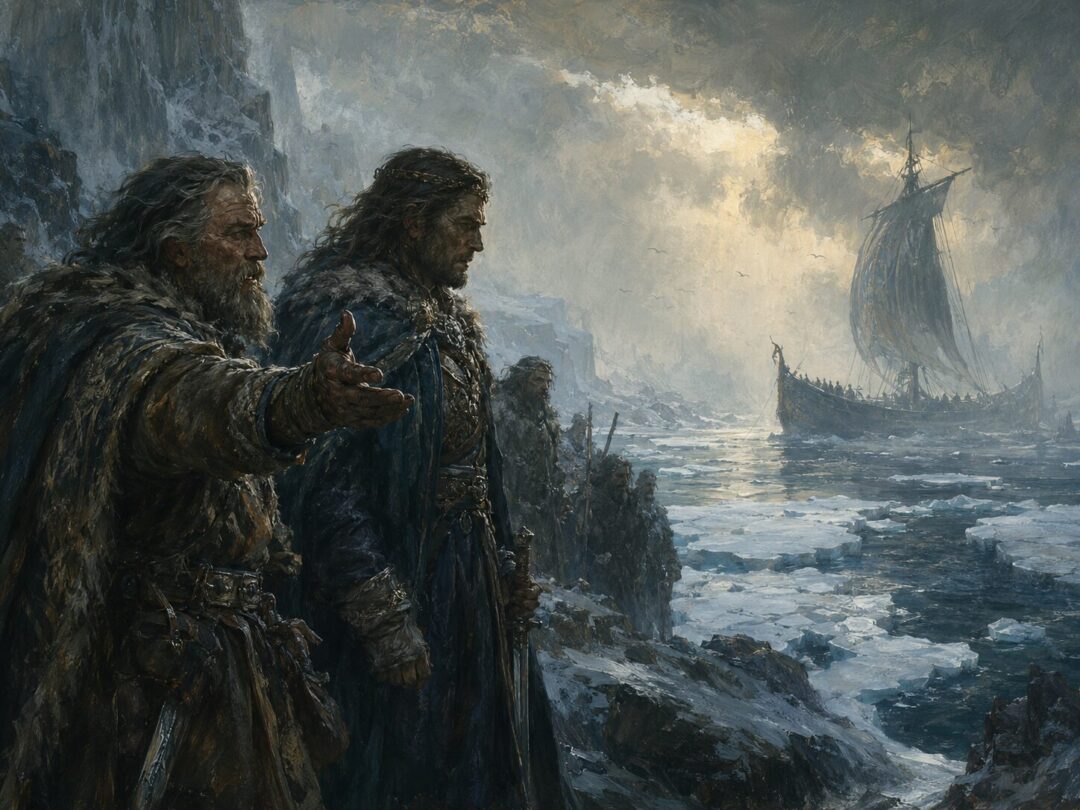
When Círdan sends a ship to rescue him, the ship’s arrival seems like deliverance. To a Dúnadan king, and perhaps to Elven mariners as well, a ship is a sign of hope. It is movement, escape, civilization, mastery over distance. The peoples descended from Númenor have deep associations with the sea. Their greatest ancestors came over the water from the Downfall. Their histories are shaped by voyages, havens, fleets, and western memory.
But to the Lossoth, the ship is not a symbol of salvation. It is a danger in the wrong season. Their chief warns Arvedui not to board it, calling it a “sea-monster” in the account preserved in the appendices. The phrase is easy to read as ignorance, but the story proves otherwise. The Lossoth do not misunderstand danger. They recognize it more clearly than the king does.
Their warning is practical: wait. Let the ship bring food and needed goods. Stay until the season changes. The cold is still too strong, the ice is still breaking, and the Witch-king’s power is imagined by them as lingering in the deadly winter. Tolkien never fully explains how literally we should take their belief about the Witch-king’s reach in the weather, so it is safest to treat it as the Lossoth’s own interpretation of a real peril: in that moment, winter itself is deadly.
Arvedui thanks them, but he does not obey.
The Wisdom of Waiting
The great contrast between Arvedui and the Lossoth is not courage versus cowardice. It is urgency versus endurance.
Arvedui has reasons to leave. His kingdom has fallen. His son Aranarth is elsewhere. The fate of the royal line matters. He carries objects of great importance, including the palantíri of Annúminas and Amon Sûl. Remaining in Forochel must have felt like delay at the edge of oblivion.
But the Lossoth understand that survival sometimes depends on refusing the dramatic exit. Their wisdom is not heroic in a song-worthy way. It is seasonal. It says: not yet. The ice has not finished breaking. The cold has not released its grip. The safe-looking path is unsafe because the land has not permitted it yet.
This is one of the most overlooked moral patterns in Middle-earth. The powerful often act as if the world can be mastered by will, lineage, or command. The wise learn to read limits. Gandalf does not force every door. Faramir resists the logic of taking what seems useful. Frodo’s mercy preserves possibilities no strategy could foresee. In the north, the Lossoth survive because they do not mistake desire for permission.
Arvedui wants rescue to mean rescue now. The Lossoth know that rescue at the wrong time can become death.
A Númenórean Blind Spot
The title of this tragedy is not that “Númenóreans were stupid” or that the Dúnedain lacked wisdom. That would be too simple and not lore-accurate. The Dúnedain preserved learning, law, memory, and resistance to Sauron across long ages. Círdan’s attempt to rescue Arvedui is generous and noble. The heirs of Númenor are not mocked by the story.
But the tale does reveal a blind spot that often haunts Númenórean history: the temptation to believe that high inheritance can overcome the conditions of the world.
Númenor itself fell because its rulers came to desire what was not given to Men: escape from death, possession of the Undying Lands, and a mastery beyond mortal limits. That ancient pattern echoes faintly in many later stories, though Arvedui’s situation is far humbler and more sympathetic. He is not Ar-Pharazôn sailing in pride against the West. He is a desperate king trying to survive.
Still, the contrast is real. Arvedui’s world is one of titles, claims, ships, heirlooms, and great histories. The Lossoth’s world is one of weather, ice, food, shelter, and timing. In Forochel, the second kind of knowledge matters more.
The king is not destroyed because he is evil. He is destroyed because he is out of place and fails to submit to those who are not.
The Ring of Barahir in Strange Hands
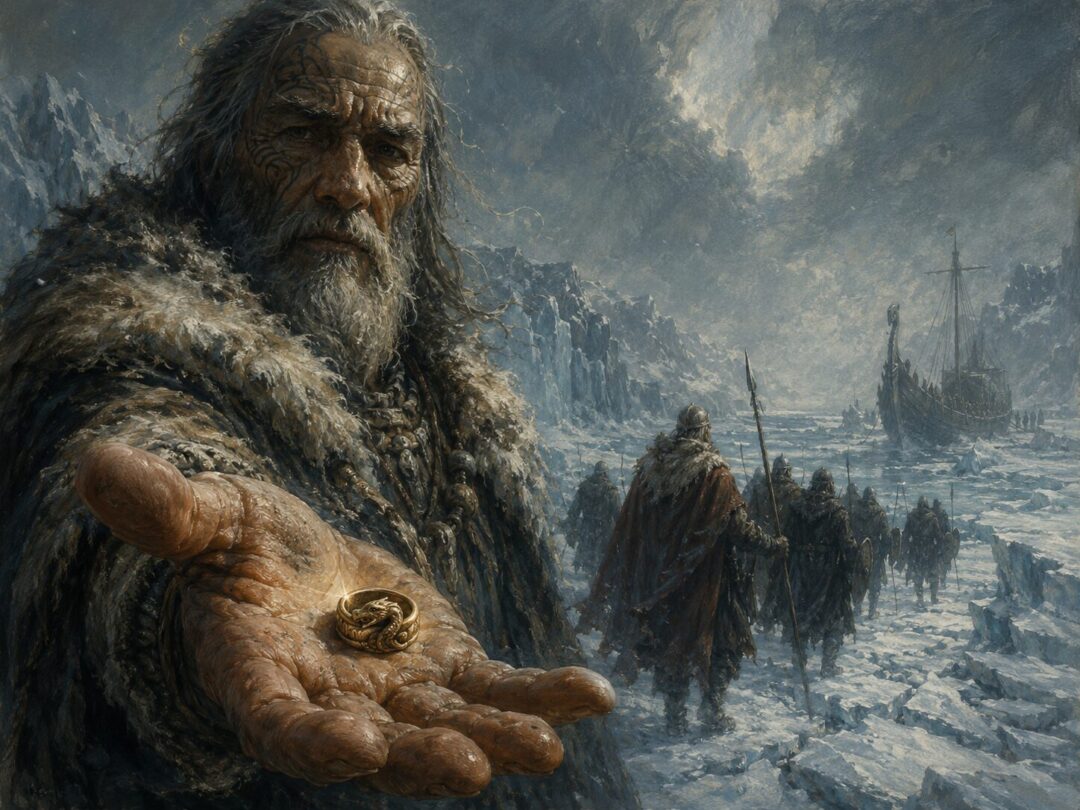
Before leaving, Arvedui gives the chief of the Lossoth the Ring of Barahir. This is one of the most remarkable transfers of an heirloom in the Third Age.
The Ring of Barahir is not one of the Rings of Power. It is older in memory than many kingdoms of Men, associated with Finrod Felagund, Barahir, Beren, and the line that eventually leads to the Númenórean kings and Aragorn. In royal terms, it is almost beyond price.
To the Lossoth, its value is not obvious in the same way. Arvedui himself explains that it is worth more than they can reckon and tells them that his kin will ransom it if they ever need aid. That detail matters. He does not simply pay them with a trinket. He gives them a claim upon his people.
The later recovery of the ring by the Rangers of the North confirms that the exchange was remembered. The Lossoth are not erased from the heirloom’s history. For a time, one of the greatest tokens of the House of Isildur rests outside the keeping of kings, held by the people who sheltered the last king when his own world collapsed.
There is a quiet justice in that. The ring survives because Arvedui gives it away. The royal line survives through Aranarth, not through Arvedui’s escape. The Lossoth, who could not use the ring as a symbol of Númenórean legitimacy, preserve its story by outliving the catastrophe.
The Loss of the Seeing-Stones
Arvedui’s death also takes with it two palantíri: the stones of Annúminas and Amon Sûl. These were not ordinary treasures. The seeing-stones were among the great instruments of the Dúnedain, bound to the communication and governance of their realms.
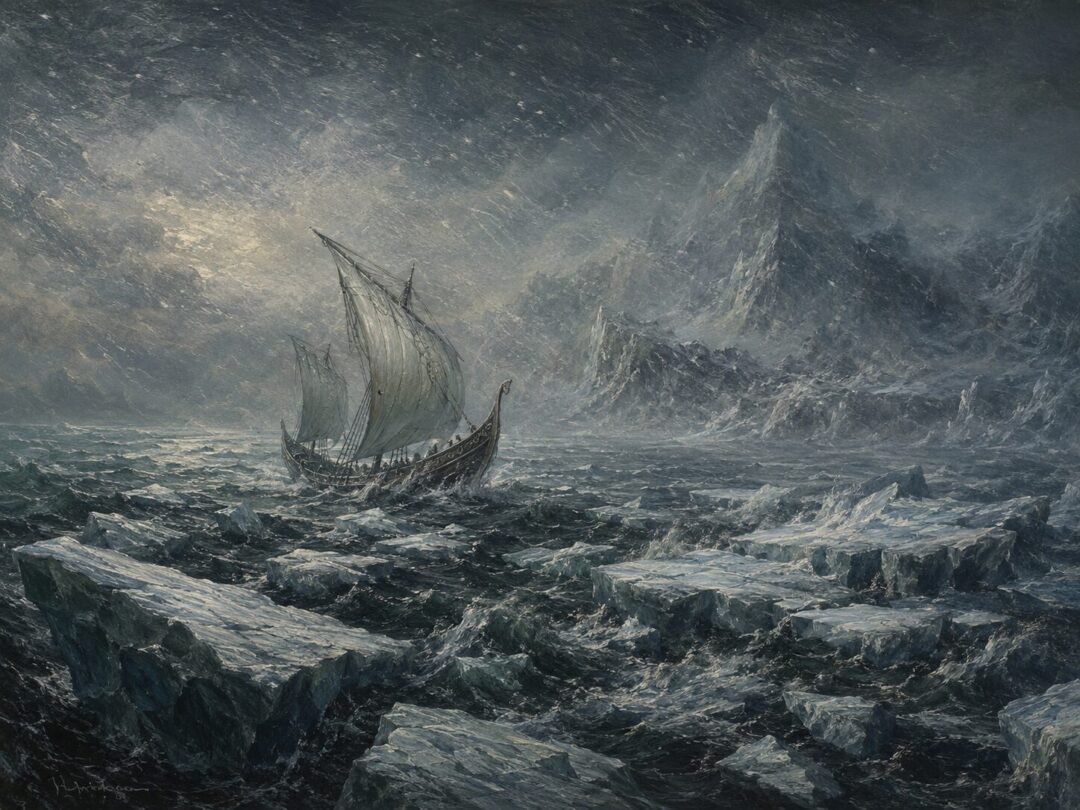
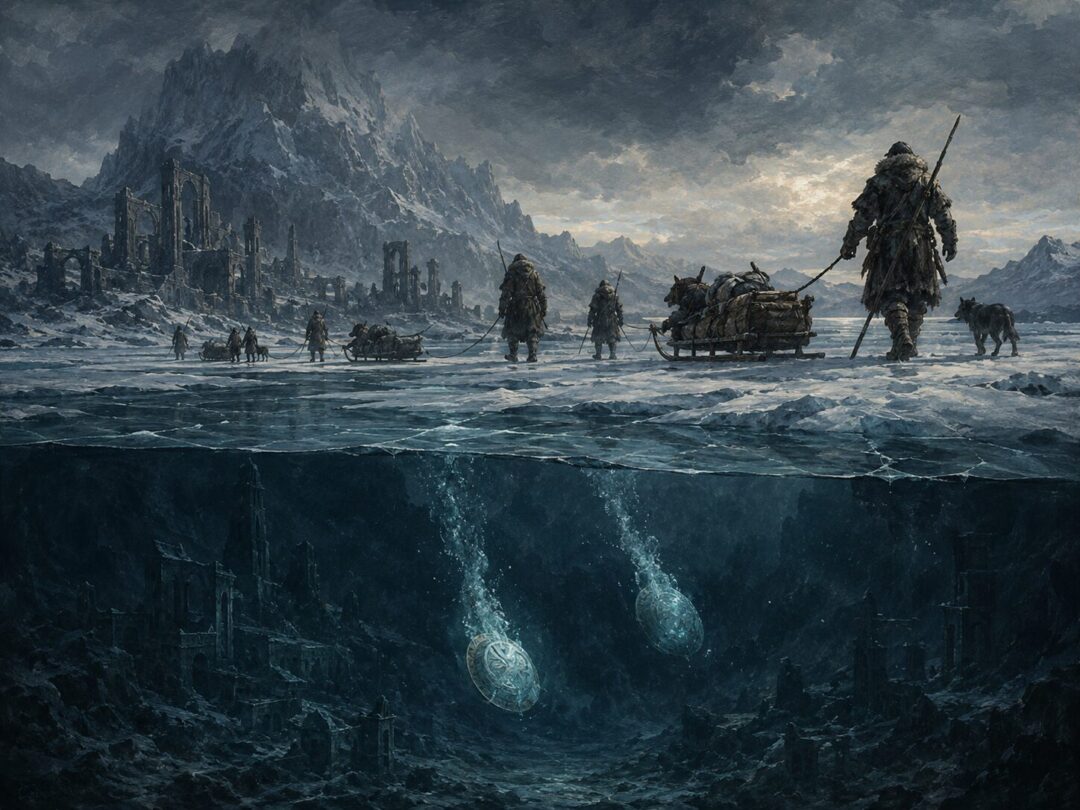
Their loss in the Icebay of Forochel is symbolically powerful. The devices of long sight vanish beneath the waters because the immediate world was misread. Instruments meant to see far could not compensate for failing to see near.
This is not stated as a moral lesson in the text, but it is a strong reading of the episode. Arvedui carries objects associated with memory, rule, and vision. The Lossoth carry knowledge of the ice underfoot. In that moment, the second is more useful than the first.
Middle-earth often treats ancient artifacts with awe, but not as guarantees. A sword may be reforged, but someone must still choose rightly. A ring may signify lineage, but it cannot make a man wise. A seeing-stone may look across distance, but it does not teach humility.
The ship breaks. The king drowns. The stones are lost. The Snowmen remain.
Survival Without Romance
It would be easy to romanticize the Lossoth as perfectly wise “noble outsiders,” but the text does not support turning them into an idealized people. We know very little about their inner culture. We should not invent customs, beliefs, or virtues beyond what the account gives.
What we can say is narrower and stronger: in the one story where they appear, they are right about the danger. They give shelter. They offer practical counsel. They survive in a place that outsiders misunderstand.
That is enough.
Their strength lies not in superiority but in fit. They belong to Forochel. Arvedui does not. They know how to wait out the cold. He cannot bring himself to wait. They understand that a ship can be a monster if it comes at the wrong time. He sees it as deliverance.
The difference is not intelligence alone. It is relationship to place.
The World the High Could Not Read
The fall of Arthedain is usually remembered as a political and military disaster: Angmar triumphs, Fornost falls, the North-kingdom ends, and the Dúnedain become a hidden people. But the episode in Forochel adds another layer. It shows that the end of a kingdom can also be the end of a worldview.
Arvedui comes from a tradition that measures time in dynasties and inheritance. The Lossoth measure time in seasons. Arvedui’s hope arrives in the form of a ship from the Grey Havens. The Lossoth ask whether the ice is ready. Arvedui looks toward escape. The Lossoth look at the bay.
And the bay decides.
This is why the Lossoth survived a world the Númenóreans could not understand. Not because they had greater power, greater lineage, or greater destiny, but because they accepted the world before them. They did not demand that Forochel become something else. They lived according to its terms.
In Middle-earth, that kind of humility is often the difference between endurance and ruin. The proud try to bend the world to the shape of their fear or desire. The wise listen for the hidden rule beneath the moment.
On the frozen shore of Forochel, the rule was simple.
Wait.
Arvedui did not. The Lossoth did.
Sources & Notes
- Tolkien Gateway, “Lossoth” — summarizes the Snowmen of Forochel, their sheltering of Arvedui, and their warning against taking ship before the winter had passed. https://tolkiengateway.net/wiki/Lossoth
- Tolkien Gateway, “Arvedui” — details Arvedui’s flight after the fall of Arthedain, his refuge among the Lossoth, the gift of the Ring of Barahir, and his death when Círdan’s rescue ship was wrecked. https://tolkiengateway.net/wiki/Arvedui
- Tolkien Gateway, “Forochel” — gives the geography and harsh northern setting of the Icebay of Forochel, grounding the article’s focus on local survival knowledge. https://tolkiengateway.net/wiki/Forochel
- Encyclopedia of Arda, “Lossoth” — independently describes the Lossoth as the Snowmen of Forochel and notes their role in aiding Arvedui at the end of the North-kingdom. https://encyclopedia-of-arda.com/l/lossoth.php
Sources added for Lossoth/Arvedui/Forochel context and public-reference verification.