This post may contain affiliate links, and I may earn a small commission at no extra cost to you. Learn more.
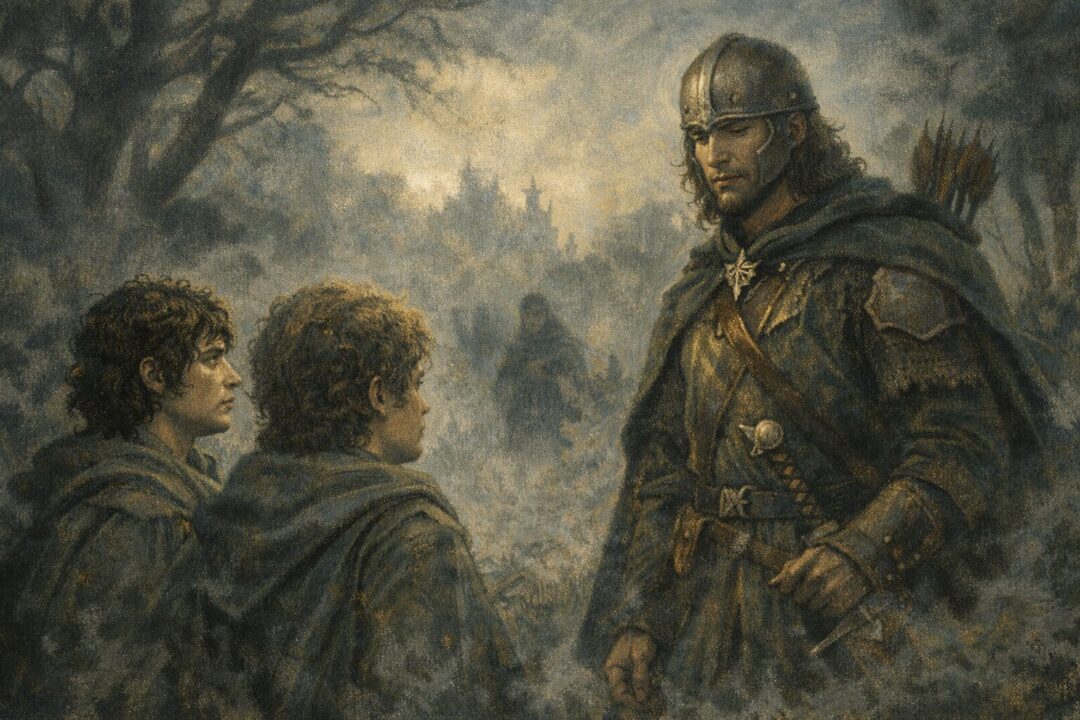
There’s a moment in The Two Towers that doesn’t look important at first.
No clash of armies.
No ancient prophecy fulfilled.
No dramatic music swelling behind a heroic stand.
Just a quiet conversation in the woods.
A man listening instead of demanding.
A decision made without ceremony — and without anyone else around to see it.
That moment is Faramir choosing to release Frodo, even after learning that he carries the One Ring.
Most readers reduce this to a simple moral contrast:
Boromir failed.
Faramir succeeded.
But that reading misses something crucial.
The Ring never fully tested Faramir — and not because he was immune to its power, wiser by birth, or morally superior to his brother.
It’s because Faramir understood the test before it ever reached him.
Where Faramir Meets the Ring — and Why That Matters
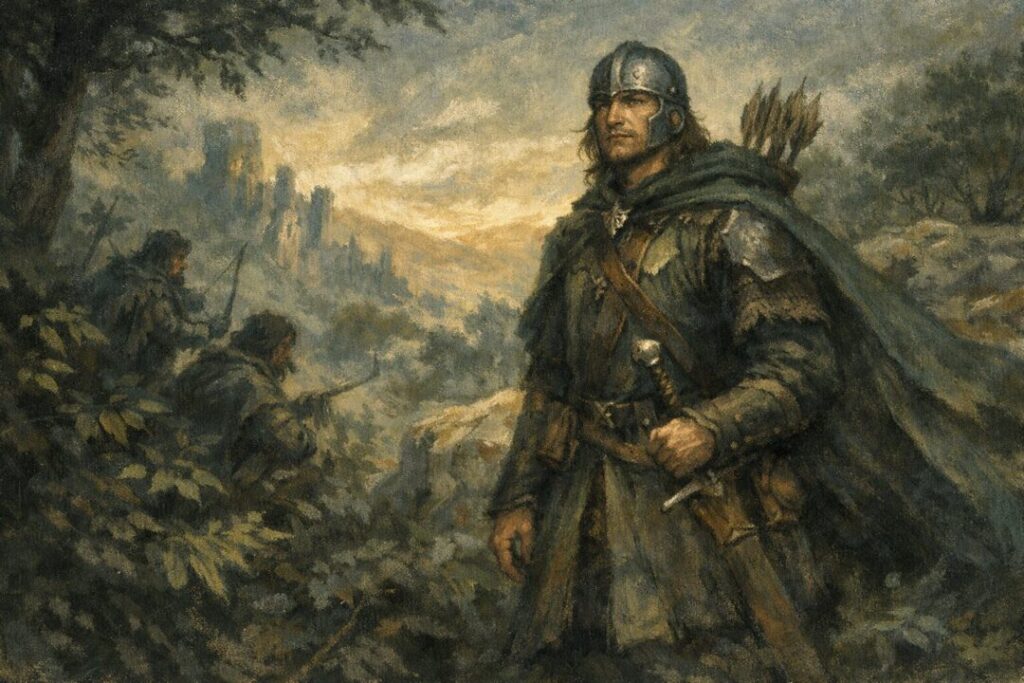
Faramir encounters Frodo in Ithilien, far from councils, armies, and watchful eyes. This matters more than it seems.
There is no pressure from Minas Tirith.
No command from his father.
No desperate crowd demanding salvation at any cost.
The Ring feeds on urgency.
It thrives when people feel cornered — when time is running out, when loss feels inevitable, when power looks like the only remaining option.
Boromir’s temptation grows in exactly that environment.
Gondor is burning. His people are dying. The Enemy is advancing. Boromir believes that strength must answer strength — and the Ring agrees with him. It amplifies that belief, whispering that using it would not be corruption, but duty.
Faramir meets the Ring in stillness.
He hears Frodo’s story instead of cutting it short.
He allows Sam to speak freely, even when Sam says too much.
He watches their fear, their exhaustion, their honesty.
Most importantly, he does not reach.
And in choosing to observe rather than act, Faramir recognizes the danger almost immediately.
“I Would Not Take This Thing…”
When Faramir says that he would not pick up the Ring even if he found it lying by the road, many readers take this as a declaration of inner strength — proof that he is simply better than his brother.
But that isn’t quite right.
Faramir doesn’t say this because he trusts himself.
He says it because he doesn’t.
This is the key difference between the brothers.
Boromir believes he can wield the Ring for good. He believes intention matters more than outcome. He believes that his love for Gondor will shield him from corruption.
Faramir understands that believing this is how the Ring wins.
So instead of testing himself — instead of “just holding it,” justifying curiosity, or imagining limits — he refuses the test entirely.
That isn’t defiance.
It’s foresight.
Why the Ring Doesn’t Press Him Harder
The Ring tempts through relevance.
It whispers most strongly to people who believe they are necessary — pivotal — the one without whom everything will fall apart.
Boromir believes Gondor cannot survive without decisive strength and heroic action.
Faramir believes Gondor must survive without surrendering its soul.
That distinction matters more than courage.
To the Ring, Boromir is promising ground. His fear, love, pride, and sense of responsibility create pressure points the Ring can exploit.
Faramir offers fewer openings.
He does not imagine himself as the answer to the war. He does not frame the conflict around his own will or importance. And because of that, the Ring finds little to grip.
Not yet.
Denethor, Expectation, and the Shape of the Real Test
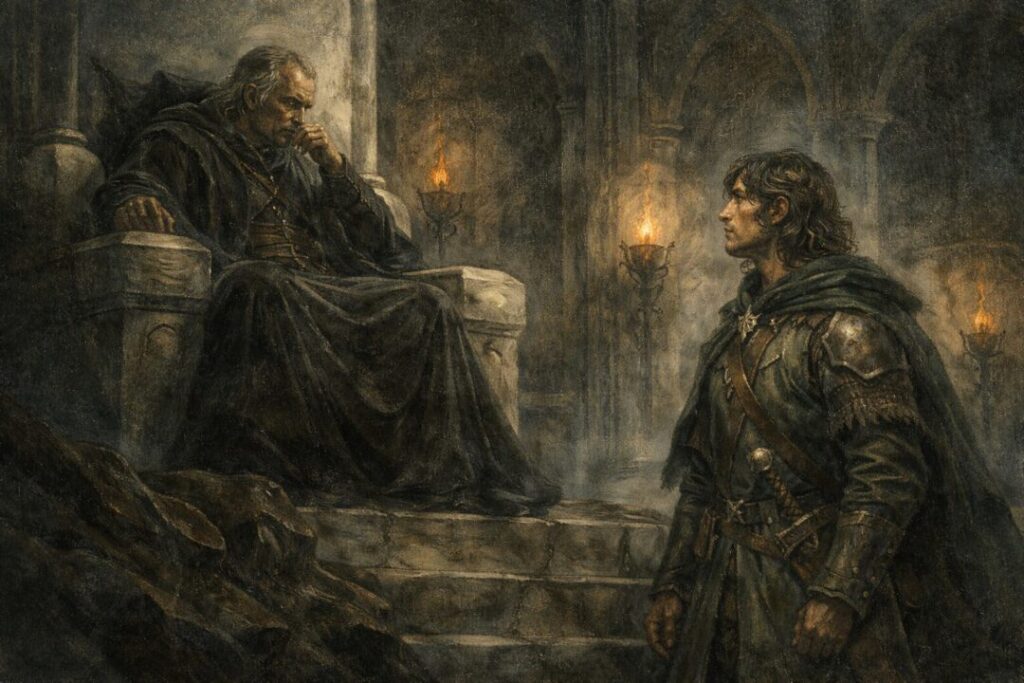
The greatest pressure on Faramir does not come from the Ring at all.
It comes from Denethor.
Faramir grows up knowing he is measured — and found lacking. He is not the son his father wanted. Not the warrior Gondor praises. Not the heir whose confidence fills a room.
Boromir receives admiration without asking.
Faramir earns survival by restraint.
And yet, when given the chance to finally prove his worth — to bring his father the weapon that could win the war — Faramir lets it go.
That decision costs him everything he has ever wanted.
Approval.
Recognition.
Love freely given.
Which tells us something essential:
Faramir’s resistance is not effortless.
It is expensive.
Boromir Falls Loudly. Faramir Passes Quietly.
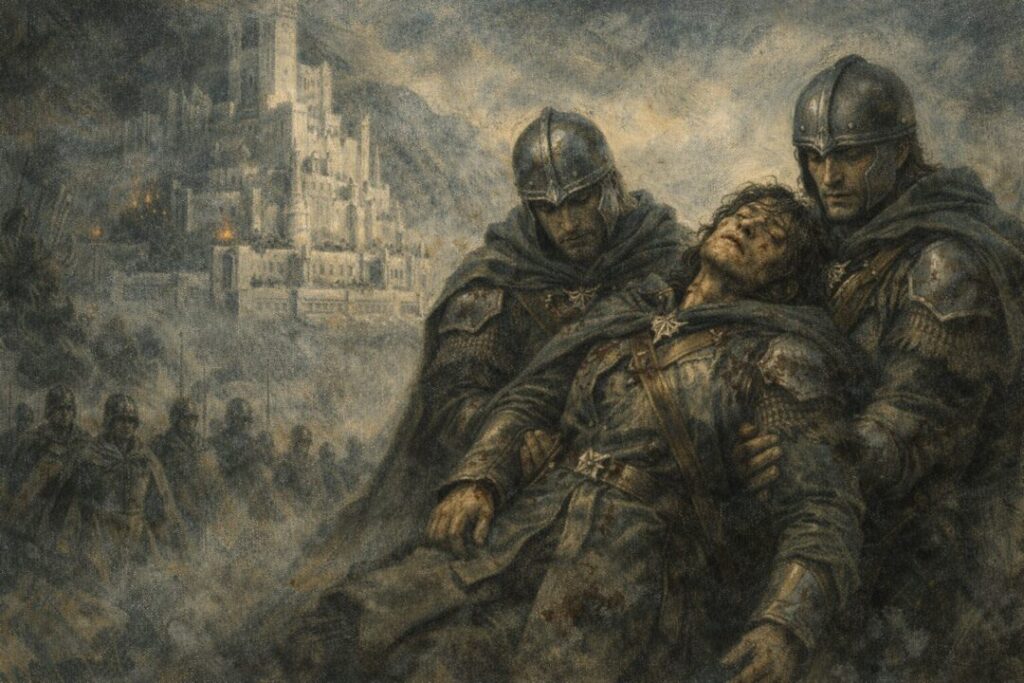
Boromir’s failure is public, violent, and tragic. His fall happens under unbearable pressure, witnessed by friends, and followed by immediate remorse.
Faramir’s success happens in silence.
No one crowns him for it.
No one thanks him.
Most of Middle-earth never even knows it happened.
And that’s exactly why it works.
The Ring wants witnesses.
It wants drama.
It wants the moment where you prove yourself.
Faramir denies it that stage.
Why This Matters to the War of the Ring
If Faramir had taken the Ring, the story would end quickly — and badly.
Not because he is weak, but because the Ring does not corrupt only through cruelty or greed. It corrupts through good intentions, delayed consequences, and the belief that one small compromise can be controlled.
By letting Frodo go, Faramir preserves the only path that can actually destroy the Ring: secrecy, humility, and the refusal to meet power with power.
The same lesson the Wise learned too late in earlier ages.
Faramir’s Invisible Victory
When Faramir later rides to near-certain death defending Gondor, he does so without believing he will be remembered. He expects neither glory nor survival — only that the city must hold as long as it can.
That, more than any battlefield courage, tells us who he is.
Faramir does not win because he resists temptation once.
He wins because he never mistakes power for necessity.
And in a story where the fate of the world hinges on not using the greatest weapon available…
That makes him one of the most important figures in Middle-earth.
Quietly.
Unseen.
And exactly when it matters most.