In Middle-earth, the passing of time is not progress.
It is decline.
Each Age leaves the world a little thinner than before. Wonders fade, memories dim, and skills once considered natural become rare, guarded, or entirely forgotten. Castles crumble into ruins, songs lose verses, and knowledge survives only in fragments. Nowhere is this long retreat more clearly visible than in the making of weapons.
By the time of the War of the Ring, swords are still sharp, shields still hold, and armor still turns aside blows. Men still march to war, and heroes still rise when the world needs them. Yet the greatest blades of that age are not new achievements. They are relics—objects pulled from the deep past, reforged or preserved because no one alive can truly equal the craft that made them.
This is not coincidence.
It is the natural consequence of Middle-earth’s slow fading.
Craft Born Close to Creation
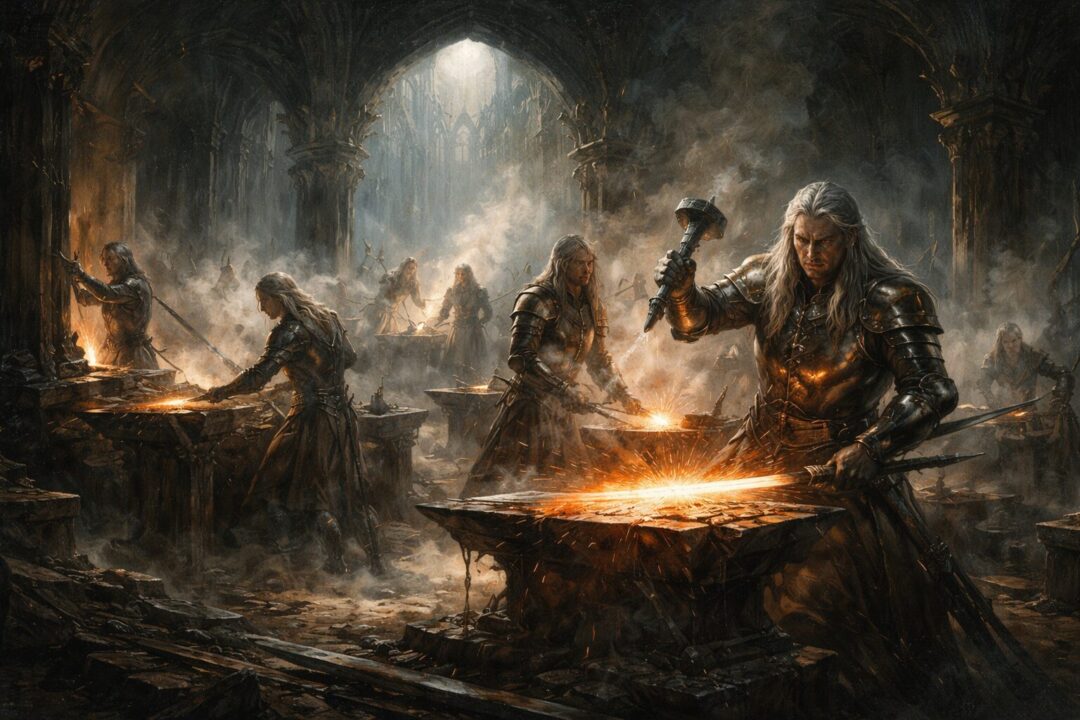
The earliest weapons of Middle-earth were forged in a world still echoing with the Music that shaped it. The First Age was closer to the beginning of all things, when the substance of the world had not yet been worn thin by centuries of use, war, and loss.
Elven smiths of that time worked not only with fire and steel, but with memory, patience, and deep understanding of form and balance. Craft was not separated from thought or intent. To make a blade was not merely to shape metal, but to give it purpose.
Blades forged in places like Gondolin were famed not simply for sharpness or beauty, but for resilience. They were designed to meet other weapons again and again without warping, cracking, or failing. Edge met edge. Steel rang on steel. A sword that bent or shattered was not merely flawed—it was a betrayal of its bearer.
These were not ceremonial objects. They were built for wars that lasted decades, for enemies that did not tire, and for battles where retreat often meant annihilation. The smiths who made them understood this reality intimately.
Their weight mattered.
Their balance mattered.
Their endurance mattered.
A sword was expected to outlive its maker, its wielder, and sometimes even the city that forged it.
War That Demanded Permanence
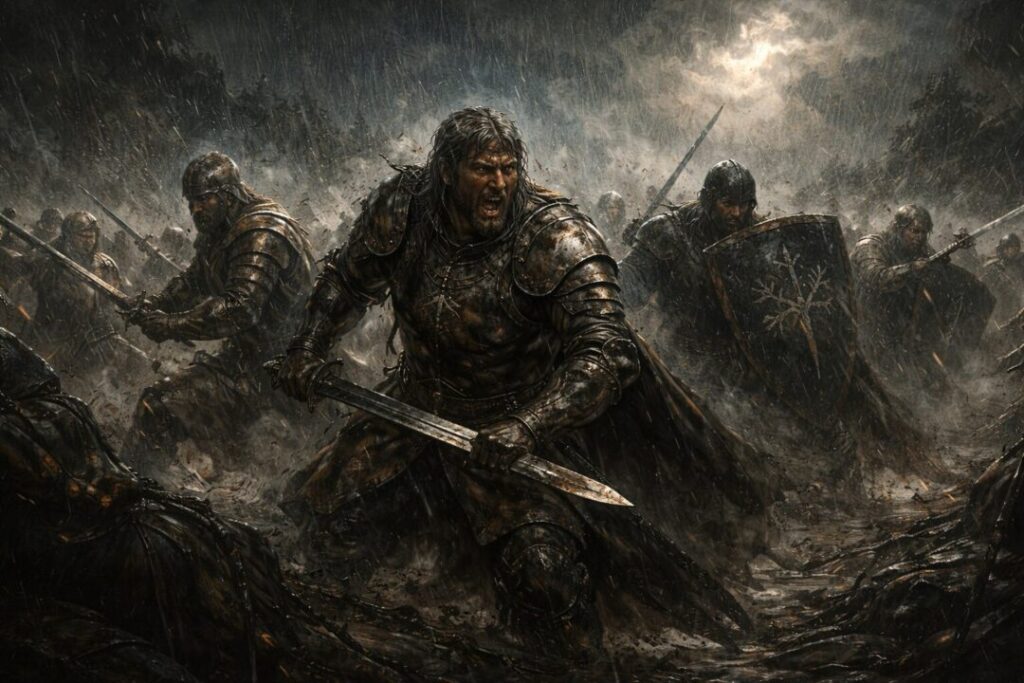
The conflicts of the First Age shaped this philosophy. Battles were not brief campaigns fought for territory or power alone. They were struggles for survival against foes who were ancient, relentless, and often immortal.
When armies faced Morgoth and his hosts, defeat was not a temporary setback. It was extinction. There would be no rebuilding, no peaceful interlude in which to replace lost tools and weapons. Everything had to last.
In such a world, craft evolved toward permanence. Weapons were made to endure the unendurable.
This is why the swords of the First Age feel different even in story and legend. They are not simply tools. They are companions in long suffering—objects shaped by a world that expected pain to be unending.
Númenor and the Height of Men
The Second Age carried much of this tradition forward through the rise of Númenor. Though mortal, the Númenóreans learned from the Eldar and brought extraordinary discipline and ambition to their forges.
Steel from Númenor was dense, resilient, and purpose-built. Númenórean weapons did not favor ornament over function. Even when richly decorated, they were meant to be used—to strike, to block, to endure.
This was the height of human craft in Middle-earth.
Blades from Númenor were made to last centuries, and many did. They survived wars, shipwrecks, and the slow erosion of time itself. Some would pass through countless hands, carried from one generation to the next as both weapon and inheritance.
Yet even at its peak, Númenor stood on borrowed time.
When the island fell, it was not only a political or moral catastrophe. It was a technological and cultural one. The greatest human mastery of weapon-craft vanished beneath the sea.
What remained survived only in fragments, carried east by the Faithful.
The Third Age: Preservation, Not Innovation
By the Third Age, the knowledge of earlier Ages still exists—but it is no longer widespread, and it is rarely advanced.
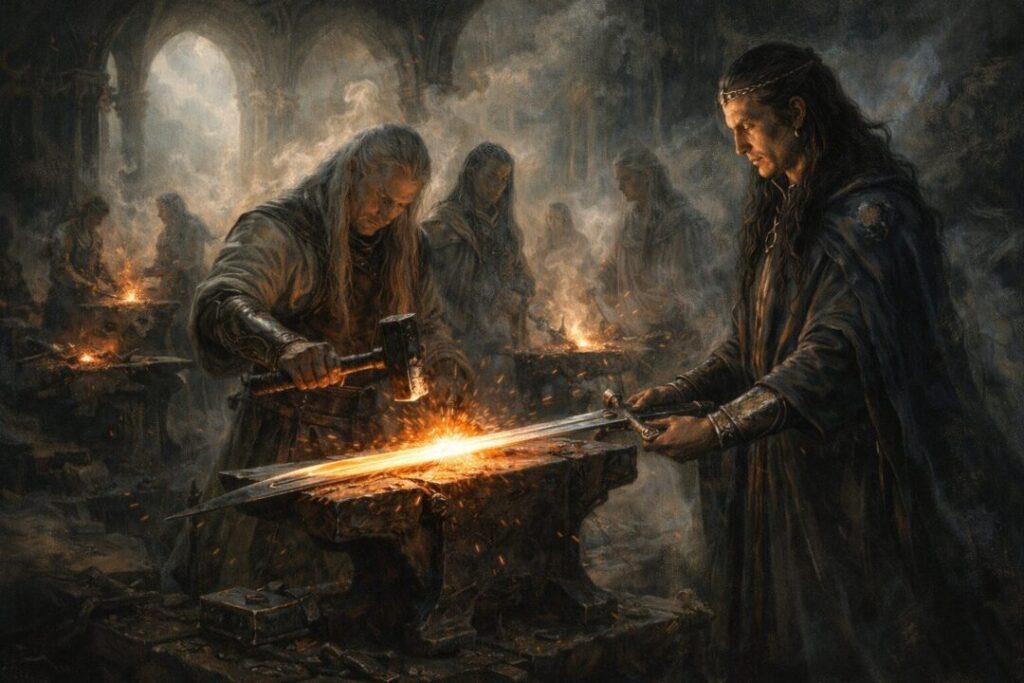
In places like Rivendell, ancient techniques are preserved rather than expanded. Smiths restore, repair, and reforge. They keep the old knowledge alive, but they do not surpass it.
This distinction matters.
When Andúril is reforged from the shards of Narsil, the act is not one of innovation. It is resurrection. The greatness of the blade lies not in new discovery, but in faithful restoration of old craft.
The message is subtle but clear: the past still outshines the present.
In Gondor, the reality is harsher. Weapons must be produced quickly, efficiently, and in great number. War demands it. The kingdom cannot afford to spend decades perfecting a single blade.
As a result, Third Age swords are lighter, simpler, and less enduring. They are practical, effective, and sufficient for the moment. But they are not built to last forever.
They are designed to arm armies, not to become legends.
They fight well.
They do not endure endlessly.
Why the Old Blades Feel Different
Older weapons feel different because they were made in a world that expected permanence.
Earlier Ages did not assume survival. They did not assume peace. They did not assume replacement. A blade had to survive repeated, brutal impact—shield rims, armor plates, stone, bone, and other swords—without failing.
Later Ages prioritize adaptability and speed. A sword that lasts one campaign, one war, or even one lifetime is considered sufficient.
The shift is subtle, but it changes everything.
Older blades strike with authority. They meet resistance and answer it. They feel grounded, deliberate, and unyielding. Later blades cut—but they give way. They flex. They sacrifice endurance for ease of production.
Neither approach is wrong.
But they are not the same.
A World in Retreat
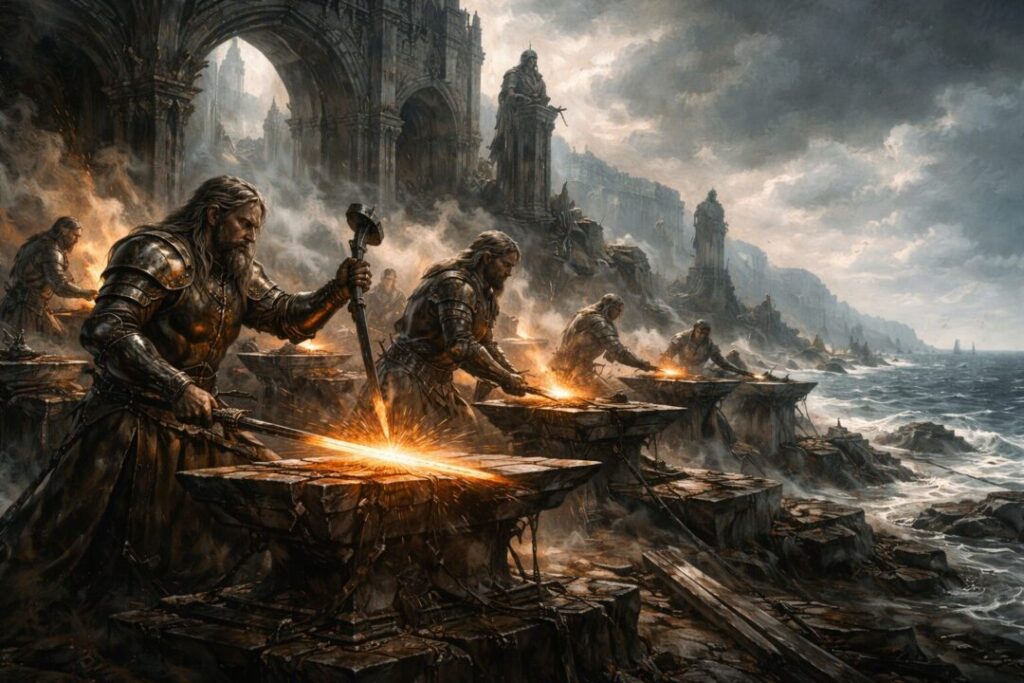
This decline in craft mirrors Middle-earth itself.
Elves fade into the West.
Dwarves retreat into their halls.
Men forget more than they remember.
Magic withdraws from the world, not in a sudden vanishing, but in a long, quiet ebb. With it goes the depth that once defined even simple tools. Objects become utilitarian rather than enduring, temporary rather than timeless.
By the end of the Third Age, the greatest weapons are museum pieces walking into battle—relics of a world that no longer exists, carried by those who barely understand how they were made.
And that is the true tragedy.
Not that Middle-earth loses its heroes.
But that it no longer knows how to make the things that once shaped heroes in the first place.