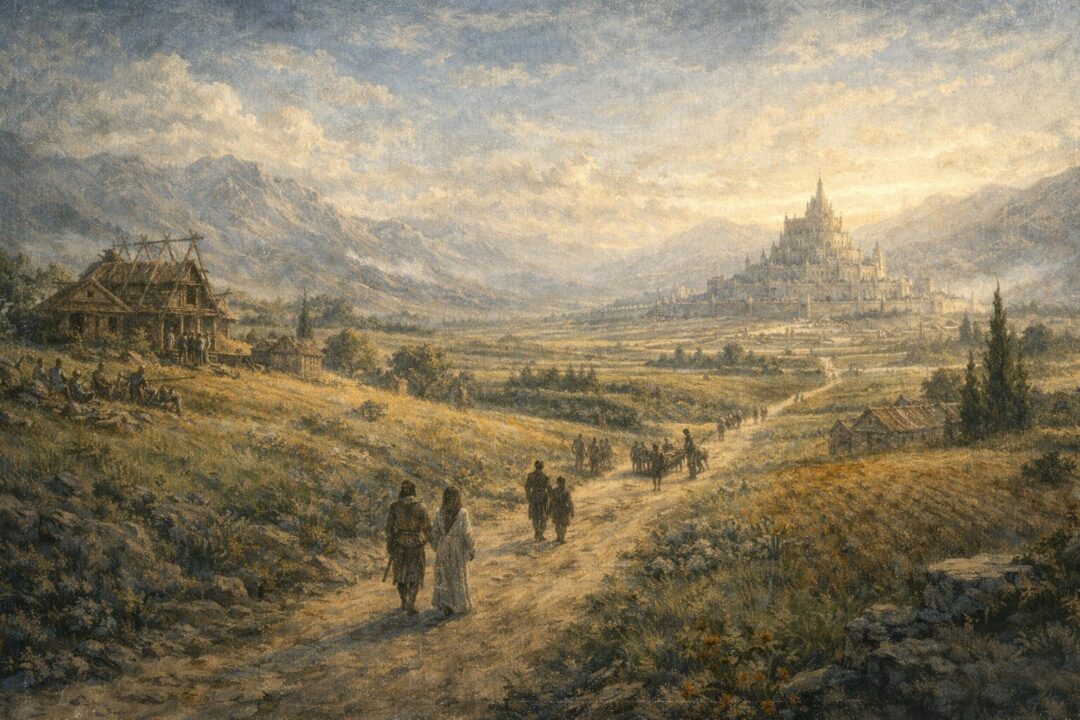
When the War of the Ring ends, something quieter—but far more important—begins.
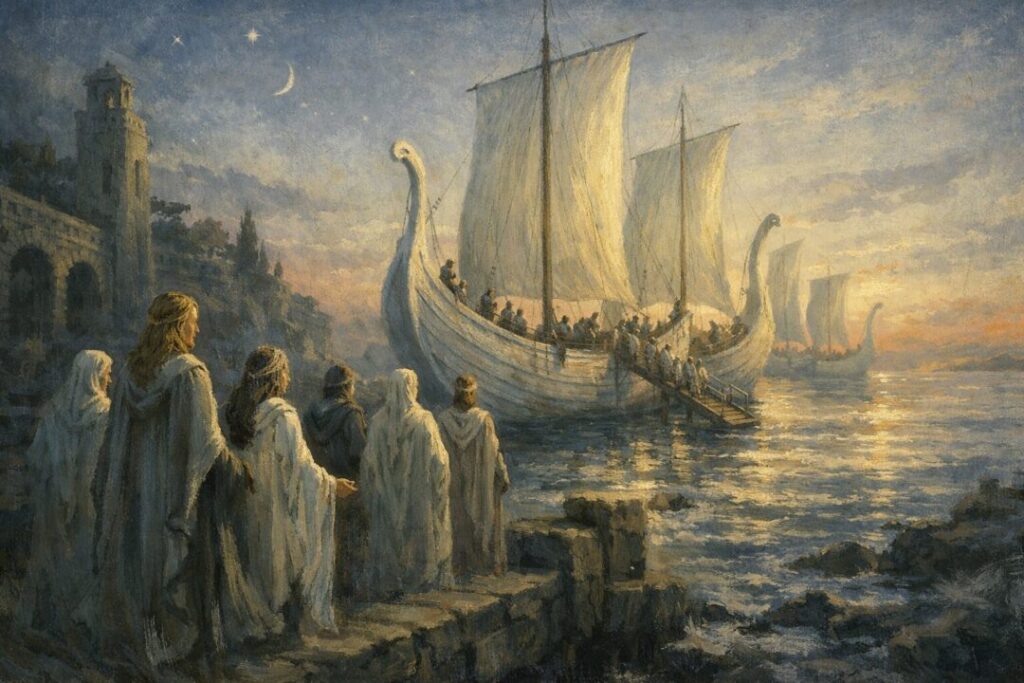
The Elves leave Middle-earth.
The Wizards fade from history.
And Men inherit the world.
This transition is often treated as a simple epilogue. Aragorn is crowned, peace returns, and the story gently closes. Evil is defeated, the Shadow retreats, and a long struggle finally gives way to rest.
But in Middle-earth, endings are never merely tidy conclusions.
They are judgments.
They are statements about how power is meant to exist, who is meant to wield it, and—most importantly—who must live with its consequences.
The victory over Sauron does not usher in an age of greater magic, stronger guardians, or wiser overseers. It ushers in an age of responsibility. An age where the world must stand without immortal protection.
And only Men can carry that weight.
The Elves: Guardians of a World Already Lost
By the Third Age, the Elves are no longer builders of the future.
They are preservers.
Their greatest works lie behind them: realms shaped by memory, sustained by power that resists time rather than embraces it. Rivendell and Lothlórien are not places of growth or expansion. They are places where decay is held at bay.
This is not a flaw in Elvish culture.
It is the essence of it.
Elves are bound to the world for as long as it endures. They remember too much, have seen too much, and lost too much to begin again lightly. Their wisdom is deep—but it is backward-looking. They understand what was better than what could be.
This makes them extraordinary guardians of beauty, tradition, and memory. But it also makes them profoundly unsuited to rule a new age.
True renewal requires loss. It requires risk. It requires the willingness to let go of what once was and accept imperfection in what comes next.
Elves do not do this easily—nor should they.
If Elves ruled Middle-earth after Sauron’s fall, the world would not heal.
It would linger.
It would become a place of exquisite preservation. Forests unchanged. Songs remembered perfectly. Sorrows never fully laid to rest.
Beautiful.
Unchanging.
And ultimately stagnant.
Their departure is not abandonment. It is restraint.
They leave not because they are defeated, but because their time has passed. To remain in power would be to deny the world its next chapter.
The Wizards: Power Without Permission
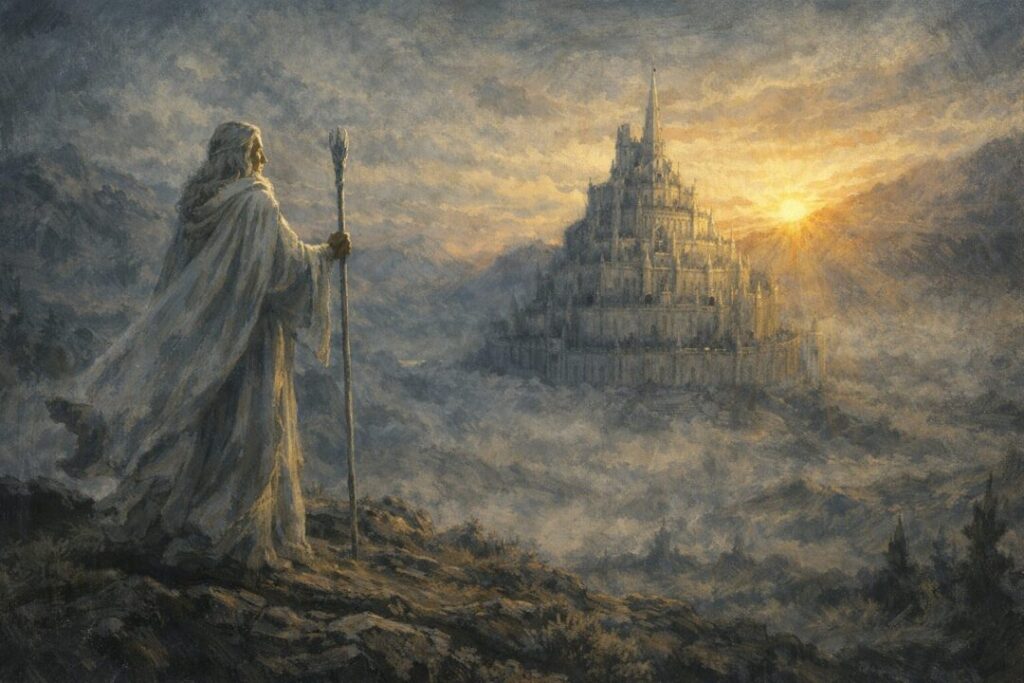
The Wizards arrive in Middle-earth with immense knowledge and authority—but with strict and deliberate limits.
They are forbidden to dominate wills.
Forbidden to rule openly.
Forbidden to confront Sauron with matching force.
These restrictions are not tactical. They are moral.
Power that overrides choice, even for good reasons, poisons the victory it achieves. A world saved without consent is not saved—it is subdued.
If Gandalf ruled Middle-earth, even with wisdom and kindness, the world would no longer belong to its people. It would be managed. Guided. Corrected.
Safe—but not free.
This is why Gandalf repeatedly refuses domination, even when offered power beyond imagining. This is why Saruman’s fall is so instructive. He does not begin as a tyrant. He begins as a manager—someone who believes he knows better than the world he seeks to fix.
The Wizards succeed precisely because they refuse crowns.
Their role is not to replace moral choice, but to awaken it in others. They inspire courage, provoke resistance, and offer guidance—but they do not take responsibility away from the world.
A victory delivered by Wizards would be hollow. It would leave Middle-earth dependent on powers that were never meant to remain.
So they step aside.
Not because they are weak—but because ruling would violate the very purpose of their mission.
Why Men Are Chosen — Despite Everything
Men are weaker than Elves.
Shorter-lived than Wizards.
And far more prone to failure.
That is exactly why they matter.
Men exist in uncertainty. They must act without full knowledge. They must choose without guarantees. Their morality is not enforced by nature or hierarchy—it is earned through struggle, temptation, repentance, and resolve.
Unlike Elves, Men are not bound to preserve the world as it is. They can change it—for better or worse. Unlike Wizards, they are not shielded from consequence. Their failures leave scars that cannot be undone by immortal intervention.
This makes their victories fragile.
But it also makes them real.
Middle-earth cannot move forward if it remains under the guardianship of beings who cannot truly fall. Growth requires the risk of ruin.
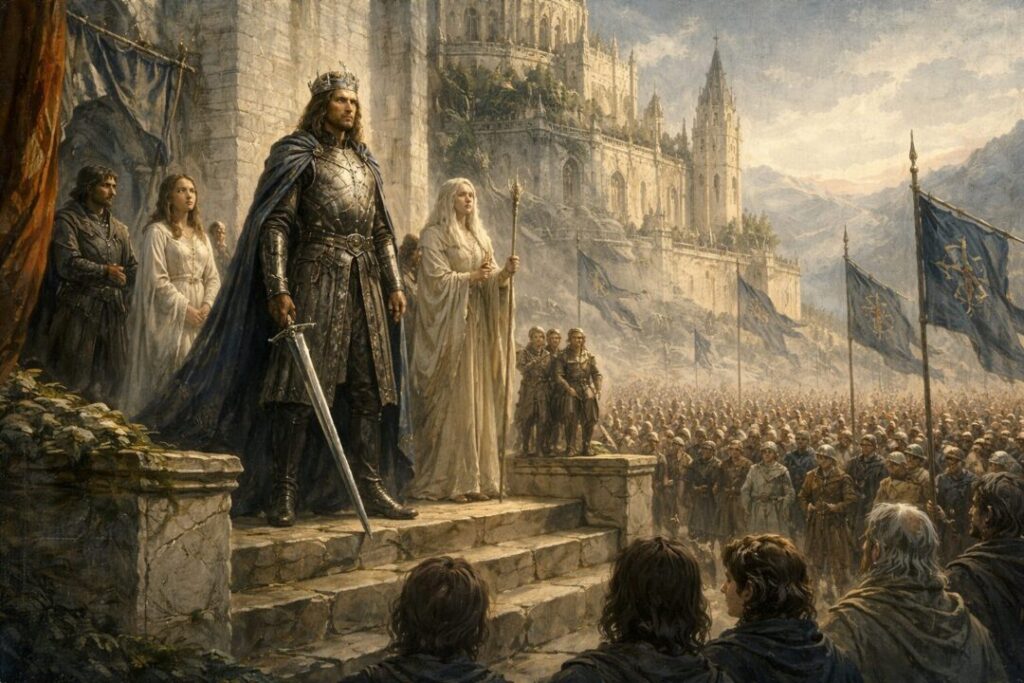
This is why Aragorn matters.
His rule is not a triumph of bloodline alone, though lineage gives him legitimacy. It is the restoration of stewardship—rule that serves rather than dominates, that protects rather than controls.
He does not claim the throne because he is perfect.
He claims it because he is willing to bear its weight.
A World That Must Stand on Its Own
The defeat of Sauron removes the final excuse for divine or immortal oversight.
Middle-earth is no longer a battleground for ancient powers clashing through proxies. It becomes something far more dangerous: a place where choices matter precisely because no one is watching over every outcome.
There will be injustice.
There will be mistakes.
There will be failures without miraculous corrections.
That is the true risk of the Fourth Age.
Not darkness—but freedom.
And freedom is only meaningful in mortal hands.
A world eternally guarded by Elves would never truly live.
A world ruled by Wizards would never truly choose.
Only Men can inherit a world where the future is unwritten.
The Cost of Failure
The story ends in hope—but not certainty.
This is easy to miss.
If Men fail again, no Elves will return from the West.
No Wizards will arrive to set things right.
No hidden powers will reset the board.
The age of guidance is over.
What follows depends entirely on those who remain.
This is not a comforting conclusion. It is a demanding one.
Middle-earth is saved—but not secured.
And that is precisely the point.
The victory over Sauron does not solve the problem of evil forever. It simply removes the last excuse for refusing responsibility.
That is not a happy ending.
It is a responsible one.
And it is the only ending that allows the world to truly become its own.