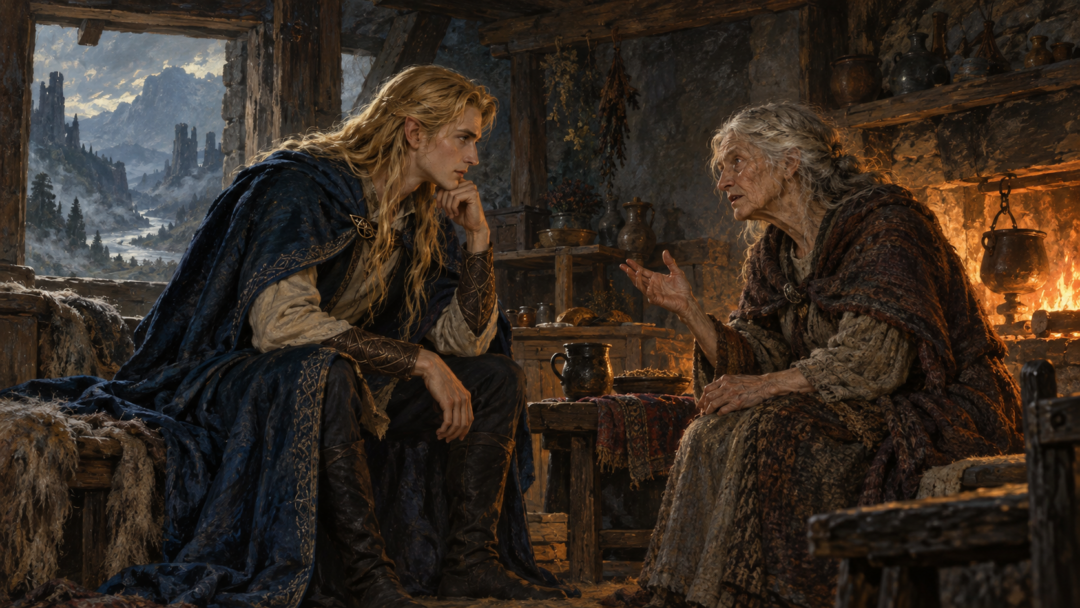
In Beleriand, while Morgoth remains contained behind the Siege of Angband, an aging woman and an Elven king argue about a question neither can settle by force. Andreth of the House of Bëor has grown old, while Finrod Felagund belongs to a people who can be slain, yet whose spirits remain bound to the world. Even before either explains a belief, their different lifetimes stand between them.
The argument in Athrabeth Finrod ah Andreth is not simply that Finrod calls death a gift and Andreth calls it evil. Finrod begins with the Elvish understanding that Men are meant to leave Arda; Andreth carries a human tradition that death as her people suffer it is an inherited wound. Their exchange opens a larger possibility: perhaps the destiny intended for Men and the violent separation they now experience are not the same thing.
Two Speakers, Not One Final Verdict
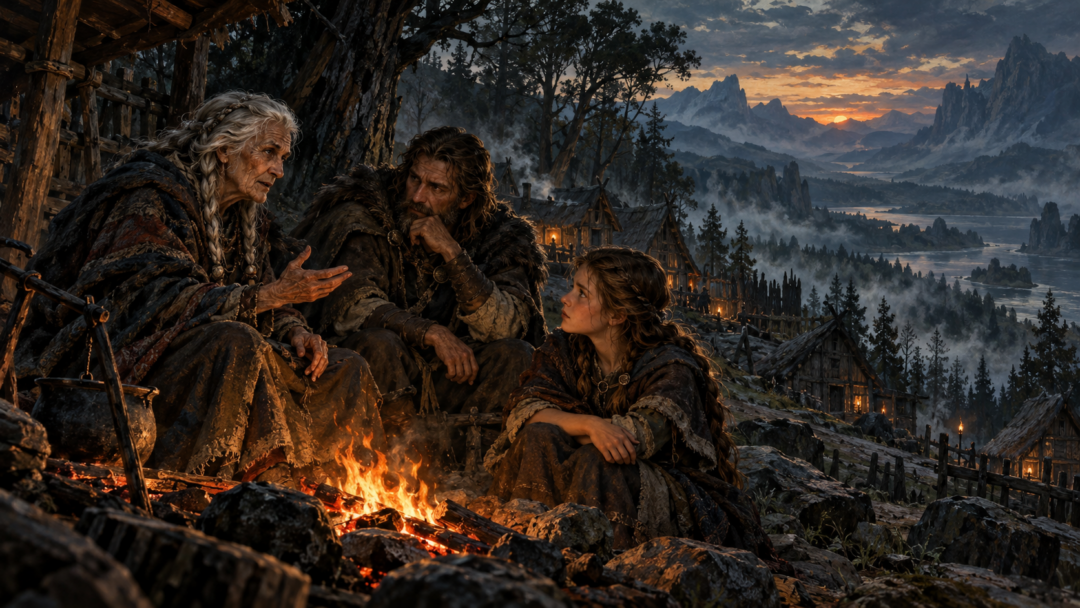
The Athrabeth, or Debate of Finrod and Andreth, takes place during the First Age’s Long Peace. Andreth is a wise-woman preserving Mannish teaching; Finrod knows the lore of the Eldar and Valar. He presses her claims, and she presses his assumptions, sometimes sharply.
The form matters. Published in Morgoth’s Ring, the dialogue comes with editorial notes and a separate commentary exploring its premises and implications. The commentary can clarify what Finrod is assuming without making every proposal he speaks into established history. Andreth’s inherited account, Finrod’s deductions, and the commentary’s explanations carry different kinds of authority. Reading them as one uninterrupted pronouncement erases much of the debate.
What Andreth’s People Remember
Andreth says the Wise among Men preserve the belief that death was laid upon their people, not given as their proper nature. They have come west already carrying this dark inheritance. Their story predates their encounter with the long-lived Elves. It reaches into a poorly remembered past: something happened to Men, and their condition bears its mark.
She does not provide Finrod with an eyewitness history of an originally deathless population. She cannot tell him what deed caused the change. Those matters have been hidden or avoided, and she points toward Adanel’s lore. The related Tale of Adanel develops a story of humanity’s early corruption, but that fuller tale should not be silently inserted into Andreth’s answers as if she had recited it here.
What she can describe is the consequence. A human being may be brave, learned, or strong, but no excellence defeats the approach of death. Worse, Men cannot follow the spirits of those they lose and discover what has become of them. Andreth therefore rejects the comfort of treating death as a harmless departure. To someone who loves the living body as part of the person, death is no simple change of address.
Her bitterness also has a historical edge. Men were not summoned to Valinor or taught by the Powers as the Eldar were. From Andreth’s position, the Elves seem to possess both the long life and the instruction denied to her people. Her accusation is her judgment, not a neutral account of the Powers. Inherited injury has bred suspicion of abandonment to Morgoth.

Why Finrod Questions the Shape of Death
Finrod first insists that the Elves know something of death themselves. His grandfather was murdered, and Elves have fallen on journeys and in war. Yet Andreth exposes a real difference: the slain Elvish spirit remains within the bounds of Arda and may be restored to embodied life, whereas the destination of human spirits lies beyond Elvish knowledge. Elvish grief is genuine, but it cannot reveal what a mortal’s departure means.
Finrod’s reasoning begins with fëa and hröa, the spirit and body of an incarnate being. For the Elves these belong together, and their continued existence is tied to the world’s life. Men, however, die even without violent injury or sickness. From that observation the Eldar have inferred a different destiny: human spirits are not made to remain within Arda for its entire history. This is an inference, not a sighting of spirits arriving elsewhere.
Andreth’s account poses a dangerous question for him. If Morgoth actually altered the essential fate appointed to a whole kindred by Eru, has the Enemy gained power over the Creator’s design? Finrod refuses to grant Morgoth that sovereignty. He questions whether a rebel could remake Eru’s design. That objection does not require him to deny human corruption, shortened life, or the anguish Andreth knows.
The argument then becomes more subtle than bodily survival versus escape from the body. Andreth insists that spirit and body are joined in love: a human person is not merely a soul trapped in disposable flesh. Finrod takes the bond seriously and imagines that humanity’s true departure might preserve it rather than tear it apart. In his developing vision, Men could pass beyond the world whole, with bodily life somehow transformed. The wound might lie in death’s present, destructive form rather than in humanity’s intended departure. This is speculation, not a witnessed account of human death.
Where Both Kinds of Knowledge Run Out
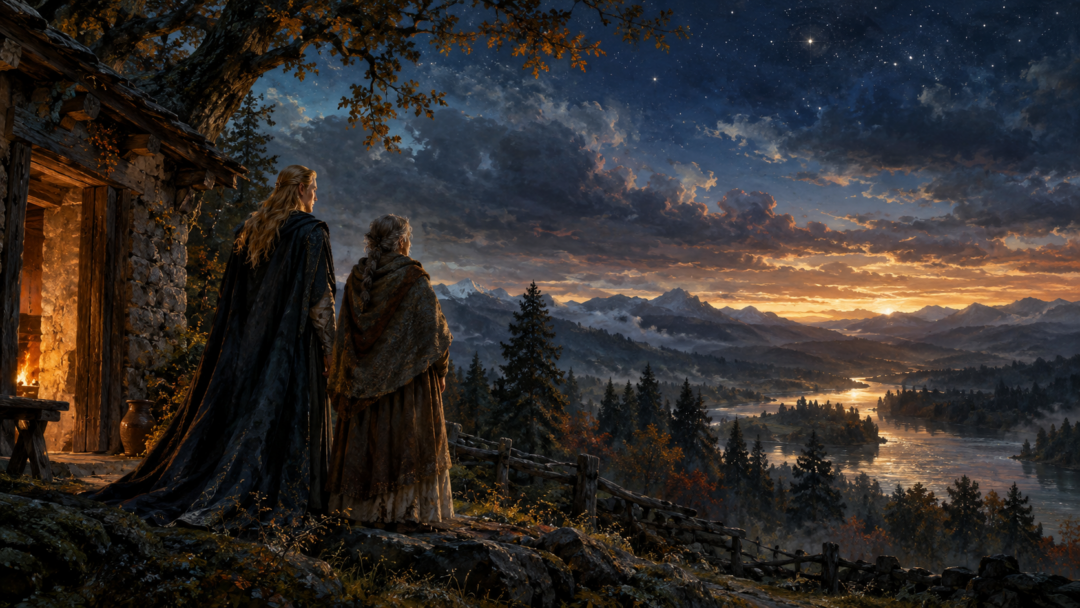
Finrod also reveals a hidden cost in what Men call Elvish immortality. The Eldar endure as long as Arda endures, but Arda itself has an end. Their memories accumulate, their world grows marred, and they have no certain account of what awaits them beyond its history. The very permanence Andreth envies is a binding that Finrod cannot simply cast off. He, too, faces an ending.
The two can therefore correct each other’s picture without possessing a complete alternative. Andreth knows bodily vulnerability and a people’s inherited grief. She cannot recover the lost event clearly enough to prove precisely how humanity was first made. Finrod knows Elvish tradition and can reason about the relation of spirits to the world. He cannot look beyond Arda and report the destiny of Men as fact.
Even their observations of human restlessness admit more than one reading. Finrod notices that Men seem to seek something beyond what they find, treating beautiful things as reminders of something greater. He takes this as a sign that Arda may not be their final home. Andreth wonders whether such dissatisfaction is natural or part of the Shadow’s damage. Restlessness might signal a higher calling or an old wound.
The Old Hope Is Not a Timetable
When Andreth finally speaks of the Old Hope, she introduces something the Elven king has not learned from the Powers. Among Men survives a rumor that the One, Eru himself, will enter Arda to heal humanity and mend the Marring of the world. Andreth reports this without certainty. Few hold the Hope, which raises the question of how the One beyond creation could enter it.
Finrod cannot explain the method. Instead, he distinguishes amdir, expectation built on what can be seen or calculated, from estel, trust that need not possess a visible route to its fulfillment. Because Eru made the Children of the world, Finrod holds that Morgoth cannot finally take them from him. That is faith, not a secret chronology of divine intervention known to either speaker.
The commentary goes further in exploring how Eru might heal the world’s damage, including the possibility of entering history in incarnate form. That commentary does not describe an event already enacted in the Athrabeth. Likewise, Finrod’s vision of Men helping to renew Arda, and Elves finding a place in a healed world, remains a vision. Andreth’s reply matters because she refuses to let an imagined future cancel the suffering of the present. Hope must answer actual wounds, not merely decorate them.
Aegnor Makes the Question Personal
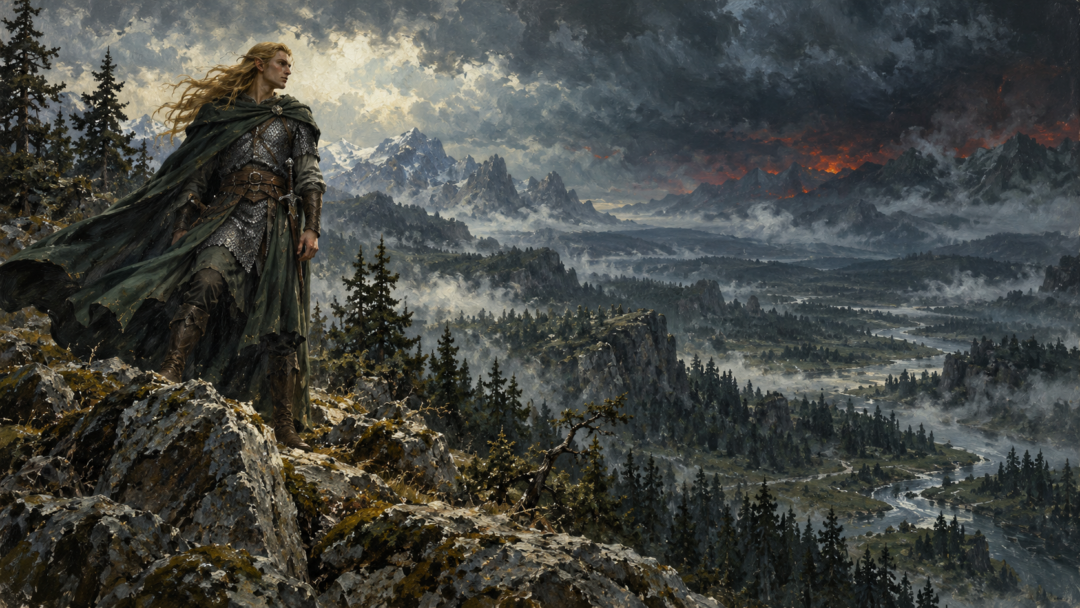
Only near the end does the debate disclose the intimate grief behind some of Andreth’s sharpness. In her youth she and Finrod’s brother Aegnor loved one another, but they did not marry. Finrod explains Aegnor’s refusal through Elvish loyalty, the demands of war, and the sorrow that unequal lifetimes would bring. Andreth would have accepted a brief happiness; Aegnor would have had to live with its loss for ages. Neither perspective makes the love unreal.
Andreth has grown old, while Aegnor remains young. Finrod can speak of how his brother will remember her, yet when she asks what becomes of her own memory after death, he cannot answer. The man who has imagined humanity’s destiny beyond Arda cannot tell this one woman whether she will remember the person she loves. His intellectual generosity does not remove that limit.
Aegnor will later fall in the Battle of Sudden Flame, and Finrod will die aiding Beren. Andreth’s eventual end is not narrated; commentary allows possibilities but does not establish a final scene for her. In the debate Finrod takes her hand before returning to the siege, wishing for a meeting beyond the world he cannot guarantee.
That is where the disagreement earns its hope. Andreth has not been talked out of mortality’s pain, and Finrod has not solved the mystery that separates their peoples. But he can leave her with something more honest than an answer he does not possess: the hope that beyond Arda’s last boundary, the people parted by its differing fates may yet meet again.
Sources & Notes
- Tolkien Gateway — Athrabeth Finrod ah Andreth: the debate's setting during the Siege of Angband and the Long Peace, its status as a finished late-1950s work printed in Morgoth's Ring, and the accompanying editorial notes and Commentary — https://tolkiengateway.net/wiki/Athrabeth_Finrod_ah_Andreth
- Tolkien Gateway — Andreth: her standing as a Wise-woman of the House of Bëor named Saelind, her descent from Boromir, and the love between her and Aegnor that never became a marriage — https://tolkiengateway.net/wiki/Andreth
- Tolkien Gateway — Finrod: Finrod Felagund's kingship in Nargothrond, his place in the House of Finarfin alongside Aegnor, and his death in F.A. 465 — https://tolkiengateway.net/wiki/Finrod
- Tolkien Gateway — Tale of Adanel: the separate Mannish account of the Disaster that Andreth points to, preserved among the Third House of the Edain and published with the Athrabeth commentary rather than inside the debate itself — https://tolkiengateway.net/wiki/Tale_of_Adanel
- Tolkien Gateway — estel: the Elvish concept of trust in Eru Ilúvatar, distinguished from amdir and explained within the debate by Finrod himself — https://tolkiengateway.net/wiki/Estel
- The Encyclopedia of Arda — Aegnor: independent reference entry on Finrod's youngest brother, his refusal of marriage to Andreth, and his death in the Dagor Bragollach — https://www.encyclopedia-of-arda.com/a/aegnor.php
- The Encyclopedia of Arda — Gift of Men: death as Ilúvatar's gift to the Younger Children and departure beyond the world, the belief Andreth's people remember as an imposed wound — https://www.encyclopedia-of-arda.com/g/giftofmen.html
The linked references are reading guides to the published texts: the Athrabeth Finrod ah Andreth and its Commentary in Morgoth's Ring, the Tale of Adanel printed with that Commentary, and secondary entries on Andreth, Finrod, Aegnor, estel and the Gift of Men. Finrod's inference that human spirits leave Arda, his vision of Men passing beyond the world whole, and the Commentary's exploration of Eru entering Arda remain argument and speculation inside the text, not narrated events; Andreth's account of an imposed death is her people's tradition, which she cannot trace to an eyewitness cause. The debate is dated to the Long Peace around F.A. 409, and Aegnor's refusal of marriage to Andreth is explained by him to her after her death, not settled on the page.