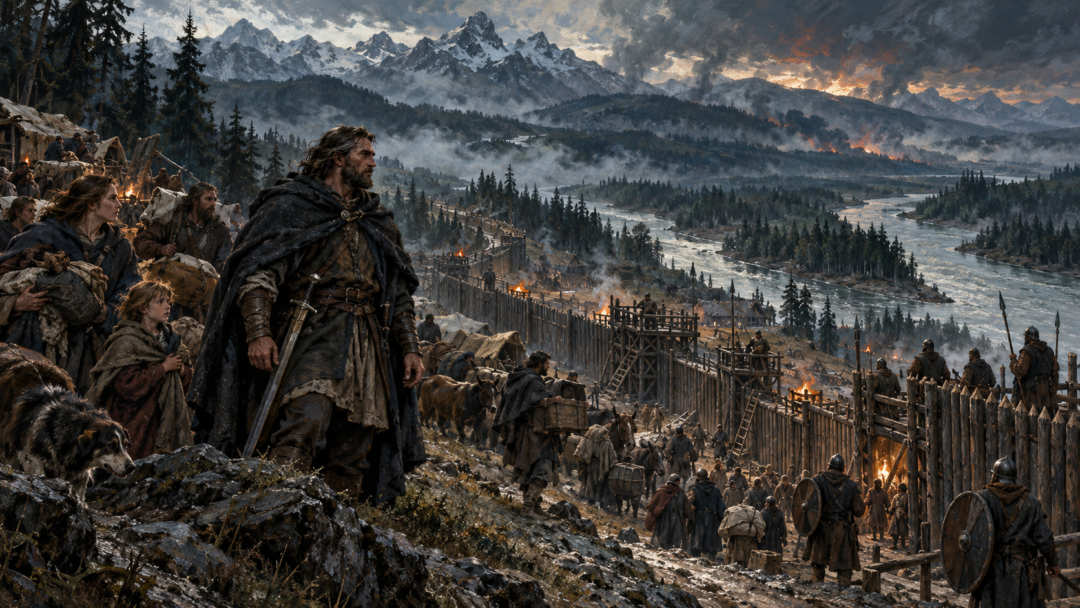
When the Orcs broke through the wooden defenses of the Haladin, there was no king coming from within their people to save them. Their leader was dead. His son had fallen beside him. Food had run out, hope was disappearing, and some of the besieged had already thrown themselves into the surrounding rivers.
Yet the survivors remained together under the leadership of Haleth, daughter of Haldad.
Her story contains one of the most revealing distinctions in the history of the Edain. Haleth did not inherit a throne from an established line of queens. She belonged to a people who had traditionally lived without centralized lordship, and her authority emerged through an extraordinary struggle for survival.
The siege made her indispensable. Her refusal of Caranthir’s protection demonstrated her independence. Her westward migration showed what she could accomplish beyond the battlefield.
Haleth became the leader of a people whose loyalty had to be earned, and whose freedom she was determined to preserve.
The Haladin Were Not a Kingdom Waiting for a Queen
To understand Haleth’s authority, it is necessary to understand the people she led.
The Haladin were one of the three great kindreds of the Edain who entered Beleriand during the First Age. Unlike the followers of Bëor or Marach, they maintained a particularly independent way of life.
After crossing the Blue Mountains, they settled in Thargelion, within the territory associated with Caranthir, son of Fëanor.
They did not establish a unified kingdom.
The Silmarillion, in “Of the Coming of Men into the West,” describes a society of separate homesteads, each managing its own affairs. The Haladin were slow to unite and did not ordinarily live under the government of lords.
There was no established royal court for Haleth to enter, no inherited crown awaiting its next occupant, and no described institution of queenship.
Haldad’s Authority Begins With a Defensive Emergency
The crisis began when Morgoth sent an Orc-raid into the southern woods of Thargelion.
The attackers reached the Haladin unexpectedly, and their scattered settlements were vulnerable.
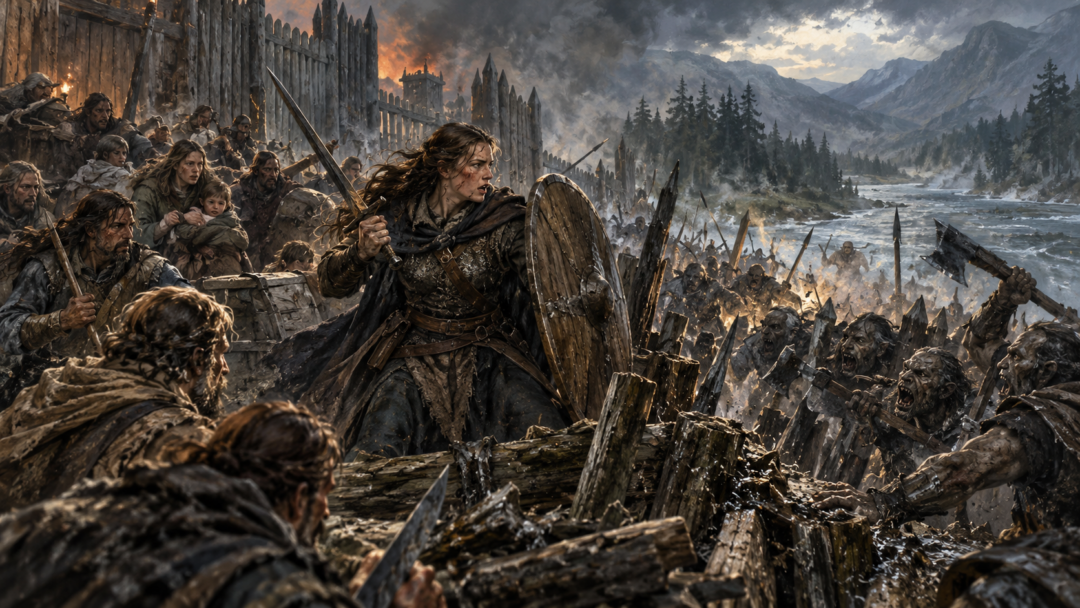
Haldad, the father of Haleth, responded by gathering as many fighting men as he could find. He led them to the angle between the rivers Ascar and Gelion, where a defensive stockade was constructed across the land between the waters.
Women and children who could be rescued were brought behind its protection.
Haldad’s leadership was therefore practical before it was institutional.
Although later accounts of Haladin chieftainship emphasize the people’s role in choosing their leaders, the published Silmarillion does not describe a formal election ceremony for Haldad. It shows a capable man gathering followers when their customary independence could no longer guarantee their safety.
The Seven Days That Established Haleth’s Strength
Haldad had twin children: Haleth and Haldar.
Both fought valiantly in the defense of the stockade. Haleth is described as possessing exceptional courage and strength, establishing that she was already an active participant before command passed to her.
Then disaster struck.
Haldad was killed during a sortie against the Orcs. Haldar rushed out to prevent the enemy from mutilating his father’s body and was killed beside him.
Food was exhausted. The survivors had little expectation of rescue. Some were driven to such despair that they drowned themselves in the rivers.
Yet Haleth held the remaining people together.
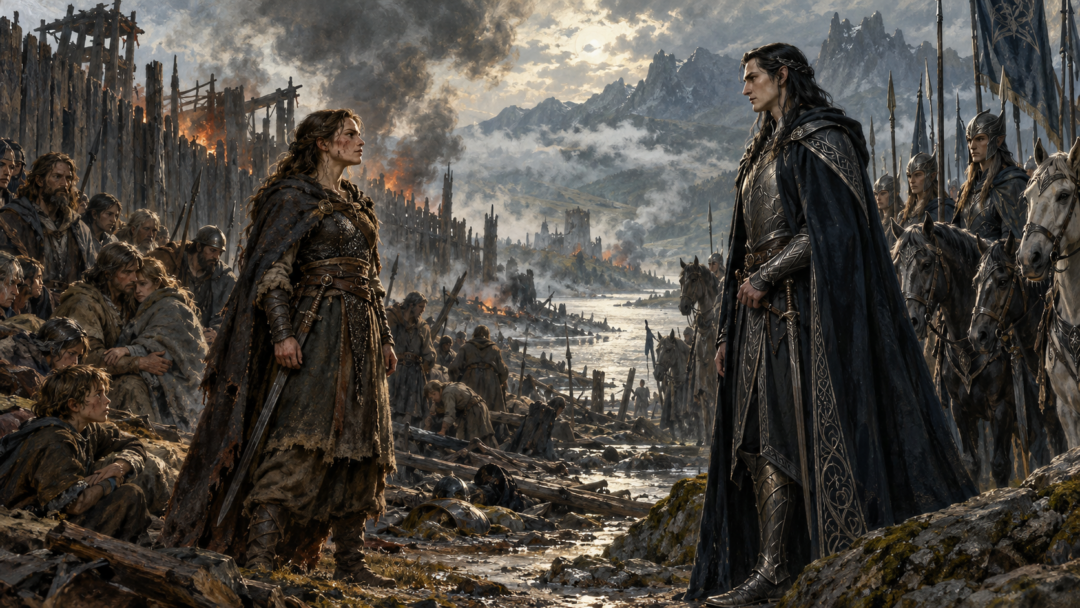
Seven days passed before Caranthir arrived with his forces from the north. By then the Orcs had launched their final assault and had already penetrated the stockade.
The Elven army drove the attackers into the rivers and ended the siege.
It would be inaccurate to claim that Haleth single-handedly defeated the Orc host. Caranthir’s intervention provided the decisive military rescue.
Her achievement was different, and arguably more important to understanding her authority.
She prevented the destruction of the surviving community long enough for that rescue to become possible.
She could not guarantee victory. She could not restore the dead or replenish the food. What she could do was maintain collective resistance after the established leader had fallen.
Her authority was demonstrated when her people had almost nothing left except their willingness to remain together.
Caranthir Offers Security, But Haleth Refuses Dependence
After the rescue, Caranthir treated Haleth with honor.
Recognizing the courage of the Haladin, he offered recompense for the deaths of her father and brother.
He also offered the survivors an opportunity to settle farther north, where they could enjoy free lands together with the friendship and protection of the Eldar.
The Haladin had already suffered the consequences of exposure to Morgoth’s forces. An alliance with a powerful Elven prince could have provided much-needed security.
But Haleth declined.
She had resolved to leave the shadow of the mountains and travel west, following the direction taken by other kindreds of Men.
The narrative characterizes her as proud and unwilling to submit to another’s guidance or rule. Most of the Haladin shared this independent disposition.
This refusal deserves careful interpretation.
Caranthir did not explicitly demand an oath of feudal service in the published account. He offered protection and land, not a formally described vassalage contract.
Nevertheless, Haleth rejected the opportunity to organize her people’s future beneath the protective authority of a powerful neighboring prince.
She accepted his assistance without surrendering the direction of their journey to him.
When the Haladin Actually Choose Their Chief
One of the most important details comes after the siege rather than during it.
Once the danger had passed, the Haladin gathered surviving members of their people who had escaped into the woods. They also recovered what possessions remained from their destroyed homes.
Only then does the published narrative explicitly state that they took Haleth as their chief.
The sequence matters.
First, she defended them through catastrophe.
Then, after the survivors had regrouped, they recognized her leadership.
The people themselves accepted her as their leader.
Under her leadership, they traveled to Estolad, where they remained for a time.
They continued to live as a distinct people, increasingly known to Elves and Men as the People of Haleth.
The Westward Journey Reveals the Limits of Consent
If Haleth’s story ended with the siege and Caranthir’s offer, it might appear to be a straightforward account of unanimous support for a heroic leader.
The migration complicates that interpretation.
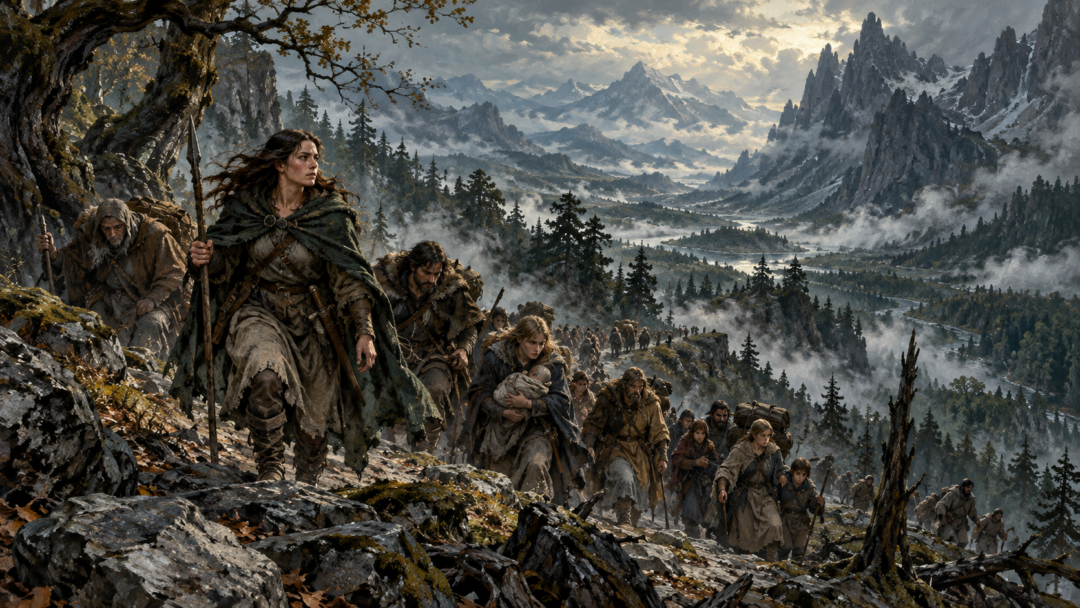
After living in Estolad, Haleth desired to move westward again.
Most of her people opposed the proposal.
Nevertheless, she led them onward without the assistance or guidance of the Eldar.
Their route crossed the Celon and Aros and carried them through dangerous country between the Mountains of Terror and the Girdle of Melian.
The journey brought hardship and loss. Some regretted their decision bitterly after they had crossed the Brithiach, when retreat had become impossible.
Haleth’s will was powerful enough to carry her followers through danger, but her judgment was not met with universal enthusiasm.
Her determination preserved the journey, but the journey also tested the trust placed in her.
When the survivors reached the western lands, they returned as best they could to their accustomed life in independent homesteads.
Some settled in the woods of Talath Dirnen. Others wandered farther into the country of Nargothrond.
Not everyone remained under Haleth’s immediate leadership.
But many loved her and wished to follow her wherever she went.
Those followers accompanied her into the Forest of Brethil.
Their loyalty is particularly significant because the narrative presents it as a choice made after hardship, not merely obedience during a siege.
Brethil Gives Her People a Home, Not a Royal Throne
Brethil became the lasting center of Haleth’s story.
Yet even here, her authority was neither unlimited nor entirely independent of the surrounding political world.
The forest lay outside the Girdle of Melian, but King Thingol of Doriath claimed it as part of his realm.
He was initially unwilling to permit Haleth to settle there.
Finrod Felagund intervened on her behalf, securing permission for her people to dwell freely in Brethil.
There was one important condition.
The Haladin were required to defend the Crossings of Teiglin against enemies of the Eldar and prevent Orcs from entering their woods.
This arrangement was not the foundation of a queenship.
It was a negotiated opportunity for a community to live freely in a strategically important woodland, provided that it protected that territory.
The obligation also fitted the experience of Haleth’s people.
They understood what happened when scattered settlements were left exposed to Orc attacks. Their new home required watchfulness and defense, not simply occupation.
Haleth’s answer to Thingol’s concern about Orcs invoked the deaths of her father and brother. She had no reason to regard those creatures as potential friends.
There was a sharp irony in the settlement.
The woman who had refused Caranthir’s offer of land and protection now accepted residence in territory claimed by another Elven ruler.
The difference lay in the terms and circumstances.
Brethil offered a place where her followers could retain their customary way of life while assuming a defined defensive responsibility.
Her independence was real, but it did not mean freedom from every political obligation.
Haleth’s achievement was to secure a workable home for those who chose to follow her.
Why the House of Haleth Is Not Evidence of a Queenship
Haleth remained chief of her people throughout her life.
She did not marry, and the headship eventually passed to Haldan, the son of her slain brother Haldar.
Her family thus continued to provide leadership after her death.
But the later prominence of her family must not be mistaken for proof that she inherited or established a monarchy.
The published account calls her the Lady Haleth and identifies her as a chief. It does not call her queen.
Nor does it describe an established institution of queenship among the Haladin.
Haleth’s standing rested upon demonstrated ability, the acknowledgment of her people, and the lasting consequences of her decisions.
Her inheritance was a family connection to Haldad. Her legitimacy was established through much more than that connection.
Later generations would know the Haladin as the People or House of Haleth, but that name commemorated her importance rather than proving the existence of a royal throne.
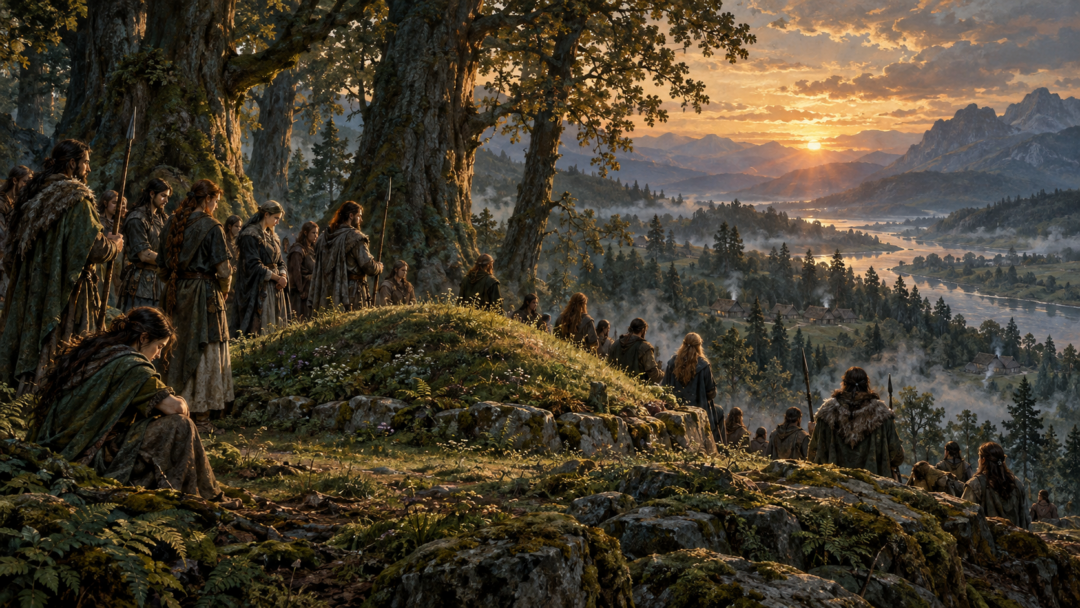
When Haleth died, her people raised a green burial mound for her in the heights of Brethil.
It became known as the Ladybarrow.
She did not become important because she was born to rule a kingdom. She became their chief because, when her people faced destruction, she proved capable of leading them through it.
Sources & Notes
This article is based on close reading and interpretation of Tolkien's published works and related source material where relevant.