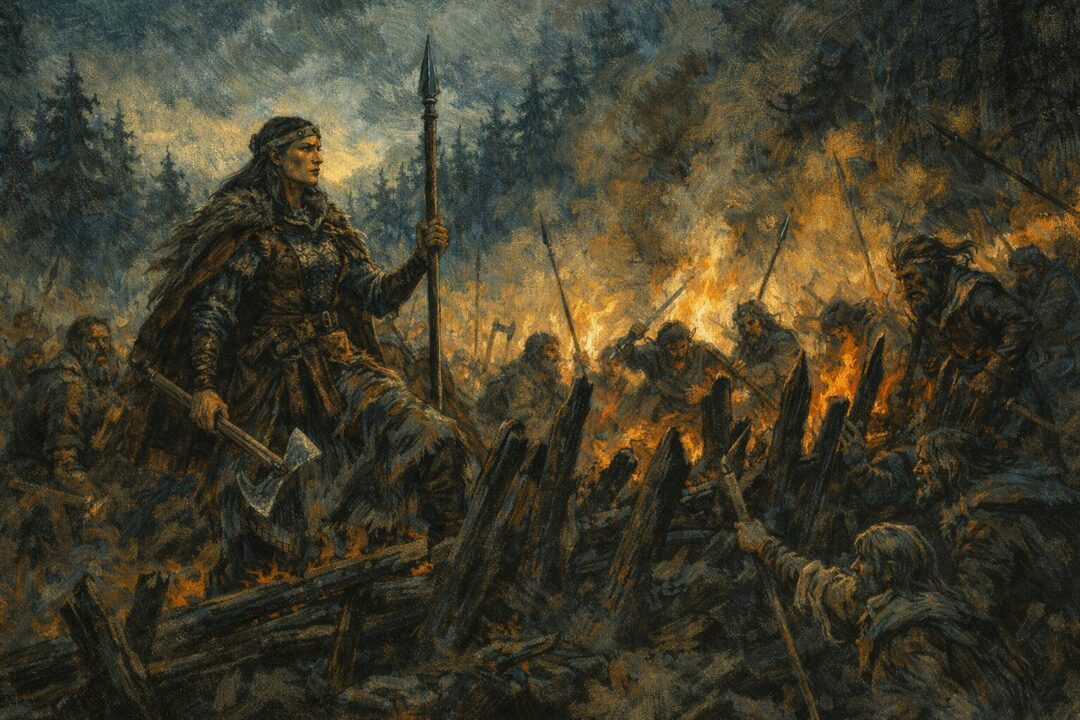
For many readers, the Houses of the Edain arrive as a blur of names.
Bëor. Baran. Boron. Bregor. Barahir. Beren.
Haldad. Haleth. Haldir. Halmir. Handir. Brandir.
Marach. Malach. Magor. Hathol. Hador. Galdor. Húrin. Huor. Túrin. Tuor.
And somewhere inside all of that, you are told this matters deeply.
It does.
But not for the reason many people first assume.
The Houses of the Edain are not important because you are expected to memorize every branch. They matter because they are three distinct peoples of Men who enter Beleriand, form different bonds with the Eldar, and leave very different marks on the history of the First Age.
Once you stop reading them as a wall of genealogy and start reading them as three different human stories, the whole picture opens up.
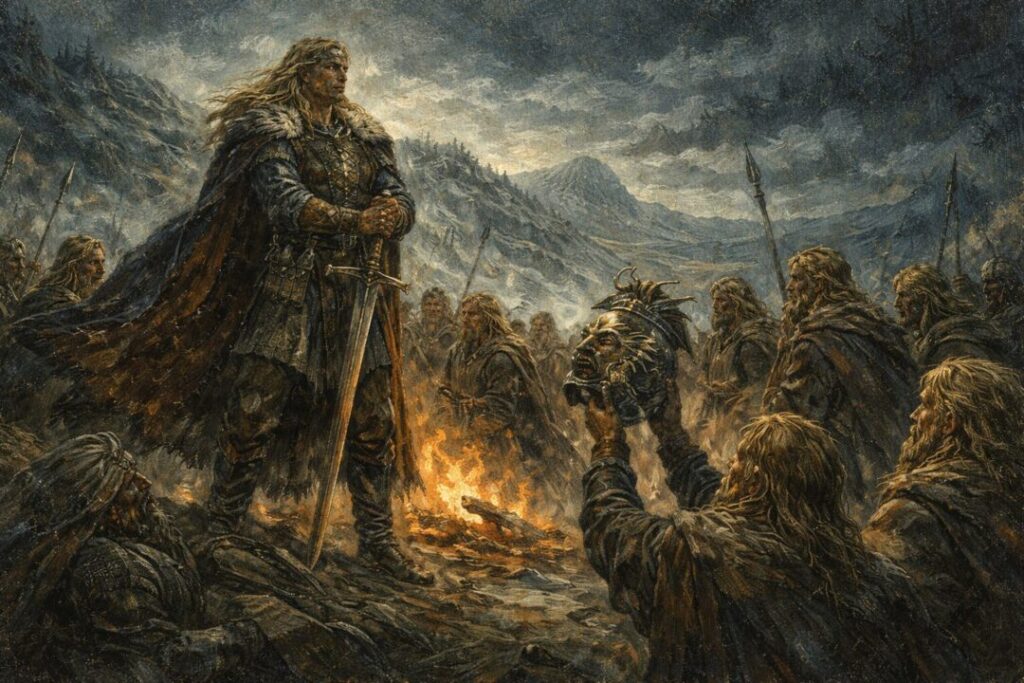
First, What “Edain” Actually Means
The word “Edain” does not simply mean all Men.
In the First Age, it is used especially for those houses of Men who came into Beleriand and became Elf-friends. That matters, because it immediately narrows the subject. We are not dealing with every people of Men in Middle-earth. We are dealing with the western-moving houses that entered into alliance, friendship, and shared struggle with the Eldar.
Among them, three Houses stand above the rest in the central narrative:
the House of Bëor, the House of Haleth, and the House of Hador.
That is the real framework.
Not dozens of equally important family lines. Three major houses, each with its own tone, loyalties, and destiny.
The House of Bëor: The First to Matter in the Story
The easiest place to begin is the House of Bëor.
They are the first of the three Houses to enter Beleriand, and in many ways they are the most intimate bridge between Men and the Eldar. Finrod Felagund is the first great lord among the Elves to discover them. That first meeting is one of the gentlest and most important encounters in the early history of Men in the West.
That tone stays with the House of Bëor.
They are closely associated with Finrod and with the line of Finarfin. Later they receive lands in Dorthonion, in Ladros, and their history becomes tightly bound to loyalty under pressure. When the north breaks in the Dagor Bragollach, it is this House that suffers terribly. Barahir’s outlaw band, Beren’s isolation, and the near destruction of the house all grow out of that collapse.
So what is the simplest way to remember them?
The House of Bëor is the house of first friendship and of Beren.
That is their center of gravity.
If you remember nothing else, remember that from this House comes Beren, and through Beren comes one of the single most important unions in the entire legendarium: Beren and Lúthien.
That one fact alone would make the House of Bëor unforgettable.
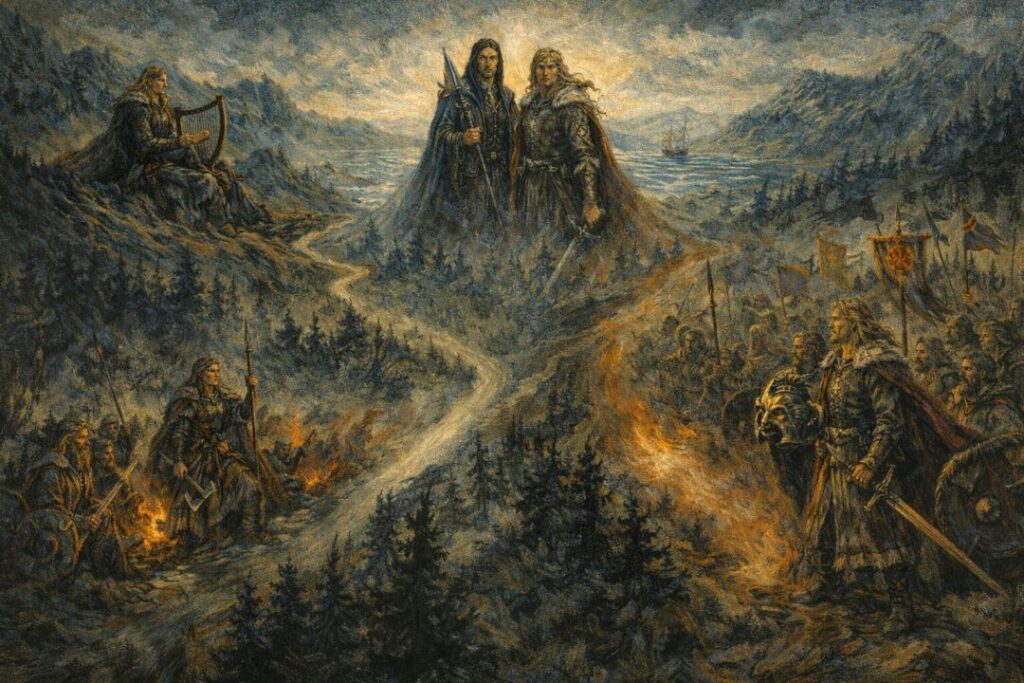
Why the House of Bëor Matters So Much
The House of Bëor does not dominate the military story the way the House of Hador later seems to do.
Its importance is quieter and more fateful.
This is the house that produces Beren, and Beren’s story does not remain a private heroic tale. It reaches directly into the history of the Silmarils, the doom of Doriath, and the ancestry of Elrond and Elros. In other words, the House of Bëor stands at one of the key turning points where the fate of Men and Elves becomes inseparably joined.
It is also the house most strongly associated with endurance under ruin.
The lands of Ladros are lost. The house ceases to stand as an independent power. Its survivors scatter, merge, and endure. But its line does not become less important when its political strength collapses.
It becomes more important.
That is one of the patterns readers can miss when the names pile up. The House of Bëor does not matter because it stays large. It matters because its bloodline and choices keep resurfacing at the deepest points of the story.
The House of Haleth: The House That Does Not Fit the Pattern
Then there is the House of Haleth.
This is the house that often becomes clearest once you realize it is supposed to feel different.
The Haladin are not simply another branch of the same stock in the way the Houses of Bëor and Hador are related. They are described as a separate people among the Edain, with their own speech and their own distinct character. They keep apart more. They are more inward. They do not slide easily into the structures built by Elven lords.
That difference is essential.
Where the House of Bëor feels closely woven into the great friendships of the Eldar, the House of Haleth feels self-contained. Their defining leader, Haleth, becomes one of the most striking human figures of the First Age not because she founds a great kingdom, but because she refuses to be absorbed. After the death of her father and brother, she holds her people together, rejects an offered settlement under Caranthir’s protection, and leads them onward.
That choice tells you almost everything.
The House of Haleth is the house of independence.
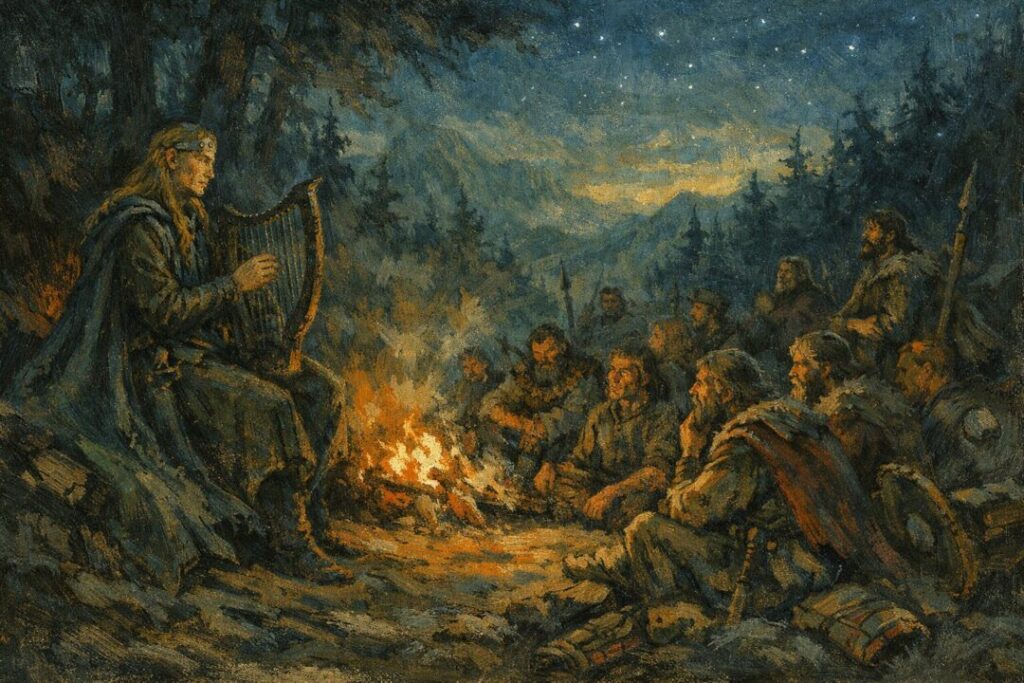
Brethil and the Quiet Strength of the Haladin
When the Haladin settle in Brethil, they do not become the most glorious of the Edain.
They become something rarer in the Silmarillion: stubbornly themselves.
They are woodsmen. Guarders. A people less drawn into the grand designs of the Noldor than the other houses. They do not vanish from the story, but they rarely stand in the center of its brightest heroic staging. Instead they remain present along the edges of catastrophe and refuge.
That matters more than it first appears.
Brethil becomes a place where other broken lines touch their story. Survivors of the House of Bëor pass through. Kinship links later connect them with the House of Hador. Túrin’s final tragedy enters Brethil in one of the darkest late movements of the First Age.
So while the House of Haleth may seem at first like the most isolated, it is not unimportant.
It is a reminder that the Edain were never one simple, unified people.
Even among the Elf-friends, there are deep differences in culture, temperament, and destiny.
The House of Hador: The Great War-House of the Edain
The third great house is the House of Hador, originally the folk of Marach.
This is the house many readers instinctively remember best, because it dominates so much of the great heroic and tragic material of the later First Age.
They are the largest of the Houses. They become closely allied with Fingolfin and Fingon. They settle in Hithlum, and under Hador they receive Dor-lómin. From there the House rises into full legendary prominence.
This is the house of Hador Goldenhead.
The house of Galdor.
The house of Húrin and Huor.
The house of Túrin and Tuor.
That is an extraordinary concentration of importance in one line, and it is why the House of Hador can feel overwhelming on the page. So many major figures cluster here that readers can start to confuse importance with complexity.
But the house itself is actually easy to grasp once reduced to its core idea.
The House of Hador is the great martial house of the Edain.
Not merely because they fight often, but because their story is shaped by open alliance, lordship, battlefield courage, and catastrophic loss on a scale almost unmatched among Men.
Why the House of Hador Carries So Much of the Tragic Weight
If the House of Bëor is the house of fateful intimacy and the House of Haleth the house of independence, the House of Hador is the house of heroic burden.
Its greatest figures stand at the front edge of ruin.
Húrin’s defiance before Morgoth. Huor’s last stand. Túrin’s long and terrible doom. Tuor’s journey to Gondolin and his later role in the line that leads to Eärendil. Again and again, the House of Hador stands where human courage meets almost unbearable pressure.
That is why the house feels so large in the imagination.
It is not just numerous in the lore. It is emotionally enormous in the narrative.
And its importance does not end with the fall of its power in Beleriand. Of the surviving Edain who later go to Númenor, the people of Hador remain the greatest in number. So even beyond the First Age, their legacy stretches forward into the making of the Númenóreans and, much later, the Dúnedain of the West.
That does not mean every later noble line is simply “the House of Hador continued.” The inheritance is more blended and more complex than that.
But it does mean that the House of Hador is not only central to the First Age. It helps shape what Men of the West become afterward.
So How Do the Three Houses Connect?
This is where people often start to drown in names.
The better question is not “Can I memorize every descent line?”
It is “How do the houses touch one another in the story?”
The answer is: through alliance, marriage, shared catastrophe, and convergence in the great lines that matter later.
The House of Bëor gives us Beren.
The House of Hador gives us Tuor.
Beren and Lúthien lead down one line to Elwing. Tuor and Idril lead down another to Eärendil. Eärendil and Elwing unite those lines. Their children are Elrond and Elros.
That is the point where the houses stop feeling like separate genealogy charts and start feeling like history moving toward a center.
The House of Haleth is less dominant in that central royal line, but it is not detached from it. The Haladin intermarry with the House of Hador, and their lands in Brethil become part of the lived geography of these families in exile, refuge, and grief.
So the right way to think of the Houses is not as three sealed boxes.
They begin distinct.
Then history presses them together.
Why Readers Feel Overwhelmed by the Genealogy
Because the Silmarillion often presents importance through lineage.
That is part of its mode. Names matter. Descent matters. Memory matters.
But the reader usually does not need the full tree to understand the meaning.
What matters most is recognizing the function of each House.
Bëor brings closeness to the Eldar, first friendship, and the line of Beren.
Haleth brings separateness, resilience, and a human identity not swallowed by Elven power.
Hador brings military greatness, terrible heroism, and the line of Húrin, Huor, Túrin, and Tuor.
That is already enough to read the story more clearly.
The genealogy is not useless. It becomes rewarding once the larger shape is in place.
But it should come after understanding, not before it.
The Real Meaning of the Houses of the Edain
The deeper point is that the Edain are not one interchangeable mass of “good Men.”
The story gives them texture.
Different houses answer the world differently.
Some draw near to Elven wisdom.
Some remain fiercely self-governed.
Some become great war-leaders.
Some survive by endurance rather than victory.
That complexity is why the Houses matter.
Not because they let readers build a chart, but because they show that from the first entrance of Men into Beleriand, humanity already contains different strengths, different weaknesses, and different ways of meeting doom.
And from those differences come the greatest human figures of the Elder Days.
So if the Houses of the Edain have ever felt like too much genealogy, the simplest correction is this:
do not begin with the family tree.
Begin with the three identities.
The House of Bëor.
The House of Haleth.
The House of Hador.
Once you see what each one is, the names stop feeling like clutter.
They start feeling like history.
Sources & Notes
- J.R.R. Tolkien, The Silmarillion, “Of the Coming of Men into the West” — establishes the three Houses of the Edain, Bëor’s people, the Haladin, and the folk of Marach/Hador, and shows their first friendships with the Eldar.
- J.R.R. Tolkien, The Silmarillion, “Of the Ruin of Beleriand and the Fall of Fingolfin” — gives the House of Bëor in Ladros, Barahir’s outlaw remnant, and the wider collapse after the Dagor Bragollach.
- J.R.R. Tolkien, The Silmarillion, “Of Beren and Lúthien” — follows the House of Bëor through Beren and shows why that line becomes central to the joined fate of Elves and Men.
- J.R.R. Tolkien, The Silmarillion, “Of the Fifth Battle: Nirnaeth Arnoediad” — presents the House of Hador at its heroic and tragic height through Húrin, Huor, and the ruin of Hithlum.
- J.R.R. Tolkien, The Silmarillion, “Akallabêth” — looks forward from the surviving Edain to Númenor and notes that the people of Hador were the greatest part of those who crossed the Sea.