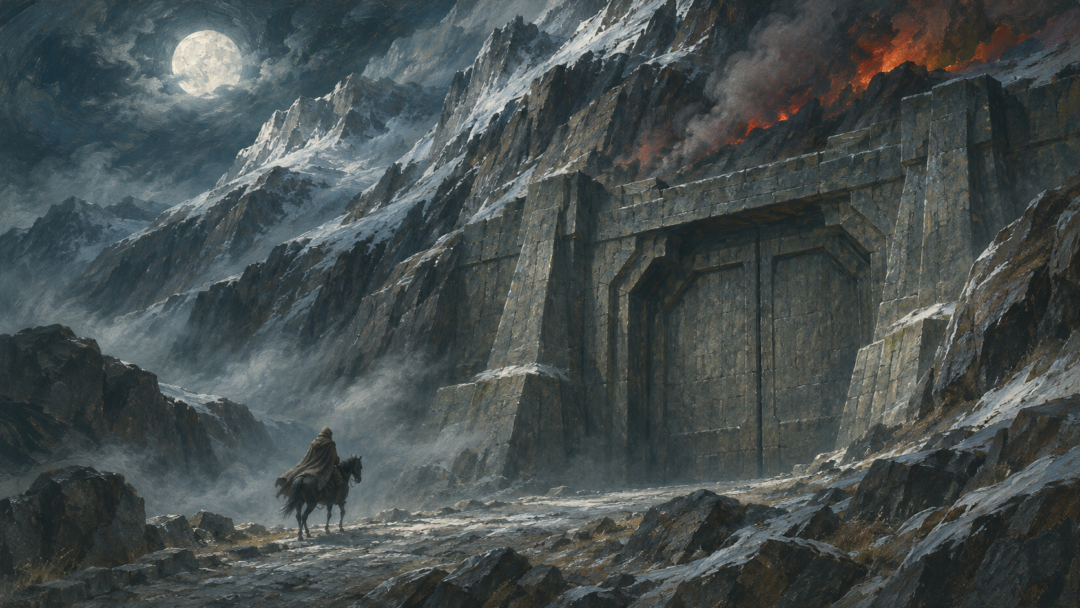
A horseman comes to the gates of Erebor at night, carrying an extraordinary offer from Mordor. Sauron will return ancient Dwarf-rings and give the Dwarves Moria, the lost kingdom beneath the Misty Mountains. For a people who remember Khazad-dûm as their greatest home, it is a temptation steeped in grief.
But there is something terrible beneath those halls. Durin’s Bane, the Balrog that drove the Dwarves out, has not gone away. If King Dáin accepted, would Sauron have ordered it out, fought it, or handed over a kingdom that was still deadly to enter? The books provide no plan for dealing with the Balrog. They give us stronger grounds for judging the promise itself: Sauron wanted the One Ring, and possession of Moria was a reward he could announce without proving he could make it habitable.
The Bargain Was Made at Erebor, Not in Moria
In The Fellowship of the Ring, Glóin tells the Council of Elrond about the messenger who called Dáin to his gate. He urgently questioned the Dwarves about hobbits. He knew that members of Dáin’s people had travelled with Bilbo during the quest to Erebor, so they were among the few who might help him trace the hobbit. He called Bilbo a thief and dismissed the Ring he wanted as an unimportant object. That was the deception: Sauron was seeking the One Ring.
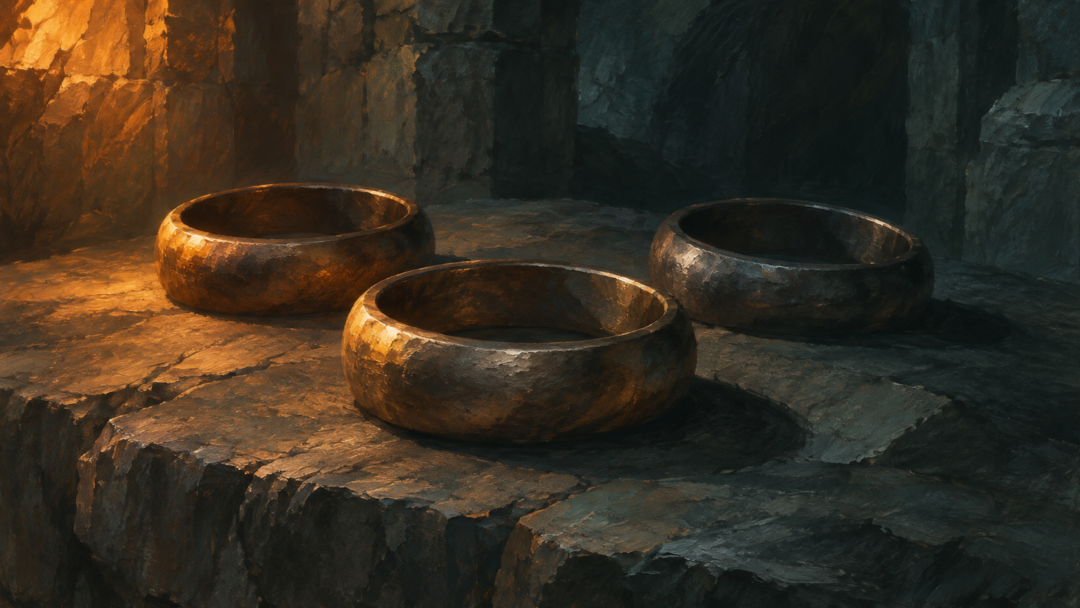
The payment depended on what the Dwarves delivered. If they obtained the Ring itself, Sauron offered to return “three rings that the Dwarf-sires possessed” and declared that “the realm of Moria shall be yours for ever.” News of whether Bilbo lived and where he could be found would earn a different, unspecified reward and friendship. Sauron was trying to recruit Dáin’s people into his search.
The messenger never explained what possession of Moria would mean. He said nothing about removing Orcs, rebuilding chambers, or confronting Durin’s Bane. Declaring the realm Dwarven property would be easy; making it possible to inhabit was another matter. The promise contains no deadline, no proposed campaign, and no account of who would deal with the power still inside.
Dáin withheld an answer, and the messenger returned with further threats. Glóin also feared for King Brand of Dale, whose borders were threatened. Refusal could carry a price, but agreement offered no trustworthy protection. Glóin later told Elrond that “his words held both menace and deceit.” Balin’s expedition to reclaim Moria had already fallen silent. A real attempt to occupy those halls had vanished before Sauron offered them back.
The Balrog Was an Enemy Older Than Sauron’s Offer
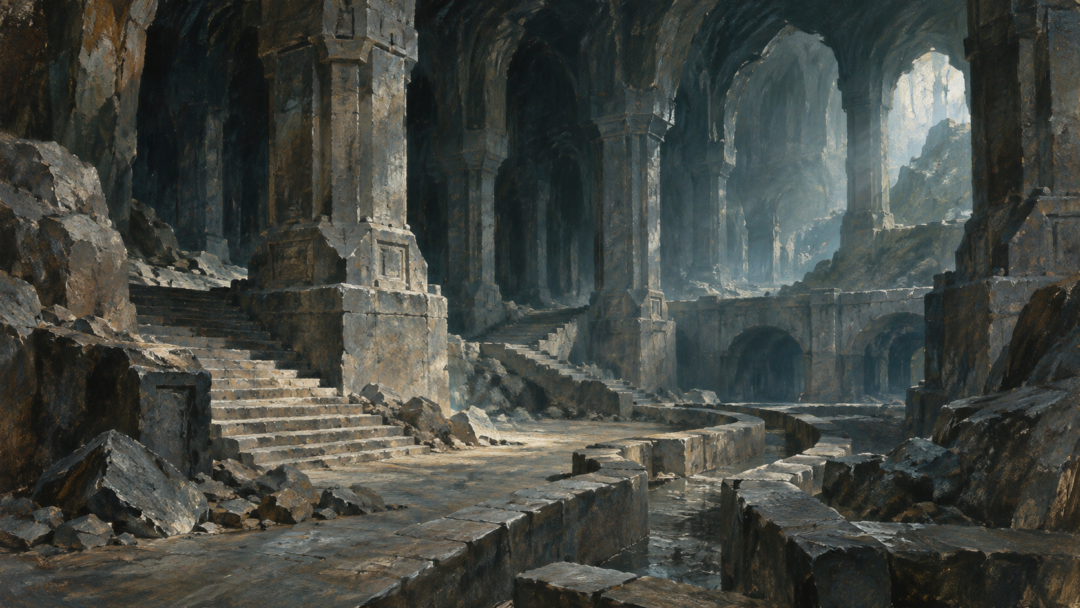
Durin’s Bane had emerged from the depths of Khazad-dûm long before the messenger arrived. It killed King Durin VI and his successor, Náin I, and the Dwarves abandoned their great underground realm. For generations their descendants knew the evil as Durin’s Bane without necessarily knowing its true nature. Orcs later occupied much of Moria, while the terror beneath them remained. It was the reason the Dwarves could not simply march home.
Dáin himself had reason to fear it. After the Dwarves defeated the Orcs outside Moria, he looked toward the gate and recognised that a power beyond their strength waited within. He opposed entering despite the victory. To him the darkness beyond the gate was not a problem that the defeat of an Orc army had solved. As Appendix A relates, the king offered Moria by Sauron had refused to occupy it even when Dwarven armies stood victorious outside.
Balin’s later colony shows the difference between entering Moria and securely reclaiming it. His people initially sent encouraging news, then all messages ceased. When the Fellowship eventually found their records in the Chamber of Mazarbul, they learned of the colony’s destruction amid attacks and siege. Balin had been killed, and the survivors were trapped as their hope of escape collapsed. The records do not establish that the Balrog personally destroyed Balin’s colony. Its presence nonetheless made restoration more dangerous than clearing out Orcs.
Did Sauron Know What Lived Beneath the Mountain?
It is plausible that Sauron knew of a formidable power in Moria. His influence extended through Orcs and other servants, and the old Dwarf-realm lay amid routes important to the struggle across Middle-earth. Reports of the terror could have reached him. Even Gandalf did not identify the creature as a Balrog until the Fellowship encountered it. But the texts never say he identified Durin’s Bane as a Balrog, contacted it, or knew how to control it.
There was also a distant connection between the two beings. The Silmarillion identifies Balrogs as fearsome spirits of fire corrupted into Morgoth’s service. Sauron, originally one of the Maiar of Aulë, served Morgoth too. They belonged to the same broad order of spiritual beings and fought under the same dark master in the ancient world. They shared a dark master, not necessarily a command structure in Third Age Moria.
Sauron had become a Dark Lord in his own right; the Balrog had remained hidden under the mountains. There is no recorded moment when one acknowledged the other’s authority, and nothing tells us whether the creature regarded Mordor’s wars as its concern. We are not told whether they had contact after Morgoth’s defeat. Orcs living above the Balrog prove nothing about its loyalty. Their coexistence could reflect fear, convenience, or an unrecorded arrangement. Durin’s Bane was not thereby a known officer of Mordor.
Four Ways Sauron Might Have Handled Durin’s Bane
The easiest possibility is that the Balrog would have obeyed him. If Sauron possessed authority it recognised, he might have ordered it to withdraw or leave the mountain, avoiding a battle. But nothing in the account of the messenger, or in the Balrog’s appearance during the Fellowship’s journey, demonstrates such obedience. Shared allegiance to Morgoth is not an order Sauron could automatically enforce.
A bargain between them is another possibility. Sauron might have sought an arrangement that left the Balrog undisturbed in the deepest passages while Dwarves occupied other parts of Moria. Their interests might temporarily have allowed that division. But neither side’s willingness is established. A Balrog had a will of its own; a demand to surrender territory might well fail.
Then there is force. Sauron might have tried to drive it out through threats, servants, or a direct confrontation. The story gives no reliable method. In The Two Towers, Gandalf describes his battle with the Balrog from the deep waters beneath Moria, through hidden passages, and up the Endless Stair. He finally threw his enemy down from the mountain, but passed out of thought and time before being sent back. Such a victory came at immense cost even for Gandalf.
That battle cannot be converted into a tidy ranking that proves Sauron would win or lose. Sauron was mighty, but when he made the offer he did not possess the One Ring he desperately wanted. A personal struggle with another formidable spirit would have involved risks that the books never calculate. Orc armies offered no demonstrated solution, either. Taking the entrances would not remove the danger below.
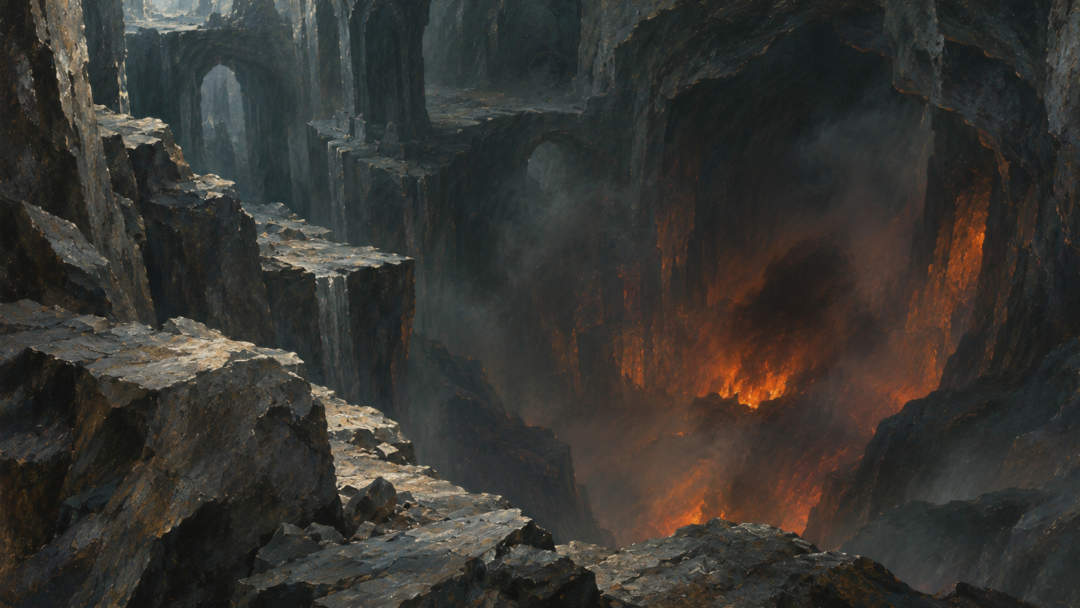
The fourth possibility needs no victory over the Balrog at all: Sauron could leave it where it was and let the Dwarves discover the limitations of their new title. He could withdraw forces he controlled, permitting an apparent return to the upper halls while leaving the deeper danger. That would give the Dwarves a foothold, perhaps even a brief sense of triumph, without solving the question of what might rise from below. This is a possibility, not a recorded plan; it assumes no power over Durin’s Bane.
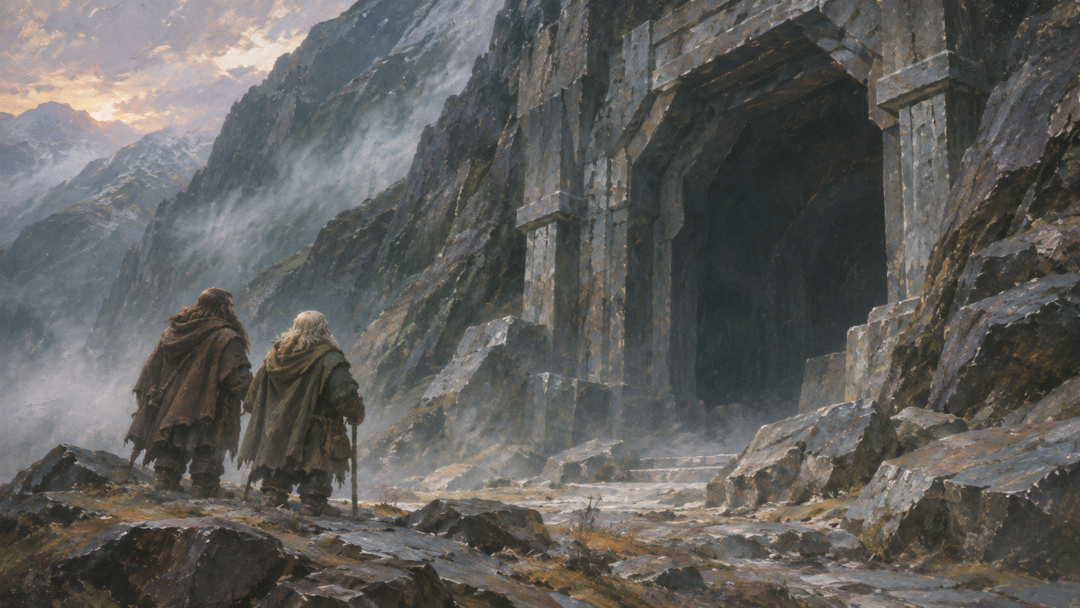
Accepting the Offer Would Change the Dwarves’ Position First
The most consequential part of the bargain happened before any Dwarf reached Moria. To receive the promised rings and realm, Dáin’s people would have to take Bilbo’s Ring and deliver it to Sauron. They would be restoring the Enemy’s greatest instrument of domination in exchange for their home. Even providing information about Bilbo would aid his pursuit.
The three promised Dwarf-rings were another warning. The Rings of Power had a long and troubled history among Durin’s people, feeding wealth and greed even though Dwarves did not become Ringwraiths. Sauron offered objects tied to the very power he wished to regain. Their return could resemble restitution without making the Dwarves freer. The precious things offered at Erebor carried memories of former kings, but also a history of Sauron’s efforts to influence those who accepted his Rings.
Suppose, generously, that Sauron genuinely intended to let the Dwarves settle Moria. He might have preferred a cooperative Dwarf-kingdom to another enemy on his northern approaches. He could recognise their claim and restrain his own forces while leaving the Balrog undisturbed. None of that ensured Dwarven safety. His sincerity about transferring a claim would still tell us nothing certain about his ability to make that claim good. He could want Dwarves in Moria and still let them bear the costs.
And if he recovered the One Ring, the whole balance would change. The Dwarves would have supplied the thing he sought above all else, greatly strengthening the ruler whose word they were relying upon. A promise of perpetual possession offered little protection against a ruler bent on mastering Middle-earth. However long he honoured it, the Dwarves would depend on terms set in Mordor.
The unanswered question is therefore not hiding a missing duel between two dark powers. It rests at the gates of a kingdom the Dwarves loved but feared to enter. Sauron could offer Moria with a messenger’s voice; he never demonstrated that he could give them its safety. Beyond the stone doors, Durin’s Bane still waited, indifferent to any promise made in its name.
Sources & Notes
- Tolkien Gateway, The Council of Elrond — Glóin's report of Sauron's offer to Dáin — https://tolkiengateway.net/wiki/The_Council_of_Elrond
- The Encyclopedia of Arda, Durin's Bane — the Balrog's survival and the Dwarves' expulsion from Moria — https://www.encyclopedia-of-arda.com/d/durinsbane.php
- Tolkien Gateway, Dáin Ironfoot — the warning at Moria after Azanulbizar and the later king of Erebor — https://tolkiengateway.net/wiki/D%C3%A1in_Ironfoot
Reading references: The Fellowship of the Ring, The Council of Elrond and The Bridge of Khazad-dûm; The Return of the King, Appendix A, Durin's Folk. No published plan explains how Sauron would have dealt with the Balrog after acceptance. The proposed alternatives are counterfactual analysis, not reported events.