Throughout the War of the Ring, the Free Peoples of Middle-earth act with courage, sacrifice, and unity unmatched since the Elder Days. Old hatreds are set aside. Ancient alliances are renewed. Kingdoms long diminished rise again in defiance of the Shadow. Even the smallest folk—the Hobbits of the Shire—are drawn into events far greater than themselves.
From almost every angle, it looks like a story of resistance done right.
And yet, beneath all this heroism lies a quiet misunderstanding—one so subtle that even the Wise never fully confront it.
The Free Peoples believe they are fighting a war that can be won.
From the moment the One Ring is revealed in Rivendell, the struggle against Sauron is framed in largely military terms. Time must be bought. Strongholds must endure. Armies must distract the Eye while the Ring-bearer moves in secrecy. Every major plan assumes that if enough courage and strength can be gathered in the right places, victory might be forced.
This strategy is not wrong.
But it is incomplete.
Because the War of the Ring is not decided by strength.
A War Everyone Thinks They Understand
Consider the great turning points of the Third Age—the moments that feel, on the surface, like decisive victories.
At Helm’s Deep, the Rohirrim stand against annihilation and survive through courage, endurance, and timely aid.
At Minas Tirith, the Witch-king falls, the siege is broken, and the White City endures against overwhelming odds.
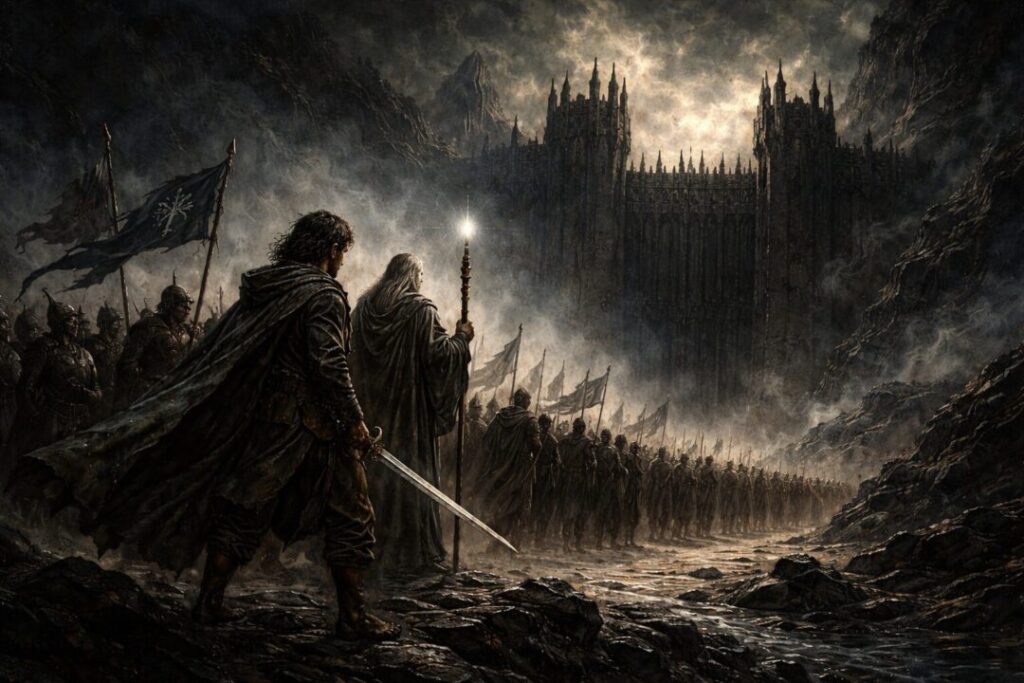
At the Black Gate, the Captains of the West march openly against Mordor itself, defying terror with resolve and unity.
These moments matter. They are earned. They are costly.
And within the logic of war, they feel decisive.
But none of them end the conflict.
Even the march to the Morannon—the most desperate gamble of the entire war—is not undertaken in the belief that Sauron can be defeated by force. It is a feint, a last act of defiance meant to draw the Eye away from the true danger.
Victory, everyone agrees, depends on the Ring.
And yet even here, the Free Peoples misunderstand the nature of their own hope.
They believe the Ring will be destroyed because someone strong enough, brave enough, and faithful enough will carry it to the end.
They believe endurance will be enough.
The Unplanned Element
It isn’t.
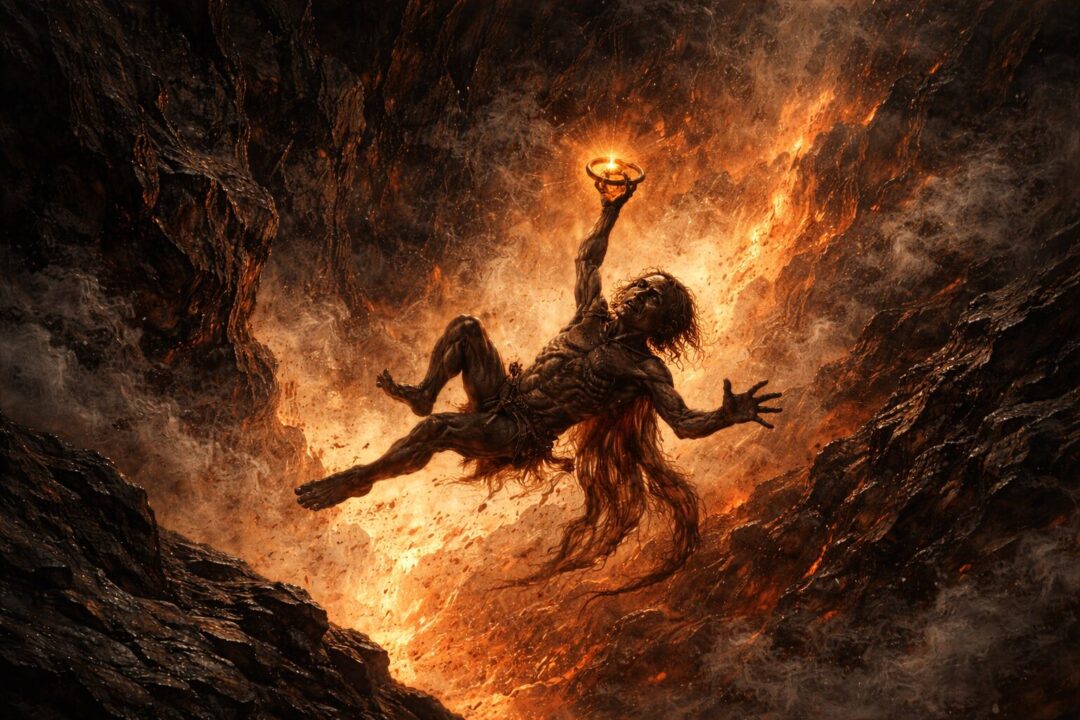
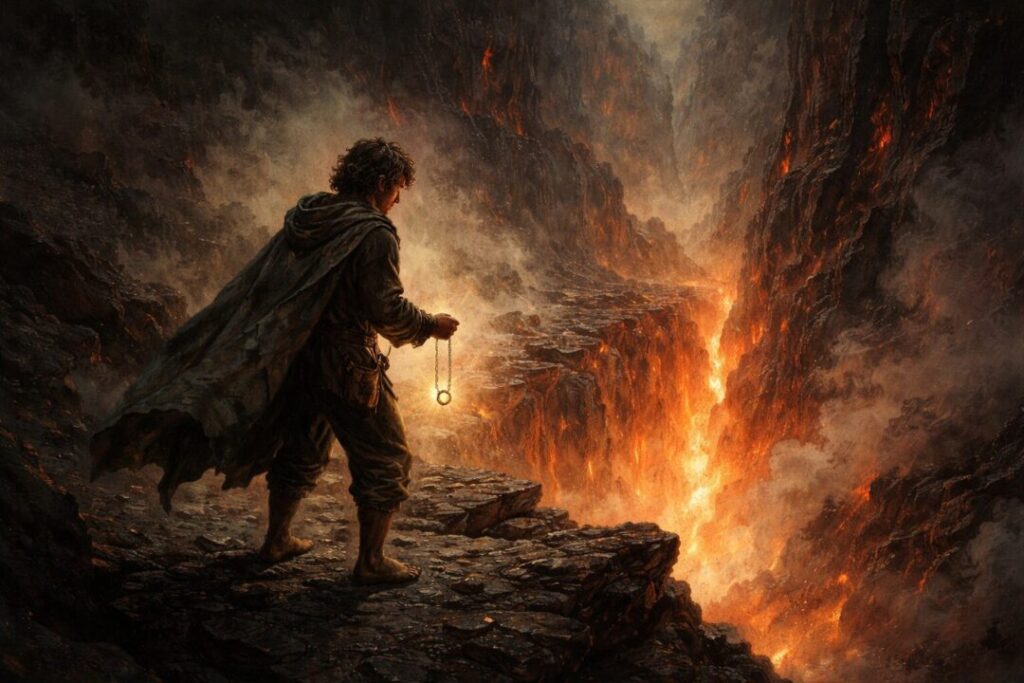
At the very brink of Mount Doom, Frodo Baggins fails.
This is one of the most uncomfortable truths in the story, and one that is often softened in retellings. Frodo does not cast the Ring into the fire. He does not conquer it through sheer moral strength. At the final moment—after a journey no other being could have endured—he claims the Ring for himself.
His failure is not cowardice. It is not weakness in the ordinary sense. It is the inevitable limit of resistance against a power that was never meant to be mastered by will alone.
What saves Middle-earth is something no council planned for and no strategy accounted for.
Gollum.
And more importantly, the mercy shown to him long before the war ever reached its climax.
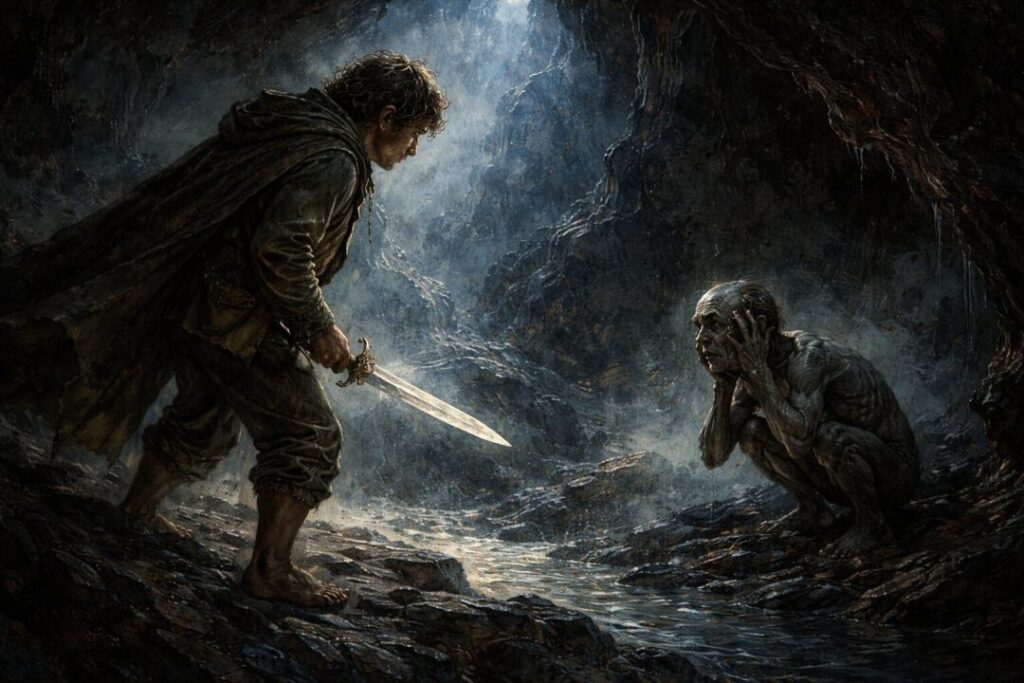
When Bilbo Baggins first spares Gollum’s life beneath the Misty Mountains, he does so out of pity, not foresight. He has no vision of Mount Doom. No understanding of future necessity. He simply cannot bring himself to strike a creature already ruined by suffering.
When Frodo continues that mercy—again and again—he is often criticized for it. Even warned.
The dominant belief among the Free Peoples is clear: mercy toward evil is dangerous.
And in almost every other story, they would be right.
Why the Wise Would Have Objected
It is telling that even Gandalf, the strongest advocate of mercy in the narrative, admits that Gollum deserves death. His refusal to judge is moral, not strategic. He does not argue that pity will save the world—only that judgment is not Frodo’s place.
No one expects mercy to matter.
If the full truth had been known—if Elrond, Galadriel, or even Aragorn had understood exactly how the Ring would be destroyed—they might well have considered Frodo’s restraint a liability rather than a virtue.
Because mercy is uncontrollable.
It cannot be commanded.
It cannot be predicted.
It cannot be relied upon.
And that is precisely why it is excluded from every plan.
The Free Peoples place their trust in courage, loyalty, endurance, and sacrifice—virtues they understand and can cultivate. These are strengths that can be trained, organized, and deployed.
Pity, by contrast, feels fragile. Risky. Almost irresponsible.
Mercy introduces uncertainty.
And in a war for survival, uncertainty feels like failure.
The True Nature of the “Mistake”
The mistake of the Free Peoples is not that they showed mercy.
It is that they never believed mercy would save them.
They treat it as a moral luxury, not a decisive force. A kindness, not a weapon. Something admirable, but ultimately secondary to strength and strategy.
Sauron shares this blind spot.
He cannot imagine that anyone would spare a creature as corrupted as Gollum. He cannot conceive of power being undone by compassion rather than domination. In his understanding of the world, weakness exists only to be crushed or exploited.
In this, the Enemy understands the assumptions of the Free Peoples better than they understand themselves.
Both sides believe power decides the fate of the world.
They simply disagree over who will wield it.
A Victory No One Planned
The War of the Ring ends not with triumph, but with astonishment.
The Ring is destroyed through failure.
Victory comes through weakness.
The world is saved by a choice that looks, from every strategic angle, like a mistake.
This is not an accident of chance, nor a convenient twist.
It is a statement about the nature of evil and the limits of power.
Middle-earth is not saved because the Free Peoples finally become strong enough to defeat darkness. Their armies fail. Their champions fall. Their plans collapse at the crucial moment.
It is saved because—without fully understanding what they are doing—they refuse the logic of domination that defines their enemy.
They choose mercy when judgment would be easier.
They choose restraint when certainty would feel safer.
They allow space for grace in a war that offers no guarantees.
Even when they do not fully understand what that refusal will cost.
Or what it might make possible.
And that is the single mistake the Free Peoples never realized they made—one that, paradoxically, becomes the only reason they survive at all.
Sources & Notes
- J.R.R. Tolkien, The Hobbit, Chapter 5, “Riddles in the Dark” — Bilbo’s pity restrains him from killing Gollum when he has the chance.
- J.R.R. Tolkien, The Lord of the Rings, Book I, Chapter 2, “The Shadow of the Past” — Gandalf’s warning that pity and mercy may still govern Gollum’s fate.
- J.R.R. Tolkien, The Lord of the Rings, Book II, Chapter 2, “The Council of Elrond” — the Wise reject using the Ring and commit to the perilous road to Orodruin.
- J.R.R. Tolkien, The Lord of the Rings, Book VI, Chapter 3, “Mount Doom” — Frodo claims the Ring, and its destruction comes through Gollum’s return.
- J.R.R. Tolkien, The Letters of J.R.R. Tolkien, Letter 246 — Tolkien discusses Frodo’s failure at the Cracks of Doom and the part played by mercy and providence.