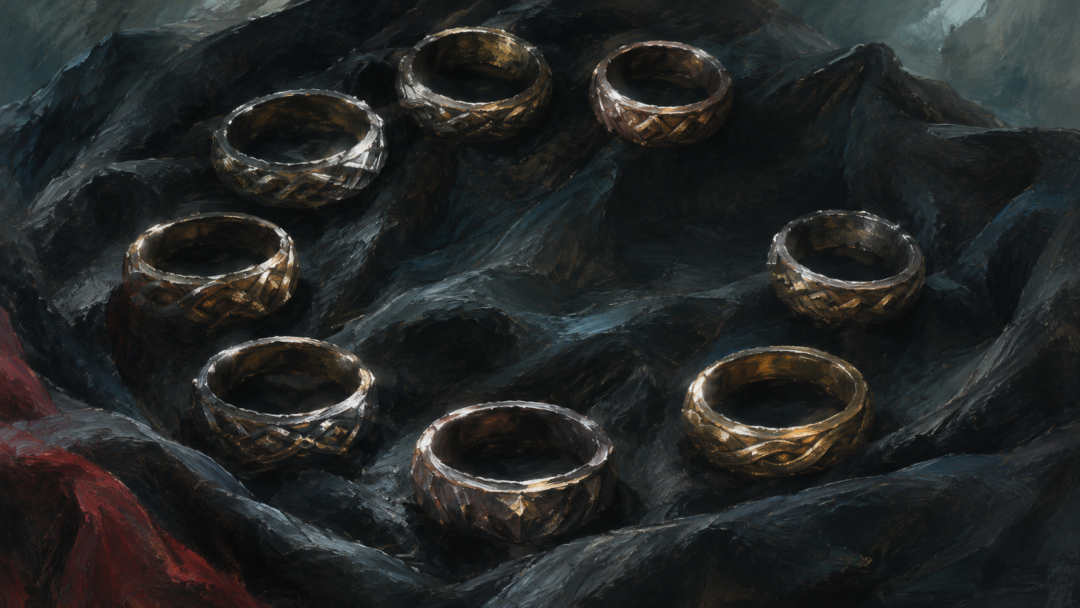
At the Council of Elrond, Glóin asks a question that sounds remarkably sensible beside all the talk of Sauron's One Ring. What about the Three Rings of the Elves? Are their keepers leaving them unused during a crisis? Elrond's answer is wonderfully brief: “They are not idle.” And that raises an even larger question. If one small golden ring can make Frodo disappear and threaten the whole world, what did the other nineteen do?
Quite a lot, but not the same things. The Nine empowered Men before making them Sauron’s servants. The Seven helped Dwarven kings amass treasure while inflaming their hunger for it, yet failed to enslave them. The Three allowed the Elves to preserve, protect and heal what they loved. The One was different: Sauron made it to master the others and, through them, their wearers.
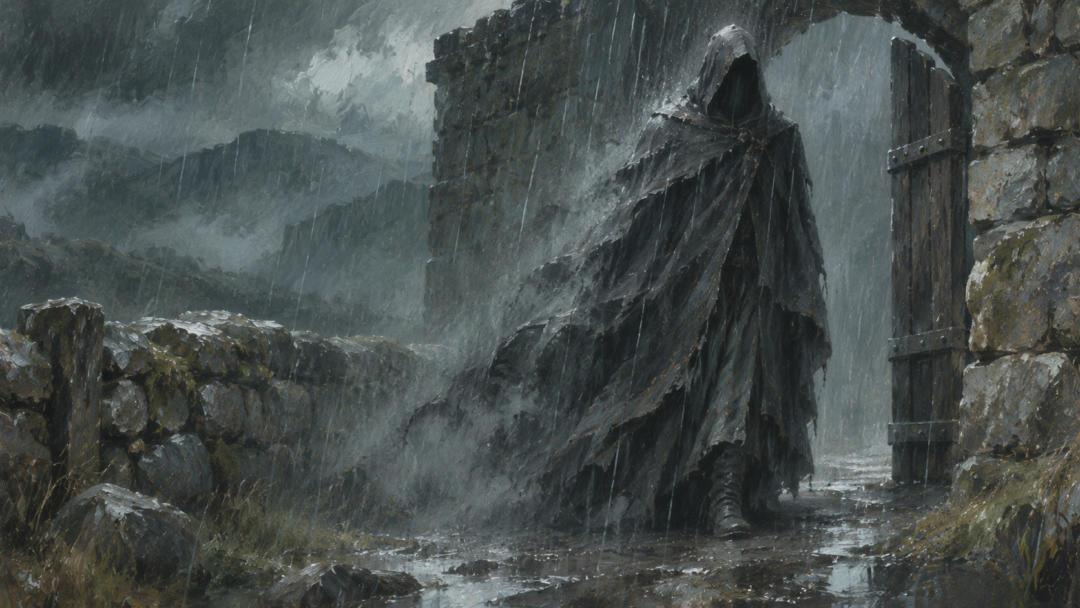
The Nine: from great lords to Ringwraiths
The Black Riders hunting Frodo through the Shire are the final result of the Nine Rings, not their starting point. Long before they rode in dark cloaks, their bearers were Men who gained astonishing advantages. In The Silmarillion, the account of the Rings of Power says that they became mighty kings, sorcerers and warriors, acquiring wealth and glory. These were powers, not decorative badges of allegiance.
One gift was the ability to walk unseen. Another was a seeming extension of life, although that was not the same as true immortality. The Men could also perceive things invisible to ordinary mortal sight. This sounds thrilling until the account adds that the sights were often Sauron's phantoms and delusions. The rings opened a door into an unseen world, but the person holding the key was not necessarily the one controlling what appeared beyond it.
Their ruin took time. The Nine did not instantly turn men into ghosts. Each bearer succumbed sooner or later according to his own strength and the character of his will. Eventually the rings brought them under the domination of Sauron's One, until they became permanently invisible to ordinary eyes. Their prolonged lives had become unbearable, and the former great lords entered the world of shadows as the Nazgûl. What looked like freedom from mortality ended in the loss of freedom itself.
That history makes the encounter at Weathertop more disturbing. Frodo puts on the One and sees the Riders differently: pale faces, terrible eyes and crowns where there had seemed to be nothing but darkness beneath their hoods. He is glimpsing the realm in which they exist. Their visible cloaks and armour give shape to servants who have otherwise faded from ordinary sight. The books give their horror a long history of power becoming dependence.
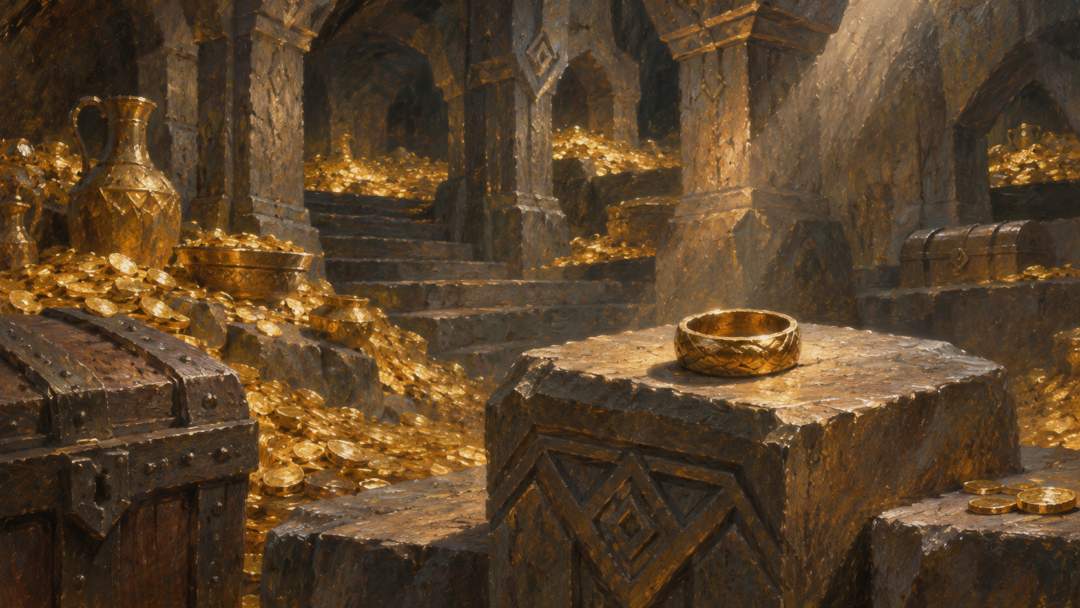
The Seven: gold without obedience
The Seven produced a different disaster. Sauron intended domination, but the Dwarves proved exceptionally difficult to bend. In the account given in The Silmarillion, they could be killed or broken, but not reduced to the shadowy slavery suffered by the Men. Their minds resisted mastery, and the rings did not prolong their lives like the Nine. Sauron's scheme had encountered a stubborn limit.
That did not make the Seven harmless. They encouraged wrath and an intense craving for gold and precious things. The Dwarves used them to increase their wealth; a ring was said to lie behind each great hoard. Nothing establishes that the Seven conjured coins or granted individual powers over stone or fire. What the story makes clear is the result: riches accumulated, and the desire for riches grew with them.
Appendix A of The Return of the King brings this problem into one family. Durin's Folk believed their ring had been given directly to Durin III by the Elven-smiths, rather than handed over by Sauron. That is their own tradition, and it differs in emphasis from the general account of Sauron distributing the Seven. Either way, his influence lay upon the ring's making. Passed secretly among Durin’s heirs, it brought wealth and a dangerous attachment to it.
Thrór passed that ring to his son Thráin before returning to Moria, so the ring did not perish with Thrór. Thráin later fell into Sauron's hands in Dol Guldur, where the last of the Seven still held by the Dwarves was taken from him. When Gandalf meets him there, Thráin is dying, and what he passes on is not the ring but a map and key for his son Thorin. The Hobbit thus touches the Seven without making a Dwarf-ring its prize.
Of the Seven, four were consumed by dragons. Sauron recovered the remaining three, including Thráin's. At the Council of Elrond, Glóin's account of a messenger offering Dáin the return of lost rings shows that even their absence could be used as bait. Sauron could not make the Dwarves into Ringwraiths, but their treasure, losses and longing still furnished him with ways to threaten them.
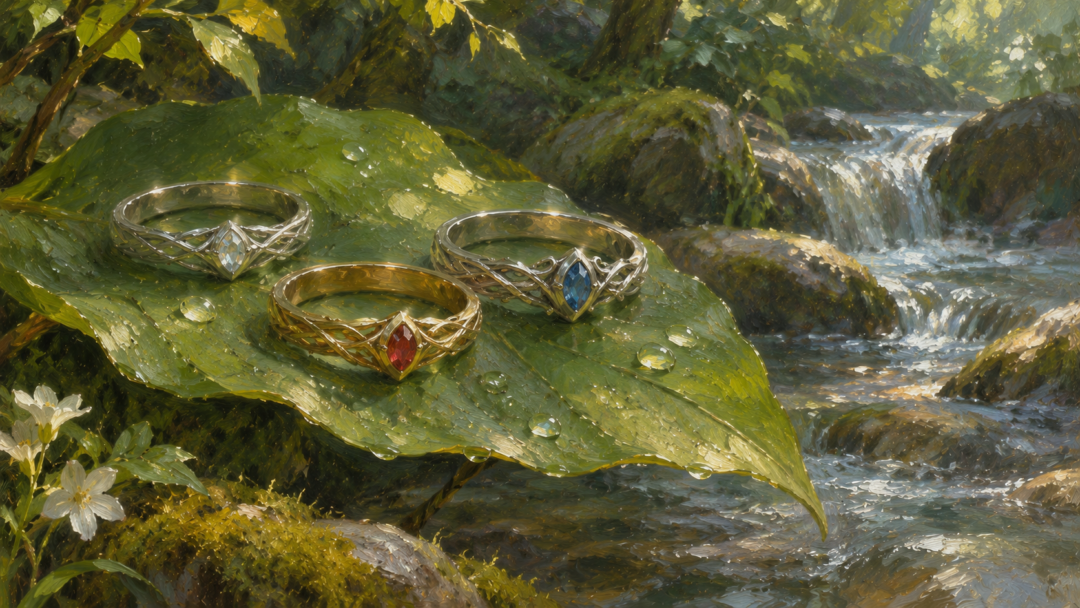
The Three: protecting what time would take
The Three are easily overlooked because their work seldom resembles a dramatic spell. Celebrimbor forged Narya, Nenya and Vilya alone. Sauron never touched them, so they remained free of the corruption he had put directly into the other rings. Yet Celebrimbor had learned ring-making through Sauron's teaching, and the Three were still subject to the One. Untouched did not mean independent.
Elrond explains their purpose when Glóin presses him in Rivendell. They were not made to conquer armies or hoard riches. Their makers sought understanding, creation and healing, preserving what time would wear away. That gives a different meaning to the enchantment of Elven places. Lothlórien feels almost outside ordinary time, its beauty lingering while the world beyond its borders changes. Galadriel's Nenya, the Ring of Water, helps explain that extraordinary preservation.
Elrond bears Vilya, the Ring of Air, at Rivendell, another refuge of memory, learning and healing. It is tempting to assign every remarkable event there to Vilya, particularly the flood that sweeps away the Riders at the Ford of Bruinen. But the narrative credits Elrond with commanding the river and Gandalf with adding the shapes of horses to its waves; it does not explicitly say that Vilya performed the feat. The ring's broader role in sustaining such a haven is clearer than any list of individual spells.
Narya, the Ring of Fire, has an even more human-seeming purpose. Círdan gives it to Gandalf, telling him that it will support him in his labours and help him rekindle hearts in a cooling world. Here, power means strengthening courage against despair. We cannot neatly label every encouraging word Gandalf speaks as an act of Narya, but his possession of the ring makes sense of the kind of resistance he inspires.
The Three also had a strict danger attached. When Sauron first put on the One, the Elves perceived his intention and took off their rings. They kept the Three hidden and did not use them openly while he held the Ruling Ring. If he recovered it again, the minds and works of their keepers would be exposed to him. Their freedom from Sauron's direct touch prevented the Nine's kind of corruption; it did not remove the peril of being governed by his master ring.
What happened when the One was destroyed?
The Council faces a cruel choice. Destroying the One will defeat Sauron, but Elrond fears that it will also end the powers of the Three. Some hope the Elven-rings might become independent and heal Middle-earth. Elrond doubts it. He expects their works to fade, along with beautiful things the Elves protected. Victory therefore promises liberation, not the preservation of everything worth saving.
His fear proves justified. After the One is destroyed in Mount Doom, the Three lose their virtue. Lothlórien is not suddenly reduced to bare earth, nor does Rivendell collapse in a single night. What the rings held against the years must now change and diminish. Galadriel's earlier choice to reject Frodo's offer of the One means accepting that future rather than trying to preserve her realm through domination.
The Seven and the Nine have no comparable happy future waiting for them. The remaining Nazgûl perish with Sauron's downfall, the Witch-king having already been slain. Of the Seven, four have already been destroyed and three reclaimed by Sauron; the story does not follow those surviving rings into any new age of Dwarven power. It offers no evidence that recovering one after Sauron's fall would restore a lost hoard or undo generations of greed. Victory does not redistribute magical equipment.
The films understandably put most of their attention on the One: its disappearance trick, its temptation, the Riders pursuing it, and the danger of Sauron reclaiming it. The prologue shows the other rings and their recipients, but explains little of the Three’s quiet work. In the books, the Three are essential to understanding why the end of Sauron is also the end of an age. Victory saves the world, not its unchanging beauty.
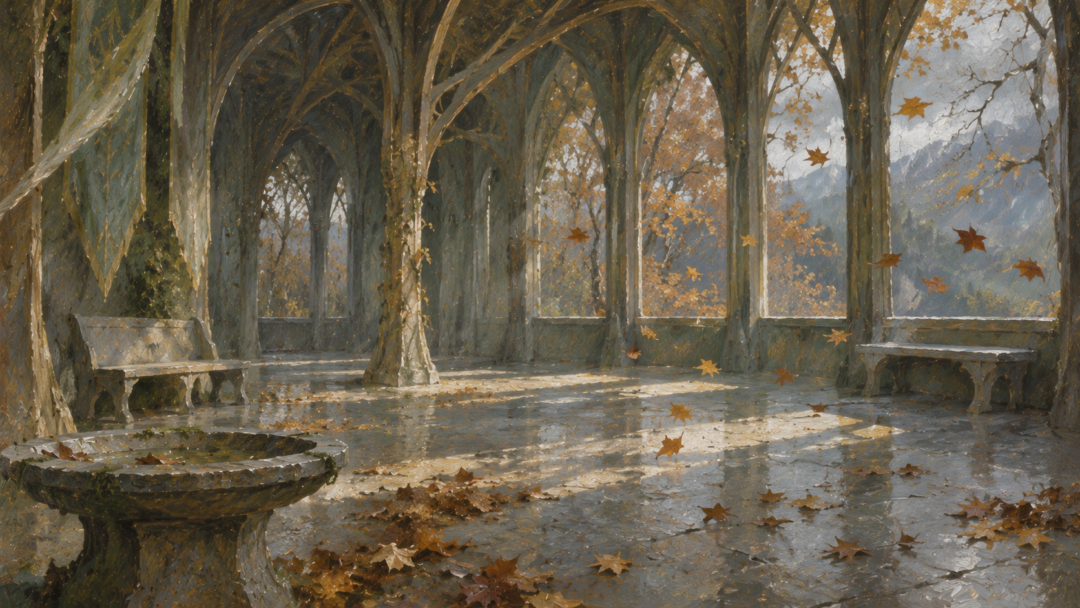
At the Grey Havens, the Three appear openly at last: Galadriel wears Nenya, Elrond wears Vilya, and Gandalf bears Narya. They sail west with Frodo and Bilbo, no longer guarding enclaves of borrowed time. The rings once helped make places where beauty could linger beyond its ordinary season. Now their bearers leave, and the wind, the leaves and the passing years belong to Middle-earth again.
Sources & Notes
- Three Rings - Tolkien Gateway — https://tolkiengateway.net/wiki/Three_Rings
- Seven Rings - Tolkien Gateway — https://tolkiengateway.net/wiki/Seven_Rings
- Nine Rings - Tolkien Gateway — https://tolkiengateway.net/wiki/Nine_Rings
The Silmarillion, ‘Of the Rings of Power and the Third Age’, and The Fellowship of the Ring, ‘The Council of Elrond’, distinguish the Rings’ effects. Appendix A, ‘Durin’s Folk’, records the Dwarven tradition and Thráin’s loss. Specific elemental spells should not be inferred from ring names.