Middle-earth has no shortage of unforgettable music. The Shire can make you homesick for a place that never existed. The Elves sound as though they remember the world before anyone else arrived. The Dwarves carry the weight of kingdoms buried beneath mountains. Mordor can make a room feel unsafe before a single enemy appears.
And then there is Rohan.
If I had to choose one people with the best music in Peter Jackson’s *The Lord of the Rings* films, my answer would be the Rohirrim. Not because their theme is the grandest or the most immediately comforting. It wins because of something harder to achieve: it can sound proud, wounded, lonely, and fiercely alive without losing its identity.
Howard Shore gives each culture a musical character, but Rohan’s music seems to understand its people almost painfully well. It makes courage sound less like confidence and more like a decision made despite knowing the cost.
That is why it stays with me.
First, What Counts as Middle-earth Music?
There is an important distinction between the music heard in Jackson’s films and the songs Tolkien wrote into his books.
Tolkien’s Middle-earth is full of singing. Hobbits sing while traveling and celebrating. Elves preserve memory through song. Dwarves sing of lost treasures and ancient homes. The Rohirrim have their own poetic traditions, and songs can remember the dead long after battles end.
Those literary songs belong to Tolkien’s imagined cultures. The film scores are a different artistic achievement, built primarily through Shore’s music for the screen. They turn places, histories, characters, and changing loyalties into sounds that audiences recognize emotionally.
There are also songs performed by characters within the films, such as Pippin’s haunting performance in *The Return of the King*. Those moments deserve attention, but they are not the same thing as judging the broader musical identity assigned to a people by the score.
My question, then, is not which race Tolkien imagined as the finest singers. It is which people’s music does the most compelling dramatic work across Jackson’s original trilogy.
Five contenders stand out.
The Shire: Music That Makes Everything Else Matter
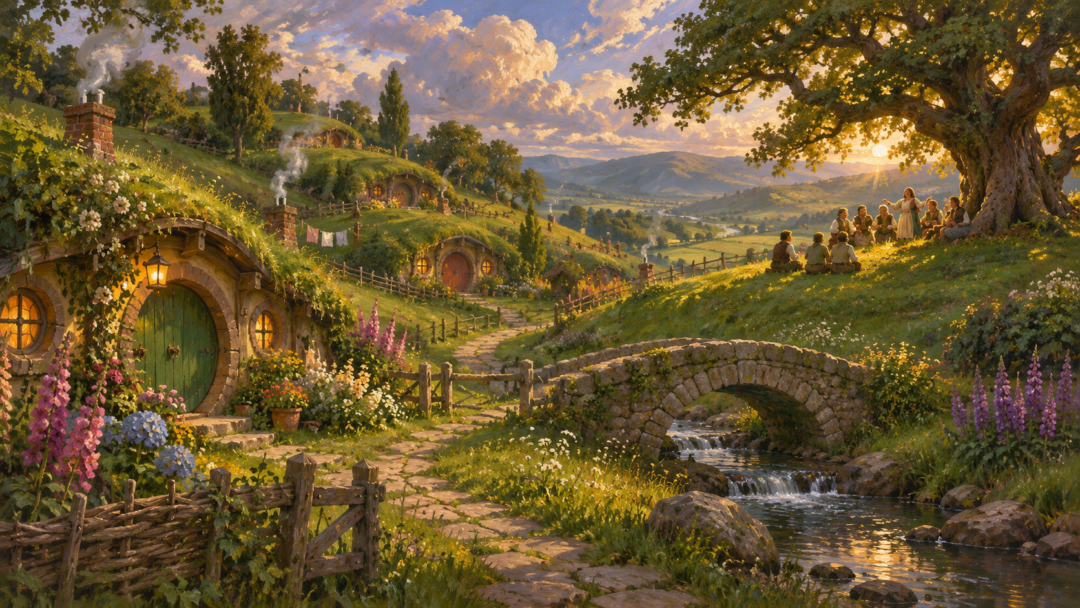
The Shire has perhaps the strongest immediate emotional appeal of any place in the trilogy.
Think of the opening journey through Hobbiton in *The Fellowship of the Ring*. Gandalf arrives, children chase his cart, Bilbo prepares for his birthday, and ordinary life unfolds in a world that has not yet been swallowed by war.
The music makes this ordinary happiness feel extraordinary without telling us that anything extraordinary is happening.
That is its achievement.
The Shire’s familiar melodic character suggests warmth, curiosity, routine, and affection. It belongs to gardens, kitchens, narrow roads, and people whose greatest immediate concerns ought to be supper and visiting relatives.
Later, the same musical identity carries a different emotional weight. When Sam and Frodo remember home far from its fields, the Shire no longer feels merely cheerful. It becomes something fragile that must survive.
The films teach us to love the place before showing us what defending it might require.
This gives the Shire an enormous advantage in any argument about the best music. Its themes reach beyond geography. They express what the entire quest is trying to save.
Still, I would not give the Shire first place.
Its music is extraordinary at making us want to return. Rohan’s music does something just as remarkable while pulling us toward danger.
The Elves: Beautiful Music With an Uncomfortable Distance
The Elves might be the most obvious choice for anyone who values sheer atmosphere.
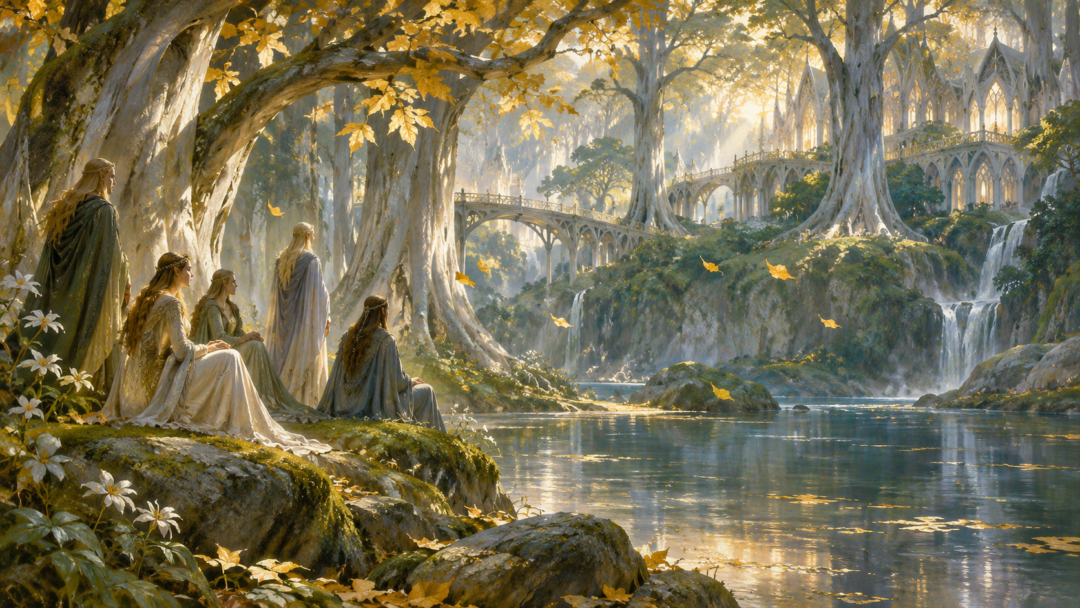
Rivendell appears in *The Fellowship of the Ring* as a place of healing and preservation. Frodo wakes after escaping the Ringwraiths, and the world briefly feels less threatening. The music helps create that refuge.
But Elven music is not simply peaceful.
Lothlórien feels stranger. When the Fellowship enters the woodland realm, the voices and atmosphere seem to belong to a place with different rules from the lands of Men and Hobbits. Following Gandalf’s fall, the Elves’ lament contributes to a sense of grief older and less familiar than the Fellowship’s immediate sorrow.
That difference matters.
The Elves are not just beautiful people living in beautiful places. Their story is also about departure, fading, and the difficulty of holding on to what time takes away.
Their music makes an important emotional argument: an immortal perspective does not free someone from loss. It may make loss harder to escape.
The departure from the Grey Havens completes that idea. The ending is tender, but the consolation comes with separation. Even victory cannot preserve every friendship or every age of the world.
I admire that melancholy. Sometimes, though, Elven music feels deliberately beyond ordinary human experience. We are invited to marvel at it and mourn with it, but not always to stand inside it.
Rohan’s music keeps its heartbreak closer to the ground.
The Dwarves: A Kingdom You Can Hear Before You Can See
The Dwarves present a fascinating problem in the original trilogy: much of their musical identity is associated with a civilization already lost.
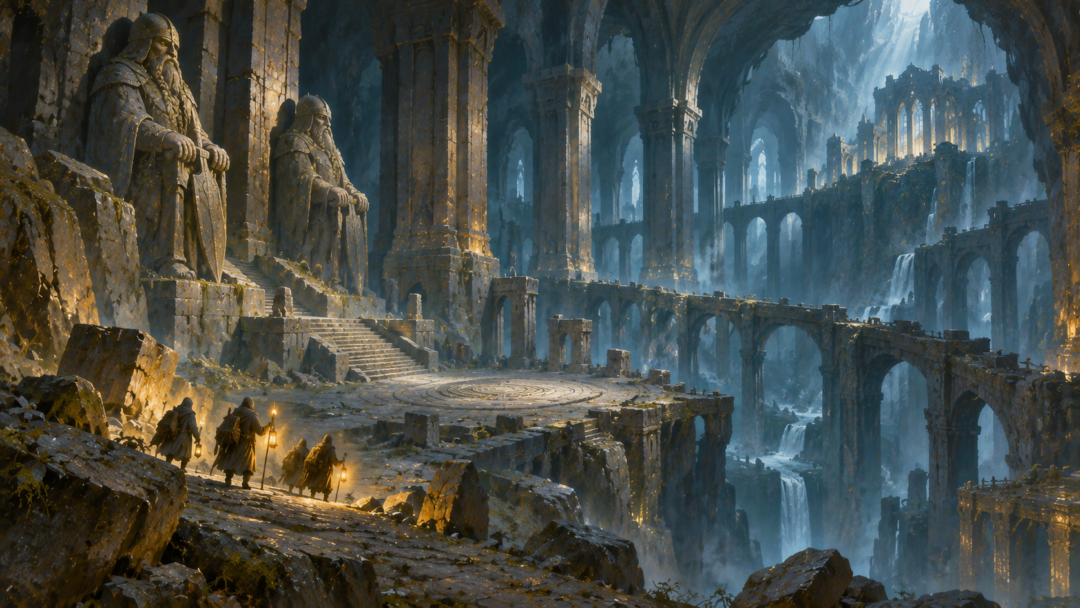
In *The Fellowship of the Ring*, Gimli approaches Moria expecting the hospitality and splendor of his kin. Instead, the Fellowship enters darkness, discovers the slaughter at Balin’s tomb, and flees through a ruined underground kingdom.
The score makes those immense stone spaces feel ancient, intimidating, and full of history. Moria is not simply a dungeon full of enemies. It is evidence that an entire people’s accomplishments can become their tomb.
That is a powerful musical idea.
The music around the Bridge of Khazad-dûm also conveys scale and danger. The Fellowship is running through architecture built for another age, confronting a terror that makes even Gandalf’s power seem vulnerable.
Yet the Dwarves have less room to develop as a living musical culture across Jackson’s *Lord of the Rings* trilogy. Their most memorable setting is a fallen kingdom, and Gimli travels largely alongside companions whose musical identities are more frequently foregrounded.
Jackson’s later *Hobbit* films expand the Dwarven presence, especially through the story of Erebor and the Dwarves’ longing for home. That is worthwhile material, but bringing it into this comparison would change the balance. I am judging the original trilogy first.
Within that boundary, the Dwarves’ music is magnificent at communicating inheritance and catastrophe. It makes absence feel enormous.
Rohan has the advantage of letting us hear a people confront catastrophe while they are still capable of changing its outcome.
Mordor: The Music You Never Want to Hear Approaching
Mordor may have the most effective musical identity in the films if the question is purely about creating fear.
Consider the Ringwraiths hunting the Hobbits in *The Fellowship of the Ring*. The threat becomes frightening not only because of black cloaks, swords, and the unnerving way the riders search, but because the music makes their presence feel like an intrusion from another world.
Later, the Black Gate and the armies of Sauron gain their own oppressive musical atmosphere. Power here is not inviting. It is overwhelming, coercive, and stripped of warmth.
The score repeatedly makes evil feel organized. Its danger is not limited to individual cruelty. It suggests a force capable of turning enormous armies and landscapes toward a single destructive purpose.
There is a distinction worth making: the musical world of Mordor includes Sauron, the Ringwraiths, the One Ring, and forces serving his rule. It should not be reduced to the idea that every Orc shares one neat cultural anthem.
What matters is how effectively the music places the audience under pressure.
At the Black Gate in *The Return of the King*, the sheer imbalance between Aragorn’s force and Sauron’s army is frightening even before the fighting begins. The musical setting reinforces the sense of confronting something almost impossibly large.
But I would not call Mordor’s music the best overall.
It is brilliant at making us dread what comes next. Rohan can make us dread what comes next and still desperately want to see its people ride forward.
That is a more complicated emotional achievement.
Rohan: A Sound That Knows Glory Has a Price
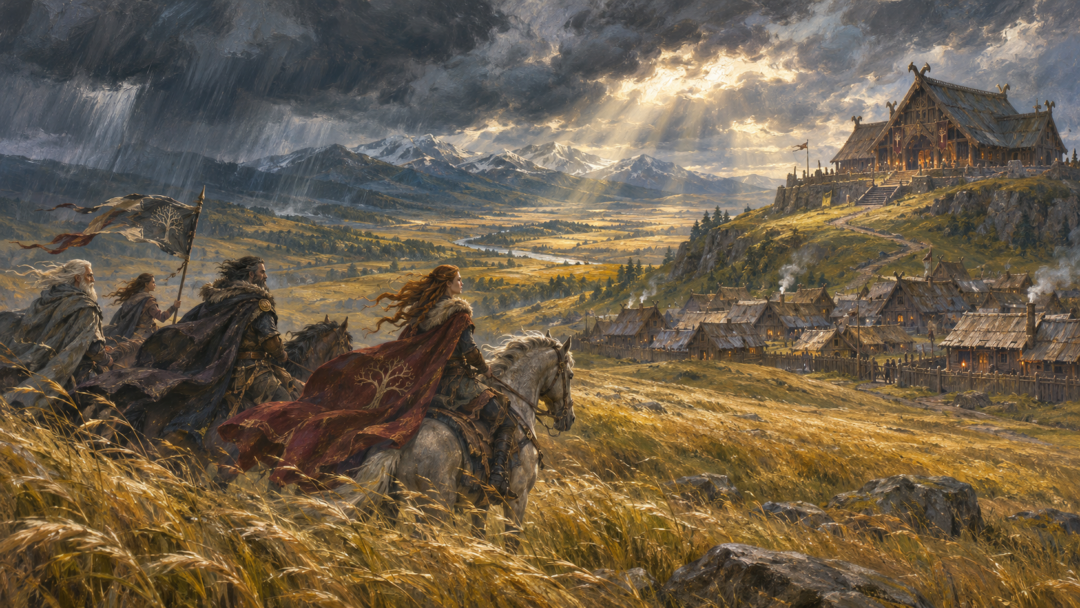
Rohan enters *The Two Towers* as a kingdom in trouble.
Its people are threatened, Théoden is diminished under Saruman’s influence, and the land itself feels exposed. We are not introduced to a nation confidently ruling its own destiny.
Listen to how the music changes the experience of seeing its open country and the halls of Edoras. There is dignity in the sound, but it does not erase loneliness. The landscape is beautiful without feeling protected.
That combination immediately tells us something about the Rohirrim. Their identity rests on freedom, loyalty, and endurance, yet none of those qualities guarantees survival.
The theme associated with Rohan has a particularly memorable, plaintive character. It can suggest the breadth of the plains while remaining intensely personal, as though a whole people’s history could be heard in one weary voice.
Then the story tests everything the music has established.
Théoden regains himself and must lead a kingdom that has already suffered. At Helm’s Deep, the defenders are outnumbered, the walls cannot hold forever, and courage offers no certainty of rescue.
When Théoden and Aragorn ride out from the Hornburg, the scene is thrilling precisely because it is so desperate. The king is not acting from a comfortable position of strength. He is choosing to meet the enemy rather than surrender the last of his people’s will.
Rohan’s musical world makes that distinction meaningful. Pride has become an act of resistance.
And then comes the charge at the Pelennor Fields.
Why the Ride of the Rohirrim Settles It for Me
By the time the Rohirrim reach Minas Tirith in *The Return of the King*, the audience understands what their arrival costs.
Théoden has faced loss, conflict, and the knowledge that Gondor’s need may demand more than his riders can give. The city is under siege. The enemy’s forces stretch across the battlefield. The cavalry preparing to charge does not appear to possess any reasonable guarantee of victory.
Yet Théoden rallies his people, and they ride.
What makes the sequence so overwhelming is not simply the size of the cavalry charge. It is the emotional history carried into that moment.
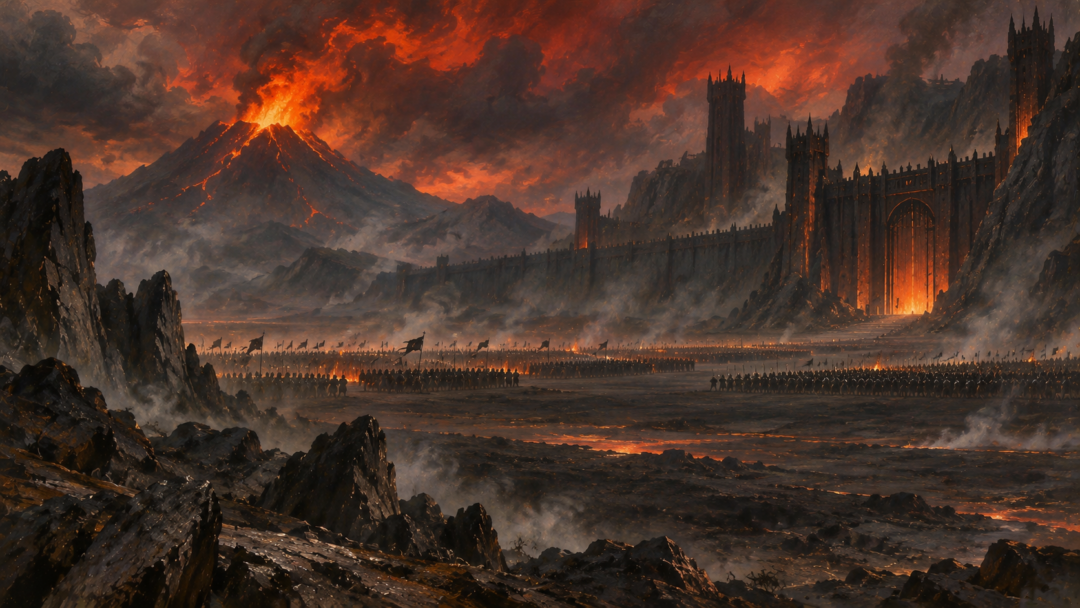
The music draws upon an identity we first encountered amid Rohan’s vulnerability. Now that identity becomes a declaration of purpose. The people who once seemed exposed and diminished are moving together toward a danger they fully recognize.
The score does not need to pretend they are invincible.
In fact, the possibility of death is essential to the scene. A charge without that knowledge would merely be spectacular. With it, the charge becomes an expression of who the Rohirrim are.
And the film refuses to make the cost imaginary. Théoden is mortally wounded. Éowyn faces the Witch-king. The battlefield delivers suffering alongside its moments of triumph.
That is why Rohan’s musical identity has such staying power for me. It never has to abandon its sadness in order to become heroic.
The Shire’s music reminds us what peace is worth. The Elves give beauty the weight of passing time. The Dwarves make lost greatness feel tangible. Mordor turns domination into something we can hear coming.
Rohan combines love of home, historical memory, fear, and courage in a single dramatic journey.
So Who Really Has the Best Music?
There is no objective winner here. Someone who values comfort will reasonably choose the Shire. Someone drawn to mystery and sorrow may prefer the Elves. The Dwarves and Mordor make equally strong claims on their own terms.
But my vote belongs to Rohan.
The measure I care about most is whether a theme changes emotionally as the story changes, without losing the character that made it memorable in the first place.
Rohan passes that test beautifully.
In Edoras, its music can sound like a people remembering their dignity. At Helm’s Deep, that dignity is tested by fear. On the Pelennor Fields, it becomes something they are willing to die for.
The music does not simply announce heroes arriving. It makes us understand why their arrival matters, what they have already endured, and what they may never get back.
The Shire makes me wish I lived in Middle-earth.
Rohan makes me wonder whether I could live up to it.
That is the difference that decides my vote.
Sources & Notes
This article is based on close reading and interpretation of Tolkien's published works and related source material where relevant.