Was Frodo’s Fake Move to Crickhollow Worth the Risk?
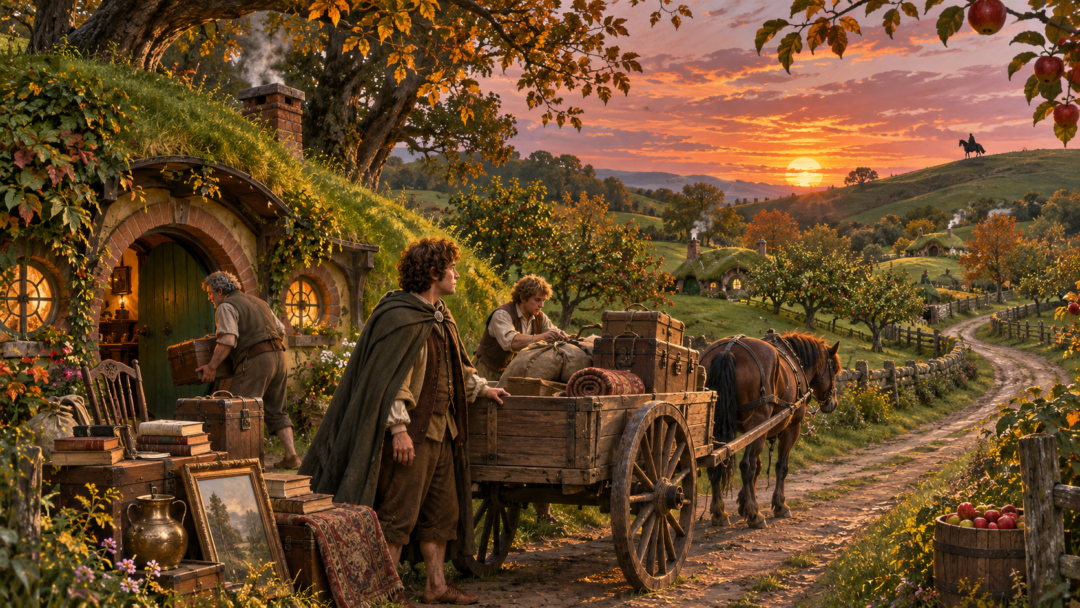
Frodo Baggins sold Bag End, bought a house in Buckland, and let the Shire believe he was making an ordinary change of address. The explanation made his departure respectable. Unfortunately, the Black Riders were already asking for Baggins before he had finished leaving home.
Why convince the neighbours he had moved when the enemy was already following him? The answer depends on the aim. The scheme could not conceal Frodo’s movements completely, but it could disguise his ultimate destination, preserve the appearance of ordinary life, and buy time after he left.
**The Crickhollow deception was worth attempting, but it was never a reliable way to shake the Black Riders. Its real value came after Frodo had left the house behind.**
The plan was already compromised in Hobbiton
In *The Fellowship of the Ring*, Frodo disguises his departure as a move to Crickhollow, a small house in Buckland beyond the Brandywine. He sells Bag End to the Sackville-Bagginses, distributes possessions, and allows his neighbours to assume he is leaving Hobbiton for ordinary reasons.
The story fits. Bilbo has been gone for years, Frodo has grown restless, and his Brandybuck relatives make an eastward move believable.
But on September 23, 3018, the day Frodo leaves Bag End, a Black Rider arrives in Hobbiton and questions Hamfast Gamgee, Sam’s father, about Baggins. Frodo, Sam, and Pippin depart that evening and soon narrowly avoid a Rider. The search is already underway, not beginning months after a mysterious disappearance.
Worse, Crickhollow is no secret. A pursuer can learn Frodo’s advertised destination from the neighbours. And Frodo really does travel toward Buckland: for much of his journey, the false story accurately describes his route. A decoy destination only helps once the quarry goes somewhere else. That is the strongest objection to the entire scheme: it gives an enemy who knows the name Baggins a useful address rather than sending him immediately in the wrong direction.
The Black Riders were not tracking an ordinary fugitive
The plan also pits a social deception against supernatural hunters. A curious hobbit might accept a property sale and removal cart; the Nazgul hunt the Ring, know of its connection to Baggins and the Shire, and wield powers beyond anything ordinary neighbours could imagine. They will not abandon their search because a move looks respectable.
Yet Tolkien never makes them all-knowing. They question locals, investigate roads, and seek opportunities to intercept Frodo. They can lose opportunities, misread circumstances, and be obstructed by geography, resistance, or incomplete information. Their supernatural power makes an ordinary cover story inadequate, not automatically worthless.
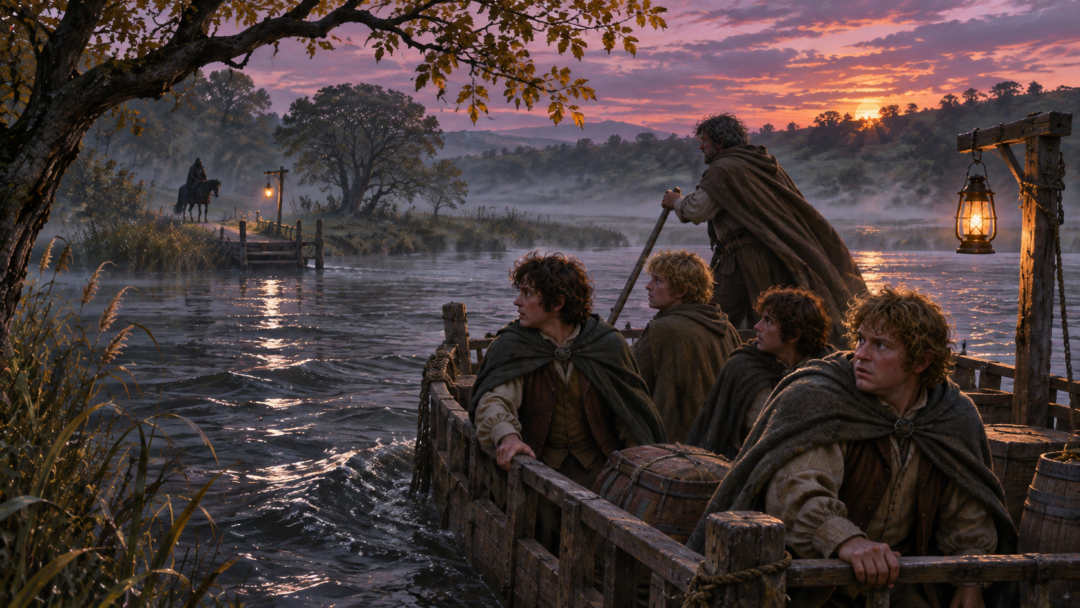
During the journey, the hobbits hide from a Rider on the road; Gildor’s wandering Elves offer temporary protection; Farmer Maggot helps them reach the Brandywine; and at Bucklebury Ferry, the river separates them from a pursuer. None proves that the house purchase fooled anyone. Together, they show that the Riders still depend on physical routes and imperfect knowledge. A decoy address could exploit those limits, even without erasing the trail.
Crickhollow made the journey look normal
The strongest justification is what the arrangements concealed from the Shire. A wealthy hobbit suddenly abandoning his home with a few companions would invite gossip. A resident moving to another house might inspire curiosity, but less alarm.
That matters because the Riders question local people. Unusual details known to neighbours could become clues. The sale, packing, and announced destination give everyone a consistent account without demanding that they lie or join a conspiracy. Most simply repeat what they believe. The plan therefore works best against the flow of information through neighbours, not against a Rider who already has Frodo in sight.
The drawback is obvious: announcing Buckland also points the Riders east. The scheme reduces suspicion about *why* Frodo is leaving while making his initial route easier to identify. That trade makes sense only because Crickhollow is not meant to be his final refuge.
Merry’s conspiracy changes the meaning of the house
In *A Conspiracy Unmasked*, Merry, Pippin, Sam, and Fredegar Bolger reveal that they have watched Frodo’s preparations, learned he intends to leave the Shire rather than settle in Buckland, and discovered the Ring’s significance. Instead of letting him slip away alone, they help.
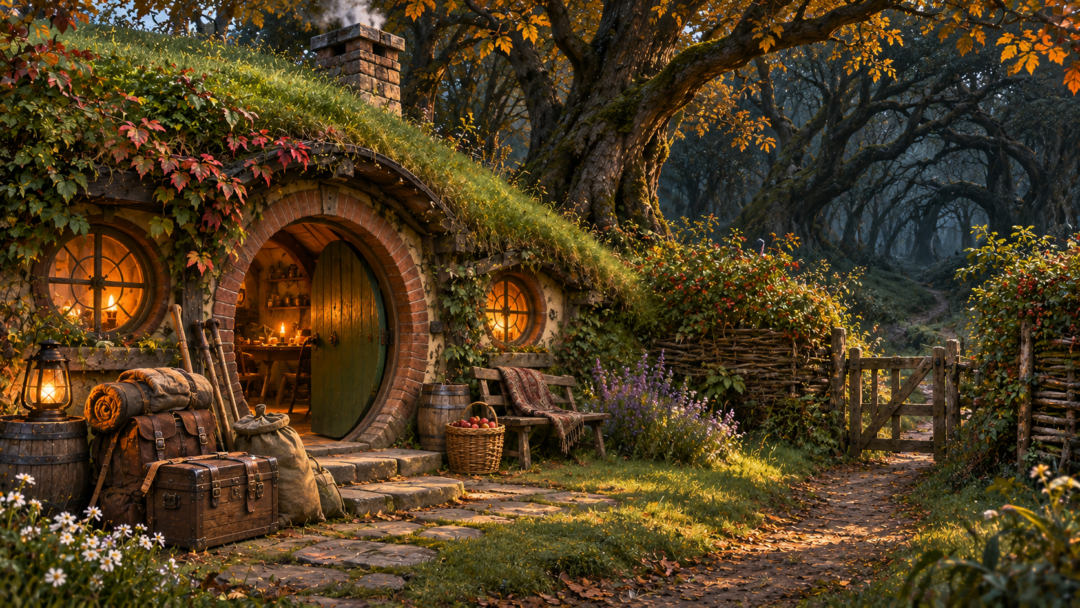
Merry has prepared Crickhollow with supplies. The travellers can rest, eat, discuss their plans, and equip themselves for the next stage. Meanwhile, Fredegar, called Fatty, stays behind rather than accompanying them into the Old Forest. His job is to make the household appear occupied after Frodo has gone.
Crickhollow also lets the travellers pause at an equipped house instead of launching directly from an exposed road into unfamiliar country. That changes the deception’s purpose. The announced move supplies an ordinary explanation for the trip to Buckland; Fatty sustains that explanation when Frodo disappears into the wilderness. It cannot defeat nine Ringwraiths, but it might delay their discovery that he has abandoned the expected route.
The ferry proves the danger was immediate
On September 25, Merry meets the travellers and helps them cross the Brandywine at Bucklebury Ferry. A Black Rider appears at the landing behind them, separated by the water. Clearly, the alleged move has not concealed their general direction.
But the ferry buys breathing room: the Rider cannot simply follow along the same path. Buckland’s geography complicates the pursuit further. Its eastern boundary is protected by the High Hay, a hedge separating the settlements from the Old Forest; not every path is an open road.
Frodo’s friends suspect the conventional eastward routes may be watched. They choose a gate through the hedge and enter the Old Forest rather than take the obvious roads toward Bree. The forest’s ominous reputation among hobbits proves justified by the dangers they encounter there, but the highways could bring them face-to-face with hunters already searching them.
Crickhollow thus marks a change of route. It is a believable public destination near the point where the travellers deliberately stop behaving like ordinary travellers.
Fatty Bolger pays the price for the deception
In the early hours of September 30, Black Riders attack Crickhollow. *A Knife in the Dark* describes the assault while Frodo and his companions are already far away in Bree.
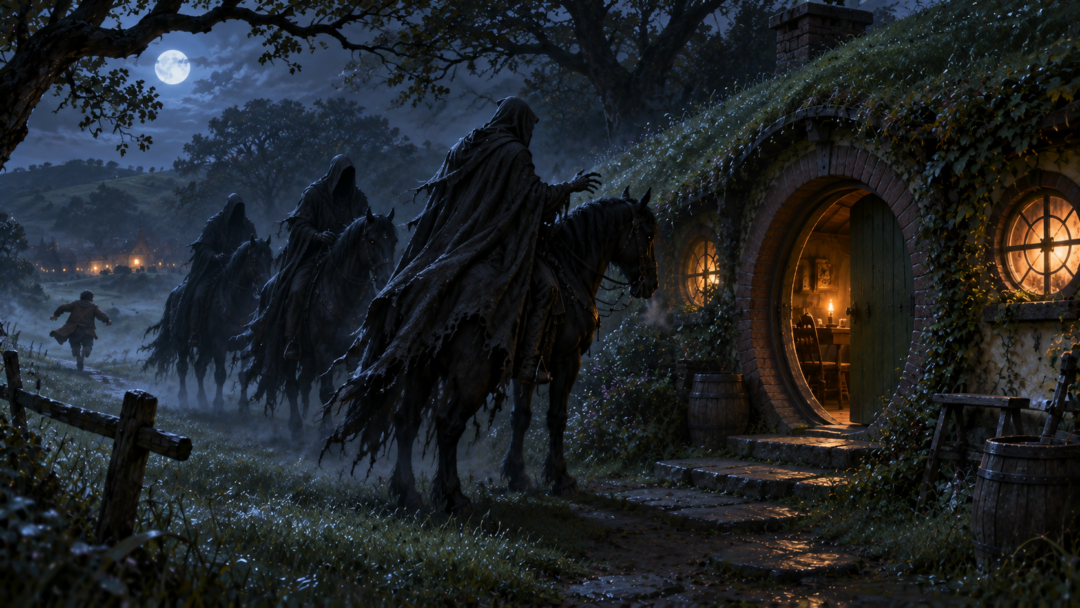
Fatty has remained in the house. When the Riders arrive, he escapes instead of confronting them, raising the alarm in Buckland. Horns sound, people gather, and the intruders retreat.
The attack demonstrates two things. First, the enemy spends effort searching a house without Frodo. Despite earlier encounters along the route, the supposed residence remains worth investigating; the Riders’ knowledge is incomplete.
Second, the decoy has a human cost. Fatty risks his life to give the Ring-bearer distance. He is not a disposable pawn: he chooses to help and escapes when danger comes. Still, his courage does not erase the danger. The plan is defensible partly because he is expected to preserve the appearance of occupation, not fight the Riders or impersonate Frodo at close range. Demanding either would make the risk much harder to justify.
Did the false trail actually save time?
The September 30 attack proves that some Riders visited the wrong location. It cannot tell us how many hours they lost or whether they would otherwise have reached Frodo earlier.
By then, Frodo’s companions have survived the Old Forest, escaped the Barrow-downs with Tom Bombadil’s help, and reached Bree. They remain in immediate danger: Black Riders strike at the Prancing Pony that same night, expecting the hobbits in their rooms.
Those simultaneous assaults prevent a simple claim that Crickhollow diverted the whole pursuit. The enemy was checking multiple possibilities. Nor did the false house get Frodo to safety: he still needed Bombadil’s intervention, then Aragorn’s help, and the later attack on Weathertop showed how closely the Riders pursued him.
The evidence supports a narrower conclusion. The Riders had not perfectly reconstructed Frodo’s movements, and the false residence remained a plausible target. Making pursuers investigate multiple places can cost them time and divide their attention. That is a reasonable inference, not proof that the deception decisively saved Frodo. The simultaneous strike at Bree is especially important: even as the wrong address drew attention, other Riders remained dangerously close to the real quarry.
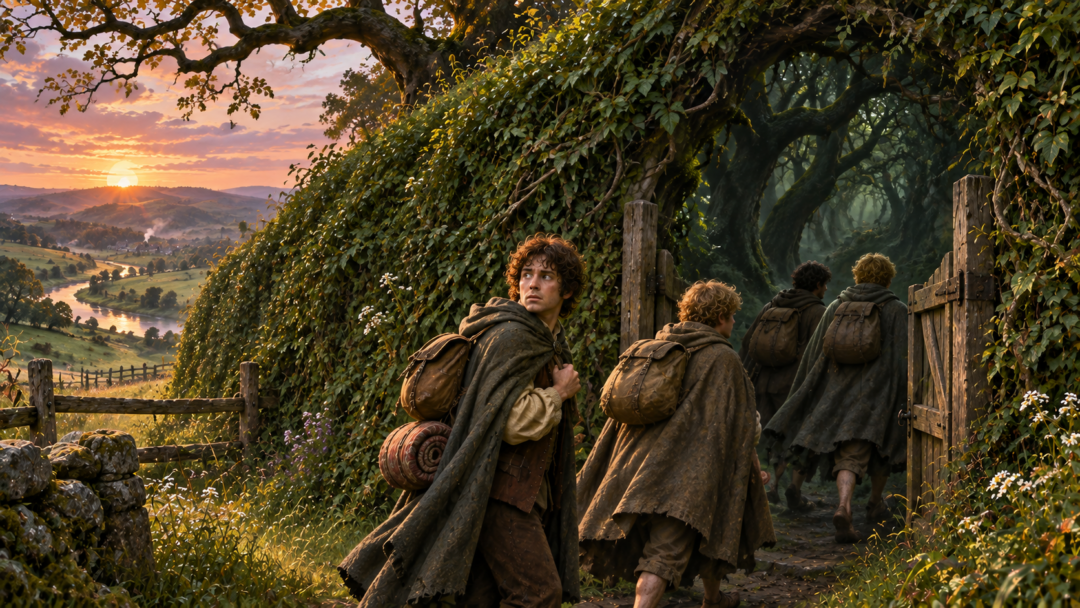
The film makes the deception look unnecessary
Peter Jackson’s *The Fellowship of the Ring* removes the property-sale deception, Fatty’s decoy role, and Crickhollow itself, along with the Old Forest, Tom Bombadil, and the Barrow-downs.
Its Frodo departs in urgent flight after the Ring’s danger becomes clear. The Black Riders appear as immediate pursuers, and the hobbits hurry toward Bree. For a film built around momentum, property transactions and a false household would slow the chase without yielding a visually decisive triumph.
The omission changes the story’s emphasis. Tolkien’s departure involves secrecy, advance preparation, uncertainty, and cooperation among hobbits who only partly understand their enemy. Jackson emphasizes sudden peril and rapid reactions. The film can dispense with Crickhollow because its journey follows a different sequence of decisions; its urgency does not establish that the book’s strategy was futile.
The larger point is that Frodo could not disappear alone
Crickhollow also reveals the flaw in Frodo’s wish to protect his friends by leaving privately. He hopes to keep others from facing dangers he considers his own, but they have already recognized his distress and organized to help.
Their conspiracy offers much more than a convincing address: companions, supplies, practical knowledge, and an alternative route when the roads grow dangerous. Merry’s planning matters more than the property. Sam is determined to accompany Frodo; Pippin refuses to stay behind. Fatty proves that even someone unwilling to leave the Shire can resist the threat by staying.
The house is temporary, but the loyalty behind it lasts. The scheme succeeds as a cooperative effort precisely because Frodo’s friends refuse to accept *his* attempt to mislead them. That does not make every choice sensible; it helps explain why they accept the risks.
Verdict: useful cover, not a successful escape plan
Was fooling the Shire worthwhile when the Black Riders were already on Frodo’s trail? Yes, within limits. The move provided a plausible reason to travel toward Buckland, a prepared stopping place, and an apparently occupied residence after Frodo entered the Old Forest. The attack on Crickhollow shows that the false address still mattered to his pursuers.
It never guaranteed safety. Riders reached Hobbiton as Frodo left, followed him toward the Brandywine, and eventually attacked both Crickhollow and Bree. Their determination and information were too formidable for a change of address to stop them. The greatest cost was the risk to Fredegar; the greatest benefit was making Frodo’s journey look ordinary until he could take an extraordinary route.
Crickhollow was neither a masterstroke nor a useless distraction. It was imperfect concealment when perfect concealment was impossible.
**Frodo did not need the Black Riders to believe the lie forever. He needed them to be wrong about where he would be when they finally came knocking.**
Sources & Notes
This article is based on close reading and interpretation of Tolkien's published works and related source material where relevant.