The Question Begins With a False Certainty
The difficulty is not simply that readers reject Tolkien’s explanation of his Orcs. It is that the explanation attributed to him is more definite than anything he established.
Tolkien did not consistently maintain that Orcs were created from nothing by a malignant will. In The Silmarillion, they result from Morgoth’s corruption and enslavement of existing beings. Letters 144 and 153 likewise distinguish corrupting life from creating it.
Nor did Tolkien declare that Orcs could never evoke real-world peoples or historical atrocities. He opposed imposed allegory, a narrower position.
Orcs belong first to Middle-earth’s internal reality, embodying the effects of a dominating will rather than serving as coded equivalents of historical populations. Yet they remain open to application, and their portrayal raises questions Tolkien never resolved.
The dispute therefore concerns not whether Orcs are fictional, but how far authorial intention governs their interpretation.
Tolkien Rejected Allegory, Not Meaning
In the Foreword to the Second Edition of The Lord of the Rings, Tolkien distinguishes allegory from application. He disliked allegory’s dependence on authorial intention and preferred readers’ freedom to recognize correspondences with their own experience.
He rejected identifying the War of the Ring straightforwardly with the Second World War, arguing that a story governed by that conflict would have unfolded differently. Yet he acknowledged that authors cannot entirely escape their experiences.
Thus Orcs need not represent soldiers of any particular nation, Sauron a historical dictator, or Mordor a modern state. Readers may nevertheless recognize militarization, terror, enslavement, environmental destruction, and suppressed individual judgment in Mordor’s political order.
Such recognition exemplifies applicability rather than necessarily contradicting Tolkien.
Allegory, metaphor, and symbolism are also distinct. Rejecting systematic historical correspondence does not eliminate symbolic meaning. The Ring participates in Tolkien’s treatment of power and temptation without representing one particular weapon or institution.
Similarly, Orcs require no historical counterpart to possess significance for readers living in history. Tolkien’s rejection of allegory was not a prohibition against interpretation.
Morgoth Could Corrupt Life, Not Create It
The deeper difficulty lies in Tolkien’s conception of evil.
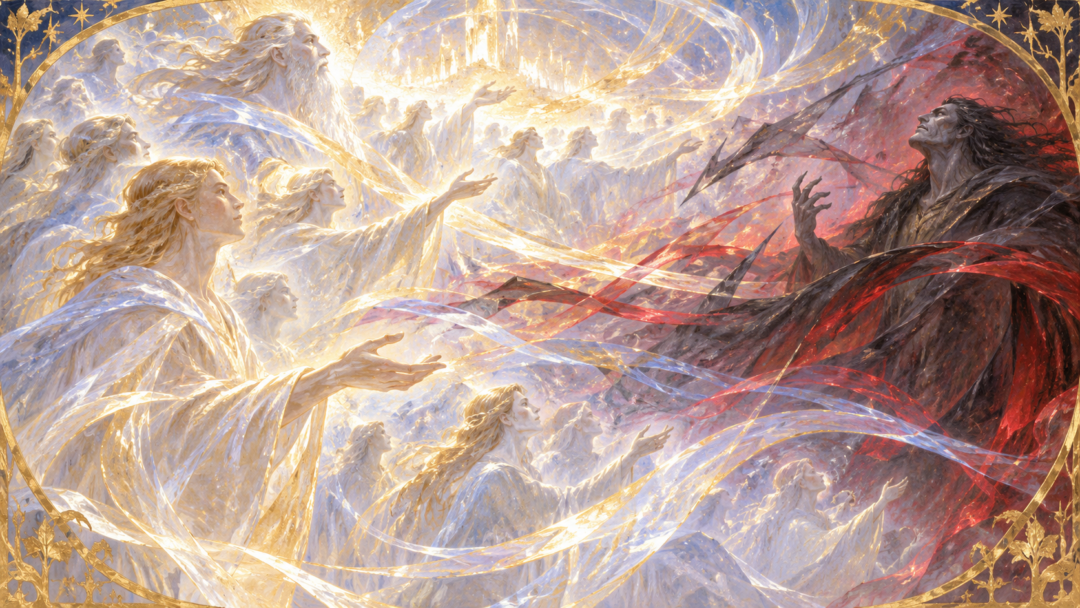
In the Ainulindalë, Melkor introduces discord into the Music of the Ainur, attempting to impose his own pattern upon creation. Yet his rebellion cannot establish an independent creative order: ultimate authority remains with Ilúvatar.
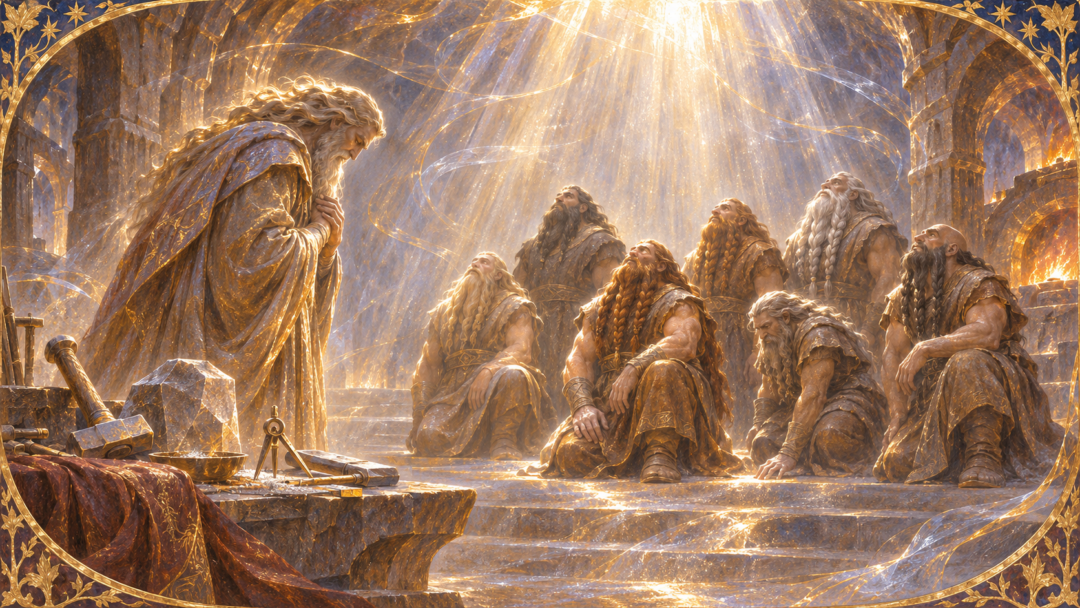
In The Silmarillion, Of Aulë and Yavanna demonstrates the distinction. Aulë fashions the Dwarves but cannot independently grant them the life and freedom belonging to Ilúvatar’s Children. They become independent through Ilúvatar’s intervention. Morgoth possesses no greater creative power.
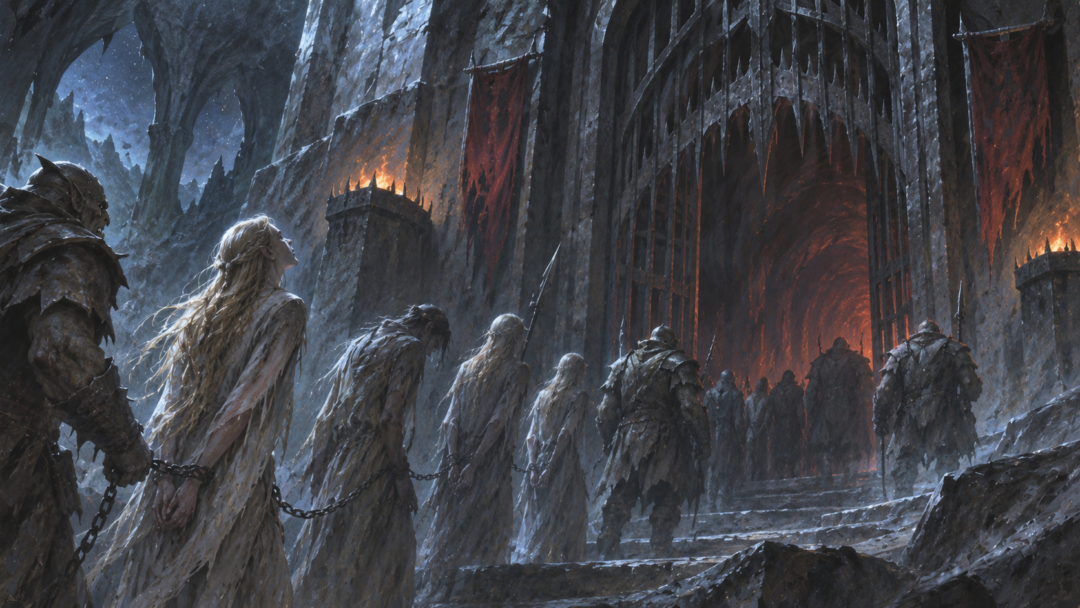
In Of the Coming of the Elves and the Captivity of Melkor, the published Silmarillion preserves the account that captured Elves were tortured, corrupted, and enslaved, producing Orcs. Significantly, this understanding is attributed to the wise of Eressëa: inherited tradition, not a directly witnessed account of every event.
If Orcs descend from Ilúvatar’s creatures, evil has not originated a wholly evil species. It has violated an existing good.
Letter 153 reinforces the distinction. Discussing Orc origins, Tolkien warns against accepting every statement by a fictional character as metaphysically authoritative. Treebeard, in The Two Towers, describes the Enemy’s counterfeiting and ruining of creatures, but his understanding is not necessarily infallible.
Orcs could therefore be fashioned into instruments of wickedness without Morgoth originating their being.
They reveal evil’s capacity to deform creation, not to create independently. Their existence demonstrates both Morgoth’s destructive reach and the limits of his power.
The Orcs Were Never a Settled Biological Problem
Tolkien’s later writings make the uncertainty unmistakable.
Letter 144 acknowledges that Orcs lack a clearly established origin. Because Morgoth and Sauron cannot create independent life, Tolkien considers them corruptions of existing beings.
In Morgoth’s Ring, particularly Myths Transformed, he repeatedly reconsiders their ancestry and spiritual nature.
Although the published Silmarillion preserves corrupted Elvish ancestry, that is not Tolkien’s final, unqualified solution. He also considered descent from Men, the involvement of lesser corrupted spirits, and creatures conditioned to imitate rational behavior.
Each explanation creates problems.
Elvish ancestry raises questions about Orc mortality and Elvish spiritual destiny. Human ancestry complicates their appearance in the mythology’s earliest periods. Merely animal-like creatures trained to speak are difficult to reconcile with Orcish independence and social complexity.
One later discussion permits a mixed origin involving corrupted Elves, possibly Men, and lesser spirits occupying Orc-like bodies.
These alternatives are evidence of ongoing revision, not interchangeable elements of settled canon.
The uncertainty becomes theological. If Orcs possess rational souls and independent wills, can they be irredeemably evil? If they lack such freedom, what responsibility do they bear for cruelty and individual choices?
The texts supply no universally applicable answer.
Orcs are unquestionably imaginary, but their metaphysical status is unresolved. Tolkien’s unpublished reflections demonstrate his awareness of that problem, rather than indifference to it.
The Orcs Speak Too Much Like Persons to Be Mere Instruments
The strongest internal challenge comes from Orcish behavior.
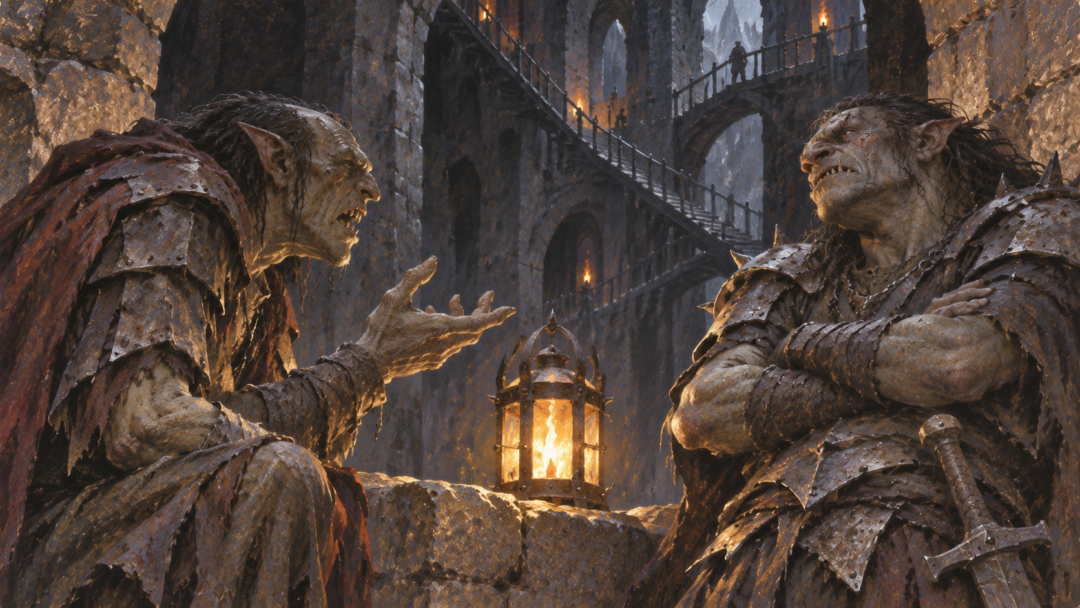
In The Two Towers, The Choices of Master Samwise Gamgee, Gorbag and Shagrat reveal suspicion, ambition, fear of punishment, resentment toward superiors, and dreams of escaping their masters.
Their imagined independence would still involve plunder and violence. Nevertheless, they recognize and resent the domination imposed upon them.
They are not interchangeable extensions of Sauron’s will. They possess conflicting interests, however degraded their conduct.
Likewise, The Uruk-hai depicts rival Orc companies with competing loyalties and orders. Isengard’s and Mordor’s soldiers behave less like a unified monstrous intelligence than members of mutually suspicious military organizations.
This does not prove Tolkien intended an allegory of modern armies or authoritarian states. Those episodes provide no evidence of such an intention.
They do, however, present recognizable motives: fear, ambition, resentment, opportunism, and the desire to exercise power over others. Readers naturally interpret these through knowledge of human societies.
A further tension appears after Sauron’s downfall. In The Return of the King, The Field of Cormallen, some forces bound to his power become helpless or disordered when that power breaks.
Orcs thus appear capable of personal calculation while remaining profoundly subject to an external will.
That need not be inconsistent. It may express the nature of corrupted agency. But it prevents any easy division between morally responsible persons and mindless instruments of evil.
Why Readers Recognize Historical Violence
Orcish history contains patterns familiar from human oppression: captivity, torment, bodily violation, destroyed identity, militarized hierarchy, exploitation, and fear.
These belong to Tolkien’s fictional history. Claiming they represent a particular genocide is an additional interpretation, not an authorial identification established by the texts.
The language of corruption and breeding may evoke the deliberate degradation of captive populations. Readers may consequently recognize parallels with enslavement, forced assimilation, and historical atrocities.
Yet Morgoth’s acts belong to an imagined cosmology, grounded in his rebellion against Ilúvatar’s creation. No historical event is required to explain them.
Recognizing similarities does not mean Morgoth secretly represents a particular ruler or Orcs a persecuted historical population.
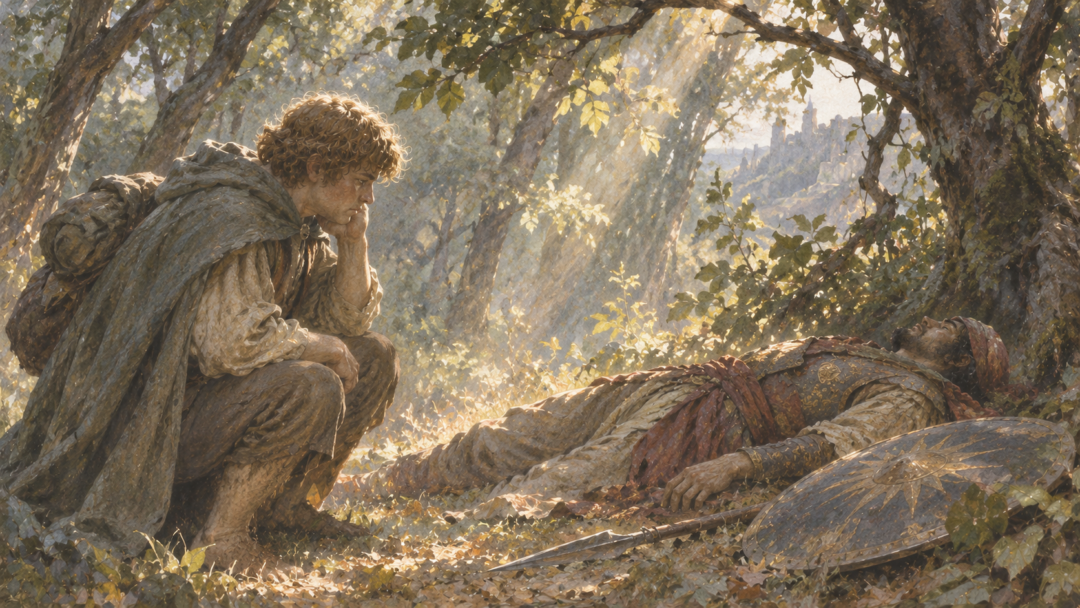
Another complication emerges in The Two Towers, The Window on the West. Sam considers a fallen Southron warrior and wonders why he came so far from home, including whether he truly wished to fight.
The episode permits sympathy for an enemy and distinguishes allegiance to an evil power from inherent moral character.
Why, then, does the narrative rarely extend comparable sympathy to Orcs?
One possible literary explanation is that they provide terrifying opponents whose deaths need not repeatedly interrupt the story with questions of personal guilt. This is interpretation, not Tolkien’s stated rationale.
The resulting ethical tension remains: the narrative recognizes individual complexity among some enemies while presenting another category as overwhelmingly available for destruction.
Readers need not import that difficulty from outside Tolkien. His narrative itself makes it visible.
Tolkien’s Own Descriptions Complicate His Defense
Letter 210, Tolkien’s 1958 response to a proposed film treatment, complicates claims that Orcs have no real-world associations.
Objecting to their depiction, Tolkien compares their appearance to what he calls Mongol-types, explicitly acknowledging a European perspective.
He therefore uses physical characteristics associated with actual human populations when describing repulsive fantasy beings.
This does not establish that Orcs represent Mongols, Asians generally, or any existing ethnic group. A visual comparison is not an allegorical identification.
But the description is relevant evidence. Tolkien’s independent imaginary world could incorporate real-world categories of physical difference, including historically conditioned assumptions about appearance.
Readers who object to that comparison are responding to his published language.
Conversely, treating Letter 210 as proof of a deliberate ethnic allegory would exceed the evidence. Its immediate subject is appearance in an adaptation, not the historical identity or intended meaning of Orcs throughout the legendarium.
Both conclusions matter: Tolkien’s Orcs need not be ethnic allegories, and his descriptions can still carry troubling associations.
Authorial intention explains what a fictional people was meant to be without determining every implication of its portrayal.
Quoting the Foreword cannot erase this distinction. Tolkien’s rejection of allegory deserves serious consideration, but so do his descriptive choices.
Why the Argument Remains Unresolved
Readers often debate four different questions as though they were one.
First, intention: did Tolkien devise Orcs as coded representations of a particular people or genocide? The published evidence does not establish that. His opposition to controlling allegory suggests otherwise.
Second, ontology: what are Orcs within Middle-earth? They are beings corrupted or shaped by evil powers, but their ancestry, spiritual nature, and relationship to independent creation remained unsettled.
Third, interpretation: may readers connect them with persecution, racialization, militarism, or dehumanization? Tolkien’s distinction between allegory and applicability permits such readings. Their persuasiveness depends on textual support, not merely recognition of similarities.
Fourth, ethics: does depicting an overwhelmingly hostile race generate moral difficulties regardless of intention? Fictional invention does not exempt a portrayal from ethical examination. Equally, identifying an ethical problem does not establish that the entire work disguises racial hatred.
These questions intersect without admitting one universal answer.
A final paradox matters most. Defenders sometimes insist Orcs are entirely alien to humanity. Yet Tolkien’s mythology describes evil as the corruption of what already exists. The corrupted creature remains connected, however profoundly, to the creation it has been forced to betray.
My interpretation is that Orcs are frightening precisely because they demonstrate what domination can do to living beings.
They are neither identifiable historical populations nor abstract symbols without narrative existence. They testify to a created order damaged by a will capable of possession and deformation but incapable of independent creation.
Tolkien’s position deserves acceptance where evidence supports it: Orcs are not established as a deliberate ethnic or genocidal allegory.
It should not be extended into claims he never established: that Orcs have no legitimate historical resonance, that their origins were conclusively settled, or that their moral status presents no difficulty.
The debate persists because Tolkien’s opposition to allegory, his theory of evil, his revisions of Orcish origins, his portrayal of Orcish agency, and his descriptive language remain in tension.
Taking Tolkien seriously means preserving those tensions rather than invoking his authority to suppress them.
Orcs need not represent real peoples to reveal something disturbing about the treatment of persons. Nor must Tolkien have intended every implication that readers legitimately discover.
Sources & Notes
This article is based on close reading and interpretation of Tolkien's published works and related source material where relevant.