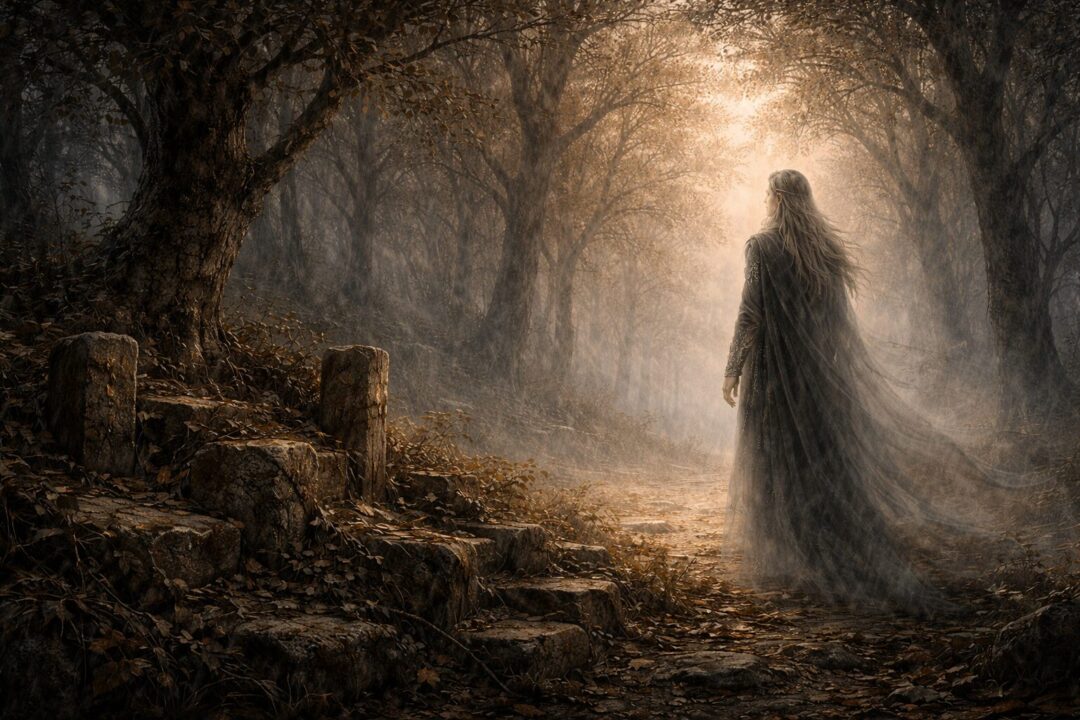
When readers think about Elves in Middle-earth, the first idea that usually comes to mind is immortality.
They do not age as Men do.
They do not pass quickly out of the world.
They remain.
But that only describes the surface.
The deeper truth is that Middle-earth does not present Elvish life as merely a longer human life. Elves do not just receive more years on the same terms as everyone else. They stand in time differently, and the texts make that difference surprisingly clear.
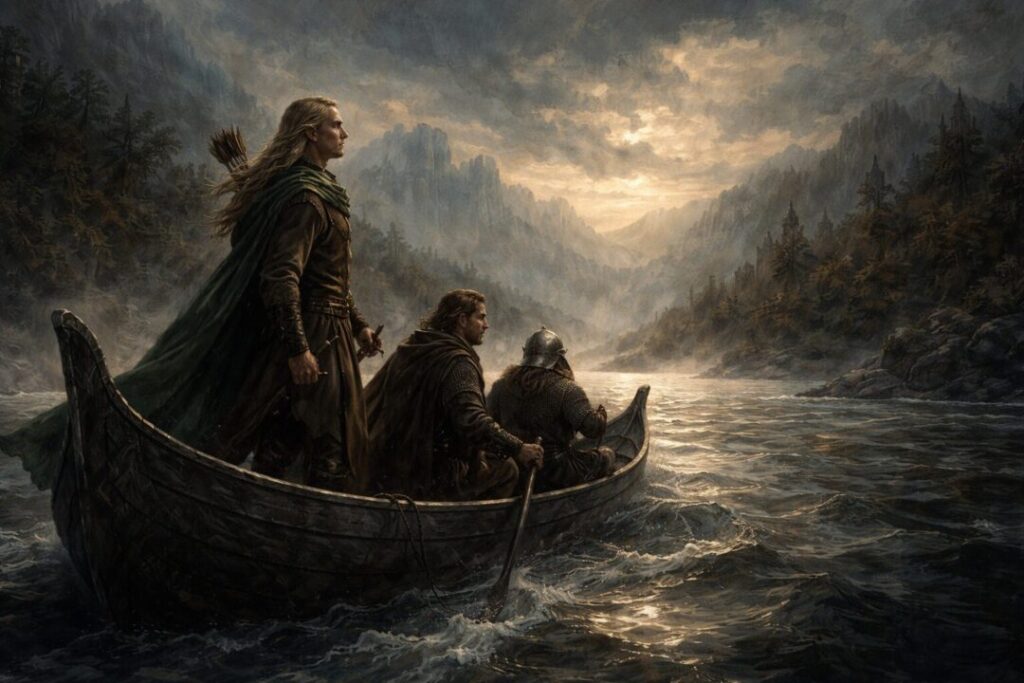
One of the clearest explanations comes from Legolas himself.
He says that for the Elves the world moves both very swift and very slow.
That line is easy to treat as elegant atmosphere. It is actually one of the most important keys to understanding the Elves at all.
Because once that idea is taken seriously, Elvish immortality stops looking simple.
It becomes something heavier.
Elves Do Not Merely Live Longer
A mortal life is measured by scarcity.
Men know, whether clearly or dimly, that their time is brief. Their choices are sharpened by endings. Their loves are fragile because they are passing. Their kingdoms rise under pressure, and their histories move with urgency because generations turn over so quickly.
Elves are not built to experience the world in that way.
They are bound to Arda for as long as it lasts. They do not escape the world through death in the same manner as Men. Even when an Elf dies bodily, the fate of the Elves remains tied to the life of the world itself. That alone creates a completely different relationship to passing years.
This means an Elf is not living under the same pressure as a Man, only stretched across a longer span.
The frame is different from the beginning.
For Men, time runs toward departure.
For Elves, time accumulates.
And that accumulation matters.
Why Time Feels Swift to Elves
Legolas explains the first half plainly: the world feels swift to Elves because they themselves change little, while everything else fleets by.
That is not a small observation.
It means that what mortals experience as the normal pace of life may feel, to Elves, like a continual vanishing.
A human generation rises and falls in what is, to an Elf, a very short span.
A friendship with a mortal can begin, deepen, and end while the Elf remains much the same.
Cities of Men are founded, flourish, decay, and become memory.
Even landscapes alter over the centuries.
So the world seems quick not because clocks run differently for Elves, but because change strikes everything around them faster than it strikes them.
This is why Elvish memory carries such weight in Middle-earth.
An Elf does not look back on the distant past as something abstract or secondhand. Much of what is ancient to everyone else is still part of living memory to the Eldar, especially the great among them. That does not make them detached from sorrow. It makes loss harder to escape.
For mortals, grief is often followed by generations that replace what was lost.
For Elves, the losses remain present.
Why Time Feels Slow to Elves
But Legolas says something else too.
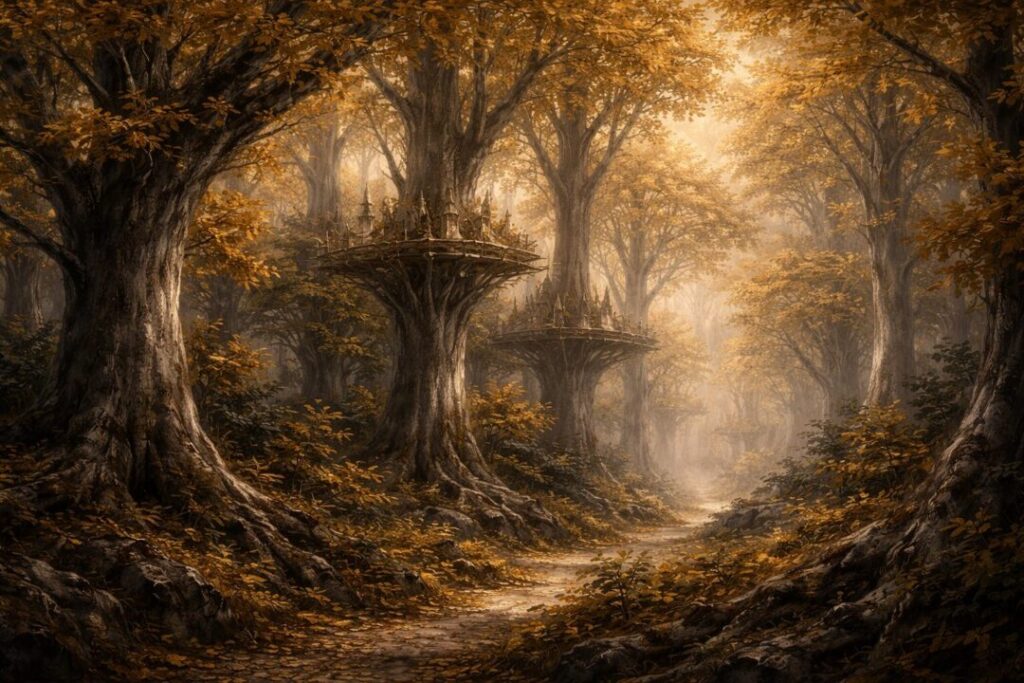
The world moves slowly for Elves because they do not count the running years for themselves. The passing seasons are like repeated ripples in a long stream.
This does not mean that Elves are careless about history.
In many ways, they are more historically conscious than anyone else in Middle-earth.
It means that time does not press inward on them in the same way it presses on mortals. A century is not, for an Elf, what it is for a Man. Repeated springs and autumns do not announce personal decline. They return and return again.
That changes everything.
Urgency becomes rarer.
Patience becomes natural.
Long memory becomes normal.
This helps explain why Elves so often seem detached, grave, or difficult for mortals to understand. It is not simply that they know more. It is that they inhabit duration differently. What feels immediate to Men may seem brief to Elves. What feels concluded to Men may still feel open, unfinished, or painfully recent to those who have endured far longer.
And yet this slowness is not freedom from burden.
It is part of the burden.
The Tragedy Hidden Inside Elvish Immortality
The common fantasy assumption is that immortality is simply an advantage.
Middle-earth is more severe than that.
The Elves are deathless in one sense, but they are also bound to a marred world. They do not merely outlast others; they remain in a realm that is subject to wear, loss, evil, and eventual diminishment. Their fate is tied to Arda itself.
That is why Elvish time is so full of grief.
To live long in an unfallen paradise would be one thing.
To live long in Middle-earth is another.
The Elves remember what has been lost.
They preserve what can still be preserved.
They watch beauty thin under the Sun.
They endure while kingdoms fail and friends pass away.
So when Legolas says that swiftness is a grief to them, he is not speaking metaphorically for effect. He is naming a condition of Elvish existence.
The years do not merely pass.
They take things with them.
Why Elvish Realms Feel So Strange
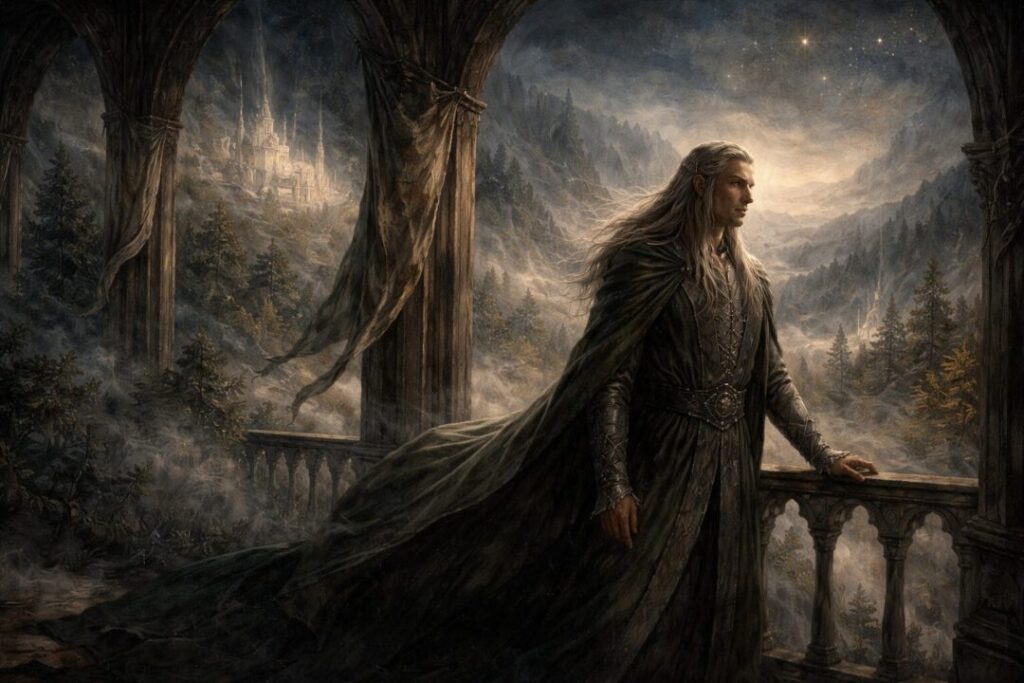
This also sheds light on the peculiar atmosphere of places such as Rivendell and Lórien.
Mortals entering those places often feel that they have stepped partly outside ordinary life. But the texts do not require us to conclude that time literally stops there. In later commentary on the writing of The Lord of the Rings, the idea of time being truly frozen in Lórien was not retained; rather, the place creates a powerful altered sense of duration, and its preservation is tied to Galadriel’s Ring.
That distinction matters.
Lórien is not simply a magical time machine.
It is a preserved realm.
Nenya is associated with preservation, protection, and concealment from evil, and Lórien is described as a land kept from withering under that power. That gives mortals the impression of touching something unstained by the normal erosion of the outside world.
In other words, the uncanny feeling of Elvish places comes not from invented rules but from a real pattern in the lore:
Elves resist decay.
They cherish memory.
They preserve against loss.
They live under the long shadow of fading.
A mortal entering such a realm comes close, for a moment, to the Elvish relation to time.
And it feels strange because it is strange.
Fading Makes the Question Darker
The later writings make this even more sobering.
Elves who remain in Middle-earth do not escape time forever. Over long ages, their spirits increasingly consume their bodily life, and those who do not depart may eventually fade, becoming less visible to mortal eyes.
This is one of the most important details people often miss.
The Elves are not untouched by time.
They are wounded by it differently.
A mortal burns quickly and goes beyond the circles of the world.
An Elf lingers, remembers, and is slowly thinned by long endurance in a marred creation.
That makes Elvish immortality far less triumphant than it first appears.
They do not simply win against death.
They pay for duration with long memory, long sorrow, and eventual fading if they remain east of the Sea.
Why Mortals Misunderstand the Elves
From a human perspective, the Elves can seem serene, enviable, even untouchable.
But that is partly because mortals see the stillness and not the cost.
They see ageless faces.
They hear old songs.
They walk in preserved woods.
What they do not immediately see is the accumulation underneath.
An Elf may remember ancient joys that no longer exist.
He may also remember betrayals, wars, exiles, and partings that mortals know only as legend.
What to a Man is “history” may to an Elf still be unfinished grief.
That is why Elves in Middle-earth so often feel both beautiful and sad.
Their beauty is inseparable from memory.
Their sadness is inseparable from duration.
The Real Difference
So why do Elves experience time so differently from everyone else?
Not because clocks run differently for them.
Not because they inhabit fantasy “slow time.”
And not merely because they live longer.
They experience time differently because their fate is different.
They are bound to the world instead of passing beyond it.
They themselves change little while all else changes around them.
They do not count years under the same pressure as mortals.
And because they endure so long, memory and loss gather around them with a weight others rarely bear.
That is why Elvish time in Middle-earth always feels double.
Swift, because all beloved things pass.
Slow, because the stream keeps going and they remain within it.
Once that is understood, the Elves become much more than beautiful immortals in the background of the story.
They become one of the clearest signs that Middle-earth treats endurance itself as a burden as much as a gift.
And that is why their passing over Sea feels so moving.
It is not only the departure of a fair people.
It is the leaving of those who have carried too much time.
Sources & Notes
- J.R.R. Tolkien, The Lord of the Rings, Book II, Chapter 9, “The Great River” — gives Legolas’s key explanation that for Elves the world moves both “very swift and very slow,” because they change little while other things fleet by.
- J.R.R. Tolkien, The Silmarillion, “Of the Beginning of Days” — explains that Elves are bound to Arda, dying not until the world dies unless slain or overcome by grief, which underpins their different relation to time.
- J.R.R. Tolkien, The Lord of the Rings, Book II, Chapter 7, “The Mirror of Galadriel” — presents Lórien as a preserved Elvish realm under Galadriel and Nenya, with its beauty tied to resistance against fading and loss.
- J.R.R. Tolkien, The Letters of J.R.R. Tolkien, Letter 154 — clarifies that Lórien’s time effect is not a simple clock-stopping device, but an altered perception and preservation bound up with Elvish experience.
- J.R.R. Tolkien, Morgoth’s Ring, “Laws and Customs among the Eldar” — describes the long-term fading of Elves as the spirit increasingly consumes the body, showing that immortality in Middle-earth carries its own cost.