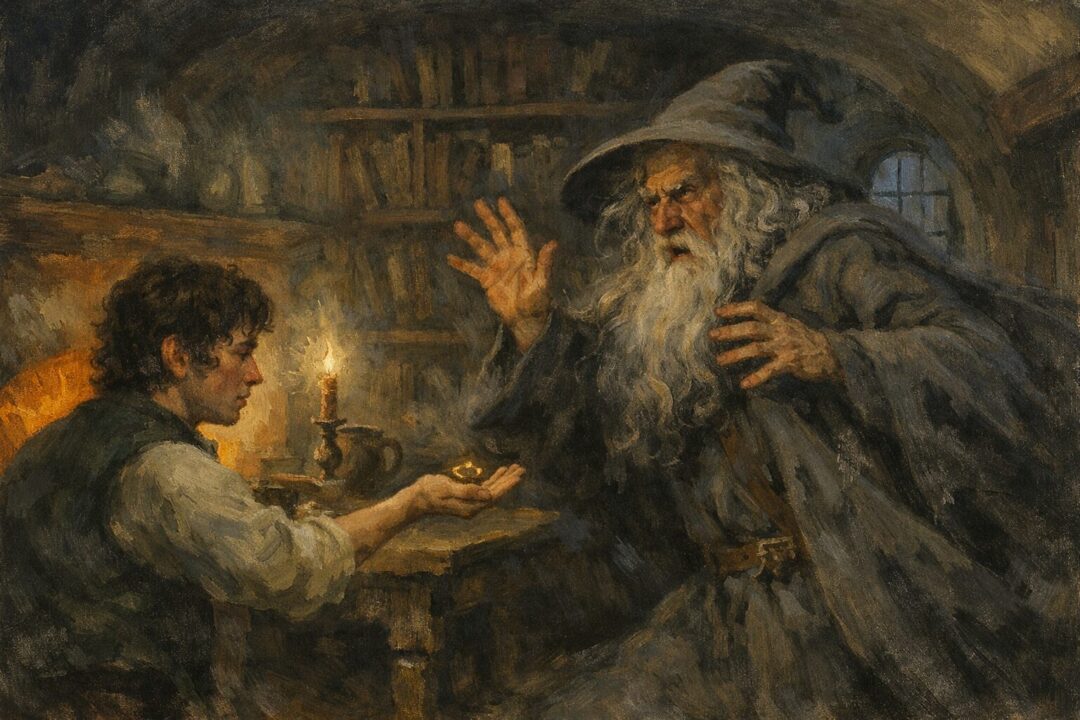
At first glance, Middle-earth seems full of characters who ought to be able to solve its greatest problems.
Gandalf is older than kingdoms.
Galadriel has seen ages rise and fall.
Elrond remembers catastrophes that later peoples know only as history.
Glorfindel is a figure of extraordinary spiritual and martial stature.
Tom Bombadil appears, at least within his own land, almost untouched by the Ring itself.
So a modern reader naturally asks the obvious question:
Why do these figures never simply fix everything?
Why does Gandalf not seize command and end the war with overwhelming wisdom?
Why does Galadriel not become the savior-queen that lesser minds can barely imagine?
Why do the oldest beings not step forward, take control, and force history back into order?
The answer is not that they are powerless.
And it is not that the story forgets they exist.
The deeper answer is that Middle-earth is built around a very different idea of wisdom.
Again and again, the texts suggest that the greatest danger is not merely evil power in the hands of the wicked. It is power itself when it becomes domination, even in the hands of the good.

Wisdom in Middle-earth is usually a form of restraint
One of the clearest patterns in The Lord of the Rings is that the wise do not fail because they cannot imagine bold action.
They fail, or refuse, because they understand the cost of certain kinds of action better than everyone else.
Gandalf is the clearest example. The Istari were sent to oppose Sauron, but not by simply matching him in raw domination. The tradition preserved in Appendix B states that they were sent to unite and encourage those willing to resist, yet were forbidden to match Sauron’s power with power or to dominate Elves and Men by force and fear. That limitation matters enormously. It means Gandalf is not meant to become a brighter version of the Dark Lord. He is meant to help others remain themselves.
That is why Gandalf’s refusal of the Ring matters so much.
He does not say he would take it for selfish reasons. He says the opposite. He fears what would happen precisely because he would begin from pity, from urgency, and from a desire to do good. The Ring would work through that good intention. It would magnify it into something terrible. In other words, Gandalf is dangerous not because he lacks wisdom, but because he has enough wisdom to see how even righteous motives can become tyrannical when joined to absolute power.
This is one of the quiet laws of Middle-earth.
The greater the person, the more catastrophic the corruption.
Why the ancient and noble are not automatically safer
Readers often assume that age and purity make someone safer to entrust with decisive power.
The texts keep pushing against that assumption.
Galadriel is one of the mightiest beings remaining in Middle-earth in the Third Age. She is perceptive, disciplined, and capable of immense resistance. Yet when Frodo offers her the Ring, the scene does not suggest she is beyond temptation. It shows that she understands the temptation completely. Her rejection is meaningful because acceptance was genuinely possible. When she says she will diminish and go into the West and remain Galadriel, the force of the moment lies in what she is refusing to become.
That refusal tells us something crucial.
In Middle-earth, wisdom does not erase the desire to protect, preserve, heal, or set wrong things right. Often it deepens it. But the Ring is especially fitted to seize exactly those motives and bend them toward rule. So the wise are not excluded from the final answer because they are insufficiently noble. They are excluded because noble motives are not protection against the Ring. Sometimes they are the very entry point by which corruption works.
This is why the story never treats “give it to the wisest person” as a serious long-term solution.
It would only create a new center of domination.
The Three Rings show the limit of Elvish power
Elrond and Galadriel do possess real power, and the texts do not hide that.
But the nature of that power matters.
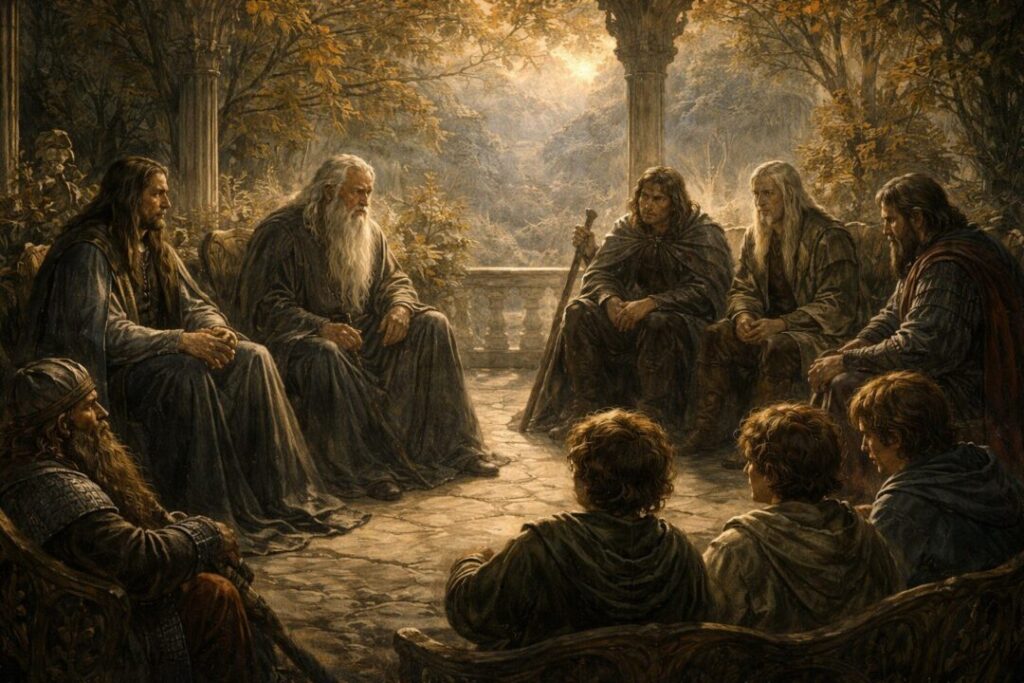
The Three Rings are repeatedly associated with preservation, healing, protection, and resistance to decay. Tolkien Gateway’s summary of the textual tradition notes that Galadriel’s and Elrond’s Rings helped protect and preserve Lórien and Rivendell rather than serving as straightforward weapons. At the Council of Elrond, the Three are explicitly discussed as something other than instruments for winning the war by force.
That distinction is easy to miss.
Readers sometimes imagine that Rivendell and Lórien are proof that the Wise are holding back some enormous unused military force. But that is not really how these realms are framed. Their strength lies partly in shelter, memory, endurance, and warding. They are refuges against the Shadow. They are not the final mechanism by which the whole world can be reordered. And if Sauron regains the One, the things sustained by the Three are imperiled anyway; if the One is destroyed, the Three also lose their former power. Either way, the preservative world of the Elves is passing.
So even the highest remaining Elvish wisdom is not positioned as a universal solution.
It can delay loss.
It can defend.
It can preserve islands of beauty.
It cannot simply end the structure of the conflict on its own terms.
Why raw greatness is often the wrong tool
One of the most revealing discussions at Rivendell concerns not weakness but suitability.
Glorfindel is no minor figure. He is one of the most exalted Elves in Middle-earth. Yet in the deliberations around the Fellowship, Gandalf’s judgment is that Glorfindel’s power would be of little use on a mission of secrecy. That line is easy to pass over, but it explains an enormous amount about the logic of the war.
The quest is not a contest to find the strongest champion and send him openly against Mordor.
That would be the Enemy’s kind of thinking.
Sauron expects rivals, visible threats, weapons, armies, and challenges scaled to power. What he does not sufficiently account for is the possibility that the decisive movement will be hidden, burdened, reluctant, and apparently small. Gandalf even frames the necessary course as something that may look like folly once all other options have been weighed.
That does not mean the great are irrelevant.
It means they are supporting a victory that cannot happen in the mode of grandeur.
The old and wise matter constantly in counsel, defense, encouragement, and resistance. But the actual shape of the quest strips away prestige. That is not an accident. It is the point.
Tom Bombadil proves that immunity is not the same as usefulness
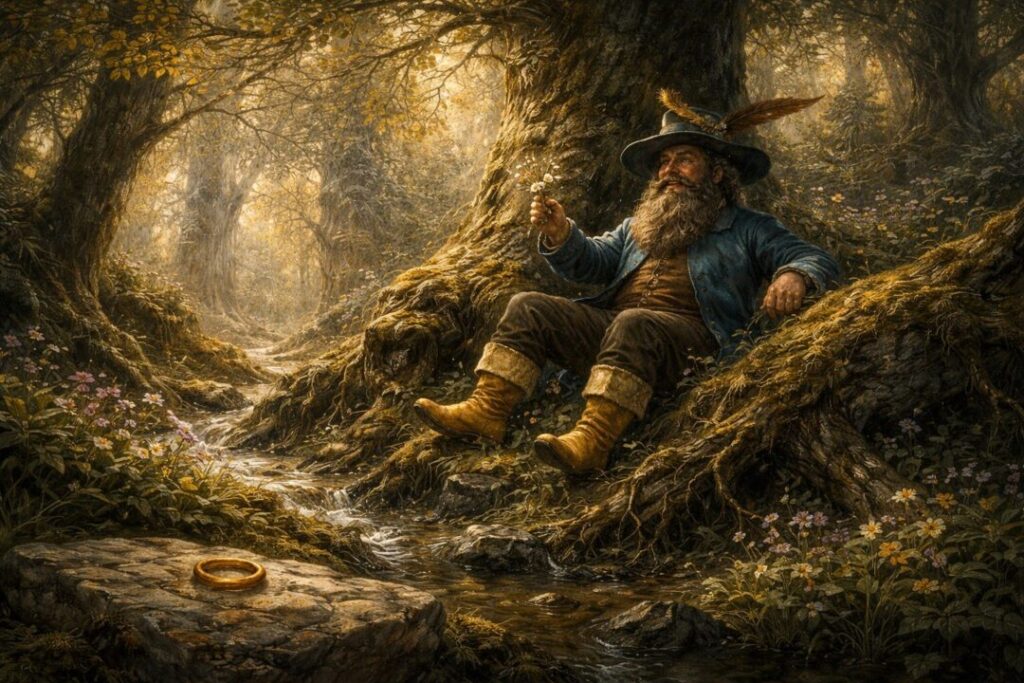
Tom Bombadil is the sharpest possible test case.
Many readers look at him and think they have found the loophole. If the Ring appears to have no hold on him, why not entrust the whole matter to him and be done with it?
But the Council rejects that immediately.
Gandalf’s answer is explicit: Bombadil would not understand the need in the right way, and if given the Ring he would soon forget it or throw it away. Such things have no hold on his mind, and that makes him an unsafe guardian rather than the perfect one.
This is a subtle but vital point.
The story is not looking for someone merely untouched by power.
It is looking for someone who can carry a burden responsibly within history.
Bombadil stands too far outside that struggle. His freedom from the Ring does not make him the answer. It makes him, in a sense, unavailable to the kind of responsibility the quest requires. That is why immunity alone does not solve the problem. A being can be unmastered by the Ring and still be the wrong steward for the fate of the world.
So even here, Middle-earth refuses the easy solution.
The deeper reason the Wise do not “fix everything”
By this point, a larger pattern starts to come into focus.
The Wise are not absent because the story forgot their strength.
They are not passive because they lack courage.
They do not step back because the threat is too small for them to notice.
They step back, or act within limits, because the central problem of the age cannot be solved by cleaner domination.
If evil in Middle-earth is bound up with the will to mastery, then simply handing history over to the greatest available master would not heal the world. It would only change the face of its ruler. Gandalf fears this. Galadriel fears it. The mission of the Istari was structured to avoid it. Even the preservation worked by the Three is temporary and conditional, not an everlasting answer.
That is why long-lived wise characters in Middle-earth are so often guides instead of controllers.
They kindle courage.
They preserve memory.
They strengthen resistance.
They create the conditions in which others can choose well.
But they do not simply seize the machinery of the world and force it right.
The texts repeatedly suggest that such an act would betray the very good they were trying to defend.
Why the story gives the burden to the small
Once that is understood, the role of Hobbits becomes much less surprising.
The quest is not built around the most visibly potent figures because visible potency is exactly what the Ring corrupts and what Sauron best understands. A humble bearer, moving in weakness, dependence, and obscurity, is not just a sentimental choice. It is strategically and morally fitted to the nature of the conflict.
This does not mean the small are immune.
Frodo is not immune.
Bilbo was not immune.
No one who carries the Ring remains untouched.
But the story consistently places its hope in people who do not begin with dreams of ordering the world. That difference matters. Where the mighty are tempted to become saviors through control, the small more often endure through mercy, loyalty, and persistence. And in Middle-earth, those qualities prove more resistant to the central lie of power than greatness does.
Middle-earth does not trust the obvious fix
That is why ancient wisdom never simply “fixes everything.”
Because the obvious fix is usually domination in a nobler voice.
Middle-earth does not deny the greatness of Gandalf, Galadriel, Elrond, or Glorfindel. It depends on that greatness. But it also places strict limits on what greatness is allowed to do. The wise are there to help the free peoples resist evil without becoming its mirror. They guide the story toward a victory that does not look like mastery.
And that may be the strangest thing of all.
The oldest and wisest characters are not prevented from fixing everything because the story is unfair to them.
They are prevented because, in Middle-earth, the moment someone tries to fix everything by taking full control, they are already too close to the problem they were meant to defeat.
Sources & Notes
- J.R.R. Tolkien, The Lord of the Rings, Book I, Chapter 2, “The Shadow of the Past” — has Gandalf refuse the Ring because his pity and desire for strength to do good would make its power too terrible.
- J.R.R. Tolkien, The Lord of the Rings, Book II, Chapter 2, “The Council of Elrond” — covers the Wise rejecting easy keepers for the Ring, including Bombadil, and choosing a secret quest rather than open power.
- J.R.R. Tolkien, The Lord of the Rings, Book II, Chapter 7, “The Mirror of Galadriel” — shows Galadriel’s real temptation by the Ring and her choice to diminish, go into the West, and remain herself.
- J.R.R. Tolkien, The Lord of the Rings, Appendix B, “The Third Age” — says the Istari were sent to contest Sauron and unite resistance, but were forbidden to match his power with power or dominate Elves and Men.
- J.R.R. Tolkien, The Silmarillion, “Of the Rings of Power and the Third Age” — describes the Three as Elvish rings of preservation and healing whose power depends on the fate of the One Ring.
- J.R.R. Tolkien, The Letters of J.R.R. Tolkien, Letter 131 — frames Sauron’s evil as the will to order and dominate others, supporting the article’s distinction between guidance and mastery.