Most people assume the Silmarils are the true center of the First Age.
That assumption makes sense.
They are the great jewels of the Elder Days, hallowed in Valinor, stolen by Morgoth, desired by Fëanor and his sons, and fought over by nearly every power that comes near them. The Oath of Fëanor is sworn for them. The long wars against Morgoth are shaped by their loss. Later, the ruin of Doriath and the later Kinslayings are bound up with the attempt to possess them again.
In terms of plot, they are undeniably central.
But in terms of meaning, the story points somewhere else.
Because when one of the greatest turning points in the history of Beleriand arrives, the decisive force is not the Silmaril itself.
It is Finrod Felagund.
That claim needs to be stated carefully. The Silmarils still matter immensely. Without them, the history of the First Age would not take the shape it does. But the deeper moral movement of the story does not finally rest on the jewels. It rests on what characters become in relation to them. And in that contest, Finrod matters more than the objects everyone is trying to seize.
The Silmarils Are Powerful, but They Are Not the Moral Center
The Silmarils are among the most sacred works in all the legendarium. Their theft by Morgoth helps trigger the rebellion of the Noldor and the tragic chain of events that follows. Even after one Silmaril is recovered from the Iron Crown, it does not bring peace. Instead, it becomes a fresh source of destruction, awakening again the terrible logic of the Oath of Fëanor.
That pattern matters.
Again and again, the Silmarils reveal desire. They do not create every evil impulse around them, but they draw it out and concentrate it. The sons of Fëanor pursue them under an oath already described as destructive and self-betraying. Thingol’s possession of the recovered Silmaril becomes entangled with pride and with the making of the Nauglamír, and that leads toward the ruin of Doriath. Dior inherits the jewel, and the sons of Fëanor attack again. Elwing escapes with it, and only much later does the jewel finally become part of something redemptive when it is borne by Eärendil.
So the Silmarils are not unimportant.
But they are often catalysts rather than answers.
They are objects of holiness in a marred world, and many characters respond to them badly.
Finrod is different.
Finrod’s Importance Begins Long Before Beren
Finrod’s significance in this story does not begin in Nargothrond when Beren arrives.
It begins much earlier, when he encounters Men.
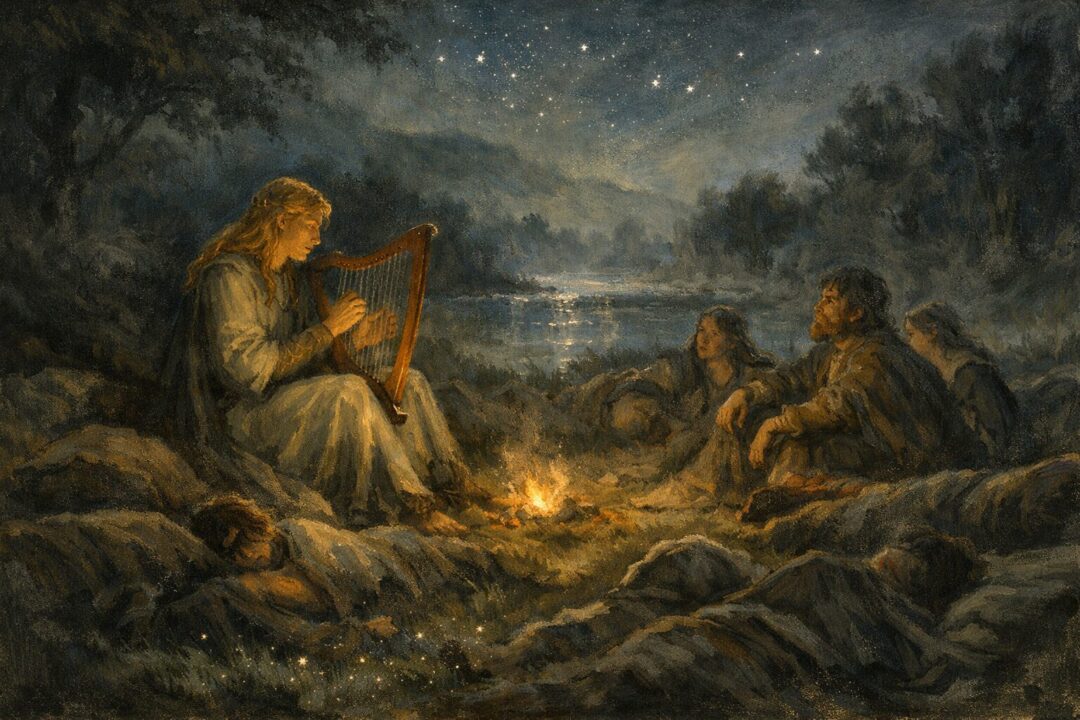
In the chapter describing the coming of Men into the West, Finrod is the first of the Noldor to discover them. He does not meet them in suspicion or contempt. He remains with them, learns their tongue, teaches them much of what his people know, and forms a special bond with Bëor. That friendship is not a passing courtesy. It becomes one of the defining relationships between Eldar and Edain in the First Age.
That is easy to overlook because the tale of Beren and Lúthien burns so brightly.
But the groundwork is already there.
Finrod matters because he is one of the clearest examples of an Elf-lord treating Men not merely as useful allies, but as people worthy of loyalty, instruction, and love. The House of Bëor does not enter the great history by accident. It does so through a friendship.
That friendship later acquires the force of an oath.
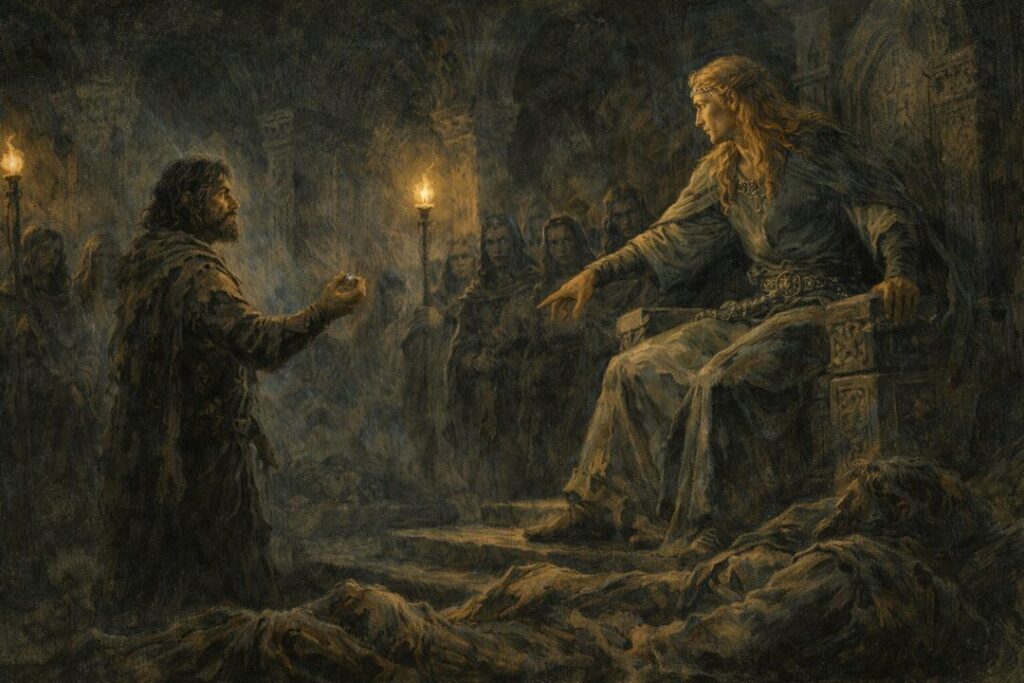
When Barahir saves Finrod’s life in the Dagor Bragollach, Finrod swears “an oath of abiding friendship and aid in every need” to Barahir and all his kin, and gives him his ring as a token. That detail is not ornamental. It is one of the hinges on which the whole later story turns.
The Real Turning Point Is Not the Quest, but the Promise
When readers think of Beren’s story, they often think first of the impossible quest itself.
A mortal man is told to bring back a Silmaril from Morgoth’s crown.
That is the headline. It is also the trap.
Because the deeper turning point comes before Angband.
Beren comes to Nargothrond with the Ring of Barahir and claims the aid once promised to his house. Finrod immediately recognizes what that means. He is now bound, not by greed, not by ambition, and not by obsession with a jewel, but by fidelity to his word.
This is where the contrast with the Silmarils becomes sharp.
The jewels are surrounded by possessive claims. Finrod is governed by obligation freely embraced. The sons of Fëanor are driven by an oath that increasingly deforms them. Finrod is driven by an oath that reveals who he already is.
That difference is everything.
In Nargothrond, Celegorm and Curufin use the fear attached to their own oath to turn the people away from their king’s purpose. Most do not follow Finrod. He loses not only safety, but in practical terms his power. Yet he still goes. Only a handful remain faithful to him.
The text does not present this as recklessness for its own sake.
It presents it as moral clarity.
Finrod knows the quest is dreadful. He knows what it may cost. He goes anyway because a promise to Barahir still binds him, and because Beren is not beneath the keeping of that promise.
In Sauron’s Dungeon, Finrod Becomes More Important Than the Jewel
The most decisive proof of Finrod’s importance comes after the company is captured.
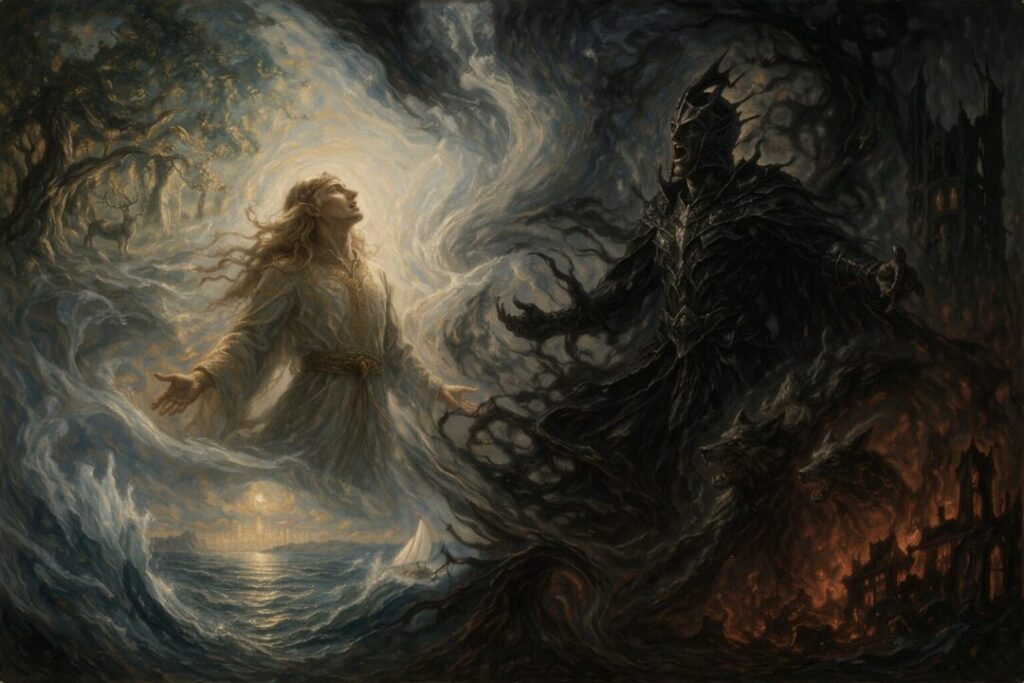
Disguised by Finrod’s arts, Beren and his companions attempt to pass northward, but Sauron uncovers them. Then comes the renowned contest between Sauron and Finrod, a struggle in songs of power. Sauron wins. The disguises are stripped away. One by one, the prisoners are devoured by werewolves until only Beren and Finrod remain.
At that point, the quest is effectively broken.
There is no Silmaril within reach.
There is no triumph.
There is no visible path forward.
And this is exactly where Finrod matters most.
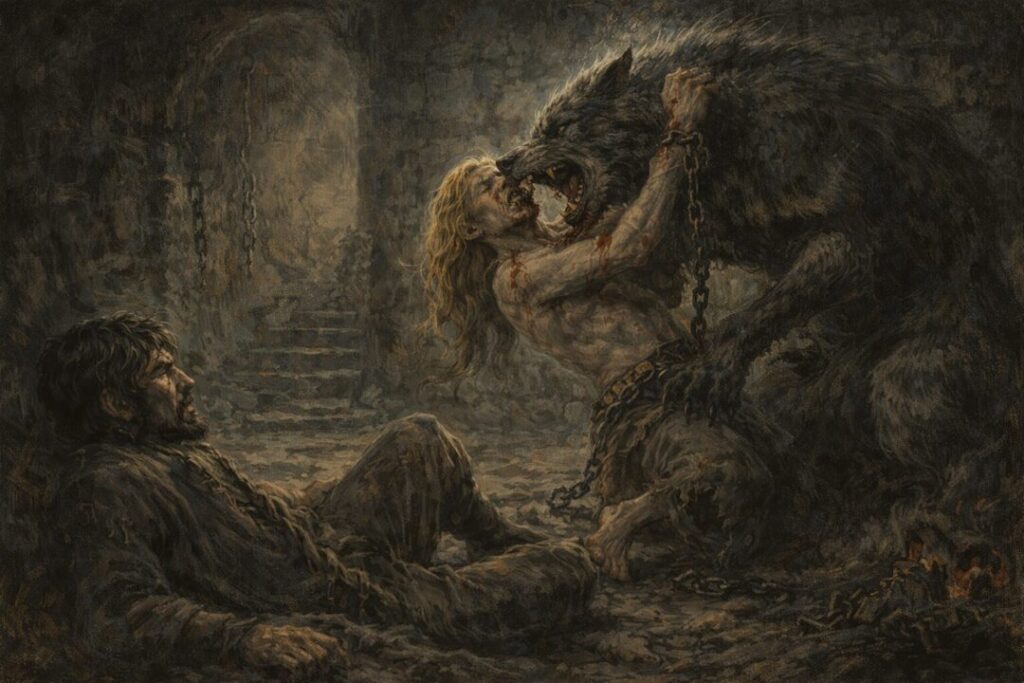
When the werewolf comes for Beren, Finrod bursts his bonds, wrestles the beast himself, kills it, and is mortally wounded in the act. In plain narrative terms, he keeps Beren alive. Without that, Beren’s story ends in Tol-in-Gaurhoth. Lúthien may still come, but she does not arrive in time to save Finrod; the text specifically gives Finrod the act that preserves Beren in that final moment.
This is why the title claim is not just rhetorical.
The Silmaril is the goal of the quest, but Finrod is the reason the quest is not extinguished in Sauron’s dungeon.
He becomes the bridge between oath and outcome.
He cannot seize the jewel.
He cannot defeat Sauron.
He cannot overthrow Morgoth.
But he can do the one thing the story actually needs at that moment.
He can remain faithful unto death.
Finrod’s Choice Helps Make the Later Hope Possible
From there, the wider consequences unfold.
Beren survives.
Lúthien rescues him.
Together they reach Angband and recover a Silmaril from Morgoth’s crown.
That Silmaril later passes through Beren and Lúthien, to Dior, to Elwing, and finally to Eärendil, whose voyage to Aman becomes crucial to the War of Wrath. Eärendil is explicitly described as crucial in that war and as the bearer of the Silmaril in the sky thereafter.
It would be too strong to say Finrod alone causes all of this. The texts do not say that, and the story has too many other indispensable figures for such a claim.
But it is completely fair to say that his fidelity is one of the essential links in the chain.
Remove Finrod from the story, and Beren’s quest very likely ends much earlier. Remove the quest’s survival at that point, and the later history surrounding the recovered Silmaril changes radically. The text does not force us to speculate much here, because it directly tells us that Finrod saves Beren from immediate death.
That is a very different kind of importance from the importance of a jewel.
It is not symbolic centrality alone.
It is active, costly, personal necessity.
The Silmarils Expose Desire. Finrod Reveals the Story’s Measure
There is another reason Finrod matters more in the deeper sense.
The Silmarils reveal what characters want.
Finrod reveals what the story honors.
Again and again, the jewels become surrounded by possession: who made them, who lost them, who deserves them, who has the right to reclaim them, who dares withhold them. The Oath of Fëanor is the clearest example of that possessive logic, and its fruits are catastrophic. The text itself frames that oath as something that drives and betrays its makers.
Finrod stands outside that pattern.
He is involved in the Silmaril story, but not because he wants the jewel. He does not seek glory through it. He does not use it to enlarge his own name. He enters the quest because of loyalty to Barahir’s house and, by extension, to Beren himself.
That makes him one of the clearest moral contrasts in the entire First Age.
Others move toward the Silmaril in hunger, oath-bound possessiveness, or pride.
Finrod moves toward danger for the sake of another person.
That is why his role feels larger than his page count.
The jewel radiates light.
Finrod clarifies meaning.
Why This Matters So Much in the Tale of Beren and Lúthien
The story of Beren and Lúthien is often remembered for its great romance and for the impossible theft from Morgoth’s crown.
But it is also a story about what kind of power changes history.
Not all power in these tales is force.
Sometimes it is endurance.
Sometimes it is mercy.
Sometimes it is keeping faith when there is no practical reason left to do so.
Finrod embodies that kind of power.
He is not the lover at the center of the tale.
He is not the one who cuts the Silmaril free.
He is not the one who returns from death for love.
And yet he is one of the reasons any of that remains possible.
The Silmarils are brighter.
Finrod is better.
And in the moral architecture of Middle-earth, that matters more.
The Deeper Answer
So does Finrod Felagund matter more than the Silmarils?
If the question is about raw legendary importance, the answer has to be qualified. The Silmarils shape the history of the Elder Days in immense ways, and no careful reading should diminish that.
But if the question is about what the story is finally teaching us to value, then the answer becomes much stronger.
Yes.
Because the Silmarils are treasures over which many fall.
Finrod is one of the clearest proofs that the First Age is not finally about possessing holy things.
It is about what remains uncorrupted when everything holy has become a cause of war.
And in that test, Finrod does not fail.
Sources & Notes
- J.R.R. Tolkien, The Silmarillion, “Of the Coming of Men into the West” — Finrod first meets the Edain, learns their speech, teaches them, and forms the friendship with Bëor that underlies the article’s emphasis on loyalty over possession.
- J.R.R. Tolkien, The Silmarillion, “Of the Ruin of Beleriand and the Fall of Fingolfin” — Barahir saves Finrod in the Dagor Bragollach, and Finrod gives him the ring with an oath of abiding aid to his house.
- J.R.R. Tolkien, The Silmarillion, “Of Beren and Lúthien” — Beren comes to Nargothrond with the Ring of Barahir, and Finrod chooses to keep his oath despite the political cost among his own people.
- J.R.R. Tolkien, The Silmarillion, “Of Beren and Lúthien” — the song-contest with Sauron, captivity on Tol-in-Gaurhoth, and Finrod’s death fighting the werewolf directly support the article’s central claim.
- J.R.R. Tolkien, The Silmarillion, “Of the Voyage of Eärendil and the War of Wrath” — the recovered Silmaril’s later passage to Elwing and Eärendil gives context for why preserving Beren’s quest mattered beyond the jewel itself.