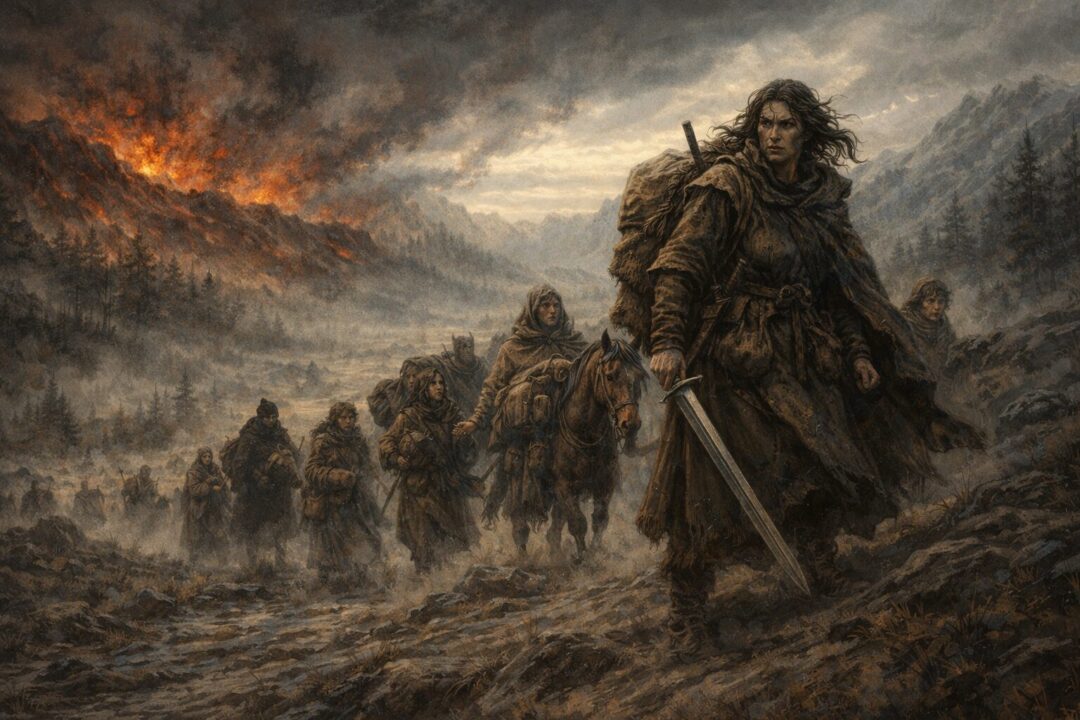
At first glance, the House of Bëor seems marked for greatness.
And it is.
This is the first of the Houses of the Edain to enter Beleriand. It becomes closely associated with Finrod Felagund. From it come Beren, Andreth, Barahir, Emeldir, Dior through Beren and Lúthien, Elwing, and eventually the line that leads into the Half-elven and the kings of Númenor. In sheer importance, few mortal houses in the legendarium stand higher.
But it is hard not to notice another pattern.
This house suffers.
Again and again, the texts return to the descendants of Bëor at moments of loss: the ruin of their land, the deaths of their leaders, betrayals under terror, impossible loves, children hunted or abandoned, kingdoms destroyed, and survivors driven into flight. Other peoples of Middle-earth endure catastrophe as well. Yet the House of Bëor seems to stand at the crossing point where personal grief and the largest doom of the Elder Days meet.
The texts never say that the House of Bëor is cursed.
So the question has to be asked more carefully.
Why does this particular line seem to bear so much of the sorrow?
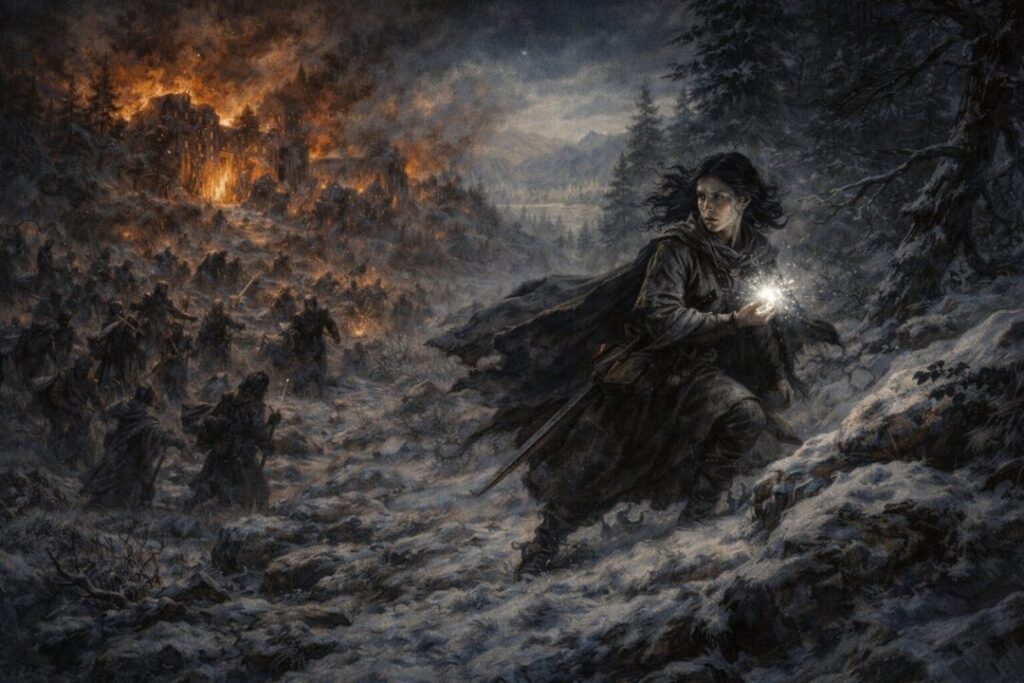
The First House of Men to Come West
The pattern begins with proximity.
The House of Bëor is the first of the Edain to cross the Blue Mountains into Beleriand, and it enters quickly into alliance and service among the Eldar, especially under Finrod Felagund. Later they are granted Ladros in Dorthonion. This is not an isolated, distant people living at the margins of the great tales. From the start, they are drawn near the center.
That closeness matters.
The House of Bëor does not merely fight Morgoth as one more mortal people among many. It becomes deeply entangled with the fate of the Noldor and Sindar. The line of Bëor is repeatedly placed beside Elven kings, Elven realms, and Elven griefs. This is the house that receives Finrod’s friendship, that produces Andreth, whose story is bound to the sorrow between Men and Elves, and that through Beren enters directly into the matter of the Silmarils.
That does not prove a reason by itself.
But it shows the shape of the pattern.
The House of Bëor is where the stories of Men come nearest to the oldest powers and oldest wounds of Beleriand.
Dorthonion and the Breaking of the House
Before Beren ever reaches Doriath, the House of Bëor is already broken by war.
Their lands in Ladros are overrun in the Dagor Bragollach. Bregolas is slain. Barahir survives and becomes leader of a desperate remnant. Emeldir the Man-hearted leads the women and children away out of Dorthonion. The house is not merely defeated; it is scattered.
This is one of the key reasons the tragedy feels so concentrated.
The destruction of the House of Bëor is narrated not only as military loss, but as the collapse of a home and a people. After the Bragollach, Barahir and his companions live as outlaws in their own ruined country. Gorlim is captured and deceived by Sauron through the image of his wife Eilinel, and his betrayal leads to the slaughter of Barahir’s band. Barahir himself is killed, and the Ring that Finrod gave him is taken from his severed hand.
Here the sorrow of the house becomes intensely personal.
It is no longer only about armies and realms. It becomes about loyalty, grief, deception, widowhood, and a son left wandering alone after the death of his father.
That son is Beren.
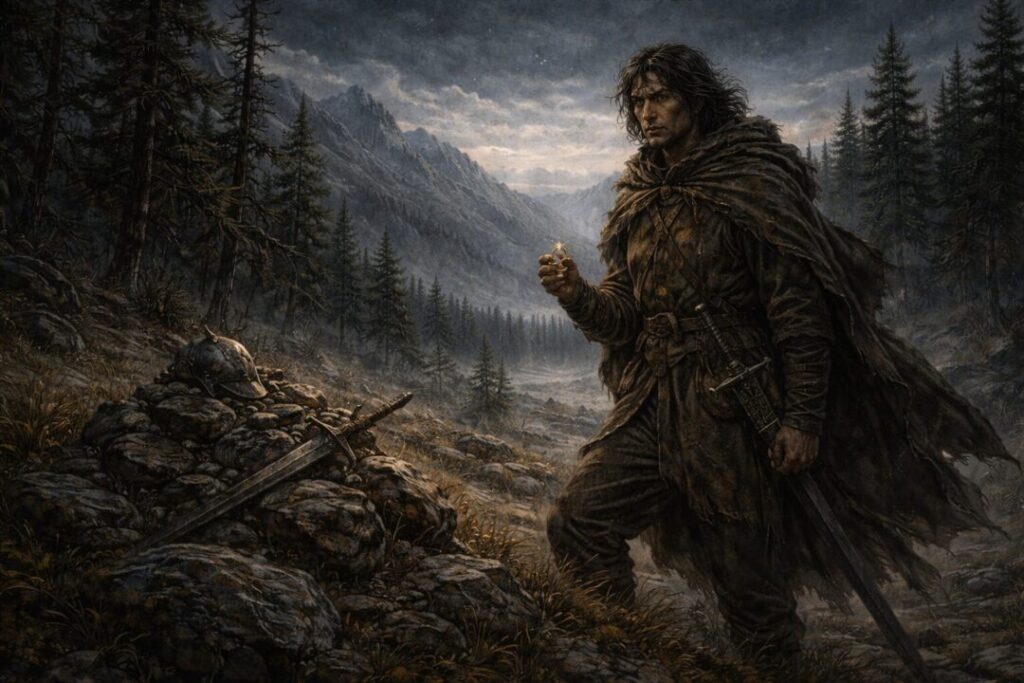
Why Beren Changes Everything
Beren is the point at which the tragedy of the House of Bëor becomes inseparable from the central legend of the Elder Days.
He is explicitly of the House of Bëor, the son of Barahir and Emeldir, and after the ruin of Dorthonion he becomes the last survivor of his father’s outlaw company. When he enters Doriath and beholds Lúthien, the line of Bëor is suddenly joined to the line of Thingol and Melian. That union is not just romantic. It places a mortal house directly into the fate of a Silmaril.
This is where an interpretive answer begins to emerge.
The House of Bëor receives so much tragedy because the texts use it as the chief place where mortal life touches the immortal world at its brightest and most dangerous. Andreth and Aegnor show one form of that collision. Beren and Lúthien show another. In both cases, the issue is not simple misfortune. It is the pain produced when the fates of Men and Elves come too close to each other to remain abstract.
That is interpretation, not an explicit statement.
But the pattern is difficult to miss.
The line of Bëor is where the mortal cost of high legend is repeatedly made visible.
The Silmaril Does Not End the Sorrow
It would be easy to imagine Beren and Lúthien as the exception.
They are not.
Their story is beautiful, but the beauty does not end the grief. Their son Dior inherits not peace, but another layer of doom. After the fall of Thingol and the ruin brought by the Dwarves in Menegroth, Dior comes to Doriath and renews the kingdom. Then the Silmaril comes to him. That possession draws the Sons of Fëanor against him in the Second Kinslaying. Dior and Nimloth are slain.
And the tragedy sharpens further.
Eluréd and Elurín, the sons of Dior, are taken and abandoned in the forest by the cruel servants of Celegorm. Elwing escapes with the Silmaril. The texts do not give any rescue or restoration for the lost boys. Later writings and readers may wonder, but the canon does not provide a return. That silence is part of the horror.
This matters for the question of why the House of Bëor feels singled out.
Once Beren’s line is tied to the Silmaril, the house does not simply participate in tragedy. It becomes one of the main vessels through which the tragedy of the Silmarils is carried forward.
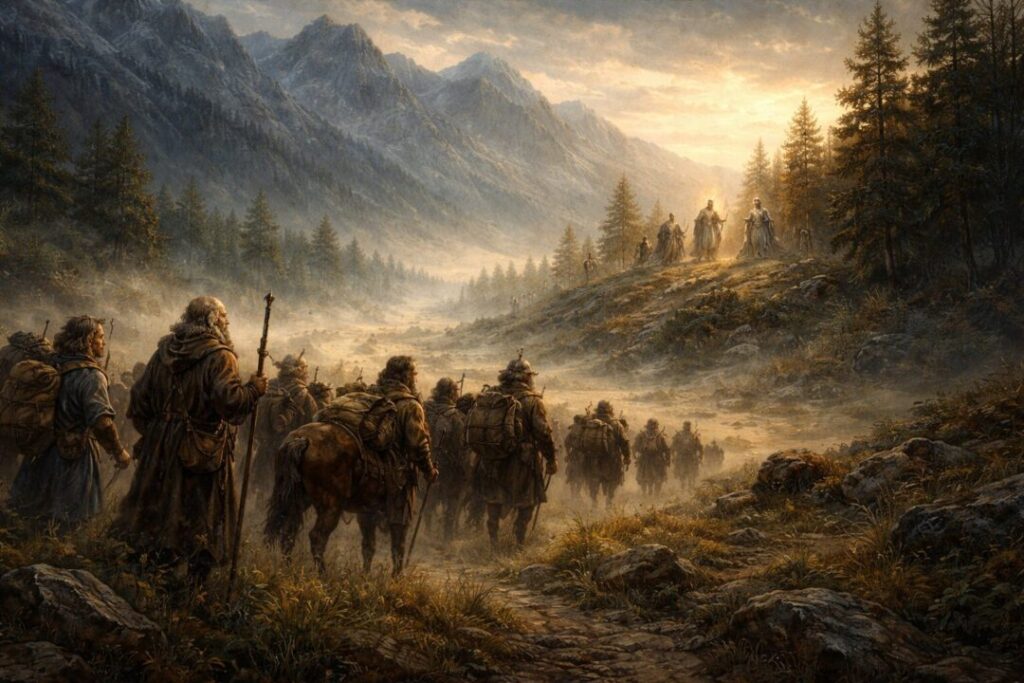
Elwing and the Long Shadow of the House
Even Elwing’s survival is not a simple escape.
She flees with the Silmaril and later weds Eärendil. Through them the line of Bëor passes into the story of the Half-elven, and from there into Elrond, Elros, and the later ages of Middle-earth. This makes the House of Bëor more than a doomed First Age family. It becomes one of the great transmitting lines of the whole legendarium.
That helps explain why its grief feels so narratively dense.
The texts keep returning to this house because so much passes through it: friendship with Finrod, the question of mortality, the first great union of Man and Elf, the Silmaril recovered from Morgoth, the ruin of Doriath, the survival of Elwing, and the ancestry of Elrond and Elros. The house is not just one lineage among others. It is one of the chief meeting points of Men, Elves, and the fate of the Elder Days.
And that is why the tragedy keeps gathering there.
Not because the texts declare a curse.
But because the House of Bëor is so often placed nearest to the things in Middle-earth that are most luminous and most destructive.
Not a Cursed House, but a House at the Crossroads
The safest conclusion is also the strongest one.
The House of Bëor does not “get all the tragedy” in a literal sense. Other houses and realms suffer terribly, and the First Age is full of catastrophe. But the line of Bëor is where the legendarium most often brings together mortality, loyalty, love, oath, and Silmaril-doom in intimate form.
That is why its sorrow feels different.
The House of Hador gives Middle-earth great war-heroes. The House of Haleth gives it endurance and independence. But the House of Bëor again and again gives it the human face of loss: a wife leading refugees out of ruin, an outlaw father hunted in the dark, a lover crossing impossible boundaries, children lost in the aftermath of a jewel’s doom, and a daughter fleeing with the last hope of a broken age.
So why does the House of Bëor seem to receive so much tragedy?
Because this is the house the texts place closest to the fire.
Closest to Elven beauty.
Closest to mortal grief.
Closest to the Silmarils.
Closest to the question of what it costs for Men to enter the great tales of the Elder Days at all.
And in Middle-earth, that nearness is never free.
Sources & Notes
- J.R.R. Tolkien, The Silmarillion, “Of the Coming of Men into the West” — introduces Bëor’s people as the first Edain to enter Beleriand and records Finrod Felagund’s friendship with Bëor and his house.
- J.R.R. Tolkien, Morgoth’s Ring (History of Middle-earth X), “Athrabeth Finrod ah Andreth” — gives the Finrod-and-Andreth frame behind the article’s mortality, Elven love, and House of Bëor sorrow themes.
- J.R.R. Tolkien, The Silmarillion, “Of the Ruin of Beleriand and the Fall of Fingolfin” — covers the Dagor Bragollach, the ruin of Dorthonion, Bregolas’s death, and Barahir’s outlaw remnant after Ladros is lost.
- J.R.R. Tolkien, The Silmarillion, “Of Beren and Lúthien” — follows Barahir’s betrayal through Gorlim, Beren’s isolation, and the way the House of Bëor becomes bound to Lúthien and the Silmaril quest.
- J.R.R. Tolkien, The Silmarillion, “Of the Ruin of Doriath” — traces the Silmaril’s later cost through Dior, Nimloth, the lost children Eluréd and Elurín, and Elwing’s flight with the jewel.
- J.R.R. Tolkien, The Silmarillion, “Of the Voyage of Eärendil and the War of Wrath” — connects Elwing and Eärendil to Elrond, Elros, and the survival of the Bëorian line into the later history of Middle-earth.