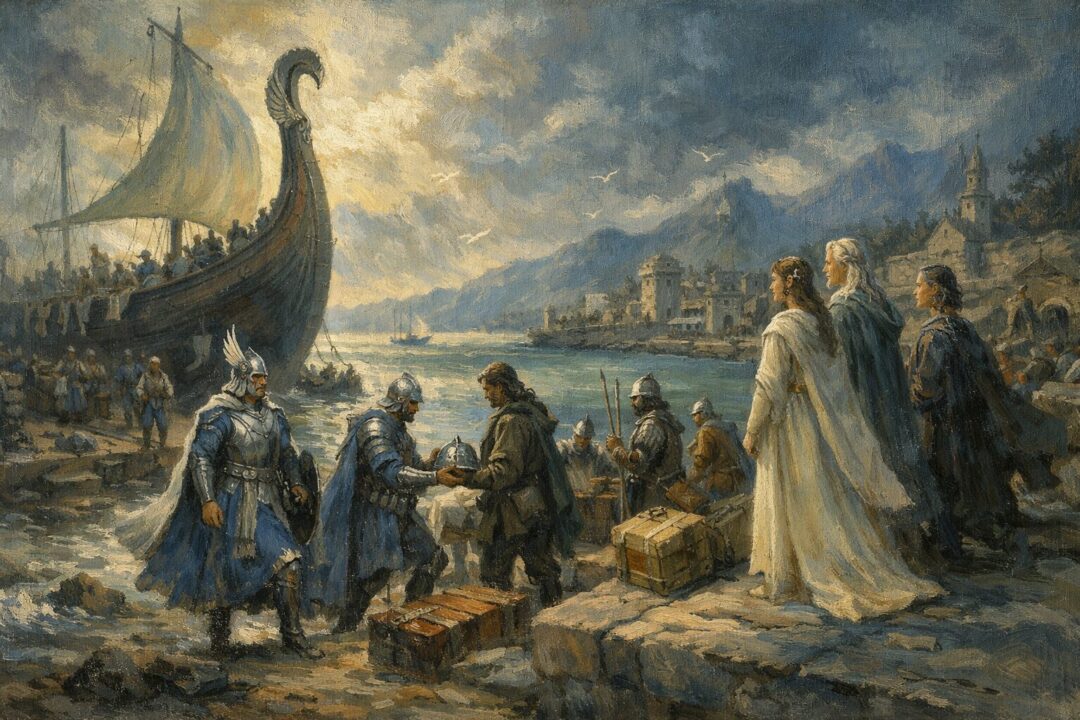
When people think about Númenor’s fall, they usually picture the final stage.
Sauron in chains.
Ar-Pharazôn in his pride.
The great temple.
The armament against the West.
That is the part everyone remembers.
And yet the more unsettling truth is that the decisive change in Númenor did not begin there.
By the time Sauron set foot on the island, he was not creating a new desire inside the kingdom. He was entering a realm that had already become vulnerable to exactly the kind of corruption he offered. The appetite for dominion, the resentment of limits, and the fear of mortality were already present. Sauron did not invent those things. He sharpened them, organized them, and drove them toward catastrophe.
That matters, because it changes the whole meaning of Númenor’s story.
It is not simply a tale about an evil outsider poisoning a noble people from without.
It is a story about a people who had already begun to turn their gifts into instruments of control.
Númenor did not begin as an empire
In its early centuries, Númenor was not presented as a predatory power.
The Númenóreans were the descendants of the Edain, granted a blessed island after the War of Wrath. They were enriched by friendship with the Eldar, grew in wisdom and craft, and became unmatched mariners. When they first returned to Middle-earth, the movement is described in far gentler terms. They reached Lindon, formed friendship with Gil-galad, and aided the Men of Middle-earth, teaching them skills and helping them emerge from the long Shadow that had lain over them.
That earlier phase matters because it keeps the later change from feeling inevitable.
Númenor was not corrupt from the start.
Its sea-power was not originally imperial in the later sense.
Its presence in Middle-earth began with contact, alliance, and assistance.
That is exactly why the later development is so striking.
The same people who once came as teachers and allies eventually came as rulers.
The first shift happened through expansion, not through Sauron
The earliest clear sign of change appears long before Sauron is brought to Númenor.
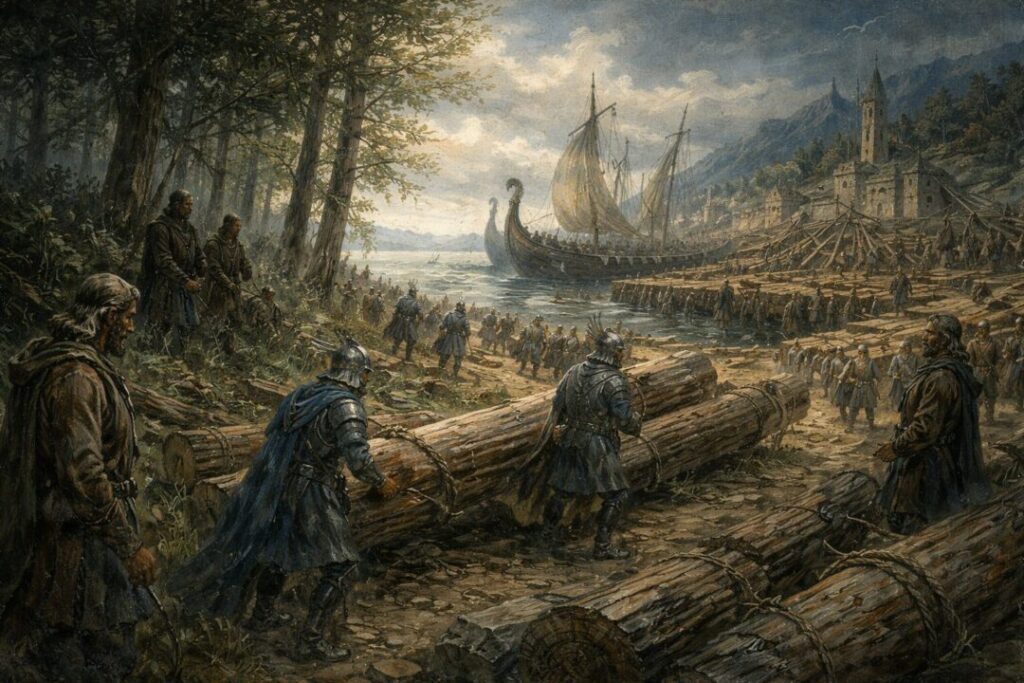
As seafaring intensified under Aldarion, Númenórean interest in Middle-earth became more permanent. Havens were built. Timber was taken in large quantities from the great forests around the Gwathló. The texts do not present this as full imperial domination yet, but they do show a crucial change in direction: Númenor was no longer only visiting Middle-earth. It was planting itself there materially, economically, and strategically. Local hostility grew when the forest-cutting began.
That detail is easy to pass over, but it matters.
Because it shows that the story of Númenórean power in Middle-earth was already becoming uneven. The island’s growing might did not only protect and teach. It also consumed resources, reshaped coastlands, and created resentment. Even here, one should be careful not to overstate the point. The texts do not say Aldarion had already created the later empire of tribute and oppression. But they do show an earlier stage in which expansion, settlement, and extraction were already underway.
That is the pattern to watch.
Sauron arrives much later.
The orientation toward outward power comes first.
Victory made Númenor dangerous to itself
A second and more decisive turning point came after Númenor displayed its overwhelming strength against Sauron in the War of the Elves and Sauron.
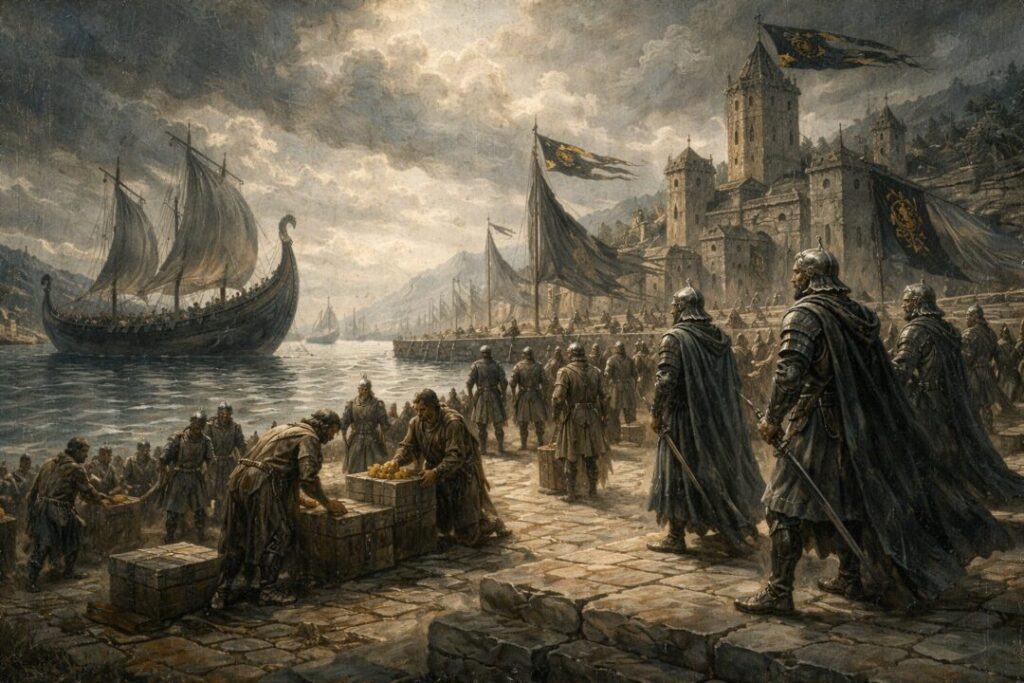
When Númenórean fleets arrived in force and broke Sauron’s assault in Eriador, their might was revealed on a scale few could challenge. After that, the tone changes sharply. The tradition preserved in the lore is that once their power had been proven, the Númenóreans “became too proud and desired more wealth and power.” Around the eighteenth century of the Second Age, they established dominions on the shores of Middle-earth and demanded tribute from peoples they had once aided.
This is one of the most important facts in the whole discussion.
It places Númenor’s imperial turn centuries before Sauron is captured and taken to Armenelos in S.A. 3261. The empire is not his creation. The text already shows dominion, tribute, and oppression before that final confrontation ever happens.
In other words, Sauron later found an empire already in motion.
He did not need to teach Númenor how to rule harshly.
He needed only to redirect what it already loved.
Wealth was only part of the problem
It would be easy to reduce this change to greed.
But the deeper cause runs below greed.
As Númenor grew richer and stronger, many of its people became increasingly discontented with the Ban of the Valar. They looked west and envied what they could not possess. They questioned the Gift of Men and resented mortality itself. This discontent is placed especially in the reigns of Tar-Ciryatan and Tar-Atanamir, both long before Sauron’s arrival in Númenor. Tar-Atanamir in particular is remembered as speaking openly against the Valar.
That is the real root of the imperial turn.
Empire was not only about gold, ports, and tribute.
It was also about compensation.
The Númenóreans had been given extraordinary blessings among Men: long life, beauty, wisdom, and power. Yet many of them increasingly experienced those gifts not as abundance, but as a tormenting reminder of what they still did not have. They could see death coming. They could see Aman from a distance only in longing. They could become mighty almost beyond measure, but not deathless.
And once a people begins to regard its rightful limits as an injustice, domination can start to feel morally justified.
That is the psychological hinge in Númenor’s story.
The King’s Men existed before Sauron because the split already existed
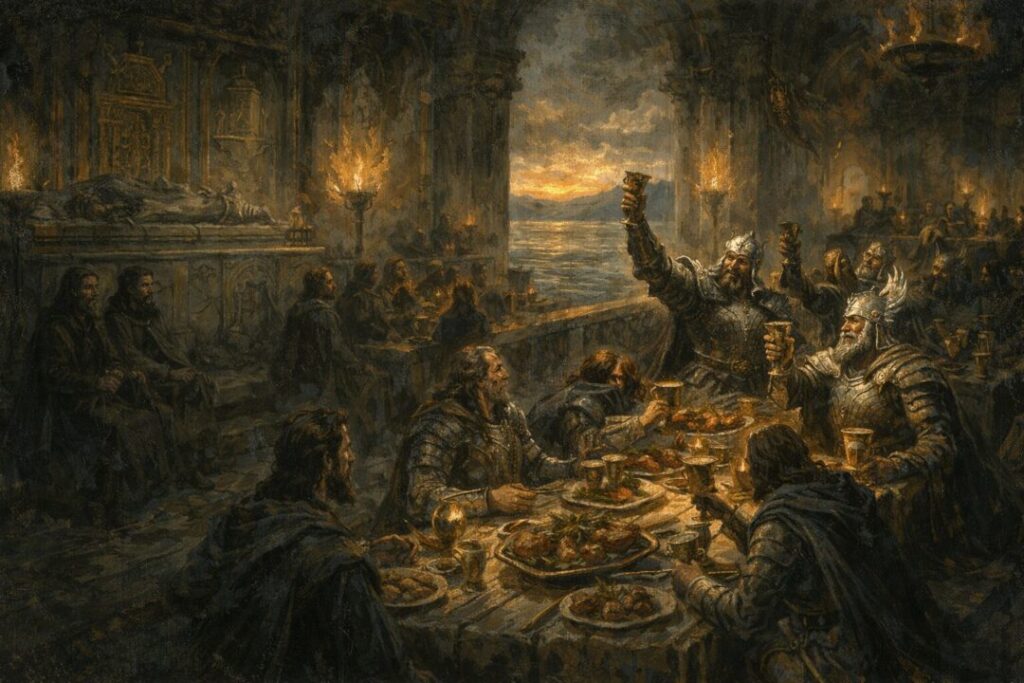
By S.A. 2251, Númenor had formally split into the King’s Men and the Faithful.
That date matters.
It means the kingdom’s spiritual and political fracture was already well established more than a thousand years before Sauron was brought to the island. The King’s Men abandoned Elvish customs and languages, opposed the old friendship with the West, and expanded their dominion in the south. The Faithful remained loyal to the Valar and friendly to the Eldar. This was not a sudden panic at Sauron’s influence. It was a long internal division about what Númenor was for.
That last point is easy to miss.
The true conflict in Númenor was not merely political in the narrow sense. It was a struggle over interpretation.
Was Númenor a gift to be received with gratitude and limits?
Or a sign that its people deserved still more?
The Faithful held to the first vision.
The King’s Men increasingly lived by the second.
And once that second vision took hold, imperial behavior followed naturally. If your greatness is proof that you deserve more, then other peoples become not neighbors but instruments. Middle-earth becomes not a place of alliance but a field of expansion.
Sauron’s genius was not creation but exploitation
When Ar-Pharazôn finally came in overwhelming force against Sauron, Sauron surrendered and was brought back as a prisoner.
This can make it look as though everything afterward was his doing.
But the lore points in a darker direction.
Sauron succeeded in Númenor because he entered a society already prepared for his message. The fear of death was already deep. The resentment of the Ban was already old. The persecution of the Faithful had already begun. Imperial dominion in Middle-earth was already established. Sauron did not persuade a humble kingdom to become proud. He persuaded a proud kingdom that its pride was wisdom.
That is why his corruption moved so quickly.
He gave theological language to envy.
He gave ritual form to fear.
He gave cosmic permission to a desire that was already there.
Under his counsel, the Númenóreans became even more warlike, and their oppression of the peoples of Middle-earth deepened into enslavement and sacrificial horror. But “even more warlike” is the important phrase. It signals escalation, not origin.
The wood was already dry.
Sauron was the spark.
Why this changes the meaning of Númenor’s fall
If Sauron had invented Númenor’s imperialism, the lesson would be simpler.
Beware the deceiver.
Guard the throne.
Do not listen to the wrong counsellor.
But that is not the deeper shape of the story.
Númenor falls because external corruption found internal consent.
Its people had been blessed beyond all other mortal realms, and yet many of them could not bear the one boundary that still remained. Their empire in Middle-earth became the outward sign of that inward revolt. They could not master death, so they mastered other peoples instead. They could not seize Aman, so they seized coasts, havens, forests, tribute, and glory. The imperial turn was not separate from the fear of mortality. It was one of its expressions.
That is what makes the story feel so severe.
Númenor did not become dangerous because it was weak.
It became dangerous because it was magnificent.
Its strength was real.
Its achievements were real.
Its grandeur was real.
And none of that saved it from becoming morally smaller as it became politically greater.
Sauron arrived late
So why did Númenor turn imperial long before Sauron arrived?
Because the deepest corruption was already underway.
The voyages eastward had become expansion.
Power had become appetite.
Blessing had become entitlement.
Long life had become resentment of death.
And gratitude had begun to curdle into the belief that a gifted people had been denied what they were owed.
Sauron did not teach Númenor to want dominion.
He found that desire already seated at the king’s table.
What he offered was not a new sin, but a final justification for an old one.
And that is why the fall of Númenor begins long before the temple, long before the sacrifices, and long before the great armament against the West.
It begins the moment a blessed people decide that limits are insults, and that power entitles them to more than they were given.
Sources & Notes
- J.R.R. Tolkien, The Silmarillion, “Akallabêth” — traces Númenor from its blessed beginning through fear of death, resentment of the Ban, the King’s Men, and the later exaction of tribute in Middle-earth before Sauron arrives.
- J.R.R. Tolkien, Unfinished Tales, “The Line of Elros: Kings of Númenor” — marks the change under Tar-Ciryatan, who built a great fleet and laid the Men of Middle-earth under tribute, and under Tar-Atanamir, who first spoke openly against the Ban.
- J.R.R. Tolkien, Unfinished Tales, “Aldarion and Erendis” — shows Númenórean sea-power expanding through Aldarion’s voyages, timber-hunger, Vinyalondë, and the early strategic relationship with Gil-galad in Middle-earth.
- J.R.R. Tolkien, The Letters of J.R.R. Tolkien, Letter 131 — summarizes the moral arc: Númenóreans first appear as teachers and helpers in Middle-earth, then become proud imperialists seeking wealth and dominion before Sauron exploits the corruption.