A lot of readers feel the difference almost immediately.
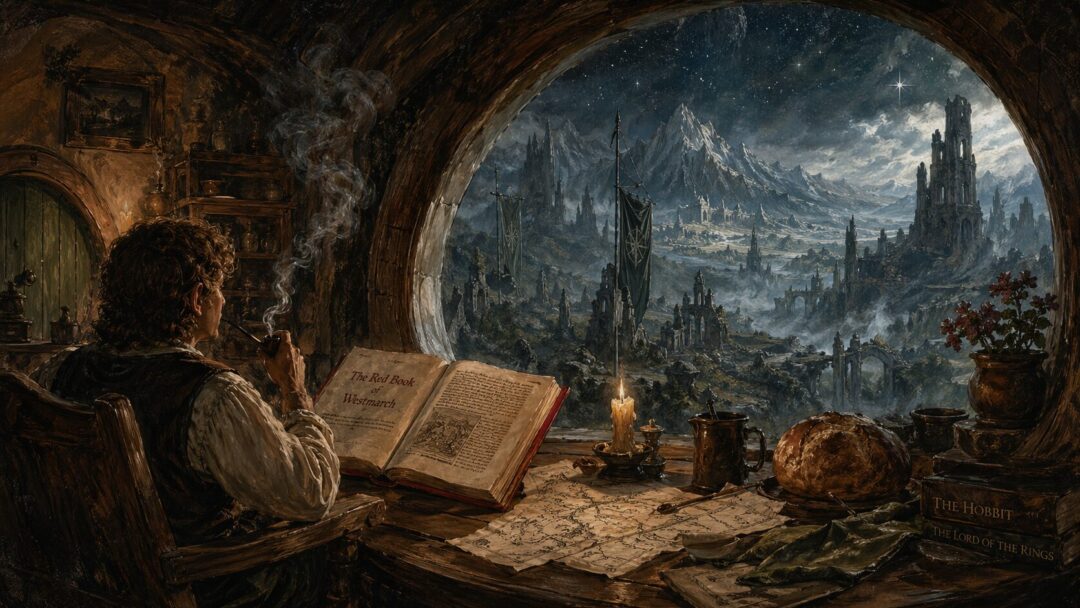
They can move through The Lord of the Rings with a sense of momentum, intimacy, and emotional orientation. Even when the world grows immense, it still feels inhabited at a human level. There are meals, inns, weather, songs, arguments, tired feet, and ordinary speech. The vastness of Middle-earth is filtered through companions who can be frightened, confused, stubborn, and small.
Then they open The Silmarillion and something changes.
The world is still Middle-earth, but the texture is different. The story no longer seems to walk at eye level. It stands farther off. It becomes older, colder, more formal, and more immense. Instead of beginning with a birthday party and a quiet rural people, it begins with creation, angelic powers, cosmic music, exile, and ruin.
So the question naturally follows:
Did Tolkien actually realize that The Silmarillion would be harder for many readers than The Lord of the Rings?
The most careful answer is yes — though not in the blunt modern form that question is usually asked.
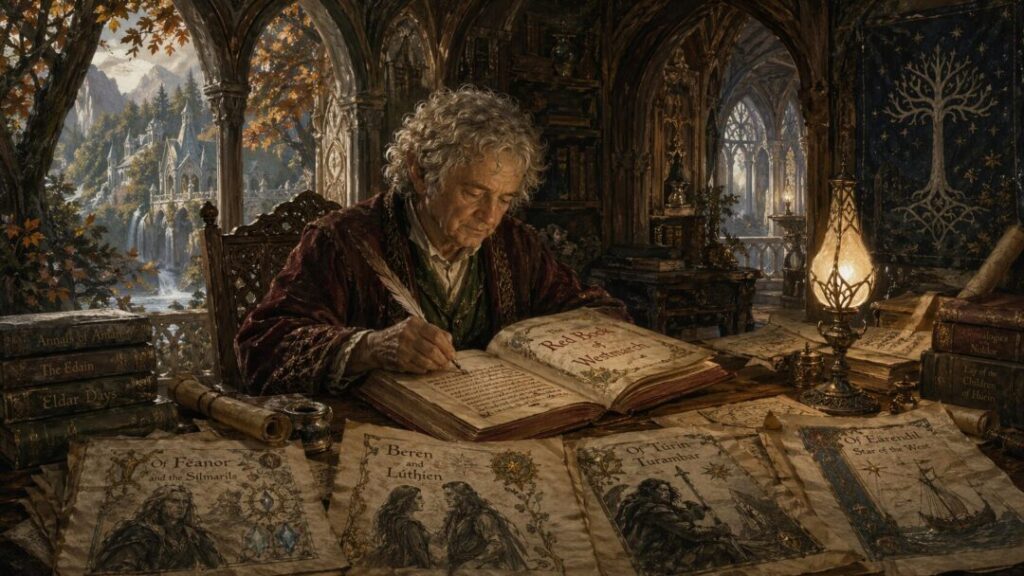
He never seems to reduce the issue to a simple statement like, “This one is more difficult to read.” But in letter after letter, and in the way he described the relation between the books, he comes very close to acknowledging exactly that. He describes The Silmarillion as being in a “high style,” centered on Elves rather than Men, and lacking the everyday grounding that hobbits provide. He even admits, in one letter about those elder tales, that there are “no hobbits” in them and “not much of every-day reality,” and that this made him doubtful of how they would be received.
He Did Not Use the Word “Harder,” But He Described the Difference Clearly
The key point is that he seems to have understood the contrast structurally rather than casually.
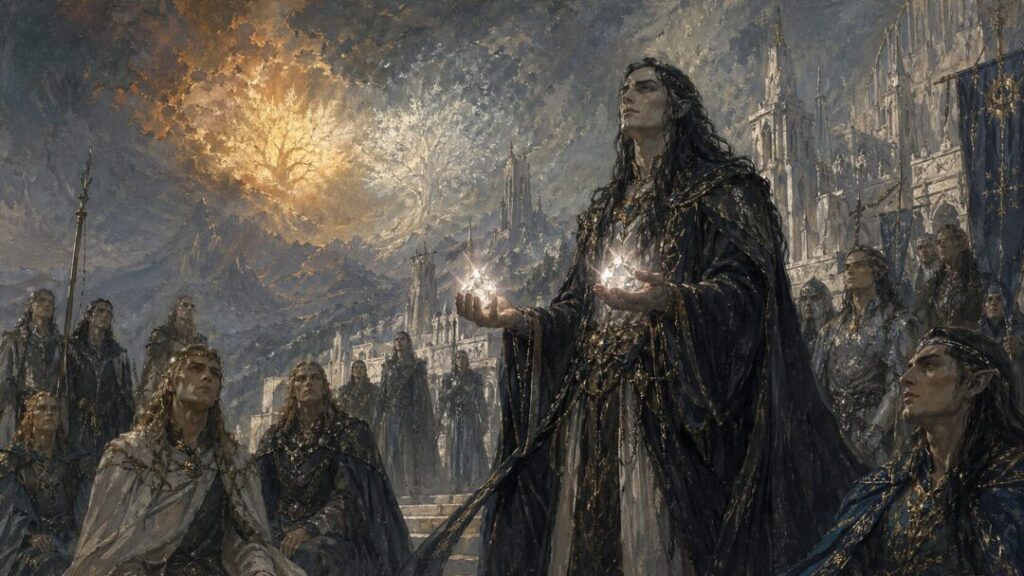
In the long 1951 letter often used to explain the shape of the legendarium, The Silmarillion is described as peculiar because its center of view is Elves, not Men. That matters more than it might first appear. Elves in the elder stories are not there merely as decorative fantasy figures. They are the primary bearers of memory, tragedy, rebellion, oath, exile, and loss on an immense timescale. Their concerns are often dynastic, spiritual, and civilizational rather than domestic.
That is very different from the narrative footing of The Lord of the Rings.
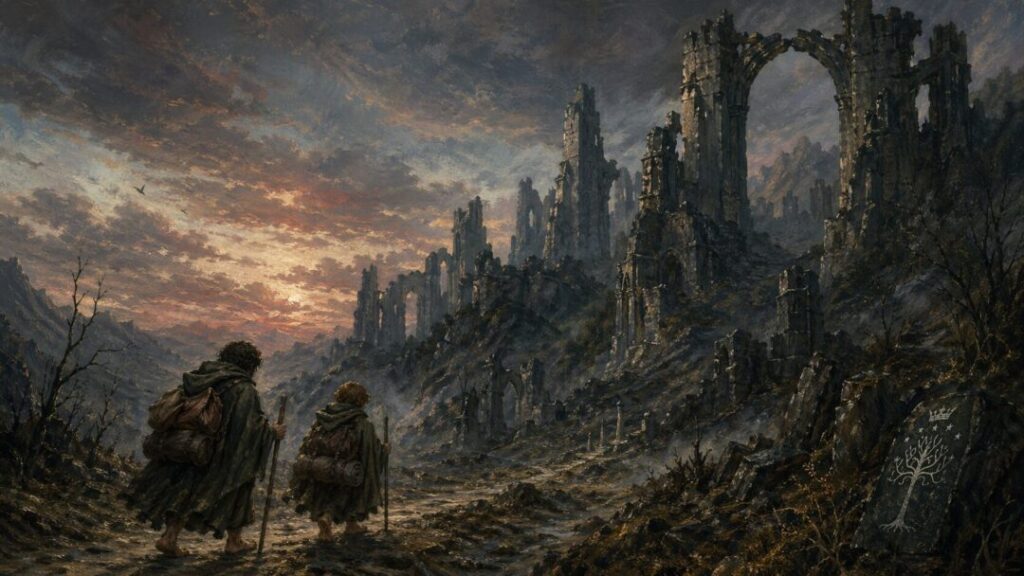
In that same discussion, The Lord of the Rings is presented as the final tale that comes down “from myth to earth” because it is seen through hobbit eyes. That phrasing explains more than many long arguments do. Hobbits do not merely lighten the tone. They lower the point of entry. Through them, the high and the ancient become emotionally accessible. The grandeur of kings, the fading of Elves, and the terror of Mordor are all felt through characters whose instincts are rooted in home, food, friendship, discomfort, and endurance.
That is not a minor stylistic choice.
It is the difference between entering a legend through a front door and being handed the chronicle after the kingdom has already fallen.
The “High Style” Was Not an Accident
One of the clearest admissions comes in a letter where The Silmarillion is described as a “long legendary of imaginary times” in “high style,” full of Elves. That phrase matters because it shows that the elevated tone was not incidental. It was part of the work’s identity. This was not meant to sound like the Shire. It was not meant to move with the same immediate familiarity as Bilbo or Frodo. It belonged to an older register.
And that older register had consequences.
The same material had earlier been rejected by the publisher’s reader as obscure and “too Celtic,” a judgment Tolkien recalled without pretending it came from nowhere. He did not agree with reducing the work to that verdict, but he plainly knew the book’s mode was harder to place, harder to market, and harder to absorb than the more earthbound storytelling of The Hobbit and later The Lord of the Rings.
This is where many readers miss the real point.
The difficulty of The Silmarillion is not simply a matter of quantity — more names, more places, more genealogies.
It is a matter of altitude.
The book asks the reader to look upward before it invites the reader inward.
Why The Lord of the Rings Feels More Immediate
The contrast becomes even sharper when you look at how the later narrative was understood.
In the same explanatory framework, The Hobbit is called “a study of simple ordinary man against a high setting,” while The Lord of the Rings tries to include both the elevated matter of the old legends and the “vulgarity of Hobbits,” along with high prose, poetry, kings, dark powers, and ancient history. That blend is what gives the later work its unusual power. It can move between the homely and the heroic without losing either.
This is why so many readers who struggle with The Silmarillion do not struggle in the same way with The Lord of the Rings.
The later work gives them emotional handholds.
A reader may not understand Númenor, the Elder Days, or the deep inheritance of Elrond and Aragorn on first encounter. But the reader understands Sam being tired. The reader understands Frodo’s fear. The reader understands the relief of firelight, the dread of pursuit, the pain of leaving home, and the loyalty of walking beside someone into darkness.
Those things do not replace myth.
They conduct it.
And once that is seen, the relation between the two books becomes far clearer: The Silmarillion preserves the height of the legend, while The Lord of the Rings carries that height into lived experience.
Even Tolkien Seemed Unsure About Reception
The most revealing line may be the simplest.
Writing about the elder stories, he admits that there are no hobbits in them, and not much everyday reality, and that this made him doubtful about their reception. That is not quite the same as saying, “This is a harder read.” But it is very close to saying, “I know why this will not reach readers in the same way.”
That distinction matters.
He was not confessing a flaw in the mythology.
He was recognizing a difference in readerly approach.
He does not seem to regard The Silmarillion as lesser because it is more elevated, nor to regard The Lord of the Rings as greater because it is easier to enter. In fact, he repeatedly treats the two as interdependent. The elder legends provide depth, ancestry, and metaphysical background. The later tale provides embodiment, contact, and the “lower” perspective that lets the reader live inside what would otherwise remain remote.
So the more accurate question is not whether he knew one was harder.
It is whether he knew they were doing fundamentally different work.
The answer appears to be yes.
The Real Surprise Is That He Thought Middle-earth Needed Both
That may be the most important part of the whole issue.
He did not seem to think the solution was to make The Silmarillion more like The Lord of the Rings.
Instead, he seems to have believed that Middle-earth required both modes: the lofty and the intimate, the elder and the immediate, the Elvish and the hobbit-centered. In the 1951 letter, he explicitly argues that the larger body of legend should contain both “high” and “low.” That is not a contradiction. It is a design principle.
Without the elder legends, The Lord of the Rings loses much of its depth. Rivendell becomes only a beautiful refuge. Aragorn becomes only a king in exile. Galadriel becomes only a mysterious queen. The grief of Elrond, the burden of Aragorn’s inheritance, the shadow behind the Rings, and the long memory of the Elves all become shallower if the First Age vanishes behind them.
But without the hobbit-centered tales, the legendarium risks remaining too far above the reader.
It becomes magnificent, but remote.
The extraordinary achievement of Middle-earth is that it never finally chooses between those things.
It lets the ancient remain ancient.
But it also lets us hear it from the road.
So Did He Acknowledge It?
Yes — but with more precision than the modern shorthand usually allows.
He does not seem to have said plainly, “The Silmarillion is harder to read than The Lord of the Rings.”
What he does seem to say is subtler and more revealing.
He knew The Silmarillion stood in a higher style.
He knew it was centered on Elves rather than Men.
He knew it lacked the everyday grounding that hobbits bring.
He knew readers might not receive it as easily.
And he knew The Lord of the Rings worked partly because it brought myth down to earth.
That is not an accidental difference.
It is one of the deepest design choices in all of Middle-earth.
Which means the reason The Silmarillion feels harder is not simply that it asks more of the reader.
It is that it is looking at the same world from a higher and older place.
And The Lord of the Rings was written, in part, to let us enter that world from below.
Sources & Notes
- J.R.R. Tolkien, The Letters of J.R.R. Tolkien, Letter 131 (to Milton Waldman, 1951) — Tolkien’s fullest explanation of the elder legends as high, Elvish, mythic material and of The Lord of the Rings as a descent “from myth to earth.”
- J.R.R. Tolkien, The Letters of J.R.R. Tolkien, Letter 19 (to Stanley Unwin, 1937) — records the early publisher-reader reaction that the Silmarillion material was brilliant but difficult to place as a finished book.
- J.R.R. Tolkien, The Silmarillion, “Ainulindalë” and “Quenta Silmarillion” — the creation-myth and First Age chronicle mode behind the article’s contrast with hobbit-level narration.
- J.R.R. Tolkien, The Lord of the Rings, Prologue and Book I, Chapter 1, “A Long-expected Party” — establishes the everyday hobbit entry point that makes the later legendarium feel more immediate.