When the Third Age ends, Middle-earth seems to cross a visible threshold.
The Ring is destroyed.
Sauron falls.
The great war is over.
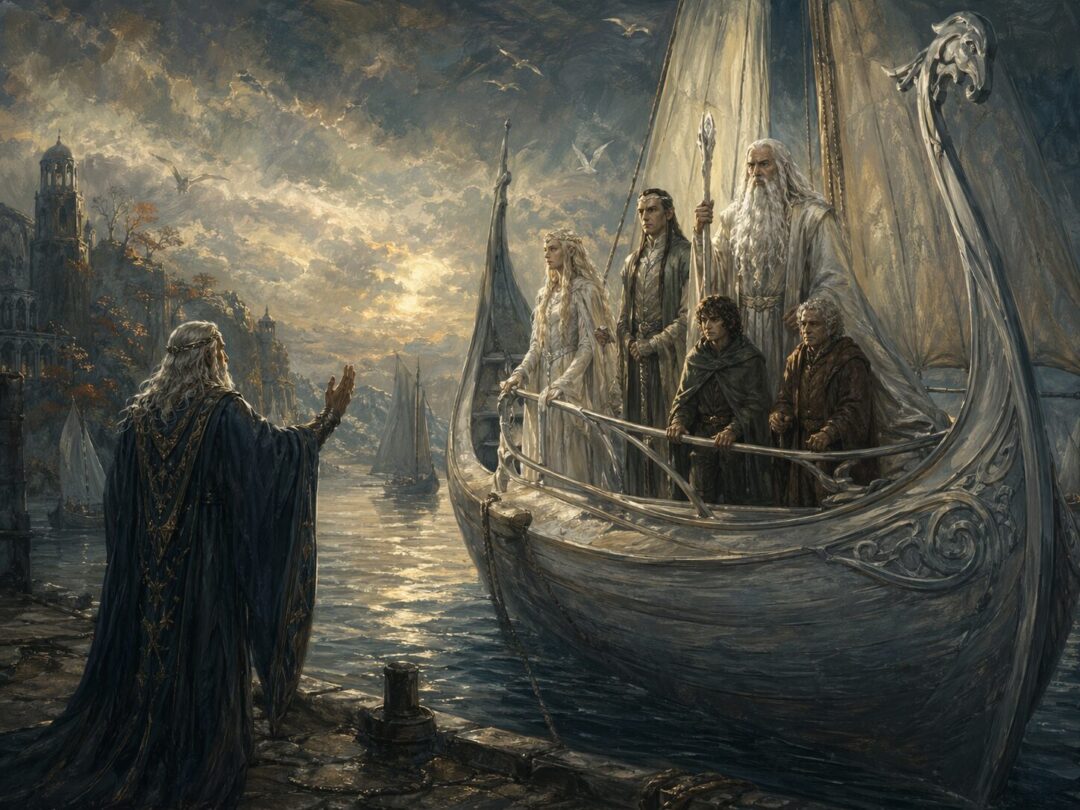
The Keepers of the Three pass into the West, and the age of Elves begins to close. Gandalf is among those who board the White Ship at the Grey Havens, and that image is so powerful that it easily creates a larger assumption: the wizards are done, and all of them depart with the old world.
But the texts do not actually say that.
In fact, once the question is asked carefully, the answer becomes much less tidy than the common version. Not all of the Istari are given the same ending. One certainly leaves. One certainly does not. One simply vanishes from the narrative. And the remaining two belong to one of the most uncertain and revised parts of the legendarium.
That matters, because it changes what the beginning of the Fourth Age really feels like.
It is not a neat clearing away of all the old powers.
It is something stranger.
Something more uneven.
A world in transition, but not one in which every loose end is tied.
Gandalf Clearly Departs
Of the five wizards, Gandalf is the easiest to place.
At the end of the Third Age, he sails from the Grey Havens on the White Ship with Elrond, Galadriel, Frodo, and Bilbo. That departure is explicit, and it is one of the clearest symbolic moments in the ending of The Lord of the Rings. The mission of Gandalf in the northwest of Middle-earth is complete, and he returns over Sea.
This is probably the main reason the broader misunderstanding exists.
Because Gandalf’s departure feels like a closing of the book. He is not only a wizard, but the wizard most readers know intimately. When he leaves, it is easy to feel that wizardry itself is leaving with him.
And in one sense, that feeling is correct.
The departure of Gandalf helps mark the passing of an age in which powers from beyond the ordinary world still moved openly through Middle-earth. The Fourth Age belongs increasingly to Men, to kingdoms, memory, and historical time rather than the older, stranger atmosphere that still lingers around figures like Gandalf, Elrond, and Galadriel.
But Gandalf’s sailing does not prove that all the others did the same.
It only proves that he did.
Saruman Does Not Depart at All
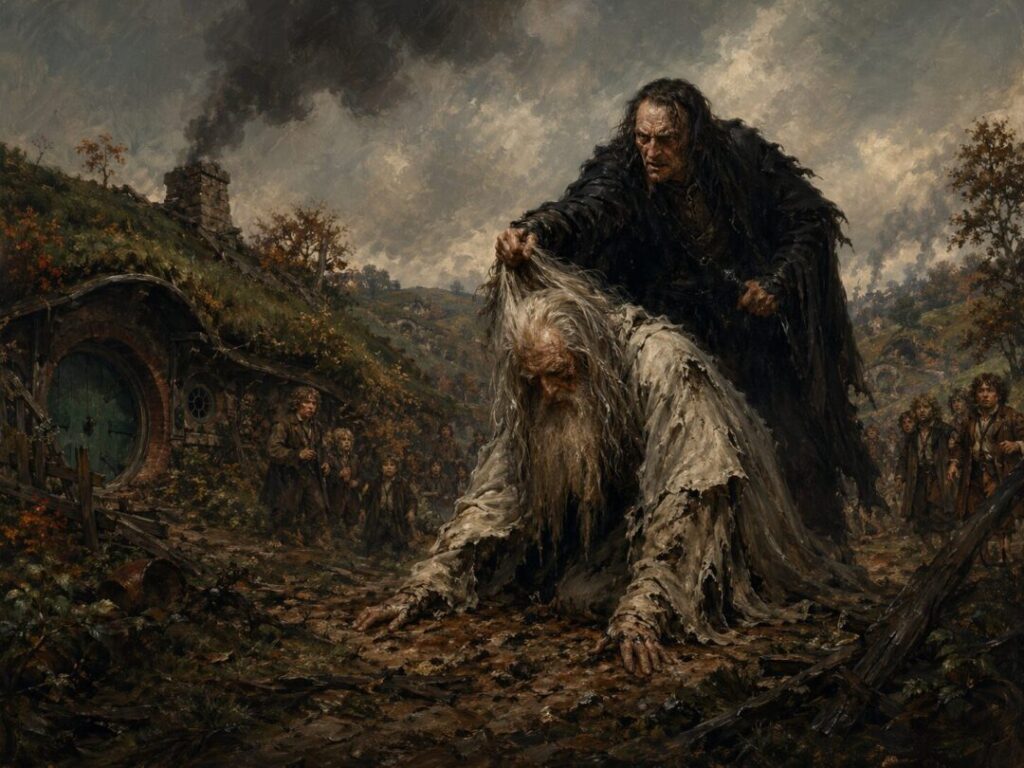
Saruman’s ending cuts directly against the idea that all wizards simply left.
He does not sail West.
He does not receive a final return.
He does not even end in dignity.
After his fall, he is reduced to Sharkey in the Shire, where he is killed by Gríma. The tradition preserved in the text is grim: after death, his spirit turns westward, but a wind from the West rejects him and drives him away. Whatever return might once have belonged to Saruman as one of the Istari is no longer granted to him.
This is one of the sharpest signs that the end of the wizards is not collective.
Saruman’s story does not merge back into Gandalf’s.
It breaks away from it entirely.
That difference is important because the Istari were not merely old men with staffs who happened to share a category. They were emissaries under a charge. Their endings reflect whether that charge was fulfilled, betrayed, or left unresolved. Saruman’s fate is not a departure into peace. It is a ruin.
So by the moment the Fourth Age begins, the notion that “all the wizards departed” has already failed.
One has gone West.
One has fallen and been denied.
And that still leaves three.
Radagast Is Left Unresolved
Radagast is where certainty begins to fade.
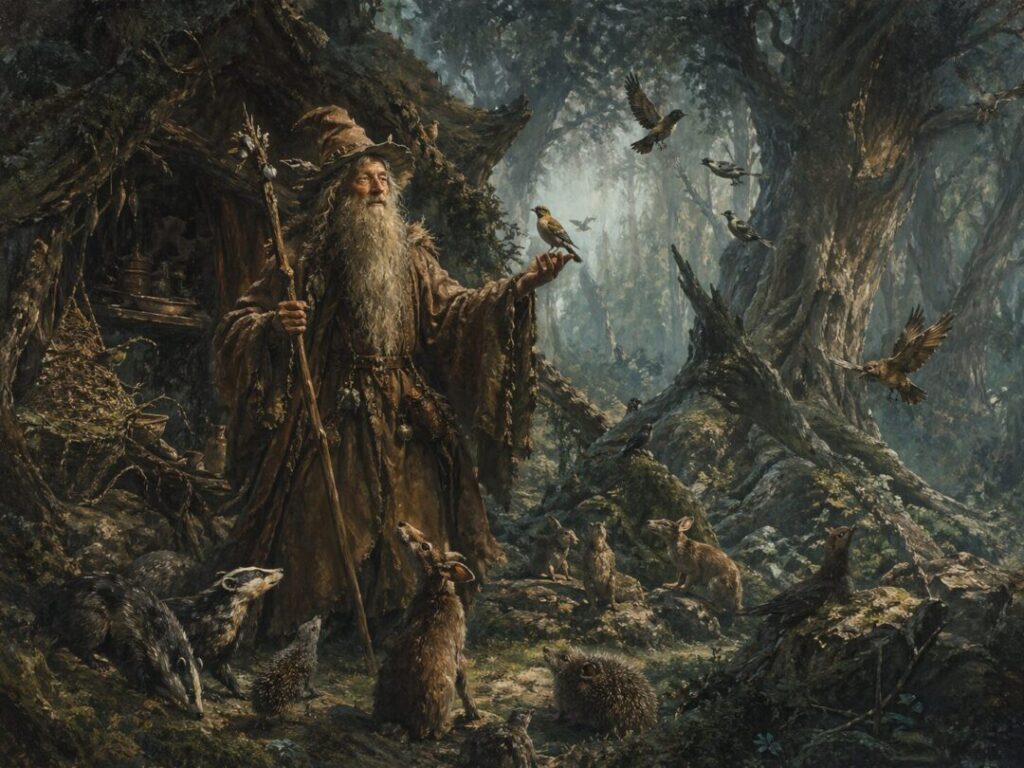
He is one of the five Istari, and unlike the Blue Wizards, he actually appears within the main narrative world of The Lord of the Rings. Yet after his brief role in the story, the trail largely disappears. There is no scene of Radagast at the Grey Havens. There is no explicit statement that he returned to Aman. There is no explicit statement that he remained in Middle-earth forever either. After the fall of Sauron, the record simply goes quiet.
That silence matters.
It means we should be careful not to overstate the case in either direction. Saying “Radagast definitely sailed West” goes beyond what is stated. Saying “Radagast definitely stayed in Middle-earth” goes beyond it too.
The safer reading is narrower: his final fate is not told. Some reputable lore summaries judge that he may well have returned eventually, while also acknowledging that the texts never actually narrate it. That is interpretation, not a direct statement.
And that unresolved quality fits Radagast in a curious way.
He was never as central to the struggle against Sauron as Gandalf, nor did he descend into Saruman’s will to dominate. He seems, instead, to drift partly away from the appointed task of the order into the care of birds and beasts. That does not make him evil. But it does make his ending less sharply defined than Gandalf’s.
So if someone asks whether Radagast departed at the beginning of the new age, the lore-accurate answer is simple:
We are not told.
The Blue Wizards Are the Most Complicated Case
Then the question opens wider still.
Because two of the five wizards are barely visible in the main story at all.
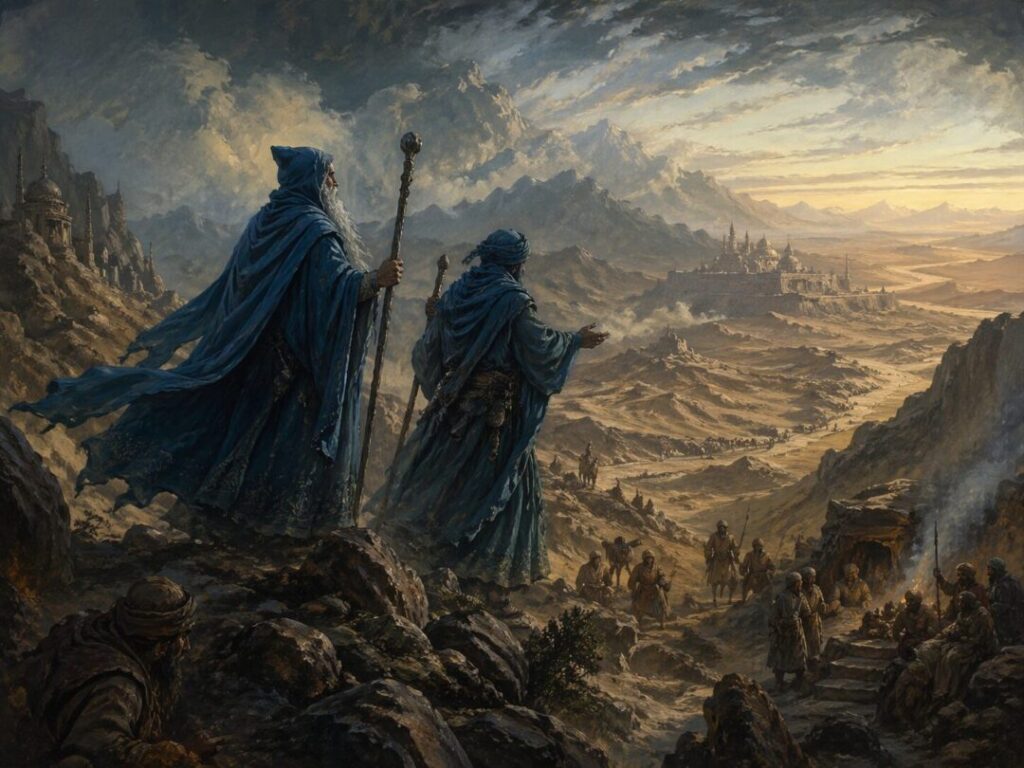
The Blue Wizards are mentioned only indirectly in The Lord of the Rings, and the fuller material about them comes from later explanatory texts and notes. In one well-known tradition, they went East with Saruman and did not return into the West. Their fate was uncertain, and one line of thought suggests they may have failed in their mission and perhaps contributed to strange cults or magical traditions in distant lands.
If that were the only version, the answer might still be relatively straightforward: they departed from the northwest long before the Fourth Age, but they did not return in triumph.
Yet later writings complicate this dramatically.
In those later conceptions, the Blue Wizards are reimagined as having come much earlier, in the Second Age rather than arriving with the other three around the year 1000 of the Third Age. They are also given a more constructive role: helping stir resistance to Sauron in the East and South, disrupting his ability to gather overwhelming strength. In that version, they are not simply lost failures on the margins. They may have mattered a great deal to the wider fate of Middle-earth, even though the main narrative never follows them.
This means any confident statement about their final departure must be softened.
The lore does not give a single flat answer that settles every version cleanly. What can safely be said is that the Blue Wizards are not recorded as leaving Middle-earth at the start of the Fourth Age in the way Gandalf does. In the earlier conception, they never returned into the West. In the later conception, their mission is pushed deep into the East and South and made much more significant, but even there the texts do not provide a simple farewell scene at the beginning of the new age.
So again, the neat idea breaks down.
The wizards do not all exit together.
Not even close.
Why the Misunderstanding Feels So Natural
The reason this confusion persists is not hard to see.
The ending of The Lord of the Rings is full of departure. Elves leave. The Ring-bearers leave. Gandalf leaves. The last high guardians of an older world are passing out of the circles of ordinary history. That emotional pattern is real, and readers naturally extend it.
But emotional truth is not always the same as literal completeness.
What the text gives us is the fading of an age, not a full administrative account of every being associated with it. Some figures receive closure. Others do not. Middle-earth often works that way. There are places beyond the map, histories only glimpsed, and endings that remain half-lit.
The Istari themselves reflect that pattern.
Gandalf gets a visible conclusion.
Saruman gets a terrible one.
Radagast is left suspended in uncertainty.
The Blue Wizards dissolve into competing traditions at the edge of recorded history.
So Did All Wizards Depart Middle-earth at the Start of the New Age?
No.
At least, not if the question is asked strictly and lore-accurately. Gandalf certainly departed over Sea at the end of the Third Age. Saruman certainly did not share that ending. Radagast’s fate after Sauron’s fall is not recorded. And the Blue Wizards remain too uncertain, and too textually revised, to be folded into one simple statement that they all left when the new age began.
That answer is less clean than people expect.
But it is also more revealing.
Because the beginning of the Fourth Age is not presented as a perfect sweep in which every old power departs on schedule. It is the end of a great chapter, yes, but not the closing of every door. Some are shut. Some are broken. And some are left standing open into the dark, far from the lands the story chooses to follow.
Which means the real question is not why all the wizards left.
It is why Middle-earth lets us watch one sail, one fall, and the others slip partly out of sight.
That is where the ending becomes much stranger than the simple version.
Sources & Notes
- J.R.R. Tolkien, The Lord of the Rings, Book VI, Chapter 9, “The Grey Havens” — shows Gandalf departing over Sea with the Keepers of the Three, Frodo, and Bilbo.
- J.R.R. Tolkien, The Lord of the Rings, Book VI, Chapter 8, “The Scouring of the Shire” — gives Saruman’s death and the westward-looking spirit that is rejected by a wind from the West.
- J.R.R. Tolkien, The Lord of the Rings, Appendix B, “The Tale of Years” — places the coming of the Istari in the Third Age and records Gandalf’s final sailing, without giving equivalent departures for all five Wizards.
- J.R.R. Tolkien, Unfinished Tales, “The Istari” — gathers the main traditions about the order, including Radagast’s partial turning aside and the uncertain fate of the two Blue Wizards.
- J.R.R. Tolkien, The Peoples of Middle-earth, “Last Writings” — preserves Tolkien’s later rethinking of the Blue Wizards as earlier arrivals active against Sauron in the East and South.