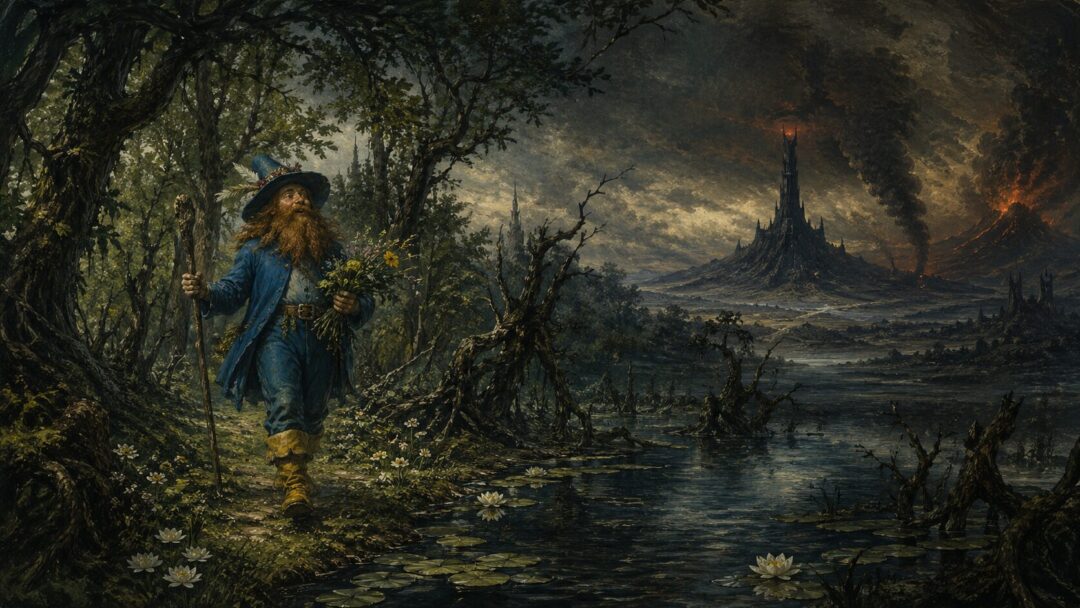
Tom Bombadil is one of the strangest beings in Middle-earth.
Not because he is powerful in the usual way. Not because he raises armies, gives prophecies, or stands at the center of the War of the Ring.
He does almost the opposite.
He sings. He laughs. He gathers water-lilies for Goldberry. He rescues the hobbits from dangers that seem ancient and terrifying, then sends them on their way with food, counsel, and little interest in the larger plans of the Wise.
And yet he creates one of the most difficult questions in the entire story:
Could Tom Bombadil have defeated Sauron?
At first, the answer seems obvious.
Tom handles the One Ring as if it were nothing. Frodo gives it to him freely. Tom puts it on and does not disappear. He makes the Ring vanish for a moment, then returns it. Later, when Frodo wears it, Tom can still see him.
No other character in The Lord of the Rings treats the Ring this way.
Not Gandalf.
Not Elrond.
Not Galadriel.
Not even Frodo.
So why not give the Ring to Tom? Why not ask him to guard it? Why not send him against Sauron?
The story asks that very question.
And then it rejects it.
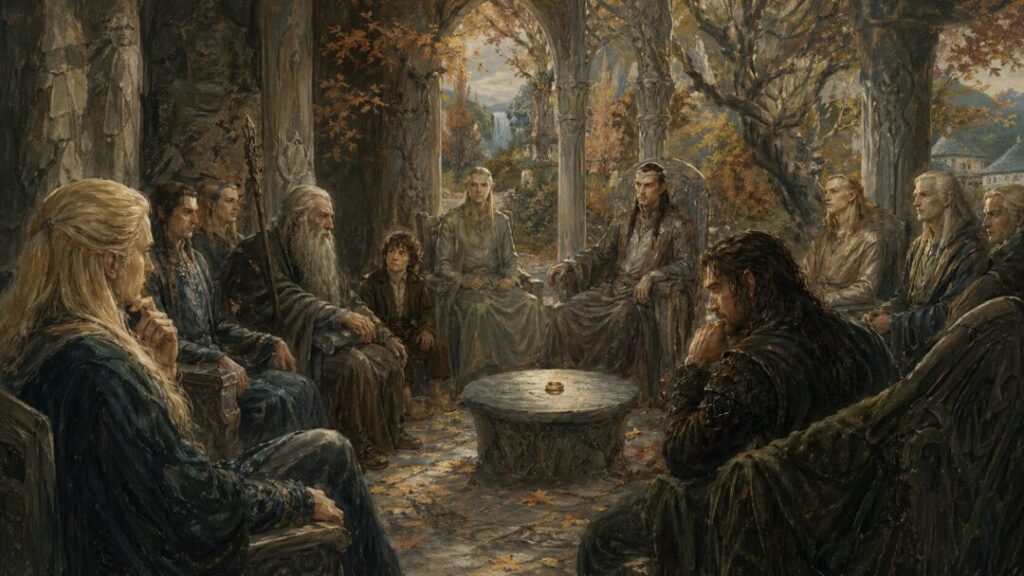
The Ring Has No Power Over Tom
The first thing to understand is that Tom’s relationship with the Ring is not normal.
The Ring was made for domination. It works by using desire: fear, ambition, pride, pity twisted into control, the wish to do good by force, the hunger to preserve what one loves by mastering others.
This is why the Ring is dangerous even to the wise.
Gandalf refuses it because he knows he would be tempted to use it for good, and through him it would become terrible. Galadriel imagines what she might become if she took it. Boromir sees it as a weapon for Gondor. Even Frodo, who begins with no great ambition, is slowly worn down by the burden.
Tom is different.
The Ring does not appear to hook into anything in him. He does not crave rule. He does not seek possession. He does not want to order the world according to his will.
That is why the Ring’s failure with Tom should not be mistaken for a simple contest of strength.
It is not necessarily that Tom overpowers the Ring in battle.
It is more that the Ring finds no door by which to enter.
Tom Is Master, But Not a Lord of Dominion
Goldberry calls Tom “the Master,” but that word must be handled carefully.
Tom’s mastery is not like Sauron’s mastery.
Sauron’s power is outward, possessive, ordering, controlling. He seeks to gather all things under his will. His Ring exists for that purpose. It is not merely a weapon; it is an instrument of domination.
Tom’s mastery is local and self-contained.
He belongs to his own country: the Old Forest, the Withywindle, the hills and borders of the land where the hobbits meet him. Within that realm, he seems almost untouchable. Old Man Willow obeys him. The Barrow-wight flees before his song. The Ring does not command him.
But Tom does not extend that mastery into conquest.
He does not march through the Old Forest destroying every dark thing in it. He does not remove Old Man Willow from the world. He does not hunt down every Barrow-wight. He intervenes when the hobbits are in danger, then returns to his own ways.
That pattern matters.
Tom’s power is real, but it is not imperial.
He is not another Dark Lord in brighter colors.
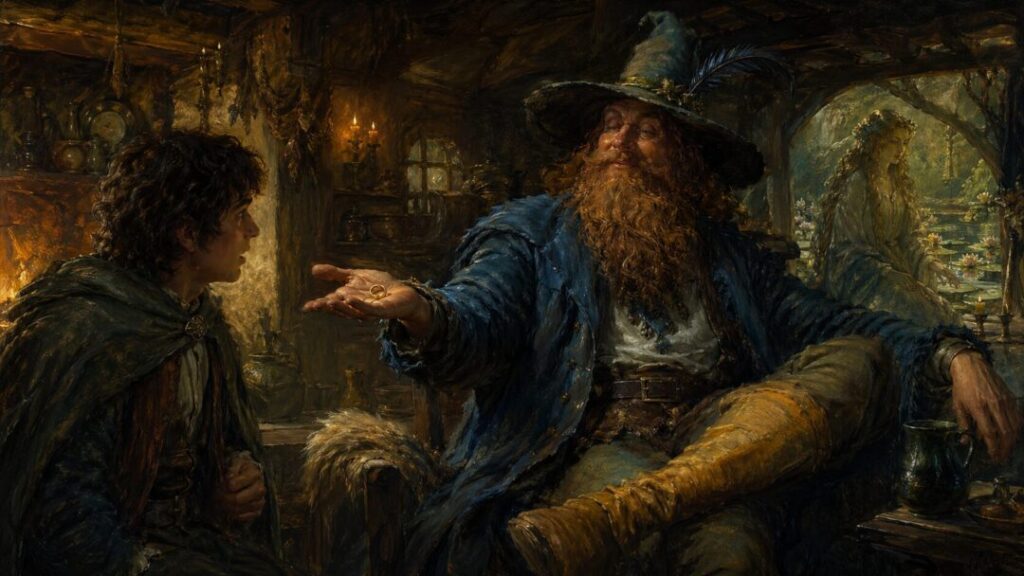
The Council Already Considered This
The clearest answer comes at the Council of Elrond.
When the Wise discuss what should be done with the Ring, the possibility of sending it to Tom is raised. This is not a foolish question. The Council knows enough to take Tom seriously.
But the idea fails quickly.
One reason is practical: Tom might not understand the danger in the way the others do. He might misplace the Ring or forget it, not because he is corrupted, but because it does not matter to him as it matters to those caught in the struggle.
That alone is revealing.
The Ring is the most dangerous object in Middle-earth. To nearly everyone else, it is a source of terror, temptation, and destiny. To Tom, it is almost irrelevant.
That makes him wonderfully free from it.
It also makes him a terrible guardian for it.
A keeper of the Ring must understand the desperate seriousness of the burden. Tom does not seem to live inside that kind of urgency.
“Last As He Was First”
The Council’s darker point is even more important.
The Wise do not believe Tom could stand alone forever if Sauron conquered everything else.
The idea is not that Sauron would simply walk into Tom’s house and win a clean duel. The text does not give us such a scene, and it never describes how a direct confrontation would unfold.
But the Council does say enough.
If Sauron recovered the Ring or if all other lands fell under his power, Tom’s little realm would eventually be surrounded. The whole strength of the Dark Lord would be bent against him. In that situation, Tom might endure longer than anyone else.
But he would not be the final answer.
He would be “last,” because he was “first.”
That phrase is haunting.
It presents Tom as ancient, perhaps older than any other living thing known in Middle-earth. But age is not the same as victory. Being outside the ordinary struggle does not mean being able to save the world from it.
Tom may be untouched by the Ring, but Middle-earth is not.
And if Middle-earth fell, Tom’s freedom would not preserve it.
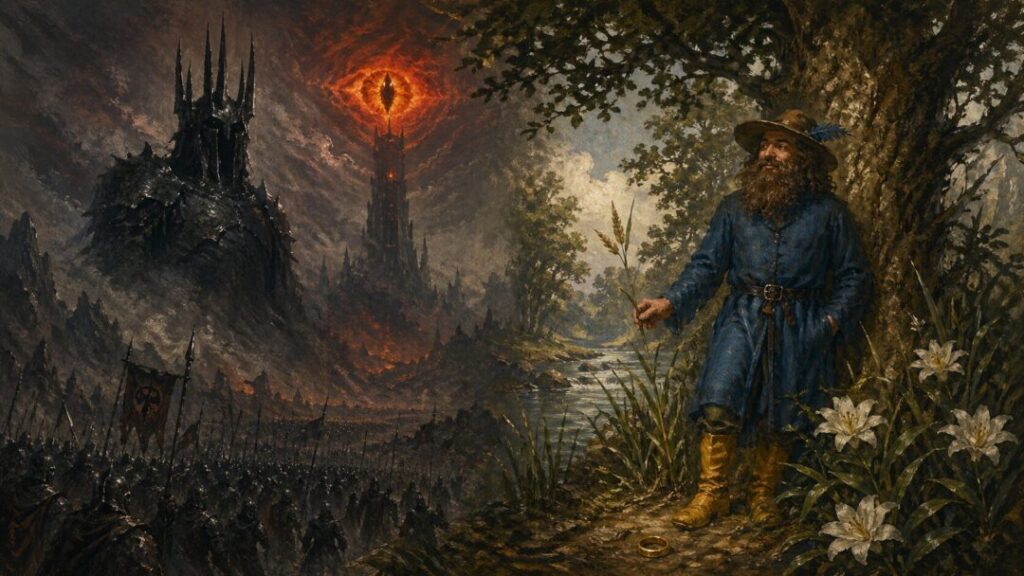
Could Tom Defeat Sauron in a Duel?
This is where many theories go beyond the text.
The books never show Tom meeting Sauron. They never describe Tom’s full nature. They never place him in a battlefield against a Maia, a Ringwraith, an army of Mordor, or the Dark Lord himself.
So any claim that Tom definitely could defeat Sauron in personal combat goes beyond what the story tells us.
The safer answer is this:
There is no clear textual evidence that Tom could march to Mordor and overthrow Sauron.
There is also no clear textual scene proving exactly what would happen if Sauron entered Tom’s land before all else was conquered.
But the Council’s judgment is the strongest guide we have. The Wise do not treat Tom as a usable weapon. They do not treat him as a hidden champion who only needs to be summoned. They do not believe the war can be solved by placing the Ring in his hands.
That matters because Elrond, Gandalf, and the others are not guessing casually. They understand Sauron’s threat better than almost anyone left in Middle-earth.
Their conclusion is not that Tom is powerless.
Their conclusion is that his kind of power is not the kind that can defeat Sauron.
Why Immunity Is Not the Same as Victory
This is the heart of the matter.
Tom’s immunity to the Ring is often treated as if it automatically places him above Sauron. But the Ring is not a simple measuring device.
It does not mean:
Whoever resists the Ring is stronger than its maker.
That is not how the Ring works.
The Ring tempts according to desire. It amplifies the will to possess, command, preserve, and dominate. Tom’s freedom from it shows something extraordinary about Tom, but not necessarily something military.
A stone at the bottom of a river may be untouched by a crown, but that does not make it a king.
Tom does not want the Ring because he does not want mastery over others. But to defeat Sauron by force would require entering Sauron’s kind of contest: command against command, will against will, dominion against dominion.
Tom does not seem to operate that way.
He is not simply “too powerful” for the Ring.
He is outside the Ring’s logic.
And that is a very different thing.
Why Tom Could Save the Hobbits, But Not the World
Tom’s role in the story is small, but meaningful.
He saves the hobbits before they fully understand the scale of the danger they are in. He gives them rest. He gives them a glimpse of a world not ruled by fear, haste, or possession. He shows that there are things in Middle-earth older and stranger than the war that now dominates everything.
But he does not join the Fellowship.
He does not go to Rivendell.
He does not guide Frodo to Mordor.
He does not become the final weapon against the Shadow.
This is not a flaw in the story.
It is the point.
Tom shows that not everything in Middle-earth can be reduced to the War of the Ring. Not every power exists to be recruited. Not every mystery is waiting to become a strategy.
The Free Peoples cannot win by handing their burden to someone untouched by it.
They must carry it.
The Real Answer
So, could Tom Bombadil have defeated Sauron?
Based on the texts, probably not in the way people usually mean.
Tom could resist the Ring’s temptation. He could master dangers within his own country. He could stand apart from the hunger for domination that defines Sauron.
But the Council of Elrond strongly suggests that he could not be used to defeat the Dark Lord. He could not safely guard the Ring. He would not wield it. And if all else fell, he too would eventually fall, last as he was first.
That is the strange power of Tom Bombadil.
He is not weaker because he refuses domination.
But he is also not the answer to domination.
He is a reminder that some forms of goodness do not conquer. Some forms of freedom do not rule. Some beings are not weapons, even when the world is desperate for one.
Sauron seeks to possess everything.
Tom possesses almost nothing.
And that is why the Ring cannot master him.
But it is also why he cannot become the master who defeats Sauron.
Sources & Notes
- J.R.R. Tolkien, The Fellowship of the Ring, “In the House of Tom Bombadil” — Tom handles the Ring, does not vanish when wearing it, and can still see Frodo when Frodo wears it.
- J.R.R. Tolkien, The Fellowship of the Ring, “The Council of Elrond” — the Council discusses giving the Ring to Bombadil, rejects him as a guardian, and says he would fall “last as he was first.”
- J.R.R. Tolkien, The Fellowship of the Ring, “The Shadow of the Past” — Gandalf’s refusal of the Ring illustrates how the Ring tempts even the wise through the desire to use power for good.
- J.R.R. Tolkien, The Silmarillion, “Of the Rings of Power and the Third Age” — Sauron makes the One Ring to dominate the bearers of the other Rings and bend them to his will.
- J.R.R. Tolkien, Letter 131 — Tolkien describes Sauron’s central motive as order and domination, supporting the contrast between Sauron’s will to rule and Bombadil’s non-possessive freedom.