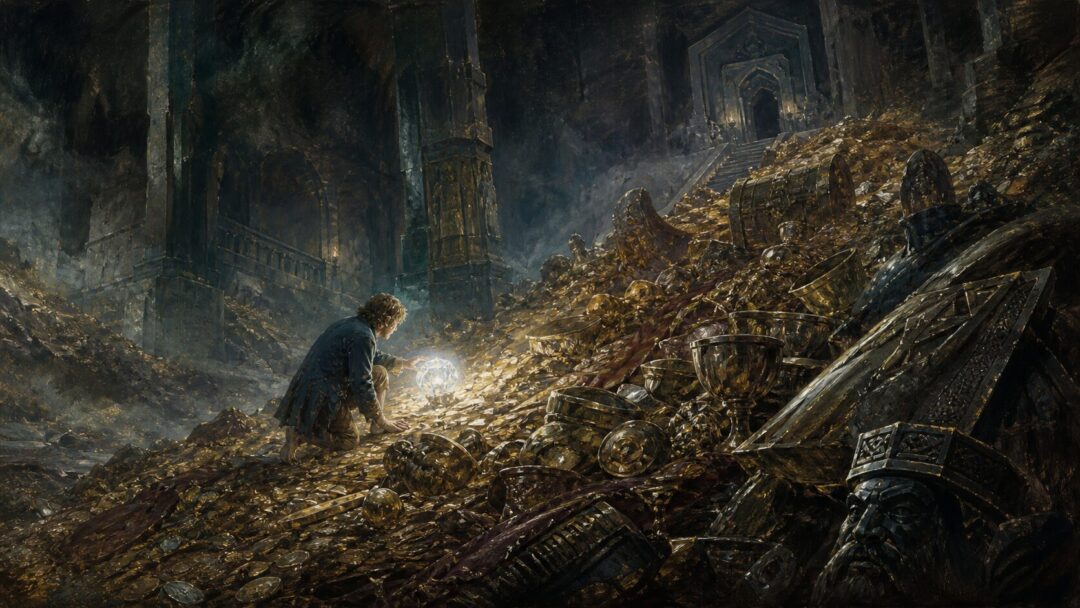
The Arkenstone is one of those Middle-earth mysteries that almost invites a larger answer.
It shines with its own pale light. It is found deep beneath the Lonely Mountain. It becomes the treasure Thorin Oakenshield desires above all others. And when Bilbo Baggins takes it from Smaug’s hoard, the whole story turns.
A war almost begins over a jewel.
That alone feels familiar.
Because long before the Quest of Erebor, the Silmarils had already shown what a single jewel could do to the hearts of Elves, Men, Dwarves, and even the powers of the world. They were not merely beautiful. They were holy, perilous, and bound up with the tragedy of the First Age.
So the question is tempting:
Could the Arkenstone have been one of the lost Silmarils?
The answer, according to the most careful reading of the lore, is almost certainly no.
But the reason is more interesting than a simple dismissal.
Because the Arkenstone may not be a Silmaril — yet it is written in a way that makes us remember them.
Why the Theory Feels So Tempting
The theory begins with a real similarity.
The Arkenstone is not described as an ordinary gem. In The Hobbit, it is the Heart of the Mountain, the greatest treasure of the Kings under the Mountain. Bilbo sees it as a great white jewel, shining even in the dark, and when light falls upon it, it scatters that light into brilliant colors.
That already makes it feel unusual.
Then there is its location.
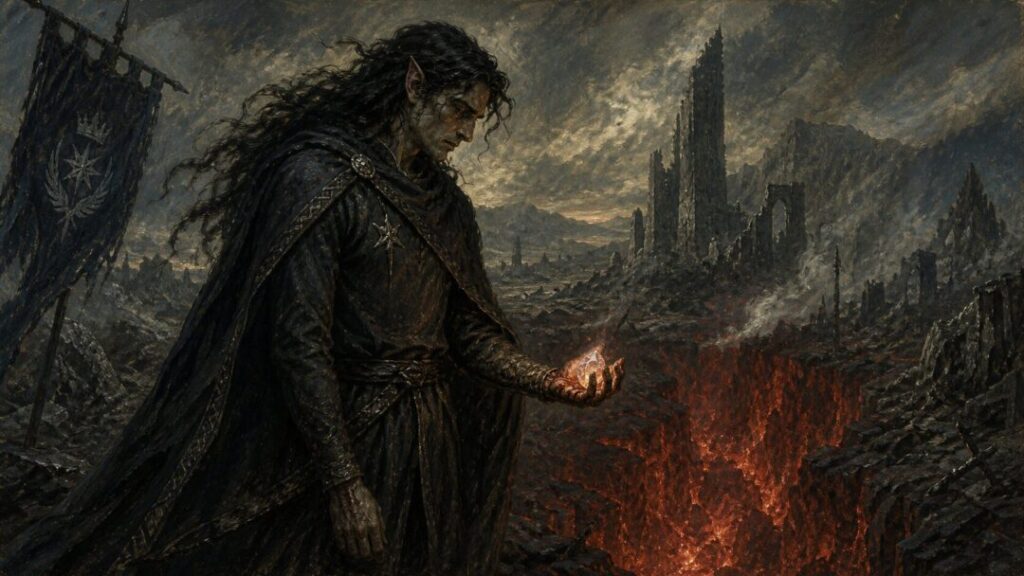
The Arkenstone was found beneath the roots of the Lonely Mountain. One of the Silmarils, after the War of Wrath, was carried by Maedhros into the earth when he cast himself into a fiery chasm. The surface-level connection is easy to see: a legendary jewel lost in the earth, and a wondrous jewel later found beneath a mountain.
There is also the effect the Arkenstone has on the story.
Thorin does not merely value it. He fixates on it. He names it for himself above all the treasure of Erebor. When it is withheld from him, his anger becomes terrible. The jewel becomes the center of his pride, his kingship, and his refusal to compromise.
That pattern feels Silmaril-like.
The Silmarils, too, were objects of beauty that became bound to possessiveness, oaths, violence, and ruin.
So the theory has emotional force.
It feels right before it is tested.
What the Silmarils Actually Were
The first problem is that the Silmarils were not simply bright jewels.
They were made by Fëanor in Aman before the First Age had fully unfolded. Within them was preserved the light of the Two Trees of Valinor, before that light was destroyed. They were hallowed by Varda, and the texts treat them as objects of unique sanctity.
This matters.
A Silmaril is not merely rare. It is not merely a perfect gem. It belongs to a level of myth far above the treasures of Dwarves, dragons, or kings.
The Silmarils also had a moral quality attached to them. Hands that had no right to hold them could be burned by them. Morgoth, after stealing them, was burned by their touch. Later, Maedhros and Maglor also found that the jewels burned them, because after all their deeds they no longer had the right to possess what they had sworn to reclaim.
The Arkenstone does not behave this way.
Bilbo handles it. Thorin desires it. Bard carries it. It is placed upon Thorin’s breast after his death. None of these moments is treated as contact with a holy and unbearable object.
That does not prove by itself that the Arkenstone could not be a Silmaril, but it strongly works against the idea.
The text gives the Arkenstone beauty, not sanctity.
The Biggest Problem: The Arkenstone Was Cut and Fashioned
The strongest argument against the theory is simple.
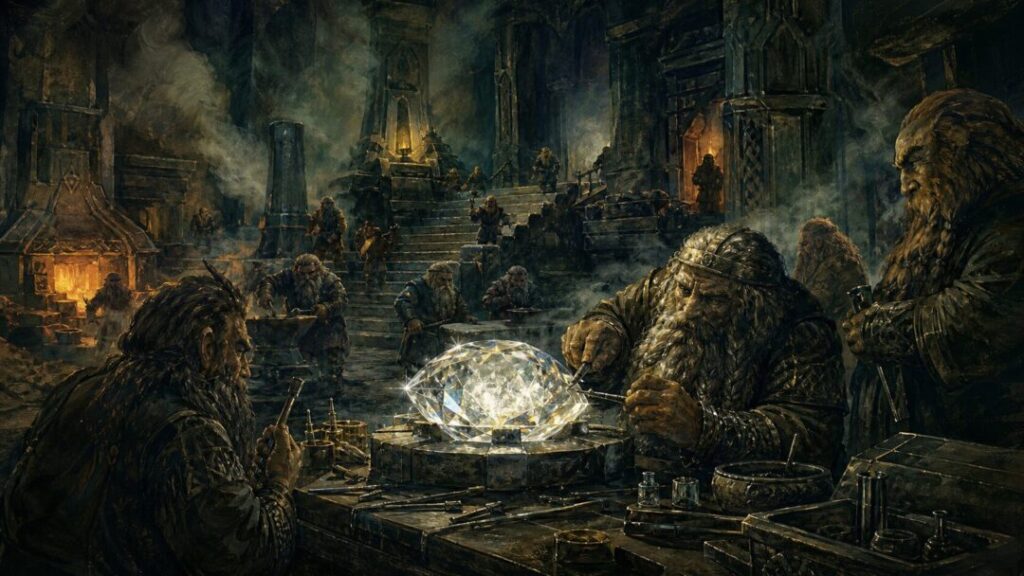
The Dwarves worked the Arkenstone.
The gem was found beneath Erebor, and then the Dwarves cut and fashioned it. This detail is not decorative. It is one of the clearest signs that the Arkenstone is not a Silmaril.
The Silmarils are described as being beyond ordinary harm. Their substance could not simply be reshaped by craft. They were not raw gems waiting for a lapidary’s hand. They were completed works of Fëanor, preserved and sealed in their own mysterious form.
If the Arkenstone could be cut, shaped, and made into the jewel known in The Hobbit, then it does not match what the older texts say about the Silmarils.
This is where the theory begins to fail.
Not because the Arkenstone is too small.
Not because it is insufficiently beautiful.
But because its history is wrong.
A Silmaril should not be something the Dwarves of Erebor could discover as a rough stone and then improve by craft. The Arkenstone, however wondrous, belongs to the world of Dwarven treasure. The Silmarils belong to the mythic tragedy of the Elder Days.
The Fate of the Three Silmarils
The second major problem is the known fate of the Silmarils.
By the end of the First Age, the three jewels are removed from the reach of ordinary history.
One is borne by Eärendil in the sky. That one becomes the light seen as a star.
The other two are taken by Maedhros and Maglor after Morgoth’s defeat. But the jewels burn their hands, and the brothers part from the world in grief and despair. Maedhros casts himself into a fiery chasm with one Silmaril. Maglor throws the other into the sea.
The result is one in the air, one in the earth, and one in the sea.
This is not presented as a temporary hiding place in the ordinary sense. The Silmarils pass out of possession. Their light remains in the world, but not as recoverable treasure. Later lore reinforces the idea that the lost Silmarils remain lost until the end.
That matters for the Arkenstone.
If the Dwarves of Erebor found the earth-lost Silmaril during the Third Age, then the Silmaril was not truly lost until the end. It had re-entered history. It had been held, shaped, hidden, stolen by a dragon, recovered by Bilbo, bargained with, and buried with Thorin.
That would be an enormous event.
Yet the narrative never treats it that way.
The Silence Around the Arkenstone
If the Arkenstone were truly a Silmaril, the silence around it would be difficult to explain.
Bilbo does not know what it is, of course. Thorin may not know either. The Dwarves of Erebor treasure it as their own heirloom, not as a relic of the Elder Days.
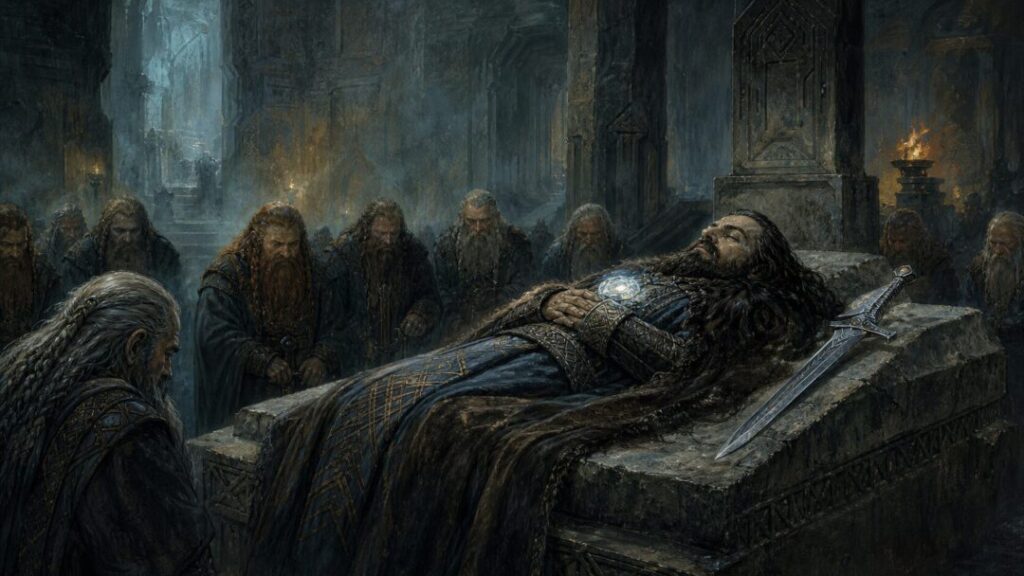
But the story brings the Arkenstone before Elves and Men as well. Bard receives it. The Elvenking is present when it becomes part of the bargaining with Thorin. Later, it is placed on Thorin’s breast in his tomb.
The text never hints that anyone has recognized something greater than the Heart of the Mountain.
This does not absolutely prove anything. The story of The Hobbit is told in a different mode than The Silmarillion, and it does not pause to explain every deep connection to the Elder Days.
But with something as immense as a Silmaril, total silence is difficult to accept.
A recovered Silmaril would not be just another treasure in a dispute over dragon-gold. It would be one of the most consequential objects in the history of Arda.
The Arkenstone causes a crisis.
A Silmaril would have caused something far larger.
Why the Arkenstone Still Feels Like a Silmaril
So why does the theory continue to feel powerful?
Because the Arkenstone plays a similar kind of narrative role on a smaller scale.
The Silmarils expose possessiveness. They reveal what people become when beauty is treated as ownership. Fëanor’s love for his own work turns into an oath that destroys his house. Thingol’s possession of a Silmaril becomes tangled with pride and ruin. Maedhros and Maglor reclaim the jewels only to discover that their right to them has been lost.
The Arkenstone does something similar to Thorin.
It draws out what is already wounded in him.
Thorin has lost his home, his inheritance, his grandfather, his father, and the dignity of his people. His longing for the Arkenstone is not random greed. It is bound to kingship, memory, and restoration.
That makes his desire understandable.
But not harmless.
When the Arkenstone is missing, Thorin’s suspicion deepens. When Bilbo uses it to force negotiation, Thorin feels betrayed. The jewel becomes the point where his nobility and his pride collide.
In that sense, the Arkenstone does not need to be a Silmaril.
It already does the work the story requires.
A Dwarven Jewel, Not an Elvish One
There is another reason the Arkenstone works better as itself.
It belongs to the Dwarves.
The Silmarils are bound above all to Elvish craft, Elvish rebellion, and the long grief of the Noldor. The Arkenstone belongs to a different history: the halls of Erebor, the wealth of Durin’s Folk, the coming of Smaug, and the attempt to restore a lost kingdom.
To turn it into a Silmaril would actually take something away from the Dwarves.
The Heart of the Mountain matters because it is theirs. It is not a relic they accidentally inherited from the First Age. It is the symbol of their own realm, their own craft, their own memory, and their own temptation.
Its power in the story comes from that.
Thorin does not desire the Arkenstone because it is one of the holy jewels of Fëanor. He desires it because it represents the kingship under the Mountain and the restoration of what was taken from his people.
That is a more personal tragedy.
And in many ways, a sharper one.
So What Was the Arkenstone?
The safest answer is also the most direct:
The Arkenstone was the great jewel of Erebor, found beneath the Lonely Mountain, shaped by Dwarven skill, treasured by the Kings under the Mountain, stolen into Smaug’s hoard, recovered by Bilbo, and finally buried with Thorin.
That is all the text requires.
It was wondrous, but not a Silmaril.
It was radiant, but not holy in the same sense.
It was ancient and beloved, but not one of the Three Jewels of Fëanor.
Any claim beyond that becomes speculation.
The idea that it might be the earth-lost Silmaril is imaginative, but it conflicts with too many established details: the Arkenstone’s fashioning, the nature of the Silmarils, their final fates, and the lack of any textual recognition that such a world-shaking relic had returned.
So the answer is almost certainly no.
The Arkenstone was not a Silmaril.
Why That Answer Makes the Story Better
The interesting thing is that denying the theory does not make the Arkenstone less meaningful.
It makes it more precise.
If the Arkenstone were a Silmaril, then Thorin’s fall would be partly explained by contact with a cosmic relic already burdened by ancient doom. The jewel would bring the weight of the First Age into the halls of Erebor.
But if the Arkenstone is only the Arkenstone, then the tragedy is closer.
No ancient curse is needed.
No hidden Silmaril is required.
A king can nearly lose himself over a jewel simply because it represents everything he believes was stolen from him.
That is more human, and more Dwarven.
It makes Thorin’s final repentance matter more. He is not released from an enchantment. He is not freed from the doom of Fëanor’s jewels. He sees, before death, that treasure was not worth more than friendship, mercy, and peace.
The Arkenstone does not have to be one of the greatest jewels ever made.
It only has to be beautiful enough to test a heart.
And that is exactly what it does.
Sources & Notes
- J.R.R. Tolkien, The Hobbit, chs. 12–13, describes the Arkenstone as the Heart of the Mountain, found under Erebor, cut and fashioned by Dwarves, and shining with its own inner light.
- J.R.R. Tolkien, The Hobbit, chs. 16–18, follows Bilbo’s use of the Arkenstone in bargaining with Thorin and its final burial on Thorin’s breast, grounding its role in Erebor’s Dwarven story.
- J.R.R. Tolkien, The Silmarillion, ‘Of the Silmarils and the Unrest of the Noldor’, gives the Silmarils their unique origin in Fëanor’s craft, the light of the Two Trees, and Varda’s hallowing.
- J.R.R. Tolkien, The Silmarillion, ‘Of the Flight of the Noldor’ and ‘Of the Voyage of Eärendil and the War of Wrath’, contrasts the Silmarils’ burning sanctity and final fates: one in the sky, one in the earth, and one in the sea.
- J.R.R. Tolkien, The Silmarillion, ‘Of Beren and Lúthien’ and ‘Of the Ruin of Doriath’, shows how a Silmaril becomes bound to oath, possession, pride, and ruin, the larger mythic pattern echoed on a smaller scale by Thorin’s jewel.