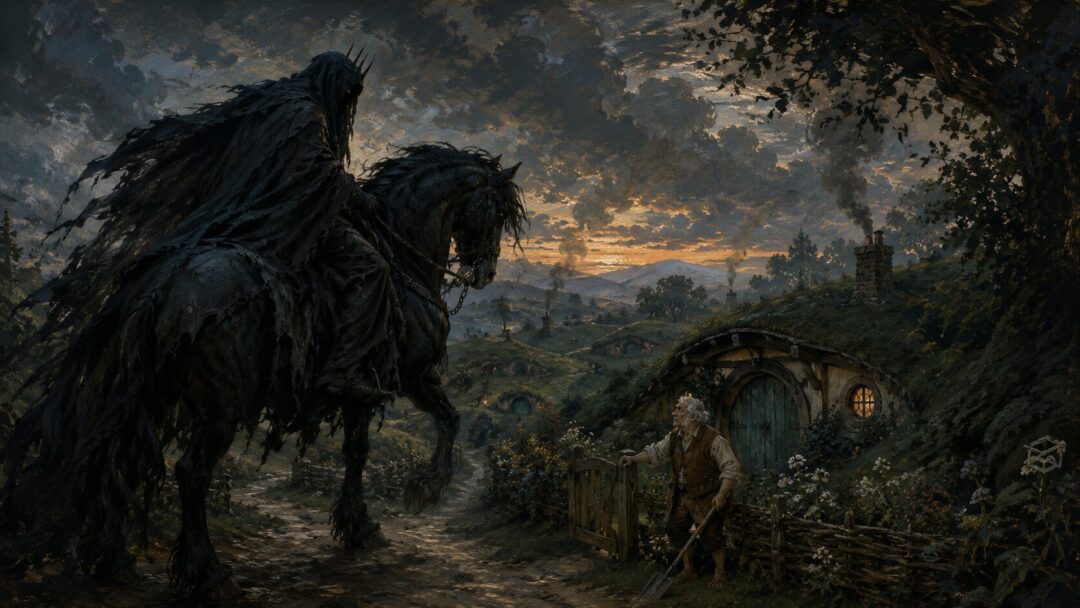
The easy answer is that the Ringwraiths failed because Hobbits were small, quiet, and easy to overlook.
But that answer is too simple.
The Nazgûl were not ordinary trackers. They were the Nine servants of Sauron, enslaved through the Rings of Power and sent out to recover the One Ring. By the time they entered the Shire, they were not wandering blindly. They had two crucial clues: “Shire” and “Baggins.”
That should have been enough.
And yet the Ring passed through their grasp again and again. Frodo left Bag End before they found him. He escaped them on the road. He crossed the Brandywine by ferry. He survived Bree. He endured Weathertop. At the Ford of Bruinen, the Nine came close, but still failed.
So the real question is not simply why the Ringwraiths could not find the Hobbits.
The deeper question is why they could not understand what the Hobbits were.
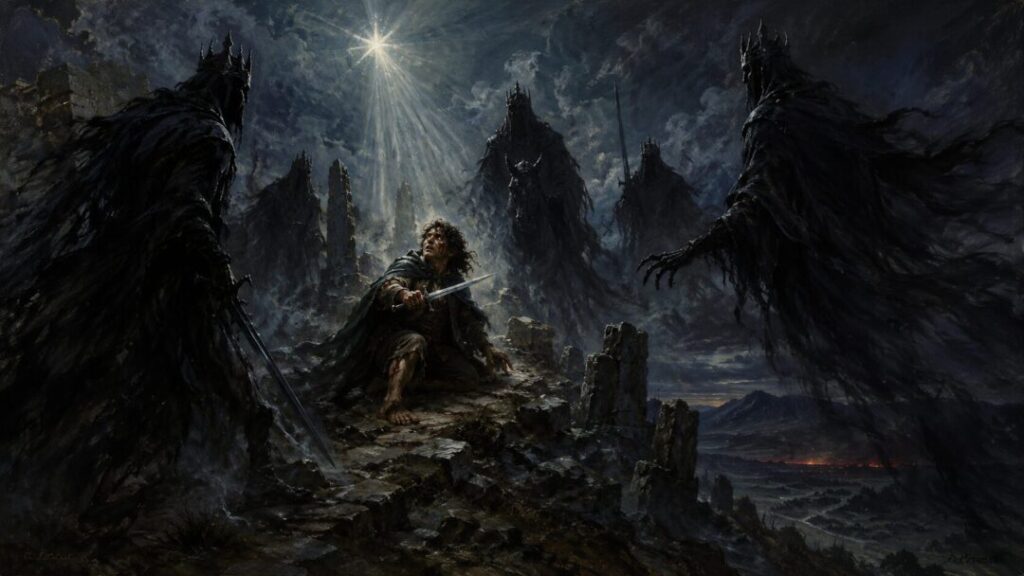
The Nazgûl Were Hunting a Name, Not a Person
When Sauron learned of the Ring from Gollum, he learned two words that mattered: “Shire” and “Baggins.”
That knowledge was dangerous, but it was incomplete.
The Ringwraiths did not begin with a clear picture of Frodo. They did not know the habits of Hobbits, the geography of the Shire, the difference between Bilbo and Frodo, or the quiet network of ordinary friendships that would help Frodo vanish at exactly the wrong time.
This matters because the early hunt in the Shire is full of awkward uncertainty.
The Black Riders ask questions. They frighten locals. They seek “Baggins.” One comes to Hobbiton and questions the Gaffer. Another is misdirected by Farmer Maggot. Their information is frighteningly close, but never complete.
They are not omniscient shadows.
They are servants operating with limited knowledge in a land they do not understand.
And the Shire itself is part of the problem. It is not a fortress. It is not a kingdom. It is not a seat of power. It is a rural, inward-looking country of people whom the great powers of Middle-earth have mostly ignored.
That ignorance becomes one of Frodo’s first shields.
Hobbits Did Not Look Like Ring-Bearers
The Nazgûl were shaped by power.
In life, the Ringwraiths had once been great among Men: kings, warriors, and sorcerers. Their fall came through Rings that promised power and extended life, until they became enslaved to Sauron’s will.
That history matters.
The Nazgûl belong to the logic of domination. They understand the desire to rule. They understand fear. They understand the hunger for power because that is the path by which they were destroyed.
A Hobbit carrying the Ring is almost the opposite of that.
Bilbo did not take the Ring as a weapon of conquest. Frodo did not set out to build a realm. Sam, when tempted by visions of command, quickly returns in thought to gardens and ordinary things. Even Gollum’s desire for the Ring is possessive and obsessive, but not imperial in the way Sauron’s desire is.
This does not mean Hobbits are immune to the Ring. They are not.
Bilbo is marked by it. Frodo is wounded and burdened by it. Gollum is ruined by it. The Ring works on Hobbits as it works on others.
But Hobbits are not naturally drawn to grand domination in the way Sauron expects important people to be. Their desires tend to be smaller, more domestic, and more personal.
That makes them harder for the servants of Sauron to read.
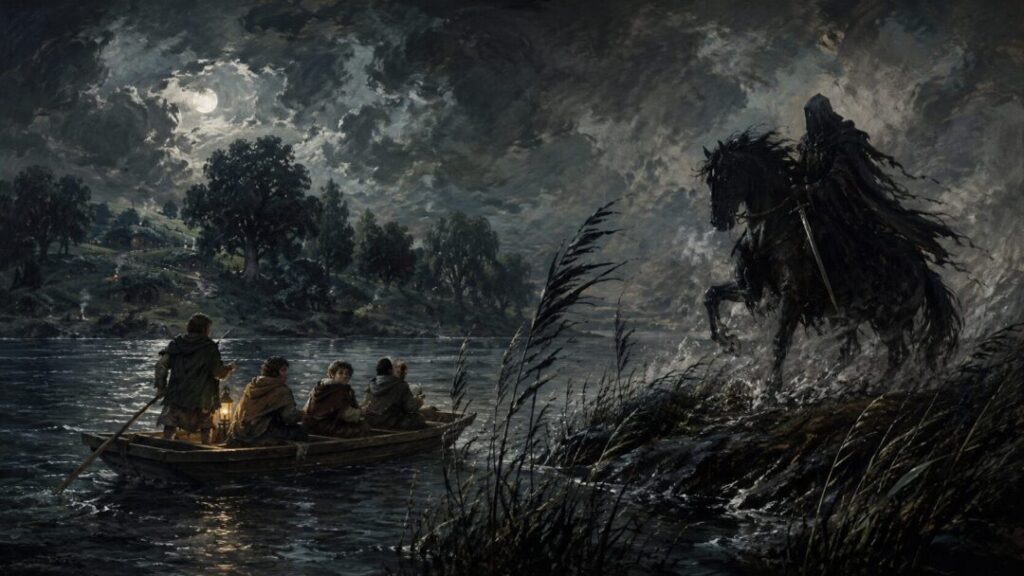
The Ringwraiths Could Sense Fear Better Than Humility
The Black Riders are terrifying because fear is one of their chief weapons.
In the Shire, their presence unnerves people and animals. On the road, Frodo feels dread before he fully understands what is near him. At Weathertop, the Nazgûl are not merely physical enemies; they attack the will.
That is what makes them so dangerous.
But it also reveals the shape of their blindness.
The Nazgûl are powerful where fear opens the door. They can overwhelm, intimidate, and paralyze. They are most effective when their enemies are isolated, despairing, or already half-defeated in spirit.
Hobbits, however, keep doing things that do not fit that pattern.
They hide in ditches.
They use ferries.
They rely on friends.
They delay, blunder, recover, and keep moving.
They are frightened, but not always ruled by fear.
This is not heroic in the grand style. It is practical, stubborn, and deeply Hobbitish.
The Ringwraiths are prepared for resistance from the Wise, from warriors, from lords, and from powers that might try to claim the Ring. They are less prepared for a frightened Hobbit who does not understand the scale of the hunt, but still refuses to hand over the burden.
Their Greatest Mistake Was Expecting the Ring to Behave Like Power
Sauron’s deepest error in the War of the Ring is not that he forgets the Ring matters.
He thinks of almost nothing else.
His error is that he cannot imagine anyone finding the Ring and choosing to destroy it. To him, the Ring is power, and power exists to be used. Anyone strong enough to matter would claim it. Anyone ambitious enough to possess it would eventually be revealed by it.
The Nazgûl share that world.
They are Ring-slaves. Their entire existence proves what happens when wills are captured by the promise of power. They are the living argument that no one can safely use what Sauron made.
So when the Ring is carried by Hobbits, the danger is hidden inside something Sauron’s logic does not value.
The threat is not military strength.
It is not wisdom in the manner of Gandalf.
It is not royal authority like Aragorn’s.
It is not Elvish power, Dwarvish endurance, or the might of Gondor.
It is pity, secrecy, friendship, and endurance.
Those are real forces in the story, but they do not look like forces to Sauron.
And because they do not look like power, the Nazgûl underestimate them.
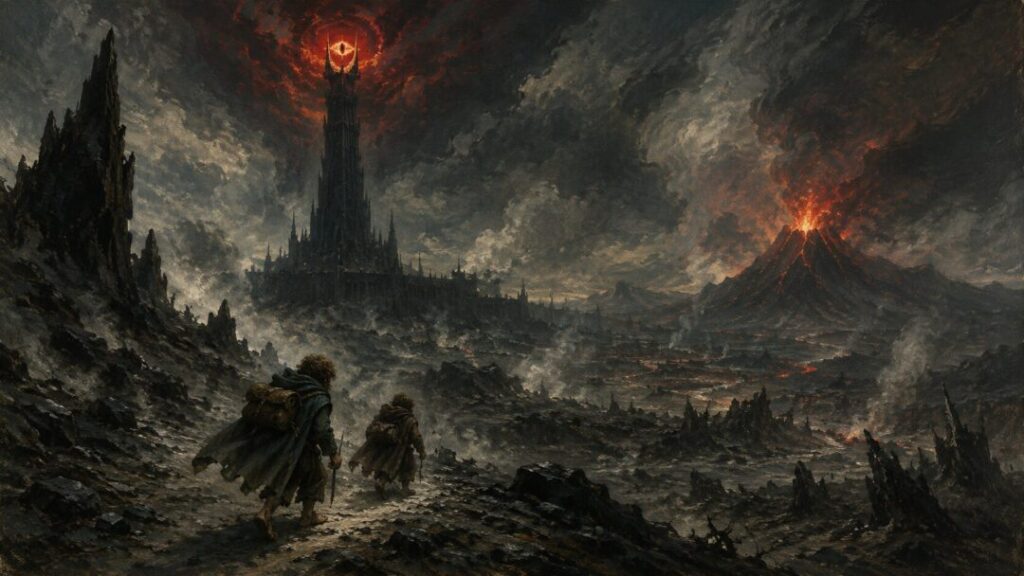
The Flight to Buckland Shows the Blind Spot
One of the most revealing moments comes before the Hobbits ever leave the Shire.
Frodo’s move to Crickhollow is partly a disguise. To ordinary Hobbit society, it looks like a private change of residence. To the conspiracy of his friends, it gives him a way to leave quietly. To the Black Riders, it becomes another clue to follow.
But the escape works because the Hobbits’ world is full of small arrangements the Enemy does not understand.
Merry knows the land.
Farmer Maggot helps.
Fatty Bolger remains behind as a decoy at Crickhollow.
The ferry delays pursuit because the Rider cannot simply cross the river there.
None of this is grand strategy in the style of kings.
But it is enough.
That is the point. The Shire does not defeat the Nazgûl by strength. It frustrates them through local knowledge, loyalty, and the unglamorous courage of people Sauron would never consider significant.
The Ringwraiths are not defeated there permanently. They are delayed.
But in the War of the Ring, delay matters.
Weathertop Was Not a Simple Victory for Frodo
It would be wrong to make the Nazgûl look weak.
At Weathertop, they come terribly close to victory. Frodo is wounded by a Morgul-knife, and that wound nearly draws him into their world. The attack is not a failure because the Nazgûl are harmless. It is a failure because Frodo survives long enough to be rescued.
Even there, the texts show something important.
Frodo resists. He calls on Elbereth. He strikes at the feet of his enemy. He does not defeat the Witch-king in any ordinary sense, but he does not simply collapse either.
The Ringwraiths expect terror and the wound to do their work.
For a time, that expectation is nearly correct.
But “nearly” is not enough.
Their mistake is not that they fail to recognize the Ring’s importance. Their mistake is that they repeatedly underestimate the bearer’s capacity to endure one more step.
The Hobbits Were Dangerous Because They Did Not Seem Dangerous
This is the strange heart of the matter.
The Hobbits were not a threat because they could overpower the Nazgûl. They could not. They were not a threat because they understood the Enemy better than the Wise did. They did not.
They were a threat because they could carry the Ring through gaps in Sauron’s imagination.
Sauron expected rivals.
The Nazgûl hunted possession.
The Wise feared the temptation to use power against power.
But the Quest depended on something else: the possibility that the Ring could be borne by the small, protected by friendship, and finally brought to the place where power would be unmade rather than claimed.
That is why the Ringwraiths fail to recognize Hobbits as the true danger.
Not because Hobbits are invisible in a literal sense.
Not because the Nazgûl are foolish.
Not because the Ring is harmless in small hands.
But because Sauron’s servants can only fully understand threats that resemble Sauron’s own desires.
Hobbits do not.
The Smallest People Exposed the Enemy’s Greatest Blindness
The War of the Ring turns on a paradox.
The Ring is the most dangerous object in Middle-earth, yet it is carried by people almost no great power would have chosen at first glance. The Nazgûl hunt them, but they do not truly understand them. Sauron fears the Ring being used against him, but not the possibility that it will be rejected, carried into his own land, and destroyed.
That blindness is not a minor mistake.
It is the crack in the whole structure of evil.
The Ringwraiths failed to recognize Hobbits as a threat because Hobbits did not look like power. They looked like weakness, accident, and irrelevance.
But in Middle-earth, that is often where the deepest resistance begins.
Not in the desire to master the world.
But in the refusal to become like the thing that seeks to master it.
Sources & Notes
- J.R.R. Tolkien, The Lord of the Rings, Book I, Chapter 2, “The Shadow of the Past” — Gollum’s captured words “Shire” and “Baggins” give Sauron a dangerous but incomplete trail to follow.
- J.R.R. Tolkien, The Lord of the Rings, Book I, Chapter 3, “Three is Company” — the first Black Rider scenes show the Nazgûl asking after Baggins and being delayed by Hobbit caution, hiding, and local ignorance.
- J.R.R. Tolkien, The Lord of the Rings, Book I, Chapter 4, “A Short Cut to Mushrooms” — Farmer Maggot’s encounter with a Black Rider and his help to Frodo support the article’s emphasis on ordinary Shire loyalties.
- J.R.R. Tolkien, The Lord of the Rings, Book I, Chapter 11, “A Knife in the Dark” — Weathertop shows the Riders’ terror and the Morgul-knife nearly succeeding, while Frodo still resists with Elbereth and a desperate stroke.
- J.R.R. Tolkien, The Lord of the Rings, Book II, Chapter 2, “The Council of Elrond” — the council’s choice to destroy rather than wield the Ring rests on a path Sauron does not expect from those he considers beneath power.
- J.R.R. Tolkien, Letter 131 — Tolkien’s overview of the Ring’s logic of power and domination helps frame Sauron’s failure to imagine renunciation as a serious threat.