The One Ring did not tempt everyone with the same dream. That is one of the quietest and most frightening truths in The Lord of the Rings. It was not merely a golden weapon whispering the same command into every ear. It found the shape of the person who carried it, or desired it, and enlarged that shape until virtue itself could become dangerous.
Boromir and Samwise Gamgee both encountered the Ring at moments of terrible pressure. Boromir saw his city standing under the long shadow of Mordor. Sam stood in Mordor itself, believing Frodo lost and the Quest almost ruined. Both were brave. Both loved something deeply. Both wanted to save what they loved.
Yet the Ring could promise Boromir something it could not truly promise Sam: the believable fantasy of command.
That difference matters. Boromir’s temptation was not simply that he was weaker than Sam. Sam’s resistance was not simply that hobbits were magically immune. The deeper contrast is that Boromir already lived inside a world of war, rank, banners, command, inheritance, and national survival. The Ring could dress itself in the language of his duty. For Sam, it had to become something more absurd: a gardener swollen into a conqueror.
Boromir’s Temptation Began With a Real Wound
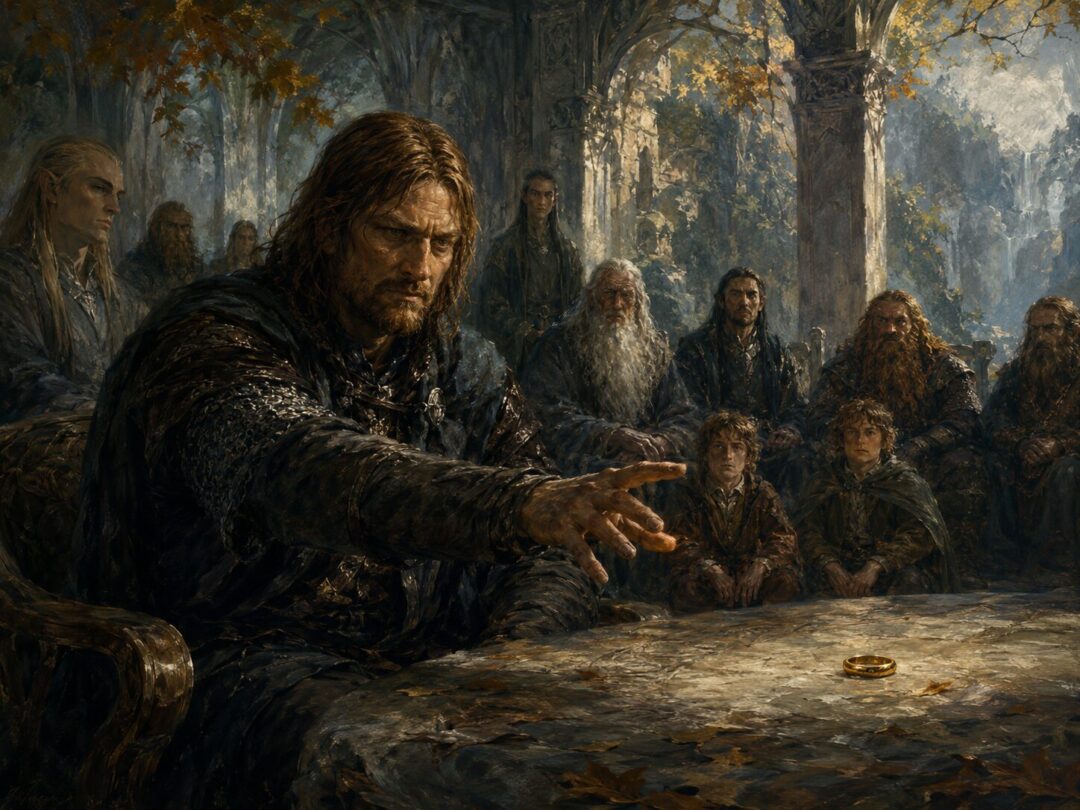
Boromir does not arrive at Rivendell as a greedy man looking for a prize. He comes from Gondor, the realm that has long stood nearest to Mordor’s threat. At the Council of Elrond, his arguments are rooted in a real strategic desperation: Gondor bleeds so that the lands behind it may remain safer. Tolkien Gateway summarizes Boromir’s position at the Council as an attempt to have the Ring taken to Gondor and used in defense of the realm, while Elrond rejects that hope because the Ring cannot safely be used against its maker.
That is why Boromir’s fall is tragic rather than shallow. The Ring does not need to invent his love for Minas Tirith. It does not need to invent his courage, pride, exhaustion, or resentment. It only needs to bend them.
Boromir’s core question is simple: if the Enemy made a weapon, why should the Free Peoples not turn that weapon against him? On the surface, that sounds practical. In war, captured weapons are used all the time. But the One Ring is not a neutral object. Elrond’s answer at the Council is that the Ruling Ring belongs to Sauron, was made by him, and is altogether evil; its very desire corrupts the heart.
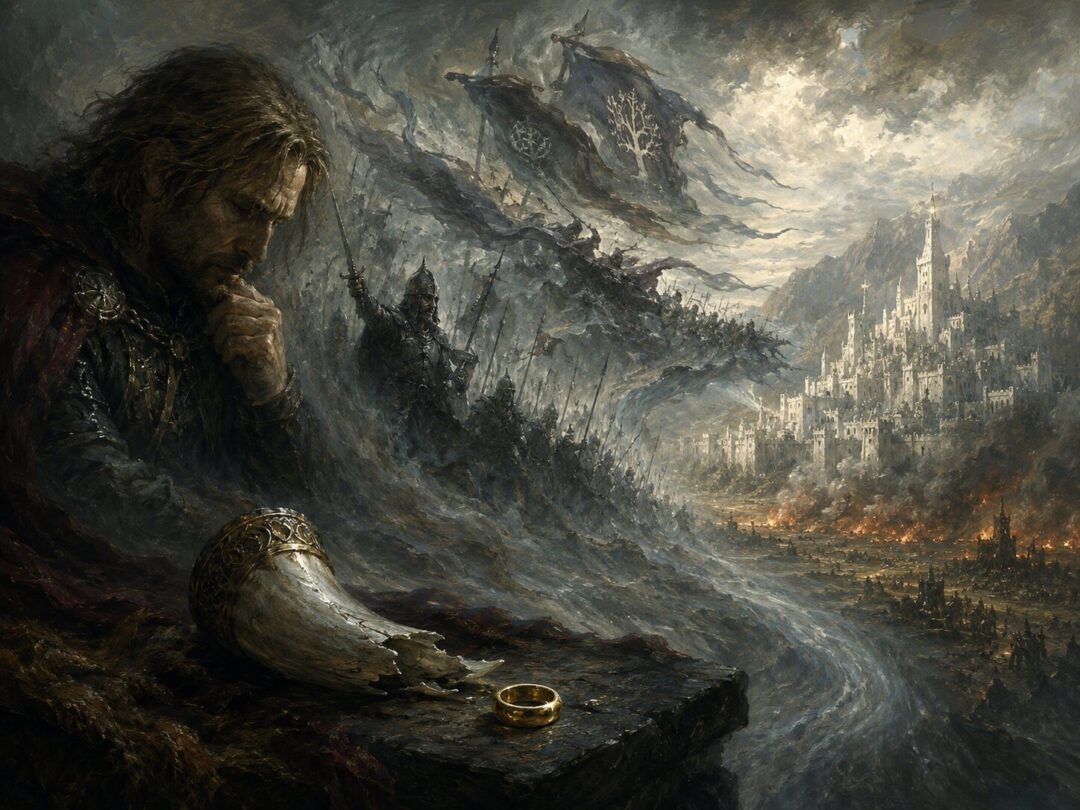
Boromir hears the warning, but the warning collides with everything his life has taught him. He is a captain of a besieged people. He knows that armies, walls, horns, swords, and authority can decide whether civilians live or die. So when the Ring approaches his imagination, it does not need to offer him a private pleasure. It offers him a victorious public role.
The Ring Could Speak Boromir’s Native Language: Power
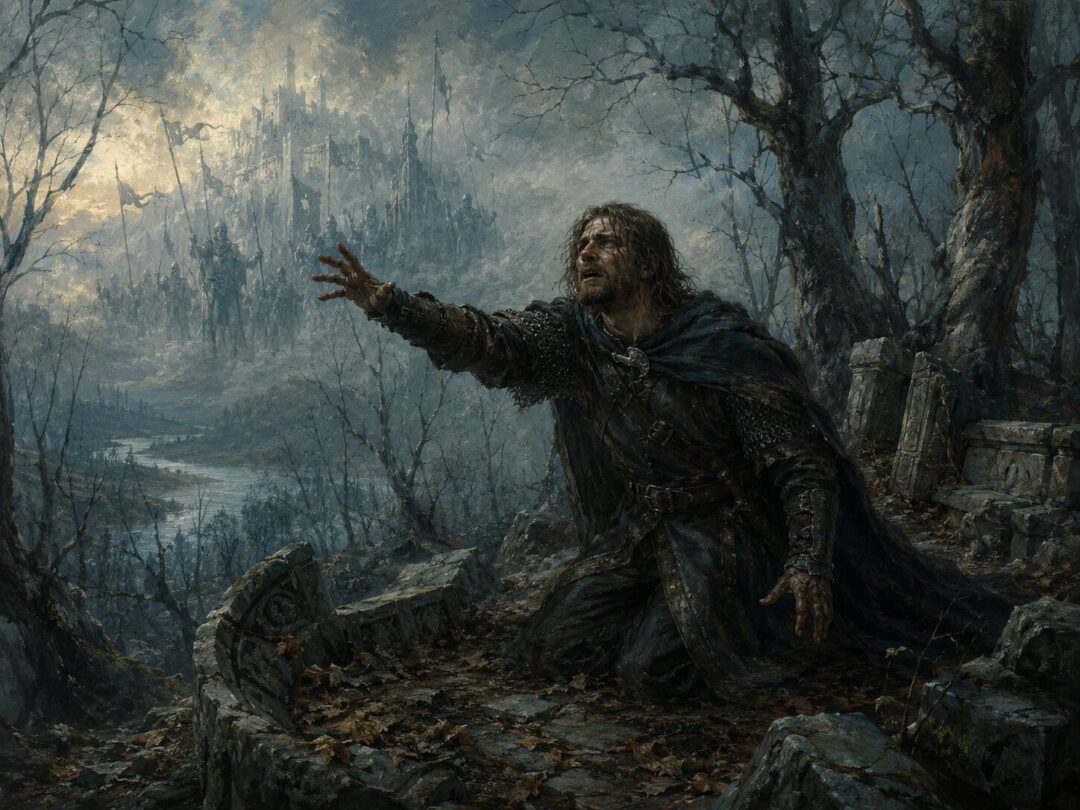
Boromir’s temptation becomes fully visible at Amon Hen, when he tries to persuade Frodo to bring the Ring to Minas Tirith. He imagines using it as a power of command, driving back Mordor and drawing men to his banner. A secondary source quoting the passage captures the essential phrasing: “The Ring would give me power of Command.”
Wisdom from The Lord of the Rings
That phrase is the key.
The Ring could promise Boromir a version of himself that felt plausible. He was already a commander. Men already followed him. He already fought Mordor. He already belonged to the ruling house of Gondor, even if he was not a king. The Ring did not have to make him imagine becoming something alien to his life. It could simply enlarge what he already was.
This is the danger of Boromir’s dream. It is not a cartoon fantasy of evil. It is the fantasy of emergency power: one last weapon, one necessary exception, one terrible tool used by a good man for a good cause. The moral trap is that Boromir can imagine himself remaining Boromir while wielding something made by Sauron.
But the Ring’s logic is domination. To use it is not merely to defeat enemies. It is to command wills. It offers victory through the very principle Sauron embodies: control.
So the Ring’s promise to Boromir is powerful because it sounds like responsibility. It says: you are the one strong enough to bear this burden. Your city needs you. Your father needs you. Your people need you. Others can speak of purity because they are not watching the eastern sky from the walls of Minas Tirith.
That is a very dangerous lie because it contains pieces of truth.
Sam’s Temptation Was Real, But It Had to Overreach
Sam’s encounter with the Ring in Mordor is one of the most revealing passages in the whole story. After Shelob attacks Frodo, Sam takes the Ring because he believes Frodo is dead or beyond help. Later, near the Tower of Cirith Ungol, the Ring tempts him. Tolkien Gateway’s summary places Sam at the opening of Book VI outside the Orc stronghold, trying to rescue Frodo after the disaster in Shelob’s Lair.
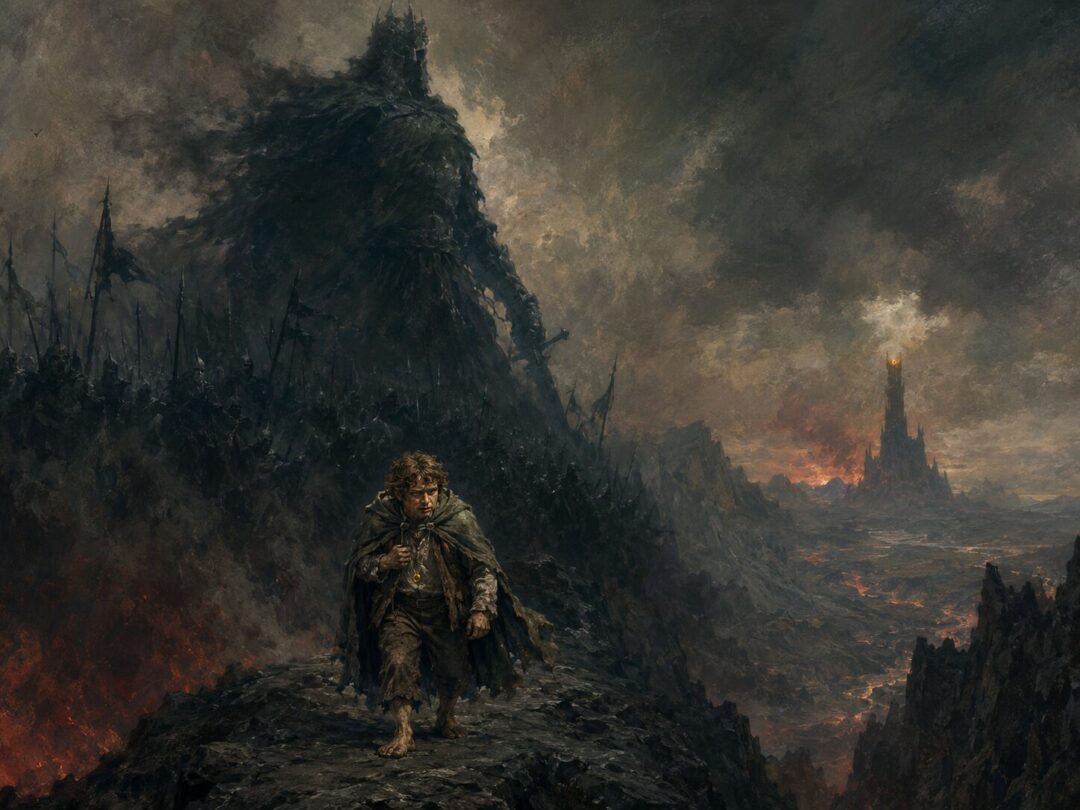
The temptation comes in grand images. Sam sees himself as “Samwise the Strong,” a hero of the age, marching against Barad-dûr with armies at his call. The Ring tries to make him imagine a huge, commanding version of himself. It offers him the same basic pattern it offered Boromir: overthrow the Dark Power by becoming a greater power.
But with Sam, the fantasy is strained. Sam is brave, stubborn, and capable of astonishing endurance, but he is not a lord, captain, strategist, prince, or wizard. He has no long habit of command for the Ring to magnify. The dream of armies flocking to Sam’s banner is not completely impossible in the abstract—Ring-temptations are not rational proposals—but it is emotionally less believable to Sam than Boromir’s dream was to Boromir.
Then the text reveals the deeper reason Sam resists: his real desire is not empire. His need is a small garden of his own, worked by his own hands, not a garden swollen into a realm or tended by the hands of others. A fan discussion preserves the famous passage’s core contrast: “The one small garden of a free gardener was all his need and due.”
That is not a denial that Sam can be tempted. He can. The Ring gnaws at him. It enlarges him in his own imagination. It offers heroic revenge and impossible restoration. But Sam’s deepest self is not organized around command. He does not truly want to rule gardeners, soldiers, fields, or peoples. He wants Frodo safe. He wants the Shire restored. He wants ordinary life to survive.
The Ring can twist even those desires, but it cannot make the dream of domination feel native to him in the same way.
Boromir Wants to Save a City; Sam Wants to Save a Person
Another difference is scale.
Boromir’s love is civic and martial. He loves Minas Tirith, Gondor, his people, and the embattled inheritance of the West. That love is noble, but it is also already tied to hierarchy and power. Saving Gondor, in his imagination, naturally involves armies, leaders, walls, captains, decisions, and sacrifice.
Sam’s love is personal before it is political. He is not indifferent to the Shire or the wider world, but in the darkest hours his immediate center is Frodo. The Quest, for Sam, is not an abstract campaign. It is the road he walks because his master and friend must not walk it alone.
That personal loyalty changes the Ring’s leverage. Boromir can be made to think: if I had command, I could save the world I love. Sam can be made to think something similar, but the thought has to pass through a personality that distrusts grandeur. His instinct is not to marshal nations but to get through the next gate, find Frodo, carry what can be carried, and endure.
This does not make Sam morally simple. His humility is not stupidity. He understands enough to know that the Ring’s images are swollen and false. He rejects not only Sauron’s darkness but also the heroic version of himself that the Ring displays.
Boromir’s tragedy is that the heroic version of himself is close enough to his real identity to become seductive.
The Ring Feeds on Virtue as Much as Vice
The contrast between Boromir and Sam is often flattened into “Boromir failed, Sam resisted.” That is true as far as it goes, but it misses the sharper point. The Ring does not only feed on greed. It feeds on courage, pity, patriotism, loyalty, and the desire to heal what is broken.
Boromir’s courage becomes the desire to seize the weapon. His patriotism becomes the excuse for domination. His sense of burden becomes resentment toward those who will not use the Ring as he thinks it should be used.
Sam’s loyalty is also tested. The Ring offers him a way to become mighty enough to rescue, avenge, and restore. It tries to turn service into mastery. But Sam’s humility gives him a kind of protection—not perfect immunity, but proportion. He can still perceive the difference between a free garden and a realm commanded in his name.
That word, proportion, may be the heart of the matter. The Ring destroys proportion. It makes the self enormous. It turns a real duty into a world-saving entitlement. It turns “I must help” into “I alone must rule.”
Boromir is vulnerable because his real duties are already vast. Sam is protected because his real desires remain small, concrete, and loving.
Why Boromir’s Fall Still Matters
Boromir’s story should not be read as proof that he was secretly corrupt all along. His repentance matters. After he tries to take the Ring, he comes back to himself. He dies defending Merry and Pippin, and confesses his failure to Aragorn. Even the brief secondary summaries of his end preserve that essential shape: remorse, defense of the hobbits, and death under Orc-arrows.
That ending is important because it shows the Ring did not reveal Boromir as worthless. It revealed the danger hidden inside his noblest desires. He wanted to save his people, but the Ring taught him to imagine salvation through possession.
Sam’s refusal reveals the opposite hidden strength. He is not grand enough for the Ring’s grandest lie. Or, more precisely, he is too rooted in ordinary love to be fully persuaded by it. The Ring can show him himself as a mighty lord, but some part of Sam knows that a lordly Samwise commanding the world would no longer be Samwise in any meaningful sense.

The Promise the Ring Could Not Make Believable
The One Ring could promise both Boromir and Sam victory. It could promise both of them a world remade. It could promise both of them the overthrow of Mordor.
But only to Boromir could it convincingly promise command as a natural extension of his identity.
Boromir already understood banners, captains, desperate war, and the terrible arithmetic of survival. The Ring could stand inside that world and pretend to be the missing instrument. Sam understood gardens, hands, loyalty, food, weariness, fear, and the stubborn holiness of small things. The Ring could invade that world too, but it had to inflate it into something grotesque.
That is why Sam’s temptation breaks where Boromir’s deepens. Sam can imagine the fantasy, but he cannot finally inhabit it. Boromir can inhabit it too well.
The Ring’s deadliest promise is never merely “you will be powerful.” It is “you will finally be able to do the good you already wanted to do.”
For Boromir, that sounded like Minas Tirith saved beneath his banner.
For Sam, it sounded like a garden too large to be honest.
And in that difference, the Ring’s corruption becomes clearer: it does not tempt people away from themselves first. It begins by offering them a monstrous version of what they already love.
Sources & Notes
- Tolkien Gateway, “Boromir” — summarizes Boromir’s desire to use the Ring for Gondor and his fall at Parth Galen. https://tolkiengateway.net/wiki/Boromir
- Tolkien Gateway, “Samwise Gamgee” — explains Sam’s brief temptation by the Ring and his very different desires. https://tolkiengateway.net/wiki/Samwise_Gamgee
- Tolkien Gateway, “One Ring” — gives context for how the Ring tempts bearers according to power, desire, and imagination. https://tolkiengateway.net/wiki/One_Ring
Sources added for Boromir, Sam, and the Ring’s tailored temptations.