When readers first meet Gollum beneath the Misty Mountains in The Hobbit, the most obvious thing about him is his body. He is thin, pale, large-eyed, and almost creature-like. By the time Frodo and Sam encounter him centuries later, he seems less like a Hobbit and more like something that has been worn down into a different shape.
Yet one of the most important details in Tolkien’s story is that the Ring did not begin by changing Gollum’s body.
It first changed his mind.
Long before his skin grew pale from centuries underground, before his eyes adapted to darkness, and before his lifespan stretched unnaturally far beyond that of any ordinary Hobbit-kind, Sméagol underwent a psychological transformation. The Ring altered his desires, his loyalties, his ability to judge right and wrong, and even the way he thought about himself. His physical corruption was real, but it followed a much deeper inner corruption.
Understanding what happened to Gollum’s mind reveals one of the central truths about the One Ring: its greatest power was never simply physical transformation. It was the gradual reshaping of the will.
The First Corruption Happened Within Minutes
The story begins on Sméagol’s birthday beside the River Anduin.
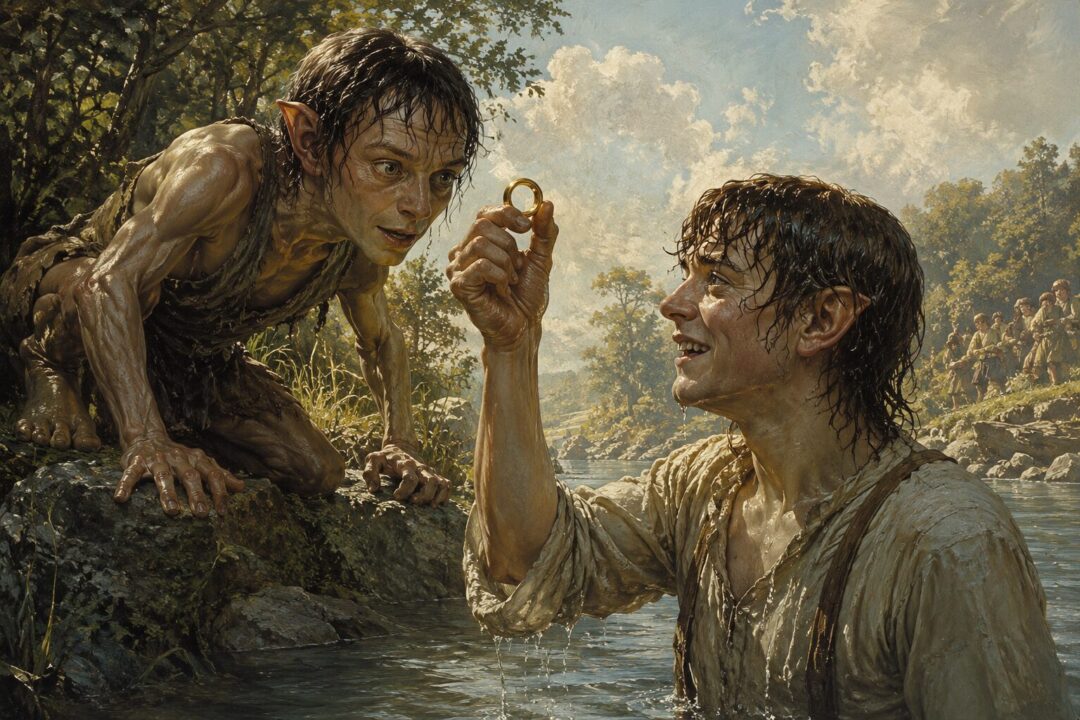
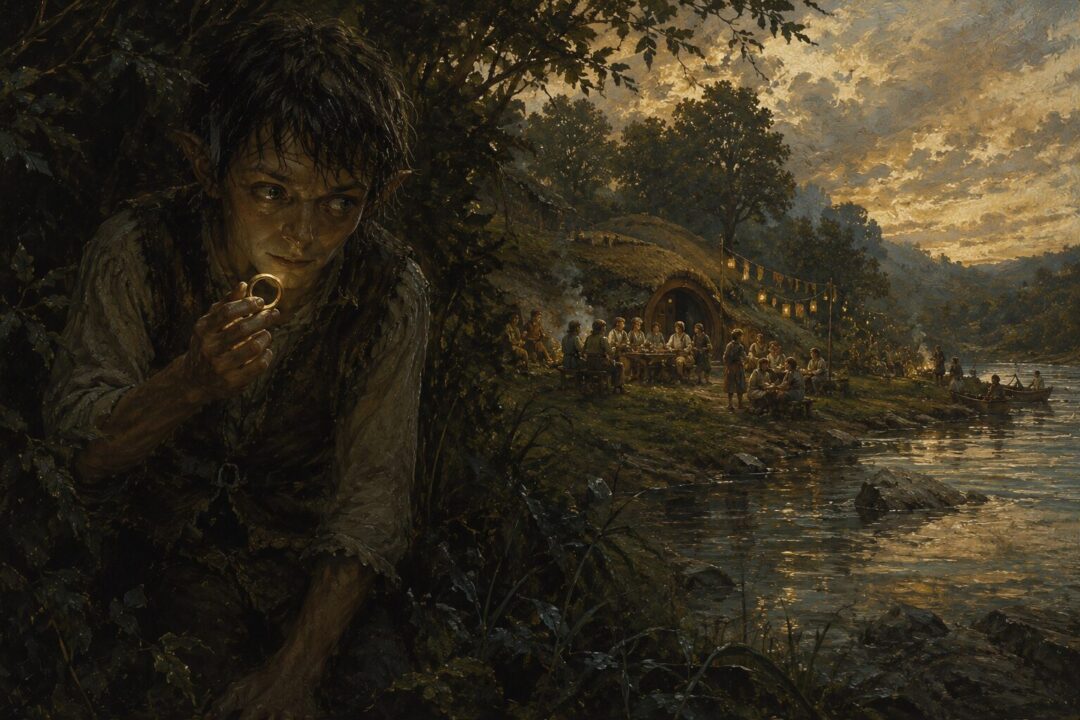
As told in The Lord of the Rings, Sméagol and his relative Déagol were fishing when Déagol discovered the Ring in the riverbed. The moment Sméagol saw it, he desired it.
What is striking is how quickly the corruption appears.
Sméagol did not study the Ring. He did not wear it for years before becoming dangerous. Instead, he demanded it immediately as a birthday present. When Déagol refused, Sméagol murdered him.
The text presents this as the first visible sign of the Ring's influence.
At the same time, Tolkien never suggests that the Ring completely removed Sméagol’s free will. Sméagol committed the murder himself. The Ring tempted and amplified desire, but it did not erase responsibility.
This distinction matters because it reveals how the Ring operates throughout the legendarium. Rather than controlling people like puppets, it magnifies weaknesses already present within them. Ambition, fear, greed, pride, possessiveness, and resentment become stronger than wisdom or restraint.
In Sméagol's case, the Ring found fertile ground almost immediately.
The Ring Turned Possession Into Obsession
After obtaining the Ring, Sméagol became increasingly isolated from those around him.
The Ring gave him advantages. He could become invisible. He could discover secrets. He could use his power to learn things others wanted hidden.
Yet these gifts did not make him happier.
Instead, they intensified a growing obsession.
The Ring became more than an object. It became the center of his emotional world. Everything else began to lose value compared to possessing it.
This is one of the earliest psychological effects seen throughout Tolkien’s works. The Ring narrows the mind. It concentrates attention on itself. Relationships, duties, communities, and moral obligations become secondary.
Sméagol's family eventually rejected him. Gandalf later explains that his grandmother drove him away because of his behavior. He became known for prying into secrets and using the Ring for malicious purposes.
The important point is that the Ring was already changing how he related to other people. Suspicion replaced trust. Manipulation replaced affection. Isolation replaced belonging.
His physical appearance may not yet have dramatically changed, but his social and moral life already had.
The Destruction of Identity
One of the most devastating effects of the Ring was its gradual destruction of Sméagol's original identity.
The tragedy of Gollum is that traces of Sméagol never completely disappeared.
Throughout The Lord of the Rings, readers repeatedly glimpse moments when the older personality still survives beneath the corruption. He remembers kindness. He responds to pity. He is capable of brief flashes of affection and loyalty.
Those moments matter because they show that the Ring did not create an entirely new being.
Instead, it fractured an existing one.
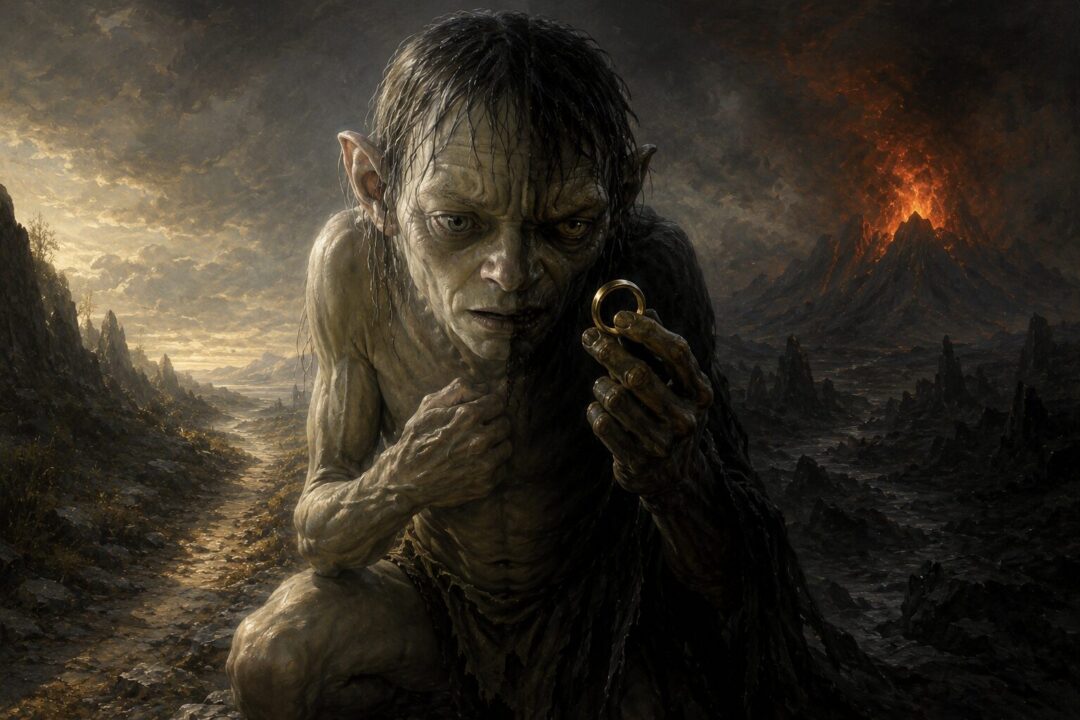
The psychological conflict becomes especially visible during the journey to Mordor. Gollum often appears to argue with himself. The famous conversations between “Sméagol” and “Gollum” are not evidence of literal multiple personalities in a modern clinical sense. Rather, they dramatize an internal war between competing desires and loyalties.
One side longs for safety, acceptance, and freedom from suffering.
The other side remains consumed by possessiveness and addiction to the Ring.
The conflict suggests that the Ring's greatest damage was not merely making Sméagol evil. It divided him against himself.
Why Gollum Calls the Ring “My Precious”
Perhaps no phrase is more associated with Gollum than “my Precious.”
The expression reveals something profound about the Ring’s effect on the mind.
Ordinarily, people value objects because of what those objects can do. A sword provides protection. A treasure provides wealth. A tool accomplishes a task.
Gollum's attachment operates differently.
The Ring becomes emotionally indispensable.
He treats it almost like a living relationship. It receives affection, devotion, and possessiveness usually reserved for people. The Ring is not merely owned; it is loved.
This distorted attachment resembles addiction far more than ordinary ownership.
Gollum cannot imagine life without it.
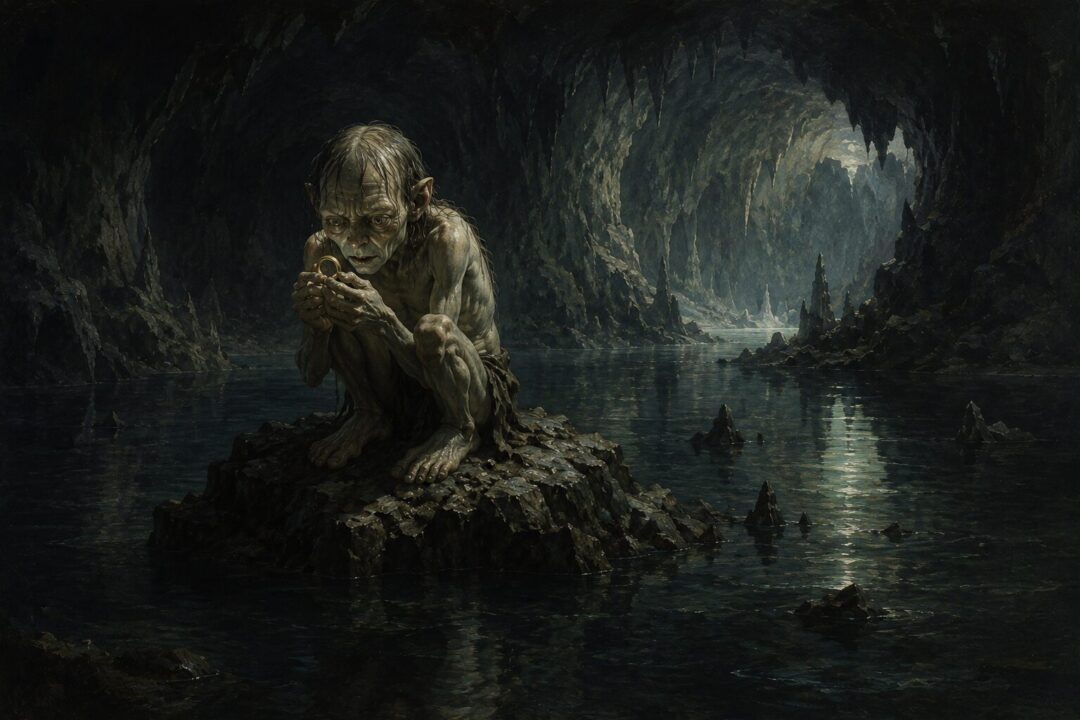
Even centuries after losing the Ring, his thoughts remain dominated by recovering it. His entire purpose narrows into a single objective. The Ring has become the organizing principle of his existence.
This helps explain why losing it causes such agony. Bilbo did not merely take a valuable possession from Gollum. From Gollum’s perspective, he lost the thing around which his entire identity had been built.
The Ring Fed Suspicion and Fear
Another important psychological effect appears throughout Gollum's behavior: extreme distrust.
Gollum rarely believes anyone's intentions are good.
He expects betrayal.
He assumes hidden motives.
He interprets relationships through fear and competition.
The Ring consistently encourages this kind of thinking. Because it centers the self above all else, other people increasingly become threats rather than companions.
We see similar tendencies in other Ring-bearers, though usually in less extreme forms. Bilbo becomes reluctant to part with the Ring. Frodo grows increasingly protective of it. Even wise figures such as Boromir imagine possessing it for noble purposes before being drawn toward darker possibilities.
In Gollum, however, centuries of exposure intensified these tendencies beyond anything seen in other characters.
By the end, suspicion had become one of his default ways of understanding the world.
Why the Ring Could Not Fully Erase Sméagol
One of the most remarkable aspects of the story is that Sméagol survives psychologically longer than readers might expect.
The Ring causes immense corruption, but it never achieves total victory.
This becomes especially clear during Frodo's treatment of Gollum.
Unlike most people, Frodo sees more than a monster. He recognizes a ruined person. Having carried the Ring himself, Frodo understands something of the burden Gollum has endured.
Several passages suggest that genuine recovery may briefly have been possible.
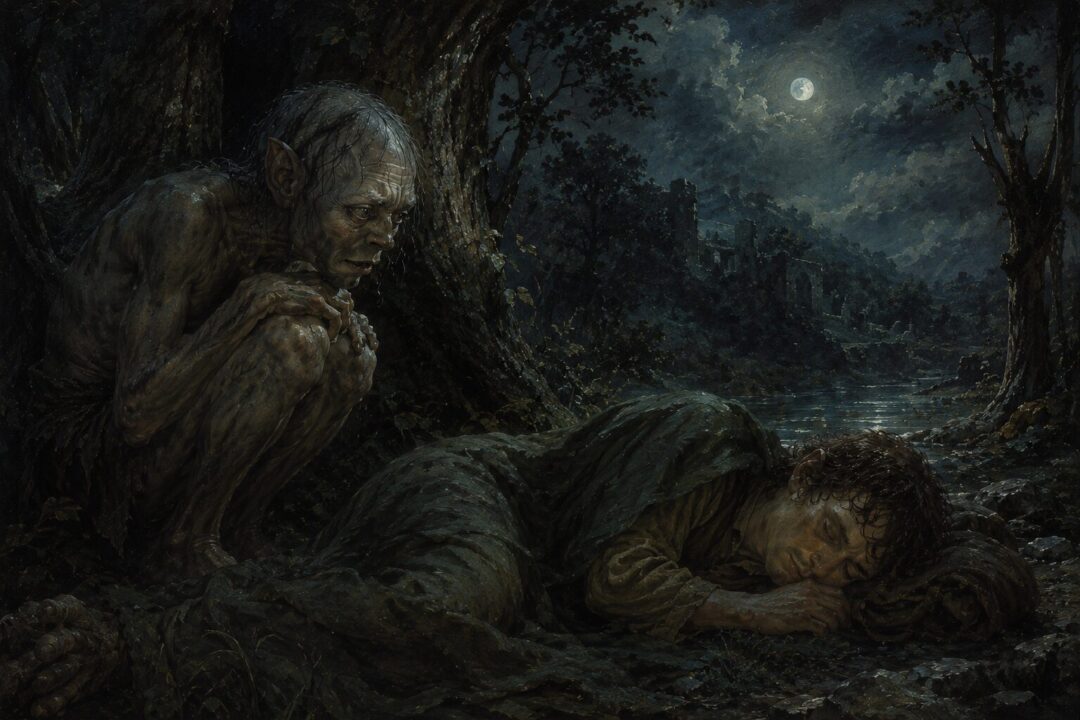
After Frodo shows kindness, Gollum experiences moments of trust and attachment. One famous scene depicts him looking at Frodo while he sleeps. The narration describes an expression that appears almost old and weary rather than malicious.
For a moment, readers glimpse what remains of Sméagol.
Tolkien never states that redemption was guaranteed. Yet the possibility matters.
If the Ring had completely destroyed Sméagol's inner self, such moments could not exist.
The tragedy is not that Sméagol vanished entirely.
The tragedy is that enough of him survived to suffer.
The Mind Changed Before the Body
Many readers focus on Gollum's appearance because it is dramatic and visible.
But the chronology matters.
The Ring first corrupted desire.
Then it corrupted judgment.
Then it damaged relationships.
Then it fractured identity.
Only after long years did the physical consequences become obvious.
His body eventually reflected what had already happened internally. Isolation drove him underground. His habits changed. His environment changed. His lifespan stretched unnaturally. Centuries of existence apart from ordinary society reshaped him physically.
Yet the deeper transformation had already occurred.
The creature readers meet beneath the mountains was not primarily the result of bodily mutation. He was the result of a mind gradually reorganized around possession.
The Ring's Most Terrifying Power
The story of Gollum reveals a truth that echoes throughout The Lord of the Rings.
The One Ring's greatest power was not invisibility.
It was not longevity.
It was not domination through force.
Its most dangerous ability was the corruption of the will.
The Ring worked by taking understandable desires and pushing them beyond their proper limits. Wanting security became obsession. Wanting power became tyranny. Wanting justice became domination. Wanting possession became addiction.
Gollum represents the furthest visible outcome of that process.
By the time his body reflected the corruption, the decisive battle had already been fought inside his mind.
That is why his story remains so tragic. Beneath the pale skin, the hunched posture, and the strange voice was still the memory of Sméagol—a person who had once lived beside a river, celebrated birthdays, and belonged to a community.
The Ring did not simply transform him into something else.
It persuaded him, little by little, to abandon himself.
Sources & Notes
- Tolkien Gateway, "Gollum" — https://tolkiengateway.net/wiki/Gollum
- Tolkien Gateway, "One Ring" — https://tolkiengateway.net/wiki/One_Ring
- Tolkien Gateway, "Sméagol" — https://tolkiengateway.net/wiki/Sm%C3%A9agol
Sources added for article-specific Tolkien reference context.