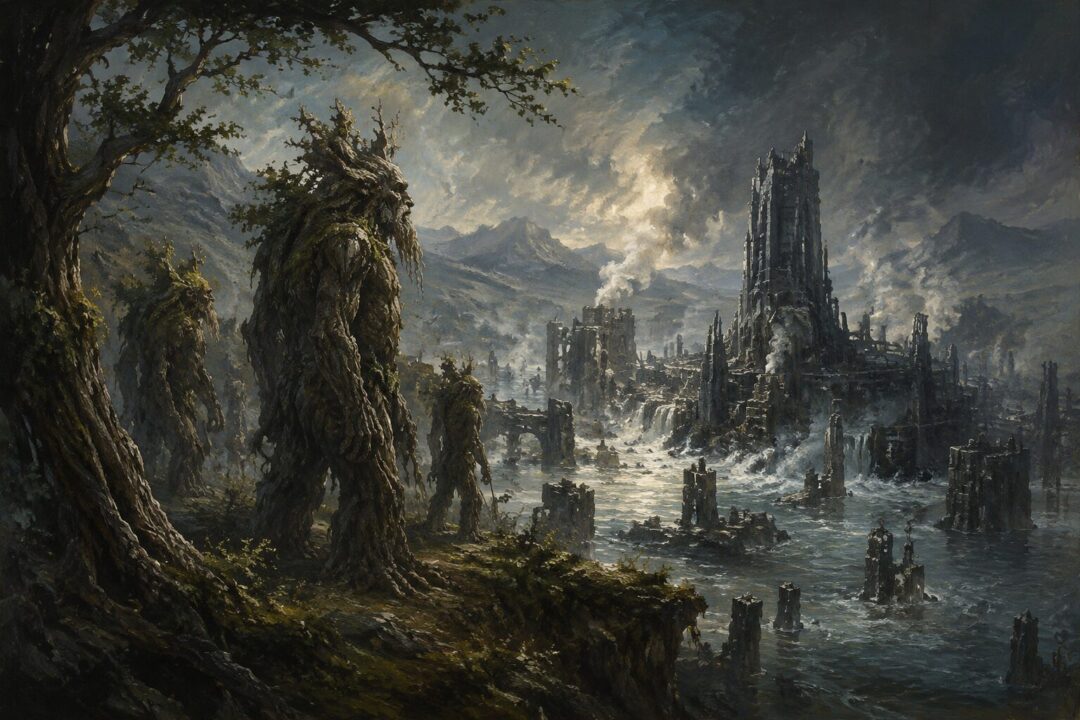
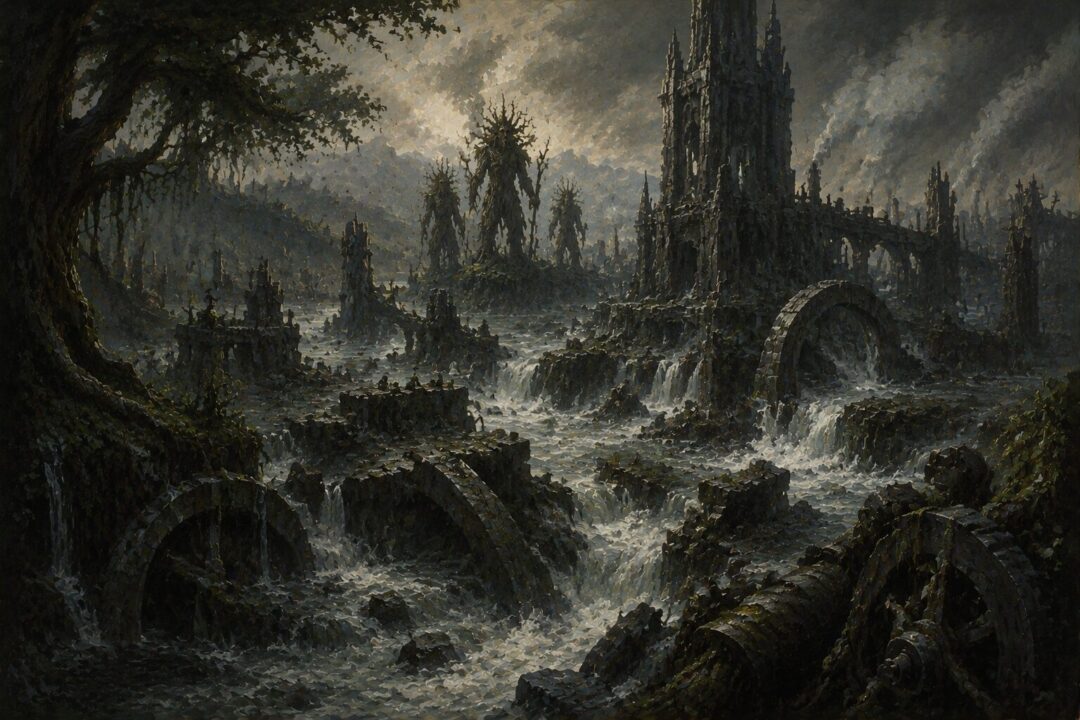
Among all the living powers of Middle-earth, few are as paradoxical as the Ents: beings ancient enough to remember forests that no longer have names, yet unable to recover what they themselves have lost most deeply. When they finally rose in wrath against Isengard, it seemed as though the world had briefly remembered what it once was capable of becoming. Trees walked. Stone cracked. Iron drowned beneath living water.
And yet, in the quiet after that victory, another truth remains: the Ents can unmake a fortress of industry in a single night of fury, but they cannot restore even one of the lost Entwives.
That contrast—between destruction and restoration, between rage and remembrance—is where the true tragedy of the Ents lies.
The Long Memory of Trees and the Slow Voice of Ents
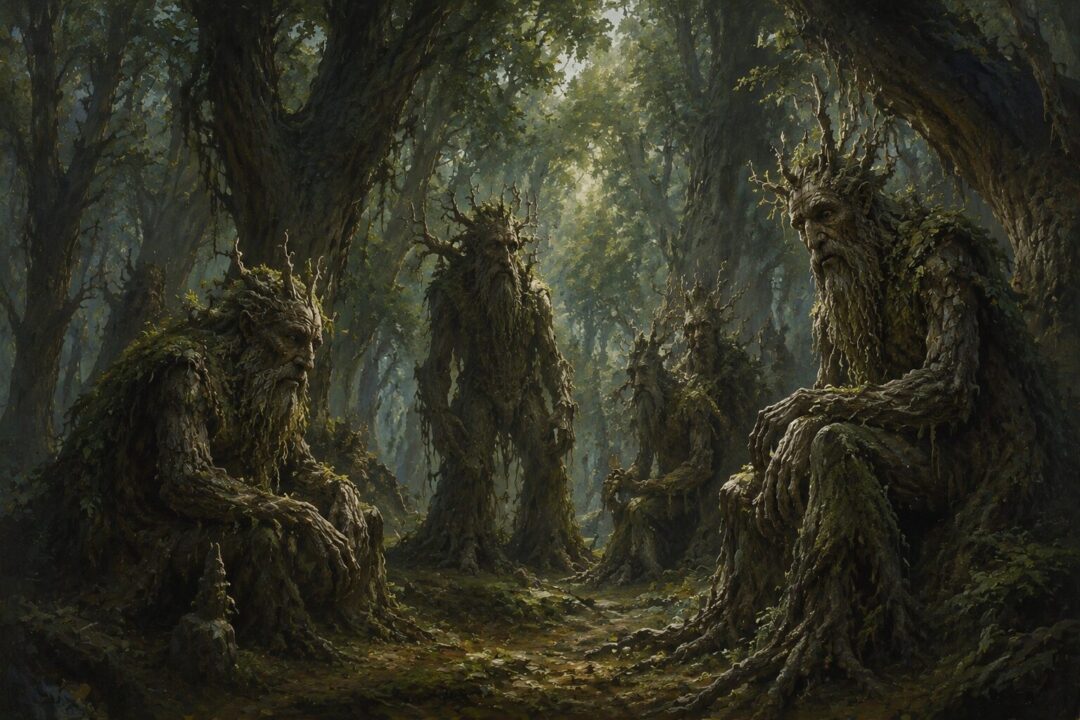
The Ents are not merely “tree-like giants.” They are shepherds of forests, ancient beings who share something closer to the rhythm of growing things than to the quick lives of Men or Hobbits. Their speech is slow because their thought is slow, and their thought is slow because they measure time in seasons of wood, not in years of stone.
This long perception of time gives them a unique strength: patience beyond exhaustion. They can endure neglect, forgetting, and silence in ways no shorter-lived race could survive without breaking. Fangorn Forest is not merely a place they inhabit; it is a reflection of their persistence.
But that same slowness carries a hidden cost. The longer something takes to change, the harder it becomes to correct what has already gone wrong.
The Entwives and the First Great Irreversibility
The central wound in Ent history is not Isengard. It is the loss of the Entwives.
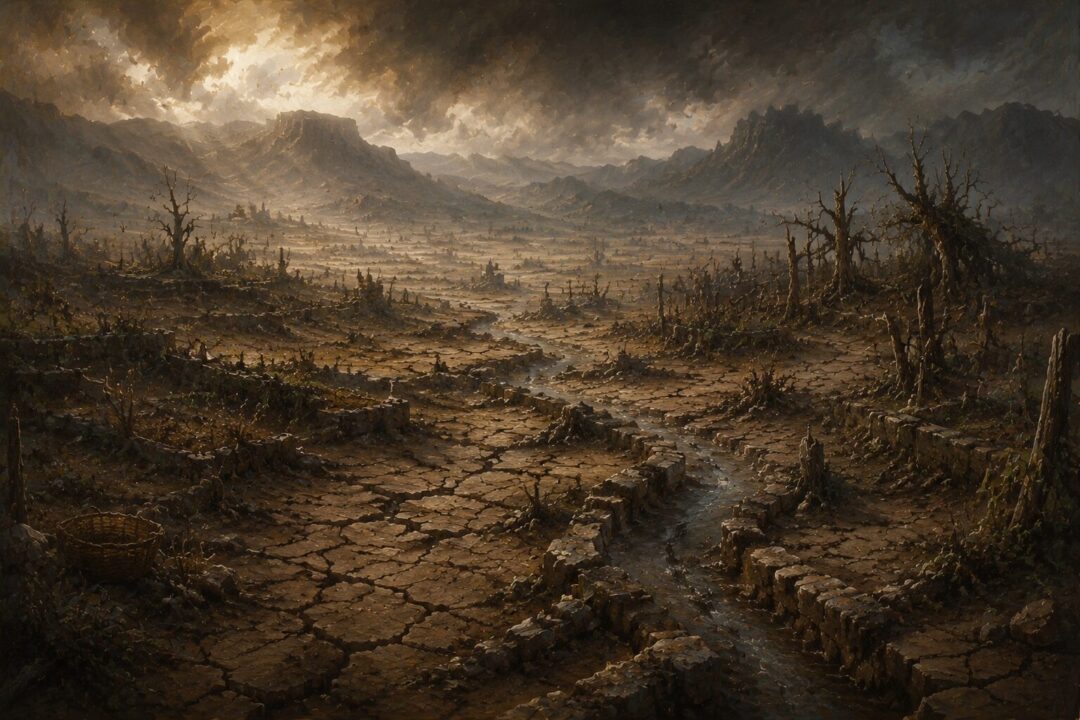
The Entwives, according to the accounts preserved in the lore of Middle-earth, once separated from the Ents. The Ents tended wild forests and growing things that were not controlled or ordered. The Entwives, by contrast, preferred cultivated land—gardens, fields, and managed growth. They moved eastward into regions later devastated by war and shifting lands.
After that, they were never seen again.
The Ents search for them persists across ages, but it is a search without resolution. Tolkien never explicitly confirms their fate. One reading suggests they were destroyed during the upheavals that turned fertile lands into the barren Brown Lands. Another interpretation leaves open the possibility that they survived in some diminished or unreachable form. The texts only confirm absence, not closure.
This absence becomes the Ents’ deepest structural limitation: they can remember what was lost, but they cannot retrieve it, rebuild it, or even confirm what remains.
Why Ent Strength Works on Stone but Not on Time
When the Ents finally attack Isengard, their power is unmistakable. They tear down walls, uproot stonework, and redirect water with a force that seems almost elemental. It is important to understand what this power actually represents: not invention, but reversal.
Isengard is an architecture of control—stone imposed upon living earth, industry imposed upon forest. The Ents do not “create” something new in that moment. They undo what was imposed. Their strength is fundamentally negative in direction: it is the ability to break, flood, and reclaim.
This is why their victory feels so complete at Isengard. The structure they oppose is recent, artificial, and still dependent on physical supports that can be removed.
But the Entwives were not lost to stone or industry alone. They were lost to distance, war, and the slow transformation of entire regions over long ages. That kind of loss is not a structure to dismantle. It is a condition of history.
And the Ents, despite their age, are still creatures bound to physical presence. They cannot “rebuild” a vanished people. They can only search.
Fangorn’s Silence: A Forest That Remembers Without Healing
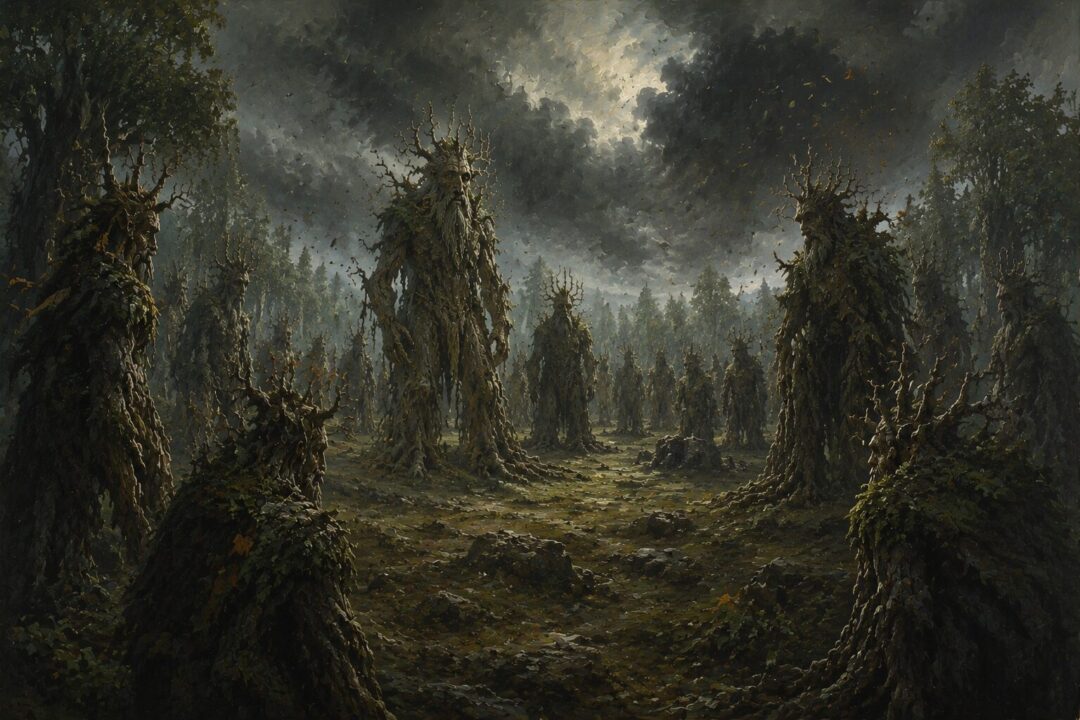
Fangorn Forest itself reflects this imbalance. It is one of the last great remnants of an older world, a place where trees still act with awareness and intent. Yet even Fangorn is not described as expanding recovery. It is a refuge, not a restoration.
Within Fangorn, the Ents preserve memory rather than repair damage. They speak of names, places, and histories that no longer exist in the present landscape. Their culture becomes increasingly archival—an accumulation of remembrance without renewal.
This creates a subtle but important distinction: memory is not the same as healing.
The Ents excel at memory. They fail at restoration.
The Entmoot and the Limits of Collective Action
When the Ents gather at the Entmoot, their decision-making process reveals another aspect of their nature. They do not act quickly because they cannot. Every decision requires prolonged deliberation, multiple perspectives, and deep alignment of thought.
This slowness becomes decisive during the War of the Ring, when urgency finally forces action. Treebeard and others recognize that inaction itself has consequences, and that neutrality can become complicity.
But even in this moment of decisive violence against Isengard, their action is reactive rather than generative. They respond to destruction with counter-destruction. They do not initiate healing processes for what has already been lost elsewhere in the world.
Why Ent Power Cannot Reverse Species Loss
The most profound limitation of the Ents is not physical strength but ecological specificity.
They are deeply tied to living forests, but they are not creators of species. They do not appear capable of generating new Ents. The Ents we see in the Third Age are already ancient, and no young Ents are described as being born in any significant number.
This suggests a slow extinction dynamic: even if Fangorn survives, it does not expand. Even if Ents endure, they do not multiply.
The Entwives’ disappearance therefore represents not just a missing population but a missing generative principle. Without them, the continuity of Ent-kind is incomplete.
And unlike stone, species loss is not something that can be undone by force.
Isengard as a Problem of Time, Not Strength
The destruction of Isengard is often remembered as a triumph of nature over industry. But more precisely, it is a triumph over a relatively recent distortion of time.
Saruman’s works compress time: rapid industrial production, accelerated destruction of land, forced extraction of resources. The Ents respond with the opposite temporal force: slow, overwhelming reassertion of natural processes.
This works because Isengard is still within reach of ecological reversal. The soil can be flooded. The machinery can be broken. The physical structures can be returned to water and root.
But the Entwives exist outside that reversible boundary. Their loss is not an ongoing process—it is an event already completed and sealed by time.
The Emotional Logic of the Ents: Rage Without Repair
Treebeard’s grief is not theatrical; it is geological in scale. It accumulates rather than expresses. When Ents become enraged, it is not a sudden emotional spike but a release of pressure that has been building over centuries of observation.
This is why their attack on Isengard is so overwhelming. It is not simply anger at Saruman. It is the long-delayed reaction of beings who have watched decline without intervention.
But even this rage has a ceiling. It can remove what is present. It cannot retrieve what is absent.
The Ents are therefore structurally aligned with “undoing,” not “restoring.”
The Core Paradox: Victory That Cannot Heal
The Ents’ victory at Isengard demonstrates that they are among the most powerful natural forces in Middle-earth when acting in concert. Yet the deeper tragedy is that their greatest act of power solves only the most superficial category of loss.
They can restore balance where imbalance is recent and physical. They cannot restore continuity where it has been broken across generations.
The Entwives are not behind a wall. They are behind time.
And time, in Middle-earth as in all mythic structures, is the one domain even ancient beings cannot reverse.
Conclusion: What the Ents Teach About Irreversible Loss
The story of the Ents is not simply about the defense of forests. It is about the limits of restoration itself. Their power reveals a harsh truth embedded in the world’s design: some losses are structural rather than situational.
Isengard can be drowned and broken because it is an imposition upon the world. The Entwives cannot be recovered because their absence has become part of the world’s history.
The Ents endure this contradiction without resolution. They remember what is gone. They act when forced. But they cannot complete the final step that would make memory whole again.
In that sense, their greatest strength and their deepest grief are the same thing: they can still care for what remains, even when what is lost cannot be healed.
Sources & Notes
- https://tolkiengateway.net/wiki/Ents — Tolkien Gateway, Ents: background on the shepherds of the trees, their long memories, slow speech, and role in the War of the Ring.
- https://tolkiengateway.net/wiki/Entwives — Tolkien Gateway, Entwives: summarizes their separation from the Ents, their gardens, and the unresolved mystery of their disappearance.
- https://tolkiengateway.net/wiki/Isengard — Tolkien Gateway, Isengard: context for Saruman’s industrialized stronghold and the Ents’ assault and flooding of the fortress.
- https://tolkiengateway.net/wiki/Fangorn_Forest — Tolkien Gateway, Fangorn Forest: setting and lore for Treebeard, the Ents, and one of the last ancient forests of Middle-earth.
Sources selected for Tolkien lore context on the Ents, Entwives, Fangorn, and Isengard’s defeat.