What Did Smaug Eat for Sixty Years? The Hidden Cost of the Dragon’s Rule Over Erebor
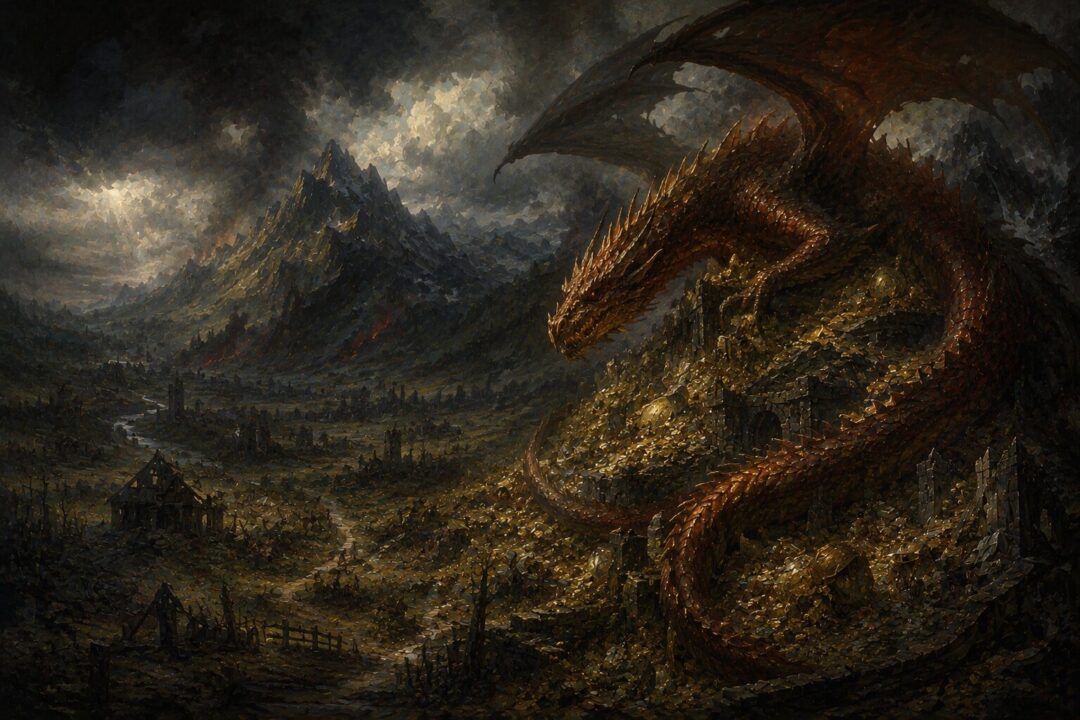
When readers first meet Smaug, the dragon lies upon a mountain of stolen gold beneath the Lonely Mountain. Treasure fills the halls, smoke curls from the ruined gates, and fear stretches for miles around Erebor. Yet one practical question often goes unasked: how did Smaug survive there for roughly sixty years?
The answer reveals far more than the appetite of a dragon. It exposes how completely Smaug reshaped an entire region. His hunger reached beyond livestock and wild game. It transformed thriving kingdoms into empty lands, turned trade routes into dangerous frontiers, and forced entire peoples into exile. Tolkien never provides a menu or a detailed account of the dragon's meals, but the primary texts provide enough evidence to build a careful picture of how Smaug sustained himself—and how his presence slowly consumed everything around him.
Smaug Did Not Live on Gold
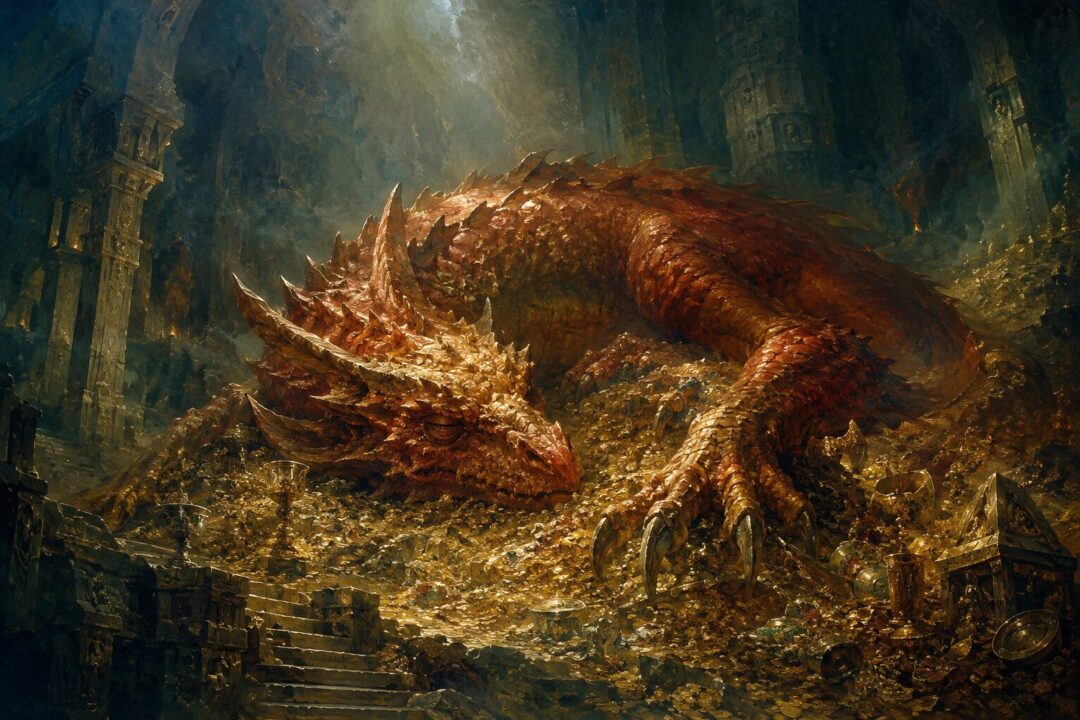
One misconception deserves clearing away immediately. Smaug slept upon treasure, admired treasure, and fiercely guarded treasure, but nothing in the texts suggests dragons eat gold or precious gems.
The immense hoard beneath Erebor served a different purpose. It represented wealth, conquest, and possession. Dragons in Tolkien's legendarium are defined by overwhelming greed rather than unusual diets.
Bilbo observes the dragon resting atop vast riches, yet Smaug awakens alert, intelligent, and physically powerful. His strength clearly comes from ordinary nourishment rather than magical consumption of treasure.
Gold fed his pride, not his body.
The First Feast Came With the Fall of Erebor
When Smaug descended upon the Lonely Mountain in the year 2770 of the Third Age, Erebor and nearby Dale were prosperous centers of trade.
The Kingdom under the Mountain housed thousands of Dwarves. Dale flourished outside its gates with a substantial human population. Warehouses, homes, markets, livestock, food stores, and trade goods filled the valley.
The attack itself almost certainly provided enormous quantities of food.
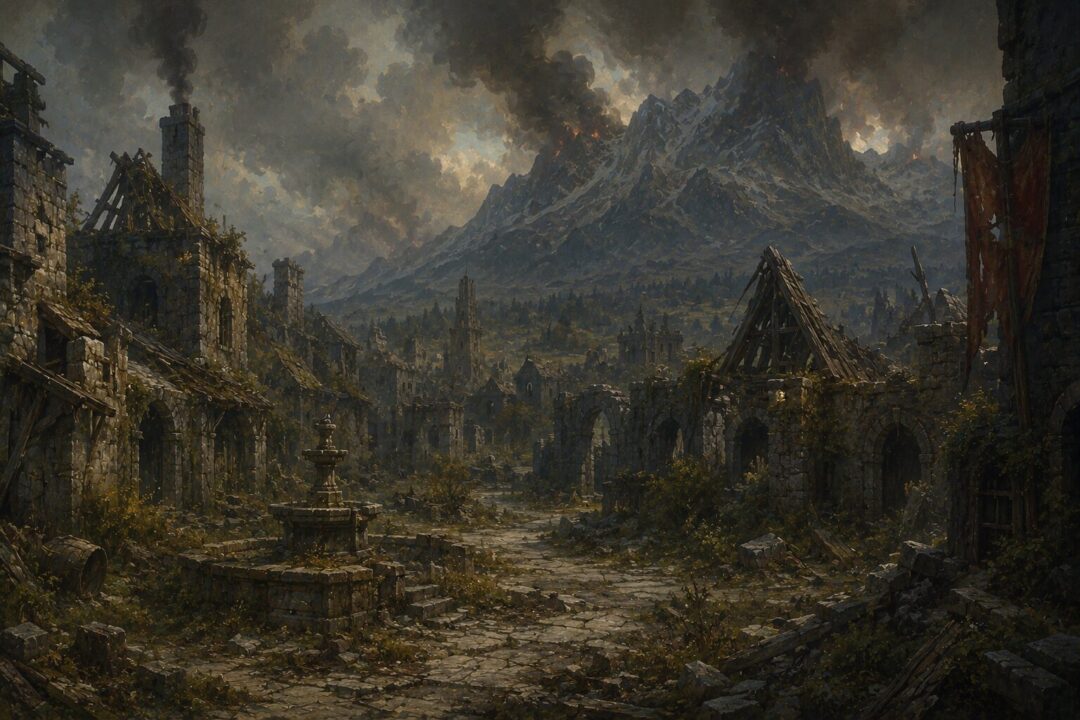
Although The Hobbit does not linger on gruesome details, it states plainly that many people perished during the destruction of Dale, while the surviving Dwarves and Men fled in every direction. Dragons elsewhere in Tolkien's writings are associated with devouring both animals and people, and Smaug's own words strongly imply that he has eaten humans before.
The immediate aftermath of the conquest therefore offered abundant food without requiring long journeys.
The Valley Could Support Hunting
Once Erebor had fallen silent, Smaug inherited far more than underground halls.
The Lonely Mountain stood in a fertile region surrounded by rivers, forests, grasslands, and foothills. Even after Dale was destroyed, wildlife would have remained abundant.
The nearby lands contained deer, wild boar, smaller mammals, birds, and fish. The River Running flowed south toward the Long Lake, supporting ecosystems that had existed long before either Dale or Erebor was founded.
Nothing suggests Smaug confined himself permanently inside the mountain.
Instead, the texts repeatedly imply that he flew abroad when necessary.
Livestock Became One of His Most Reliable Food Sources
The strongest direct evidence appears in The Hobbit itself.
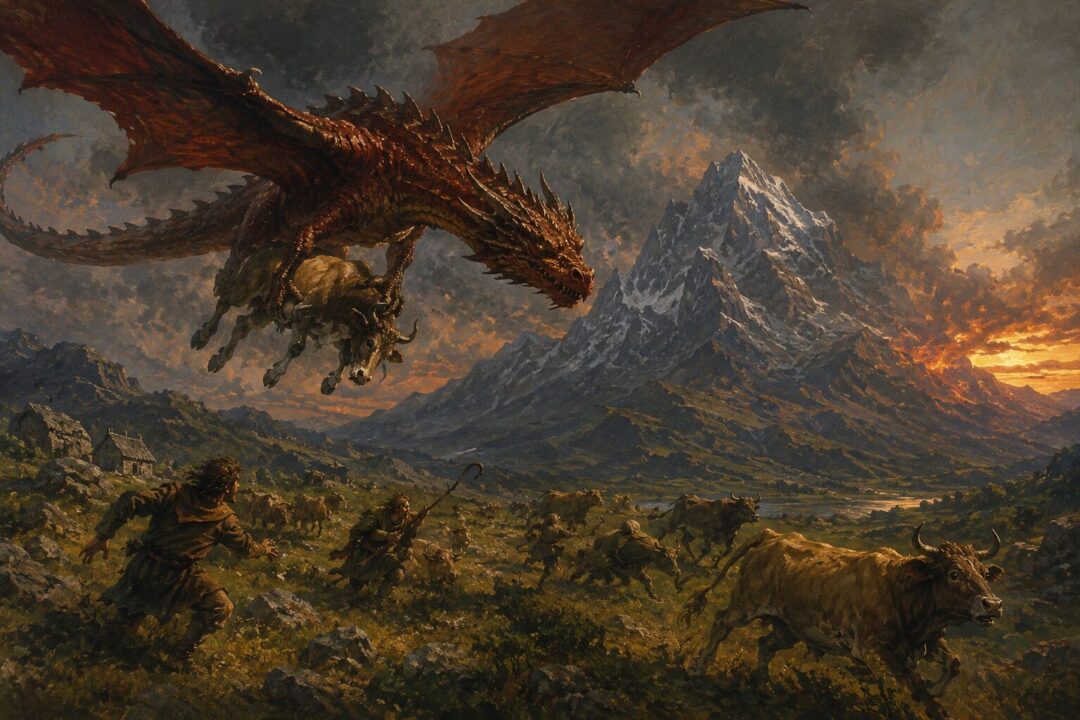
The people of Lake-town explain that the dragon often descended from the mountain to seize cattle and sheep from surrounding lands. This detail appears more than once, establishing livestock as a regular part of Smaug's diet.
This also explains why settlements survived despite living within reach of the dragon.
Smaug did not destroy every community every time he hunted. Like a predator feeding from territory under his domination, he could take animals periodically while allowing human populations to continue raising more.
Ironically, the continued survival of nearby settlements helped feed the dragon over the decades.
Why Didn't Smaug Destroy Lake-town Earlier?
At first glance, Lake-town seems an obvious target.
If Smaug hated Men, why leave an inhabited settlement untouched for decades?
The texts suggest several practical reasons without stating a single definitive explanation.
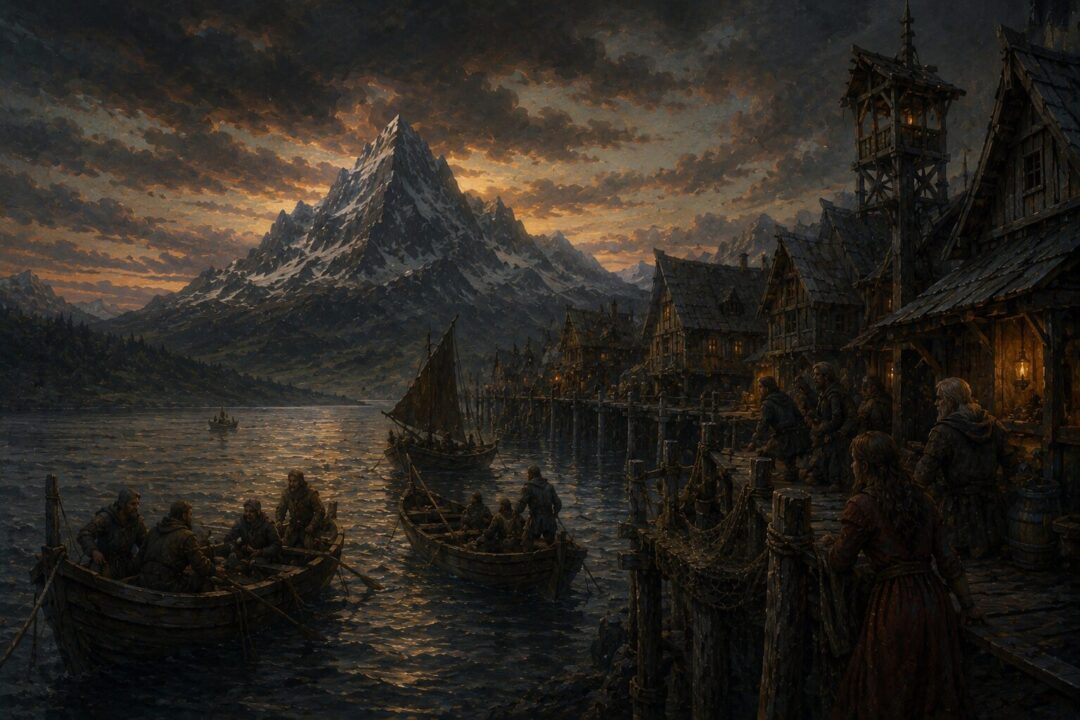
First, Lake-town stood on piles driven into the waters of the Long Lake. Although this offered no perfect defense against dragon-fire, it complicated direct assault compared to exposed settlements like Dale.
Second, the town apparently posed no military threat. Its people traded, fished, and survived while avoiding open conflict with the dragon.
Third, Smaug's overwhelming confidence likely contributed. He believed himself effectively invincible. A community that occasionally supplied livestock posed little danger to him.
Only after Bilbo's intrusion awakened both his suspicion and his rage did Smaug abandon this long-standing balance and attack Lake-town directly.
Wild Animals Alone Were Probably Not Enough
A creature of Smaug's immense size would have required substantial nourishment.
Tolkien never specifies how often dragons eat, making precise calculations impossible. It would therefore be speculation to assign daily or yearly food requirements.
Nevertheless, the surrounding wilderness by itself may not have supported such a predator indefinitely if he fed frequently.
This makes the combination of hunting and raiding particularly plausible.
Wild game supplemented domesticated animals, while occasional attacks on settlements ensured larger meals whenever Smaug desired them.
The pattern resembles an apex predator ruling a vast territory rather than remaining permanently hidden underground.
Smaug Could Range Across a Very Large Territory
Readers sometimes imagine Smaug rarely leaving Erebor.
The text paints a different picture.
His final flight to Lake-town demonstrates extraordinary speed and endurance. The distance between the Lonely Mountain and the Long Lake presents little obstacle to him.
Nothing prevents us from concluding that he hunted across similarly broad ranges during earlier decades.
Indeed, fear of the dragon extended throughout northern Wilderland. Such widespread terror makes sense only if Smaug occasionally appeared far beyond the mountain itself.
Communities never knew exactly when the dragon might descend from the sky.
Fear Became One of Smaug's Greatest Weapons
The dragon did not need to eat constantly if fear accomplished much of his work.
People abandoned farms.
Trade diminished.
Settlements shrank or disappeared.
Travel became dangerous.
The lands surrounding Erebor gradually lost much of the population that had once supported flourishing commerce.
This had an interesting consequence.
Although fewer people meant fewer immediate opportunities for plunder, it also meant fewer organized efforts to challenge Smaug. His reputation became a protective barrier stronger than walls.
Entire generations grew up accepting that the Lonely Mountain belonged to the dragon.
The Dragon Slowly Consumed an Economy
Smaug's appetite affected far more than individual victims.
Before his arrival, Erebor stood at the center of an interconnected regional economy.
The Dwarves produced renowned craftsmanship.
The Men of Dale prospered through trade.
Lake-town benefited from commerce flowing along the River Running.
After the dragon's conquest, this entire system collapsed.
Trade routes shifted.
Craft production disappeared.
Population declined.
Agriculture contracted.
Livestock became vulnerable to repeated raids.
Smaug therefore consumed wealth in two different ways.
He physically stole treasure while indirectly destroying the economic engine that had produced prosperity in the first place.
This broader destruction helps explain why Thorin's quest mattered so deeply. Recovering the mountain was not merely about reclaiming gold but about restoring an entire region that had remained stunted under the dragon's shadow.
Did Smaug Eat People During Those Sixty Years?
The evidence points toward yes, but careful wording matters.
Smaug openly boasts of devastating towns and destroying warriors. Dragons elsewhere in Tolkien's writings unquestionably consume people, and Smaug's reputation inspired terror among every nearby population.
However, Tolkien never supplies a detailed record of every human victim over the six decades between the fall of Erebor and the events of The Hobbit.
It is therefore safest to conclude that the texts strongly imply human victims occurred during attacks while stopping short of claiming a documented pattern or frequency.
The dragon was certainly willing to kill people.
That he sometimes ate them is entirely consistent with the evidence, though the surviving narrative focuses more on the destruction than on graphic description.
Long Sleep Reduced His Need to Hunt Constantly
One overlooked feature of Smaug's life is how much time he appears to spend asleep.
Bilbo finds him in an extended slumber upon the treasure. The dragon can remain dormant for long periods before waking with astonishing alertness.
Tolkien never explains whether dragons require less food during these inactive periods, but the pattern naturally reduces the number of hunts required compared with an equally massive creature that remained active every day.
This remains an inference rather than an explicit biological rule.
The texts describe the behavior, not the underlying physiology.
Smaug's Greatest Appetite Was Possession
By the time Bilbo enters the mountain, Smaug has accumulated more than food or treasure.
He has accumulated ownership.
The dragon speaks as though every object in Erebor belongs to him. Even the smallest missing cup immediately alarms him because possession, not utility, defines his thinking.
This mirrors one of the recurring themes of The Hobbit: greed can become an appetite that never reaches satisfaction.
Smaug did not simply eat enough to survive.
He dominated landscapes, ruined kingdoms, scattered peoples, and claimed wealth he could never meaningfully use.
His physical hunger explains how he lived for sixty years.
His spiritual hunger explains why so much of the North remained broken until his fall.
In the end, the answer to what Smaug ate is surprisingly grounded. The dragon almost certainly survived on a combination of livestock, wild animals, and at least some human victims during attacks, while ranging across the lands surrounding the Lonely Mountain whenever necessary. The treasure beneath him was never his food—it was the visible symbol of a far deeper hunger. That hunger reshaped northern Middle-earth long before Bard's arrow finally ended the dragon's reign.
Sources & Notes
- J.R.R. Tolkien, The Hobbit, Chapter 12, Inside Information. https://tolkiengateway.net/wiki/Inside_Information
- Tolkien Gateway character overview for Smaug. https://tolkiengateway.net/wiki/Smaug
- Tolkien Gateway overview of Erebor and the dragon's occupation. https://tolkiengateway.net/wiki/Erebor
Sources added.