Why Don't Elves Have More Children in Middle-earth?
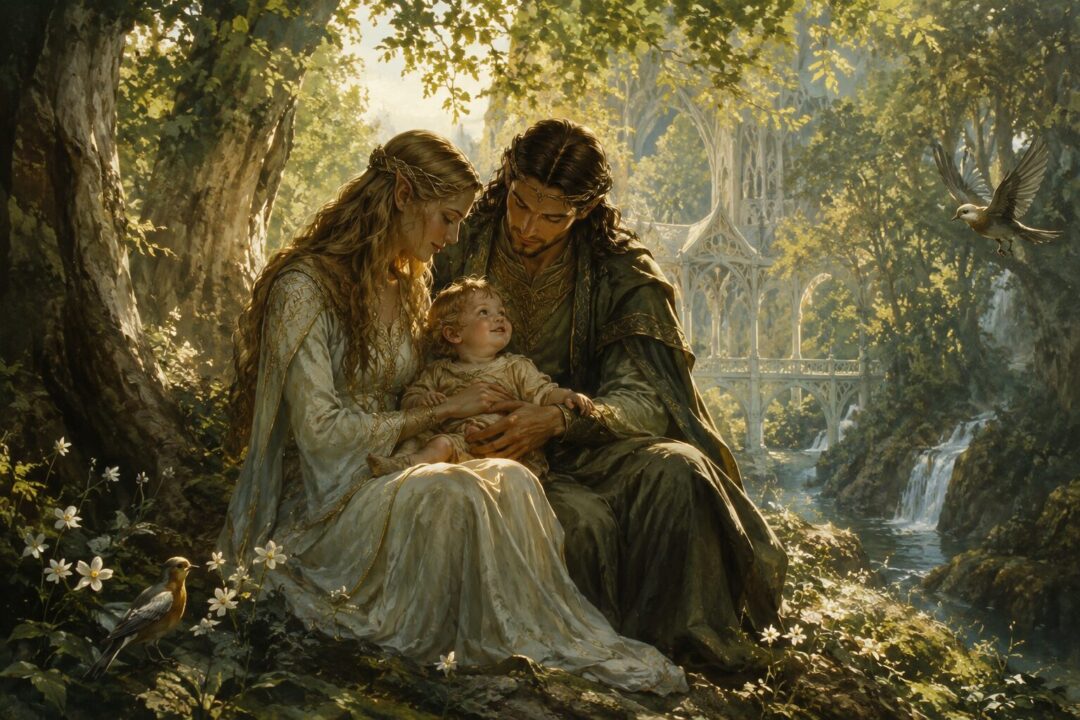
When readers first encounter Rivendell or Lothlórien, one detail quietly stands out. The Elves appear ancient, wise, and numerous enough to shape the history of the world—yet very few children are ever seen. Entire generations of Men rise and fall while familiar Elves remain unchanged, and despite their immense lifespans, most Elven families seem remarkably small.
At first glance, this feels like a paradox. If Elves are immortal within the life of Arda, why are they not countless by the end of the Third Age?
The answer lies not in biology, but in the unique nature of Elvish life. Tolkien's writings consistently present the Eldar as a people whose marriages, children, and family life are governed by profound spiritual, emotional, and historical realities. Their apparent low birth rate is not the result of infertility or an unexplained limitation. Instead, it reflects how immortal beings experience love, time, and the growing weariness of the world itself.
Elvish Marriage Was Intended to Last Forever
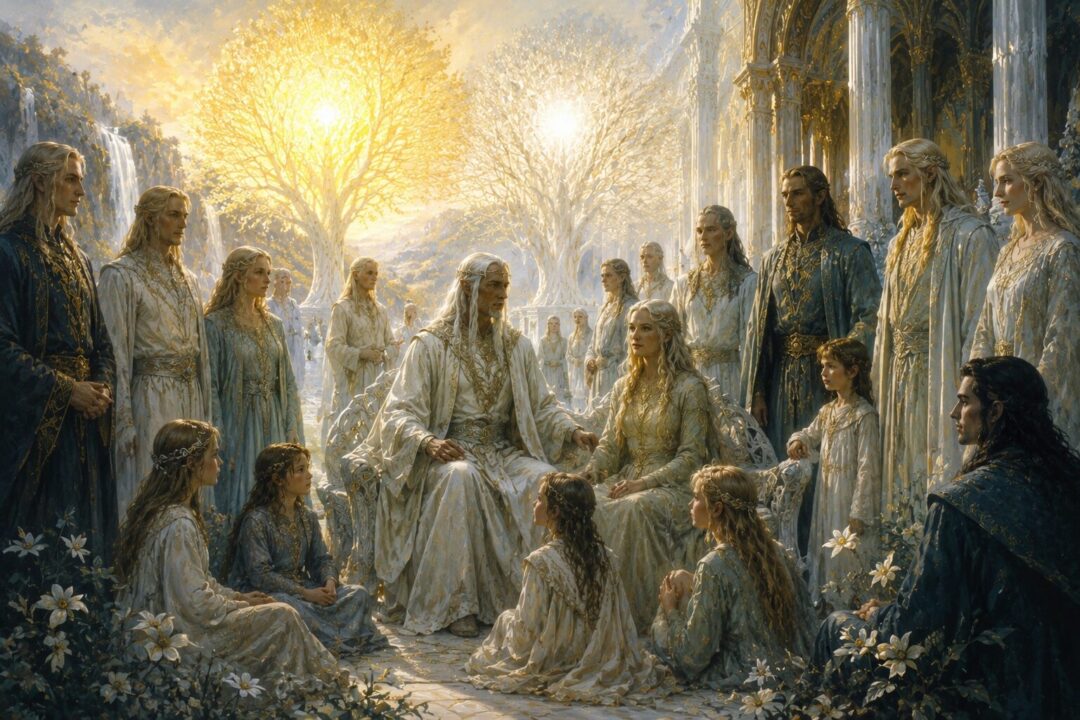
One of the most important differences between Elves and Men is that Elvish marriage is permanent.
According to Tolkien's writings, an Elf normally marries only once in life. Marriage is entered into freely and from genuine love, and it is intended to endure for as long as Arda itself exists. Unlike Men, whose lives are brief, Elves never expect to outlive their spouses through natural aging.
This permanence naturally slows population growth. There is no continual cycle of generations replacing one another. Instead, families remain stable for thousands of years.
Because marriage is such a profound union, Elves also do not rush into it. They may wait many years before choosing a spouse, and once married they generally remain together without the expectation of producing large families.
The result is a society built on permanence rather than expansion.
Children Required More Than Physical Parenthood
Perhaps the most distinctive explanation comes from Tolkien's discussion of Elvish conception and parenthood.
He explains that bringing children into the world required not only physical union but also the deliberate investment of the parents' spiritual strength. In particular, the mother gave of her own being in bearing and nurturing children, while both parents shared in the creative act in a way that reflected their fëar—their spirits.
This means that having children represented a genuine expenditure of personal vitality.
The texts do not suggest that Elves became physically incapable of further children after one or two births. Instead, they indicate that each child demanded such deep personal commitment that parents naturally limited the size of their families.
This helps explain why even great royal houses often consisted of only a handful of children despite existing across thousands of years.
Most Elven Families Were Surprisingly Small
Across the legends, large Elven families are unusual rather than typical.
Many prominent Elves have only one known child. Others have two, three, or four. Even among the descendants of Finwë—one of the largest royal families recorded—the numbers remain modest considering the immense span of time involved.
There are exceptions. Finwë himself had children by two wives, an extraordinary circumstance created by the death of Míriel and her unprecedented refusal to return from the Halls of Mandos. Fëanor fathered seven sons, making his household one of the largest in all Elvish history.
Yet Fëanor's family is presented as exceptional, not ordinary.
Most Elven households remained comparatively small throughout every Age.
Early Joy Was the Best Time for Raising Children
Tolkien also notes an important pattern in Elvish life.
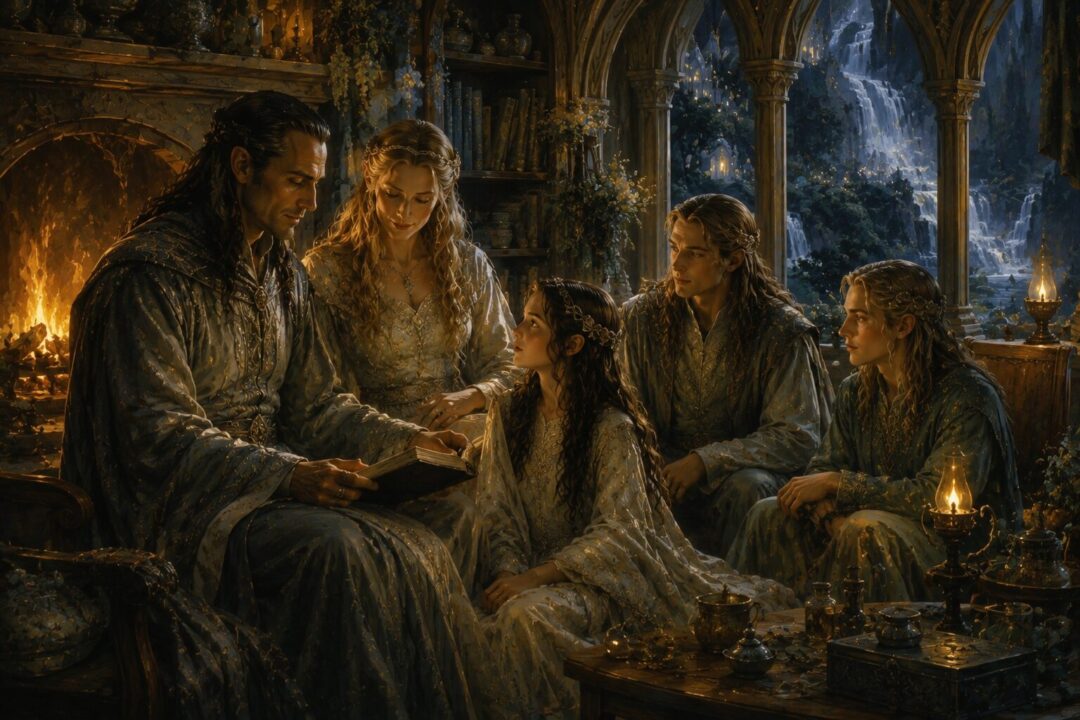
Children were generally born during the early, happiest years of marriage.
As centuries passed, the interests of Elves gradually shifted. They devoted themselves increasingly to learning, craftsmanship, memory, governance, language, healing, or the preservation of beauty. Their minds expanded into pursuits that reflected their long experience.
This does not mean parents loved their older children less. Rather, the desire to begin entirely new families naturally faded with time.
For immortal beings, there was no urgency to continue producing descendants across thousands of years.
Instead, families reached a point of completion.
Immortality Changed the Meaning of Generations
For Men, every generation eventually replaces the previous one.
Among Elves, this almost never happens.
Parents remain alive beside their children. Grandparents remain alive beside grandchildren. Entire family lines continue simultaneously for thousands of years.
The result is a society where generations accumulate instead of succeeding one another.
If Elves produced children at rates similar to Men while never dying naturally, their population would increase enormously over time. Tolkien never describes such explosive growth. Instead, Elvish customs themselves appear balanced toward stability.
Their society resembles an ancient forest rather than a rapidly growing kingdom.
New branches appear slowly while the old ones endure.
The Long Wars Took an Enormous Toll
Although Elves are immortal, they are not invulnerable.
The history of Middle-earth is filled with devastating wars.
The great battles of the First Age alone claimed countless Elves through combat, including many of the greatest princes and warriors of the Noldor and Sindar. Entire realms such as Gondolin, Doriath, and Nargothrond fell.
Later Ages brought further losses through the War of the Last Alliance and many lesser conflicts.
An Elf whose body is slain does not simply disappear. The spirit goes to the Halls of Mandos, where it may eventually be rehoused if permitted. However, this does not immediately restore population within Middle-earth itself.
Some spirits refuse to return. Others remain long in Mandos. The texts never suggest that every slain Elf quickly resumes ordinary life.
Thus, warfare significantly reduced the visible Elvish population over time.
Many Elves Eventually Left Middle-earth
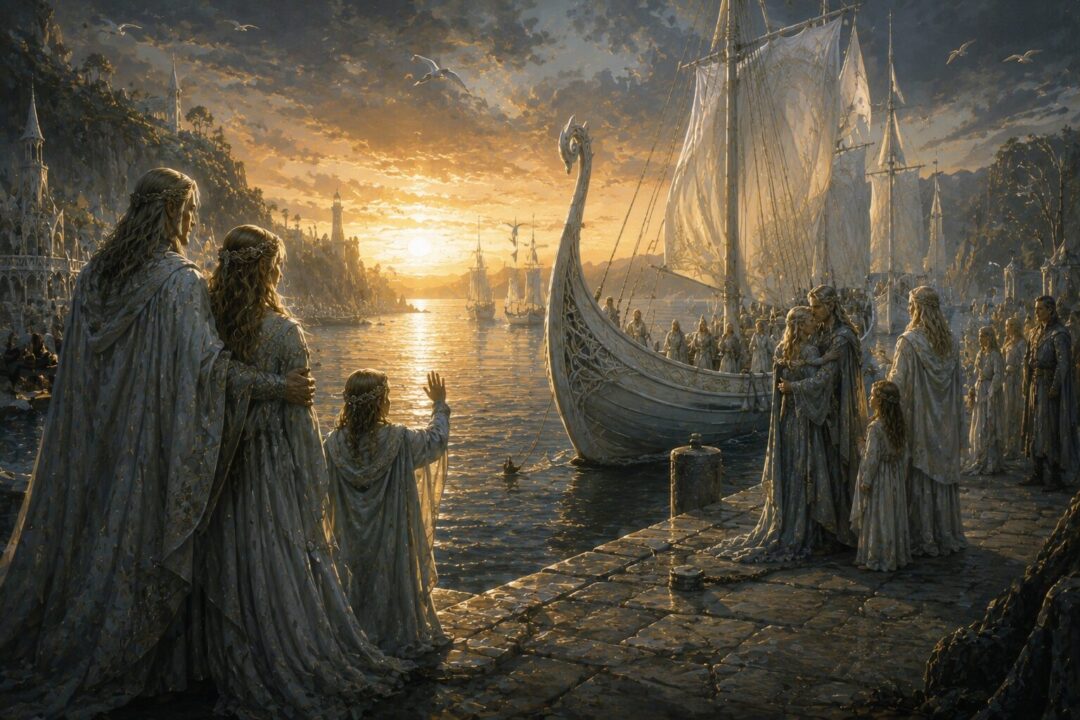
Another major reason the Elves appear fewer is that many departed altogether.
Throughout the Third Age, increasing numbers sailed west across the Sea to Aman.
This migration accelerated after the destruction of the One Ring because the power sustaining the Three Rings faded, making it increasingly difficult to preserve the beauty and memory of Elvish realms in Middle-earth.
Importantly, these departures were not deaths.
The Elves simply ceased to live in the lands where the stories primarily take place.
To observers remaining in Middle-earth, however, the effect was the same: Elven populations steadily diminished.
The Weariness of Arda Affected Elven Life
One of the deepest themes in Tolkien's mythology is that Elves are bound to the world.
As Arda ages, they experience its gradual fading more intensely than Men.
The texts repeatedly describe the increasing burden of memory, sorrow, and loss carried by the Eldar. They remember ancient kingdoms, fallen friends, vanished forests, and forgotten languages across millennia.
This growing weariness does not mean Elves stop loving life.
Instead, it gradually changes the focus of that life.
Rather than looking toward endless future generations, many increasingly become guardians of memory, preserving what remains beautiful before the inevitable passing of each Age.
In that emotional landscape, raising many new children no longer appears central to their existence.
Even the Greatest Houses Eventually Grew Quiet
The history of famous Elven families reflects this pattern.
The House of Finwë dominates much of the First Age through numerous princes and princesses, yet later generations become noticeably smaller.
Galadriel is known to have one daughter, Celebrían.
Celebrían and Elrond have three children: Elladan, Elrohir, and Arwen.
Legolas is never described as marrying or having children in Tolkien's writings.
Many other important Elves likewise have no recorded descendants at all.
These examples should not necessarily be interpreted as proof that no additional children ever existed; Tolkien often leaves genealogies incomplete. Nevertheless, the surviving records consistently portray relatively small families rather than large dynasties.
The Small Number of Elven Children Reinforces a Central Theme
Ultimately, the rarity of Elven children serves more than a demographic purpose.
It reinforces one of the central emotional truths of Middle-earth.
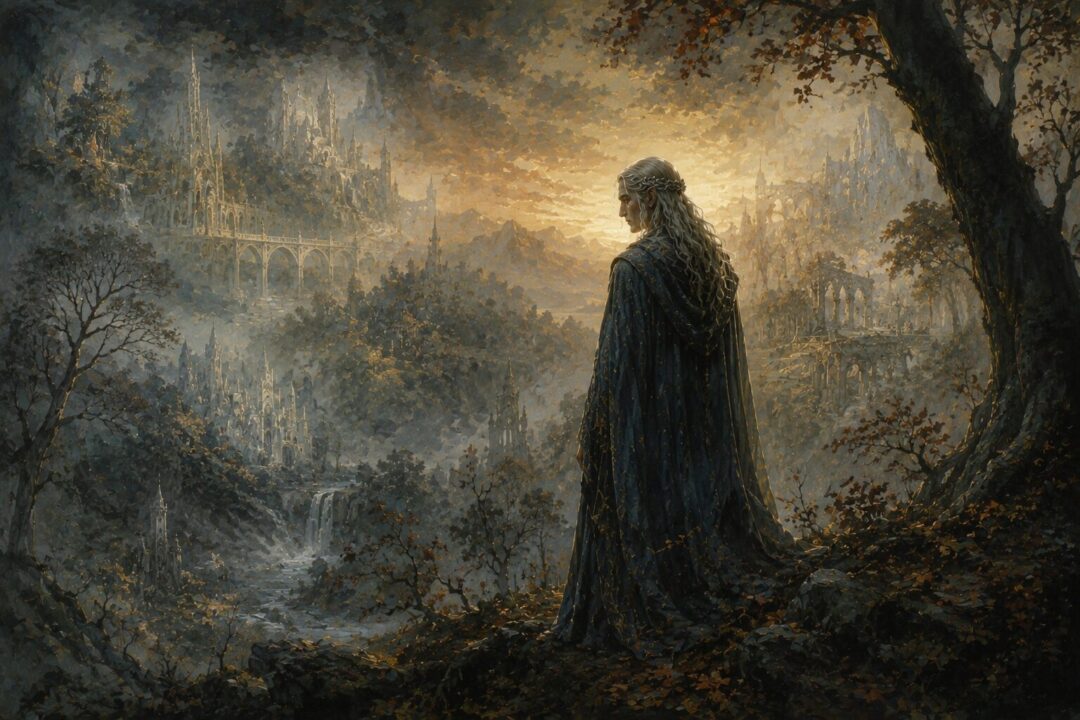
The Elves are not a civilization expanding toward the future. They are an ancient people preserving what remains of an older world.
Every child represents an extraordinary gift rather than an expected stage of life. Every family carries immense continuity across thousands of years. Every departure to the West leaves Middle-earth a little quieter than before.
By the end of the Third Age, readers are witnessing not the rise of Elven civilization but its gradual withdrawal.
That is why the halls of Rivendell feel peaceful instead of bustling, and why the woods of Lothlórien seem timeless rather than crowded.
The apparent absence of children is not an oversight. It reflects the deeper nature of immortal beings whose greatest treasures are memory, permanence, and enduring love rather than continual growth. Their story is one of preservation in a fading world, where each generation is precious precisely because it comes so rarely.
Sources & Notes
- Tolkien Gateway overview of the Elves. https://tolkiengateway.net/wiki/Elves
- Tolkien Gateway overview of Elven life cycle and immortality. https://tolkiengateway.net/wiki/Elven_life_cycle
- Tolkien Gateway overview of Laws and Customs among the Eldar. https://tolkiengateway.net/wiki/Laws_and_Customs_among_the_Eldar
Sources added.