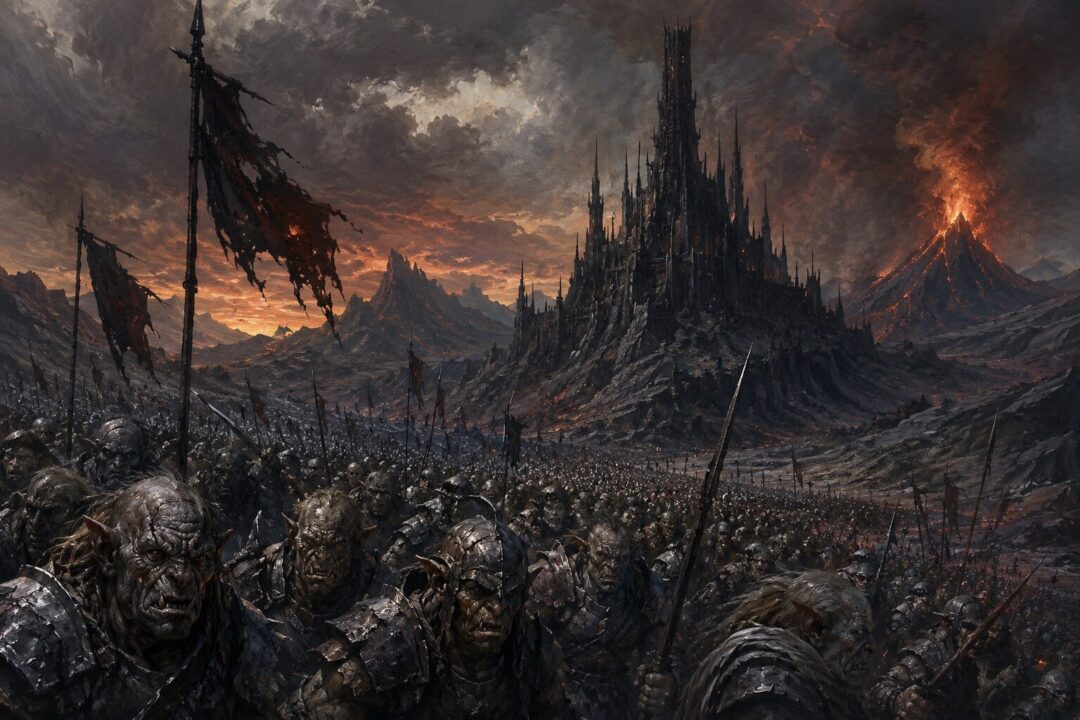
The Dark Tower seems to promise certainty. From its heights came commands that shook kingdoms, moved armies, and filled the lands of Middle-earth with fear. It is easy to imagine that the countless Orcs of Mordor followed Sauron with fanatical devotion. Yet the legendarium presents something far stranger—and far more tragic.
The Orcs did not necessarily love the Dark Lord they served. In fact, the deepest lore suggests the opposite. They feared him, depended upon him, and marched beneath his banners, but hatred simmered beneath that obedience. Their service reveals one of the darkest truths in Middle-earth: tyranny does not require loyalty. Fear, domination, and corruption can be enough.
The Legacy They Never Chose
To understand the relationship between Orcs and Sauron, it helps to begin before Sauron's rise.
The published Silmarillion presents the wise belief that Orcs descended from Elves who had been captured and corrupted by Morgoth. Other late writings explore different possibilities for their origin, and Tolkien never settled on one final explanation. Whatever their precise beginning, the texts consistently portray Orcs not as beings freely created by evil, but as creatures twisted and enslaved by it.
That distinction matters.
If evil cannot truly create life but only corrupt what already exists, then Orcs inherit a profound tragedy. Their existence is rooted in domination rather than freedom. They are shaped by violence before they ever become instruments of it.
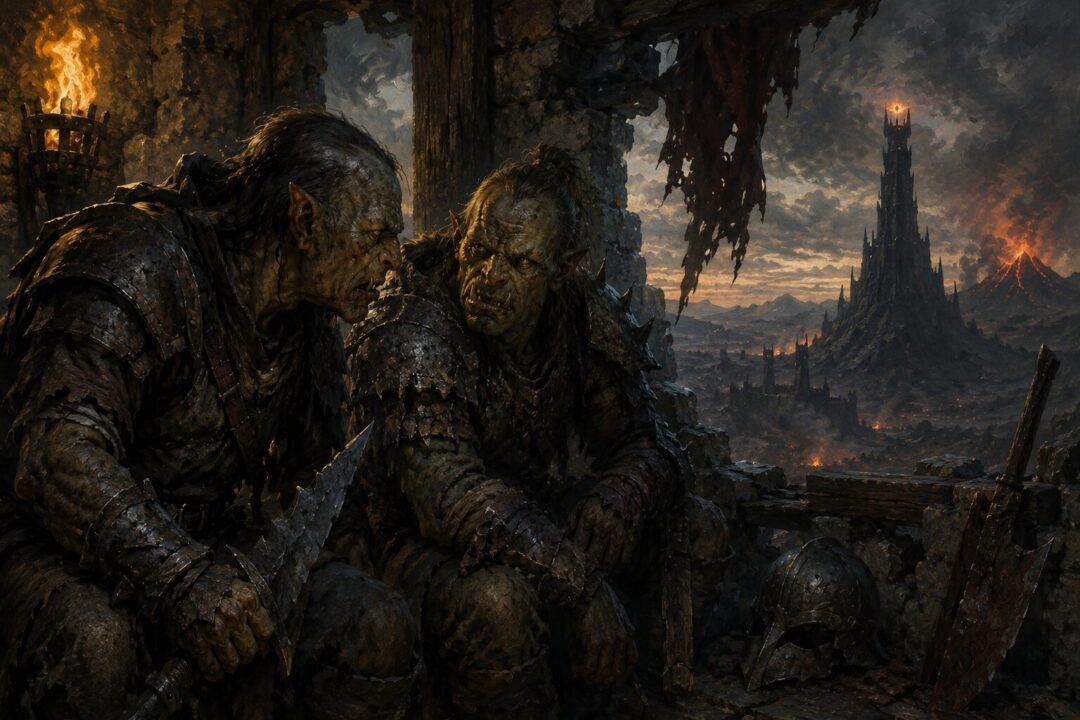
One remarkable passage in The Silmarillion states that "deep in their dark hearts the Orcs loathed the Master whom they served in fear, the maker only of their misery." Although the passage refers to Morgoth, it establishes a pattern that extends naturally into the later ages, when Sauron inherits Morgoth's dominion over many Orcs.
Their first experience of authority was not protection or justice. It was endless suffering.
Sauron Inherited More Than an Army
When Morgoth was overthrown at the end of the First Age, Sauron did not simply gather scattered soldiers.
He inherited a culture built upon terror.
Unlike loyal kingdoms, Orc society was never held together by mutual trust or shared ideals. Rank depended on strength. Failure often meant death. Captains bullied weaker Orcs, while stronger chiefs constantly competed for advantage.
This pattern appears repeatedly in The Lord of the Rings. Orc companies argue with one another, threaten each other, and even kill rivals when discipline weakens. The quarrels between the Orcs of Mordor and those of Isengard after the capture of Merry and Pippin reveal that they possess ambitions, grudges, and conflicting loyalties rather than functioning as mindless extensions of a single will.
Sauron's rule sat above this unstable society like the weight of a mountain.
He did not erase their hatred.
He controlled it.
Fear Was Stronger Than Loyalty
One of the greatest misconceptions about Sauron's servants is that they admired him.
The books rarely support this.
The Nazgûl obey him absolutely because their Rings have enslaved them. Many Men serve him through fear, deception, ancient allegiance, or promises of power. Trolls are bred and directed for war.
The Orcs, however, are repeatedly shown complaining about commanders, longing for easier lives, and resenting constant warfare.
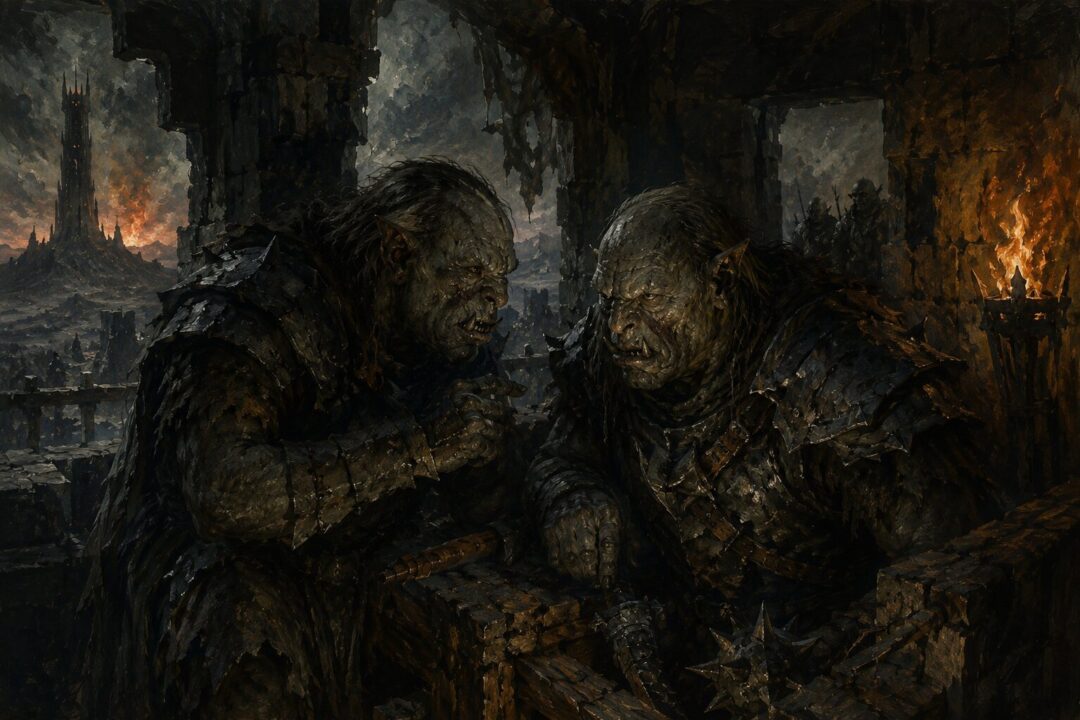
Perhaps the clearest example comes from the conversation between Gorbag and Shagrat in The Two Towers. Away from higher authority, the two captains imagine escaping the endless commands of "the Big Bosses." They dream of taking a few trusted companions and living independently where they could loot without answering to anyone.
Their fantasy is revealing.
They do not imagine building a better society.
They imagine freedom from masters.
This does not make them noble. They remain cruel and violent. Yet their conversation demonstrates that they are not enthusiastic servants devoted to Sauron's vision. Even while carrying out his war, they privately wish to escape it.
Sauron's Power Was More Than Military
If the Orcs hated serving, why did they continue?
The answer lies partly in Sauron's overwhelming personal power.
Unlike an ordinary king, Sauron was a Maia—a mighty spiritual being whose will dominated weaker minds. Throughout the legendarium, his greatest strength is not brute force but domination.
The One Ring itself was created as an instrument of mastery over other wills. Even after losing the Ring, Sauron remained capable of exercising immense authority over those already within his power.
The texts do not describe every Orc as magically mind-controlled at every moment. Indeed, their arguments and rivalries show considerable independence. Yet when Sauron's will is fully directed toward war, vast hosts move with terrifying coordination. His presence imposes order upon creatures naturally inclined toward violence and disorder.
When that controlling will disappears after the destruction of the Ring, the armies of Mordor collapse into confusion and panic almost immediately.
That collapse suggests how much of their unity depended upon Sauron's domination rather than genuine allegiance.
Cruelty Flowed Downward
Another reason Orcs continued serving was simple survival.
Life under Sauron appears brutally hierarchical.
Captains threatened common soldiers.
Greater chiefs intimidated lesser ones.
Failure brought punishment.
Success often meant only temporary security before the next campaign.
The conversations between Orcs throughout The Lord of the Rings consistently suggest a world where everyone fears someone stronger.
This mirrors Sauron's own philosophy.
His understanding of order depends upon absolute control. Every servant exists to advance the designs of someone higher in the chain. Mercy has no place within that system.
For ordinary Orcs, rebellion would rarely have offered hope.
It would almost certainly have meant death.
They Were Not Mindless Beasts
Modern readers sometimes assume Orcs function like fantasy zombies or magically programmed soldiers.
The books paint a far more complicated picture.
They joke.
They complain.
They boast.
They feel fear.
They hold grudges.
They negotiate.
They quarrel constantly.
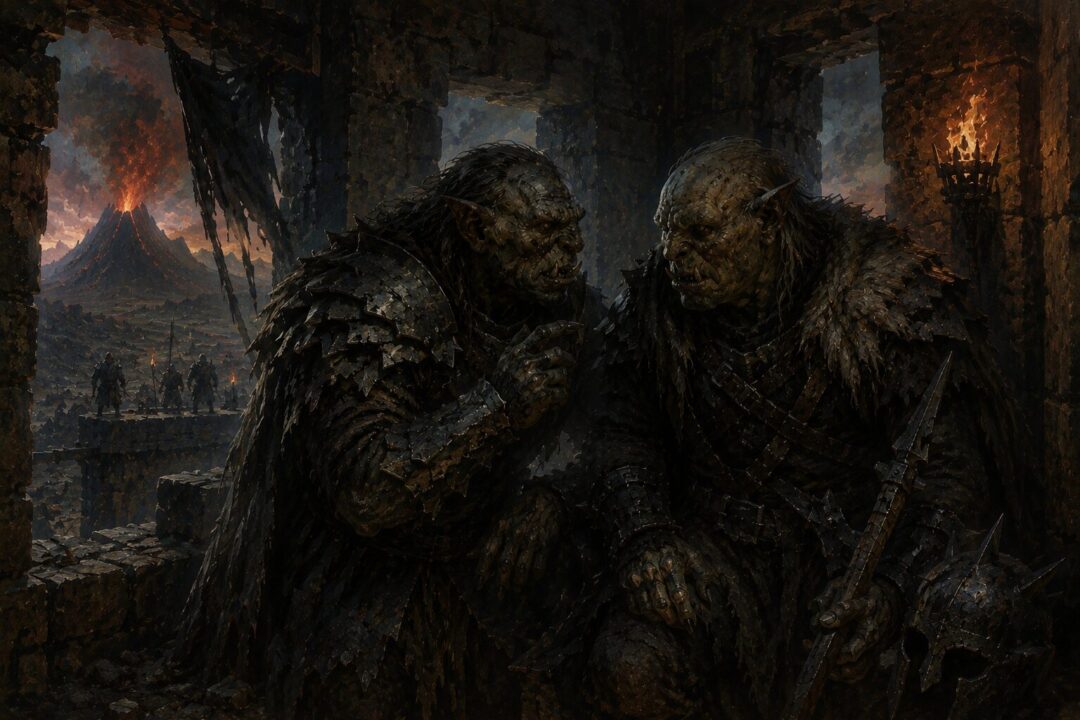
Their conversations reveal personalities, however cruel those personalities may be. They display recognizable motives: greed, resentment, ambition, and self-preservation.
This individuality actually strengthens the tragedy of their condition.
Because they possess wills of their own, domination becomes meaningful. If they were merely automatons, tyranny would be less horrifying.
Instead, the texts portray rational beings whose choices have been profoundly corrupted and whose society rewards the worst impulses while crushing trust and compassion.
Why Didn't They Simply Rebel?
A natural question follows.
If Orcs hated their masters, why did they never overthrow Sauron?
In practice, the obstacles were enormous.
First, Sauron himself was unimaginably powerful. Challenging him directly would have been impossible for ordinary Orcs.
Second, the Orcs were deeply divided among themselves. Rival tribes from Mordor, the Misty Mountains, Isengard, and elsewhere frequently distrusted one another. Their internal conflicts made unified rebellion unlikely.
Third, fear reinforced every level of command. Individual leaders might be replaced, but the structure of domination remained intact.
The books contain examples of Orcs serving different masters or acting independently in isolated regions, yet no successful uprising against Sauron's rule emerges during the War of the Ring.
The texts therefore support the picture of scattered resentment without effective resistance.
Sauron Used Their Weaknesses
Sauron's genius as a tyrant lay in understanding corruption.
He rarely depended upon affection.
Instead, he exploited existing desires.
Among Men, he offered power, wealth, revenge, or false promises.
Among Orcs, he ruled beings already accustomed to violence and suspicion. Rather than transforming them into willing believers, he directed qualities already present within their damaged society.
Their aggression became military strength.
Their fear became obedience.
Their rivalries prevented collective resistance.
The result was an army that could conquer kingdoms while remaining miserable itself.
The End of the Dark Lord
When the One Ring was destroyed, Sauron's spirit lost the power to dominate Middle-earth.
The effect upon his armies was immediate.
The captains lost heart.
The great hosts faltered.
Many fled.
Others were left leaderless.
This ending reinforces an important truth.
Sauron's empire had not been sustained by love, shared purpose, or genuine loyalty. It depended upon the continuous pressure of his personal will.
Once that will vanished, the structure collapsed with astonishing speed.
The Orcs had been held together, not united.
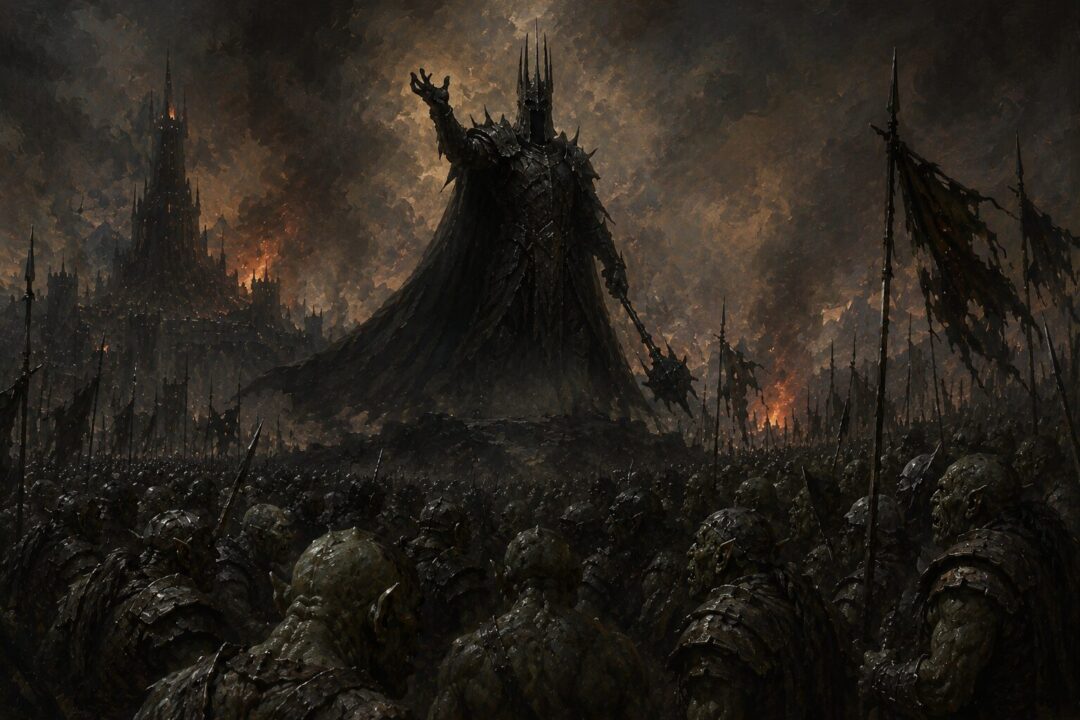
A Tragedy Hidden Beneath the Enemy
It is easy to view Orcs only as enemies encountered in battle, and within the narrative they unquestionably commit terrible deeds. Yet the deeper lore refuses to reduce them to simple monsters marching happily behind their master.
The texts instead reveal something darker.
Their hatred of Morgoth, explicitly stated in The Silmarillion, casts a long shadow over their later service under Sauron. They become creatures trapped inside a system of domination that they neither created nor escaped. Their conversations in The Lord of the Rings expose resentment toward commanders and dreams—however selfish—of life beyond endless orders.
None of this excuses their cruelty.
But it explains why Sauron's armies could be immense without being loyal.
The Dark Lord ruled because he inspired terror, not affection. His empire was built upon fear so complete that even those who despised him continued carrying his banners. That is perhaps the most chilling lesson of all: evil often survives not because it is loved, but because it convinces its servants that there is no alternative.
Sources & Notes
- Tolkien Gateway overview of Orcs, including their coerced service and hatred of masters. https://tolkiengateway.net/wiki/Orcs
- Tolkien Gateway overview of Sauron as the tyrant whom Orcs served in the Third Age. https://tolkiengateway.net/wiki/Sauron
- Tolkien Gateway entry for Shagrat, one of the Mordor Orc captains whose quarrels reveal Orcish resentment and fear. https://tolkiengateway.net/wiki/Shagrat
Sources selected to support the Tolkien textual/lore context discussed in this article.