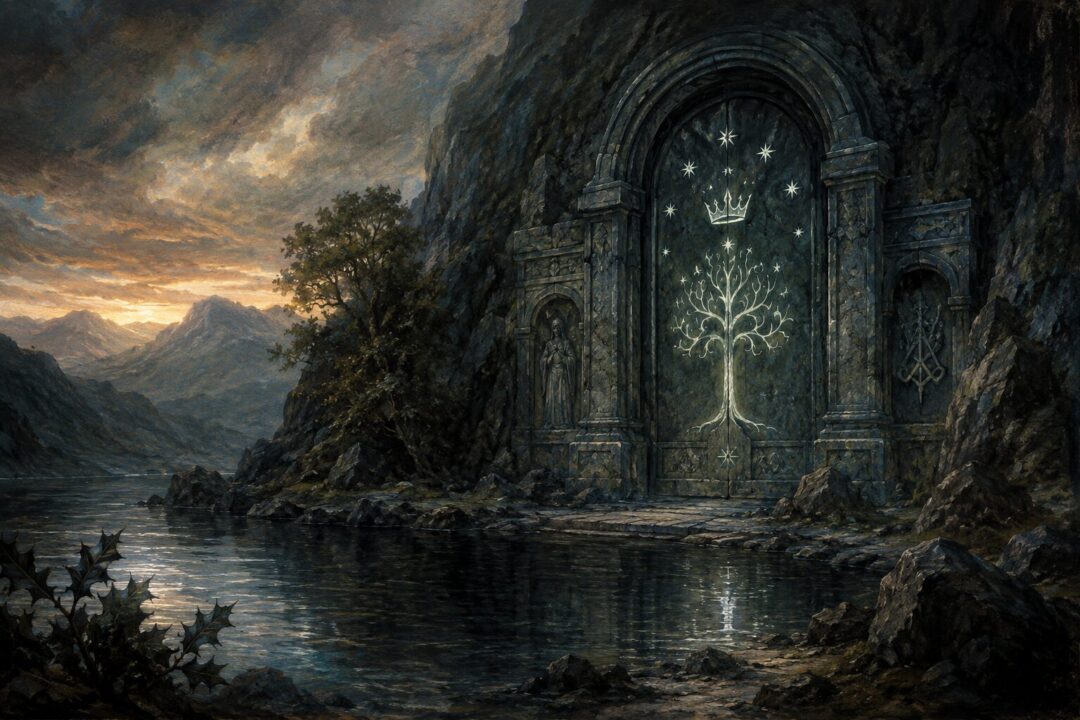
The Fellowship entered Moria because the mountain offered the only road left open to them. Snow had defeated them on Caradhras, enemies watched the roads, and the ancient Dwarf-city promised at least a path beneath the mountains. Yet by the time they crossed the Doors of Durin, the greatest danger was no longer the darkness ahead—it was the story already written into every empty hall.
Moria is often remembered as the place where Gandalf confronted Durin's Bane and fell into the abyss. But the battle on the Bridge of Khazad-dûm was only the final chapter of a much older tragedy. Long before swords were drawn or the Balrog emerged in shadow and flame, Moria had become a warning. Its silence, abandoned wealth, broken ambitions, and repeated failures all carried lessons that the peoples of Middle-earth either recognized—or ignored.
The true significance of Moria is not simply that it became a battlefield. It is that nearly everyone who encountered it first received a warning.
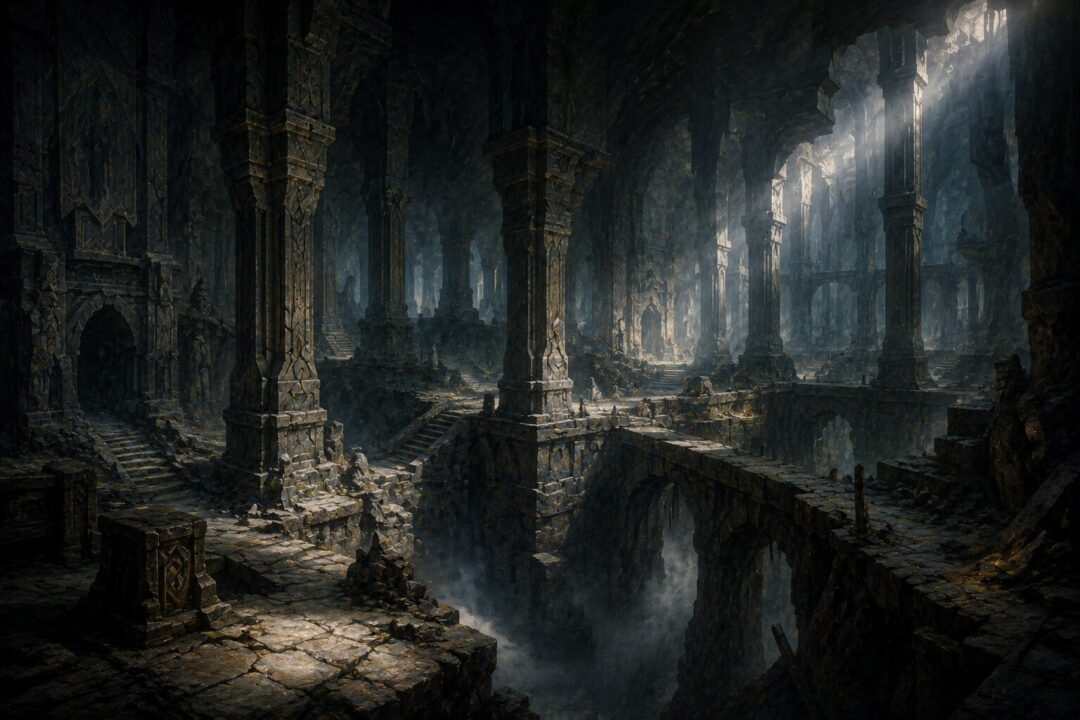
The Greatest Dwarven Kingdom Became an Empty Monument
Khazad-dûm had once been the greatest city of Durin's Folk. Its prosperity rested on remarkable craftsmanship, deep friendship with the Elves of Eregion, and above all the discovery of mithril. The city became famous not because it conquered kingdoms, but because it produced unmatched works of stone and metal while controlling one of the rarest resources in Middle-earth.
For centuries the kingdom flourished.
Yet its eventual ruin was not sudden. By the Third Age, the richest and easiest veins of mithril had been exhausted. The surviving deposits lay ever deeper beneath the mountains. The Dwarves continued their search until they disturbed the ancient Balrog later known as Durin's Bane, a spirit that had hidden beneath the roots of the Misty Mountains since the end of the First Age. The creature slew King Durin VI and, soon afterward, his son Náin I. The kingdom could no longer be held, and its people abandoned their ancestral home.
The famous observation that the Dwarves "delved too greedily and too deep" comes from Gandalf's explanation of these events. The texts connect the awakening of the Balrog directly to the relentless search for mithril, though they do not reduce the entire civilization to simple greed. Khazad-dûm had been a place of extraordinary achievement for thousands of years before its final catastrophe.
Its fall transformed the greatest Dwarven city into the greatest warning they possessed.
A Kingdom Lost Is Different From a Kingdom Forgotten
One of Moria's most haunting qualities is that nobody forgot it.
The Dwarves continued to speak of Khazad-dûm with longing. Songs preserved its glory. Its kings still traced their authority back to Durin. Every generation inherited not only memories of greatness but also the hope that one day the halls might be reclaimed.
That hope repeatedly collided with reality.
The ruins remained physically present beneath the mountains, yet spiritually unreachable. Moria represented the painful difference between remembering a homeland and possessing it. Every survivor understood what had been lost, but memory alone could not overcome the power that now occupied the depths.
This tension made Moria more dangerous than an ordinary ruin. It tempted the living to believe the past could simply be restored.
Dáin Ironfoot Understood the Real Warning
Perhaps no one grasped Moria's meaning better than Dáin Ironfoot.
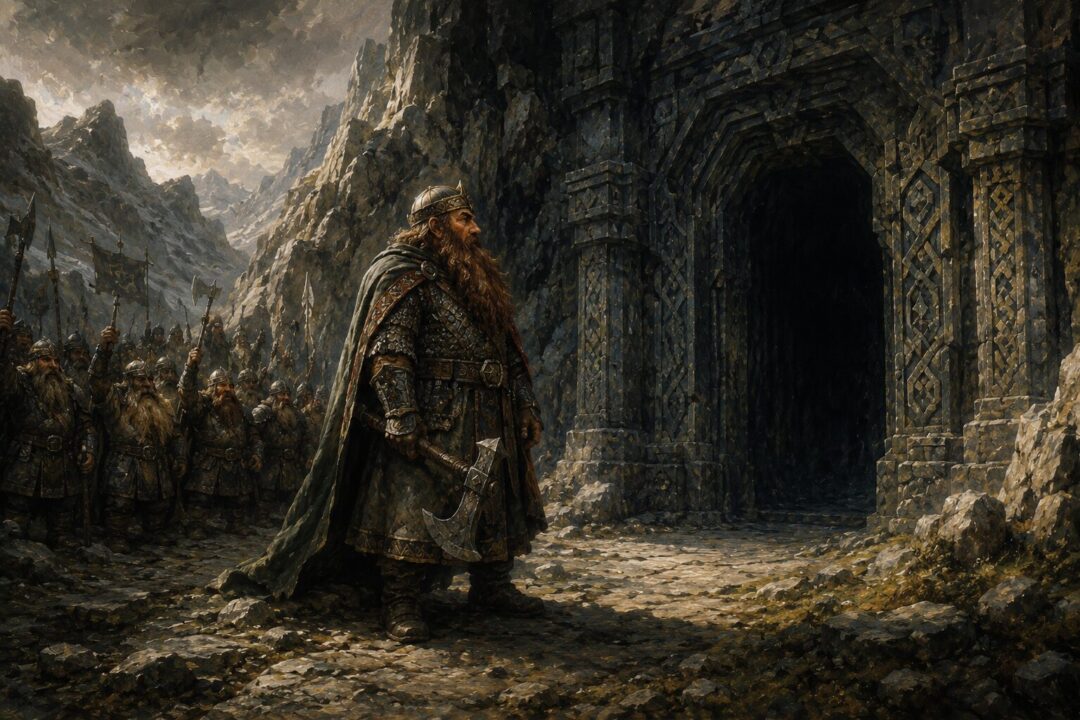
After the Battle of Azanulbizar, the Dwarves had achieved a costly victory against the Orcs before the East-gate. Azog was slain, and many believed the time had come to reclaim Khazad-dûm.
Dáin refused.
Having approached the gate, he perceived the terror waiting inside. The texts never describe him seeing the Balrog directly in detail, but they make clear that he recognized an overwhelming presence and understood that some power remained which no ordinary Dwarf army could overcome.
He warned that Moria could not yet be retaken.
This moment matters because Dáin's decision was not born of cowardice. He had just proven his courage in battle. Instead, he recognized the difference between victory and wisdom.
The battlefield outside Moria suggested triumph.
The warning inside Moria revealed otherwise.
Balin's Colony Ignored the Lesson
Years later, Balin led an expedition to recolonize Khazad-dûm.
At first, the effort appeared successful. The colony entered Moria, occupied important halls, recovered relics, and briefly restored life to portions of the ancient kingdom. Messages reached Erebor reporting encouraging progress.
Then the news stopped.
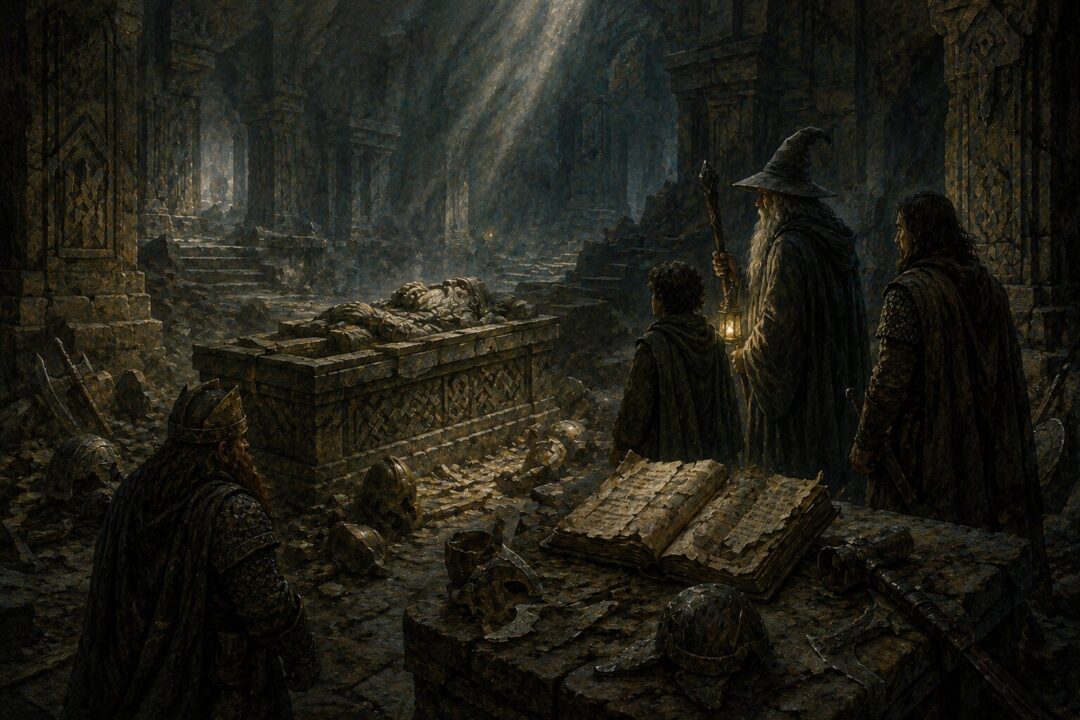
When the Fellowship entered Moria years afterward, they discovered the truth preserved in the Book of Mazarbul. Balin had been killed near Mirrormere. The colony gradually lost ground as Orc attacks intensified. Survivors withdrew into the Chamber of Mazarbul before being overwhelmed.
The record does not describe the Balrog directly destroying the colony. Instead, Orcs dominate the immediate narrative of its fall. Yet the larger context makes clear that Durin's Bane still ruled the depths. The Balrog's continued presence ensured that Khazad-dûm remained beyond the power of ordinary settlers to reclaim.
The tragedy of Balin's expedition lies partly in its hope.
Everything they wished to rebuild had once truly existed.
Everything they tried to recover remained just beyond reach.
Silence Became the Loudest Warning
When the Fellowship entered Moria, they encountered surprisingly little immediate fighting.
Instead they found silence.
Empty roads.
Dark halls.
Abandoned chambers.
Ancient architecture untouched by living civilization.
This silence does something remarkable in the narrative.
Rather than frightening readers with constant danger, it creates growing uncertainty. Every magnificent hall reminds the Fellowship what Moria used to be. Every vacant space forces them to imagine what happened there.
By the time they reach Balin's tomb, the emotional blow comes not from combat but from recognition.
Gimli had expected to greet living kinsmen.
Instead he found a grave.
The warning had been visible long before the first Orc appeared.
The Book of Mazarbul Is a Chronicle of Decline
The Book of Mazarbul is one of the most important historical documents encountered during the Quest of the Ring.
Its surviving pages reveal events growing steadily more desperate.
Early entries describe exploration and settlement.
Later entries speak of mounting attacks.
Finally come fragmented lines recording chaos, drums, and approaching death.
The damaged chronicle gives readers something unusually powerful: history unfolding in real time rather than summarized afterward.
It transforms Moria from an ancient legend into a fresh wound.
Unlike distant tales from the Elder Days, these events happened only years before the Fellowship arrived. The people who wrote those final words expected others might someday read them.
Their record itself became part of Moria's warning.
Gandalf Recognized That Some Evils Cannot Be Avoided Forever
Gandalf never wanted to enter Moria.
His preference had been the Redhorn Pass. Only after that route failed did he reluctantly choose the mines.
Even then, he understood that ancient dangers remained below.
Exactly how much Gandalf suspected before entering is left uncertain. He certainly knew of the Balrog's historical role in Moria's fall, but the text does not explicitly state that he expected to encounter it personally. His reaction in the Chamber of Mazarbul suggests recognition rather than surprise once its power becomes evident.
The confrontation on the Bridge therefore represents more than an unexpected monster attack.
It is the unavoidable meeting between two ancient powers whose histories reach back to the First Age.
Everything beforehand had been warning.
Everything afterward became necessity.
The Balrog Represents More Than Physical Power
Durin's Bane is terrifying because of its strength, but its symbolic role is equally important.
Unlike many enemies in the War of the Ring, the Balrog is not actively expanding its dominion across Middle-earth. It remains beneath the mountain, yet its existence shapes history for centuries.
Entire kingdoms alter their decisions because of it.
Trade routes change.
Settlements fail.
Refugees scatter.
The mere presence of one surviving servant of Morgoth leaves a permanent scar across the map.
In this sense, the Balrog demonstrates that evil does not always need to conquer new lands.
Sometimes its greatest victory is making others abandon what they already possess.
Moria Warned Against More Than Greed
Readers often summarize Moria with a single moral about greed.
Certainly, the search for mithril forms part of the kingdom's downfall.
Yet Moria warns against something broader.
It warns against believing that glorious history guarantees future success.
It warns against confusing courage with readiness.
It warns that memory alone cannot restore what has been lost.
And perhaps most importantly, it warns that ancient evils rarely disappear simply because later generations wish them gone.
Each attempt to reclaim Khazad-dûm failed for different immediate reasons, but all shared one common mistake: they confronted the visible ruins before fully reckoning with the unseen danger that remained beneath them.
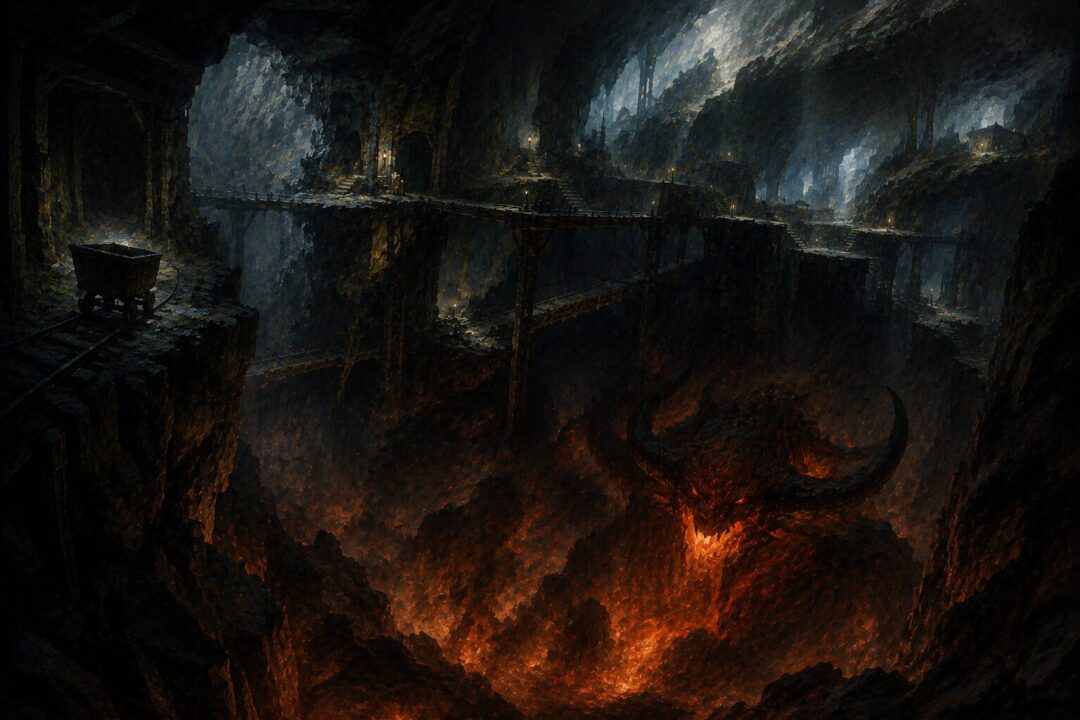
Why the Battle Matters Less Than the Warning
The duel between Gandalf and Durin's Bane is one of the defining moments in The Lord of the Rings. It is dramatic, heroic, and unforgettable.
Yet its emotional weight depends entirely upon everything that came before it.
Without the abandoned halls, the Book of Mazarbul, Balin's tomb, Dáin's earlier warning, and centuries of failed hope, the Balrog would simply be another powerful enemy.
Instead, it emerges as the living embodiment of Moria's history.
The battlefield exists because the warning was ignored, repeated, and finally fulfilled.
That is why Moria remains one of the richest locations in Middle-earth. It is not merely a place where heroes fought. It is a place where every empty corridor speaks before any sword is drawn, where history itself urges caution, and where the greatest danger announces its presence long before it appears in flame and shadow.
Sources & Notes
- Wikipedia overview of Moria / Khazad-dûm and its fall — https://en.wikipedia.org/wiki/Khazad-d%C3%BBm
- Wikipedia overview of Balrogs and Durin’s Bane — https://en.wikipedia.org/wiki/Balrog
- Wikipedia overview of The Fellowship of the Ring for the journey through Moria — https://en.wikipedia.org/wiki/The_Fellowship_of_the_Ring
Sources selected for Tolkien-lore context and reader verification.