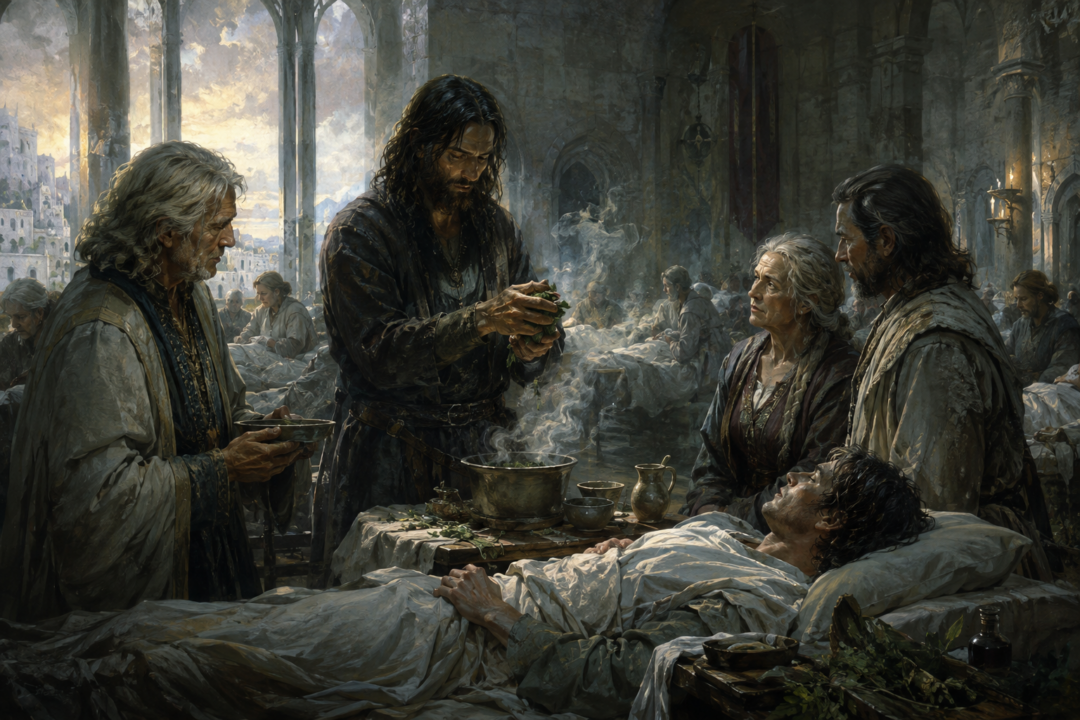
When Aragorn asks for athelas in the Houses of Healing, the response is almost absurd.
Minas Tirith possesses trained healers, herb-lore, organized wards, and a medical tradition still considered wise even in the diminished late Third Age. Yet the plant Aragorn urgently needs is known to the herb-master chiefly through names and old verses. Its reputation has faded so badly that kingsfoil is treated as a modest wild herb rather than a serious medicine. Ioreth remembers more—not because she commands some hidden school of healing, but because fragments of older knowledge have survived among ordinary people.
Then Aragorn uses the herb, and everything changes.
The text never tells us that Gondor later established gardens, training programs, or formal athelas treatments under King Elessar. Any such system would be speculation. But the events surrounding the War of the Ring reveal exactly how a nearly forgotten medicine might return to serious practice: not through the discovery of a new plant, but through the reunion of institutions, living tradition, royal knowledge, and memories that educated people had ceased to value.
That makes athelas more than a magical herb. It becomes a small example of one of Middle-earth’s deepest patterns: knowledge can survive long after the culture capable of understanding it has begun to forget.
Gondor Had Medicine—but Not All of Its Old Knowledge
The strange thing about the Houses of Healing is that they are not incompetent.
The narrative explicitly treats Gondor’s healing arts as sophisticated. Its healers understand ordinary wounds, injuries, and diseases. What has diminished is not medicine itself, but its inheritance. The lore of earlier days has declined from its former fullness even while considerable skill remains.
Athelas exposes that gap.
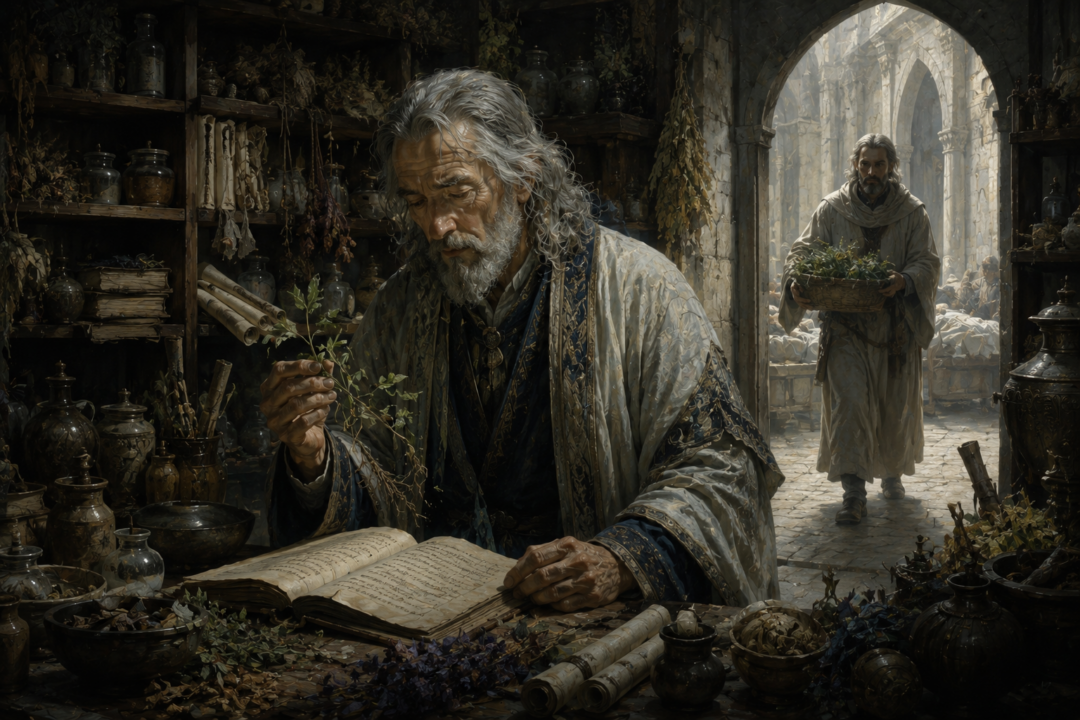
The herb-master knows the plant under several names and knows traditional sayings associated with it, but he does not regard it as possessing great medicinal virtue. Ioreth remembers that it smells wholesome when bruised and recalls the saying that the hands of the king are those of a healer. Neither fragment alone constitutes a medical method. Together, however, they preserve pieces of something the professional institution has lost.
This distinction matters.
Gondor has not forgotten that athelas exists. It has forgotten what athelas means.
That is a much more realistic form of cultural decline. Old knowledge does not always vanish cleanly. Sometimes the terminology survives while practical understanding dies. Sometimes a rhyme survives after scholars have stopped believing there was wisdom behind it. Sometimes a plant continues growing beside the road after the people who knew its proper use are gone.
Athelas has reached precisely that dangerous stage.
A Númenórean Plant in a Post-Númenórean World
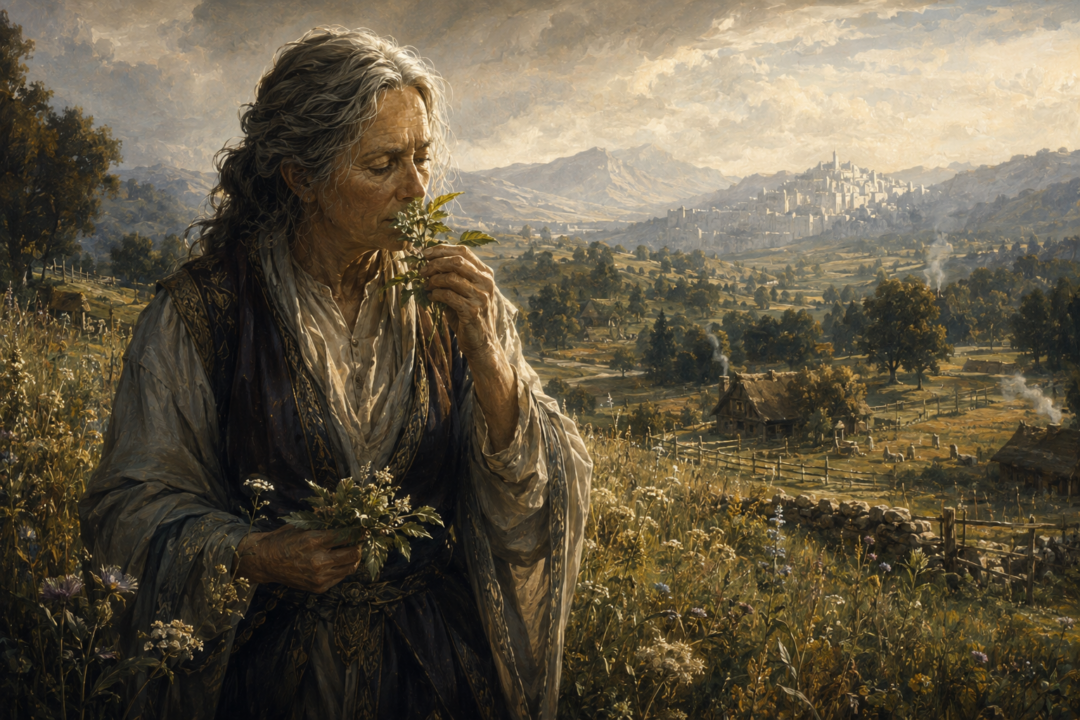
Athelas is associated with the Dúnedain. The tradition recorded about the plant says that it was brought to Middle-earth by the Númenóreans, and by the end of the Third Age it could be found growing wild in regions where their descendants had lived.
That history helps explain its strange position.
A cultivated or valued plant can outlive the civilization that first understood it. Roads break. Kingdoms fall. Archives are lost. Political boundaries shift. Yet vegetation spreads beyond abandoned gardens and settlements.
By the late Third Age, therefore, athelas can be physically common enough to encounter while remaining culturally obscure.
Aragorn himself demonstrates the contrast. In the wild beneath Weathertop, he knows what plant to seek when Frodo has been wounded by the Witch-king. In Minas Tirith, generations later in the story, the official healers possess far greater institutional resources than a wandering Ranger—but Aragorn again understands the plant in a way they do not.
That is not because the Houses of Healing know nothing. It is because Aragorn belongs to another chain of memory.
The northern Dúnedain preserved traditions from the lost realm of Arnor under conditions very different from those of Gondor. Aragorn also spent part of his youth in Rivendell and later travelled widely. The text does not provide a curriculum explaining precisely where he learned each element of his healing knowledge, so it would be unsafe to invent one. What is clear is that his practical understanding surpasses what the Gondorian herb-master can provide at the crucial moment.
The return of athelas to medicine would therefore require more than harvesting the plant.
It would require recovering context.
The Houses of Healing Provide the Perfect Turning Point
The aftermath of the Battle of the Pelennor Fields creates conditions in which forgotten knowledge can no longer be dismissed.
Faramir, Éowyn, and Merry are all gravely afflicted, with the Shadow lying upon their conditions in ways ordinary treatment cannot fully answer. Aragorn recognizes what is happening and calls for athelas. When he uses it, the herb’s fragrance accompanies the revival of those he treats. The episode also connects his healing directly with the old saying remembered by Ioreth concerning the rightful king.
This is important because forgotten practices rarely return to institutions merely because someone argues that an old tradition deserves respect.
They return when something demonstrates their value.
After the events in the Houses of Healing, athelas is no longer merely an obscure plant attached to quaint names. The Warden, the herb-master, attendants, patients, and others have witnessed a practical use of the herb under extraordinary circumstances.
The text does not say that they immediately understood how much of the healing came from the plant itself, how much depended upon Aragorn, or how its effectiveness should be classified. Indeed, athelas seems especially potent in his hands. Tolkien Gateway summarizes this tradition as a special healing power associated with the Kings of Gondor.
So formalizing athelas would not mean pretending that every healer could reproduce Aragorn’s achievements.
The first lesson of a restored medical tradition would need to be humility about what was actually known.
Folk Memory Would Suddenly Become Valuable Evidence
One of the richest ironies in the episode is that Ioreth preserves something the more scholarly herb-master does not value.
He has technical knowledge of the herb’s names and lore. She possesses remembered sayings and domestic observations. Neither should simply replace the other.
A plausible restoration of athelas knowledge would require combining them.
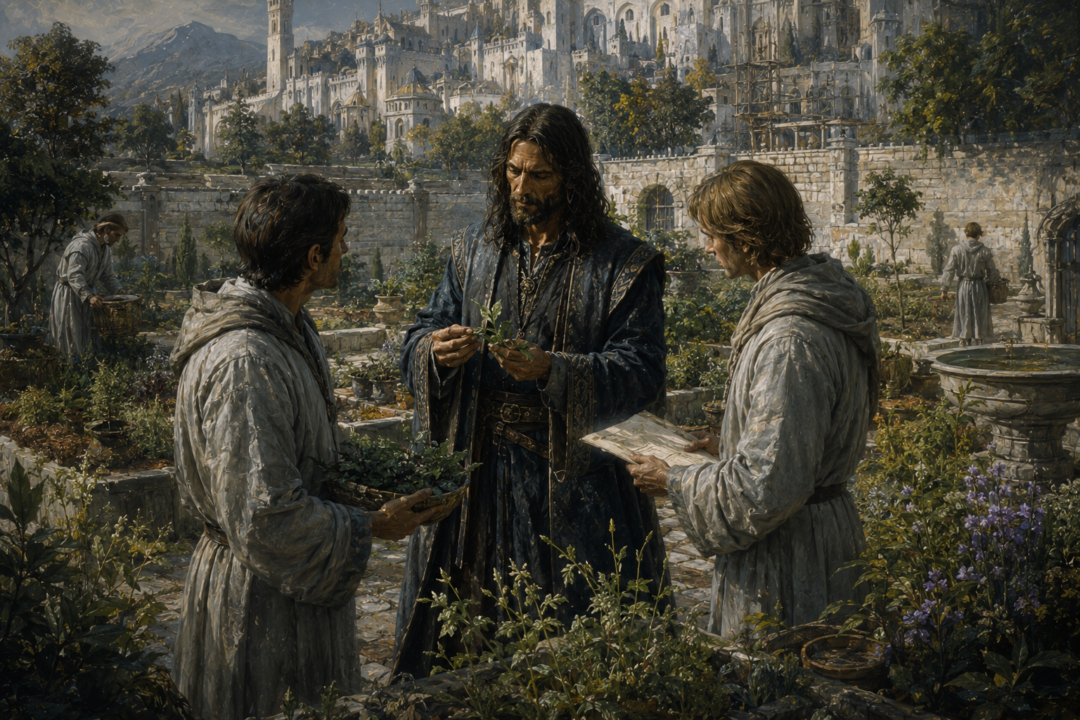
The herb-master could identify textual traditions, alternate names, classifications, and whatever records survived. Rural people could preserve memories of where kingsfoil grew, how it smelled when crushed, and what earlier generations said about it. Rangers and surviving Dúnedain traditions might preserve practical knowledge unavailable in Gondor. Aragorn could supply the demonstrated expertise that gives those scattered fragments new significance.
That would create something stronger than either scholarship or folklore alone.
It would also reverse the assumption that information preserved in old sayings is necessarily useless because its original explanation has disappeared.
Ioreth’s importance is not that every traditional saying must be medically correct. The text gives no basis for such a rule. Her importance is that one particular piece of neglected memory turns out to matter enormously.
The lesson is narrower and more interesting: when a civilization knows that its inherited lore has diminished, dismissing old memory without investigation may destroy the last surviving clues to genuine knowledge.
A Restored Kingdom Could Restore the Chain of Transmission
The strongest lore-grounded case for athelas returning to formal medicine comes not from the herb itself, but from the political change surrounding it.
Aragorn does not remain a wandering healer.
He becomes King Elessar.
That matters because knowledge previously carried by an unusually learned individual could now, in principle, enter the institutions of the restored kingdom. The text never records him founding a school of athelas medicine, so we cannot claim that he did. But the circumstances make systematic preservation far more plausible than they had been before his reign.
A responsible program might begin with simple measures rather than dramatic ones: identifying athelas accurately, recording where it grows, cultivating specimens near the Houses of Healing, preserving the knowledge of its names, documenting the circumstances in which Aragorn used it, and distinguishing observed properties from royal abilities that other healers might not share.
That last distinction would be crucial.
Athelas should not become a miracle cure merely because Aragorn accomplished remarkable healings with it. The narrative never establishes that any person armed with a handful of kingsfoil could achieve the same results.
Formal medicine would therefore need to preserve both the herb and the limits of its known use.
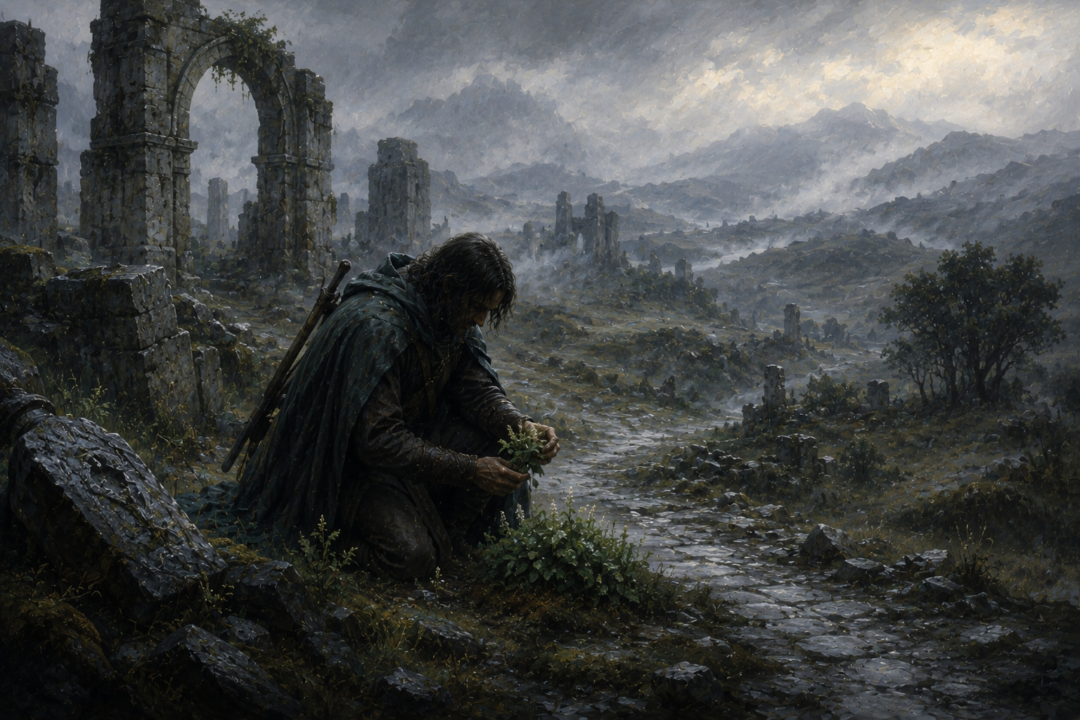
The First Medical Garden Might Begin With a Weed
There is a final irony in kingsfoil.
For much of the late Third Age, its value is hidden partly because it does not look valuable enough.
It grows wild. Its flowers are not celebrated as splendid. Its practical significance has become obscure. Even its grand Common Speech name sounds disproportionate to the humble plant.
Yet its history reaches back toward Númenor, its memory survives among the people of Gondor, and its greatest recorded uses occur at moments when the Shadow has entered wounds more deeply than ordinary medicine can reach.
If athelas moved back into formal medicine during the Fourth Age, the real restoration would therefore be larger than the recovery of one herb.
It would represent the repair of a broken relationship between learned institutions and inherited memory.
The healer would no longer laugh too quickly at the old rhyme. The village memory would no longer remain disconnected from scholarly knowledge. The king’s skill would not have to disappear with the king if some part of it could be observed, recorded, taught, and tested.
Nothing in the published story confirms that such a transformation occurred.
But the Houses of Healing give us the moment from which it could have begun.
A battered kingdom discovers that one of its forgotten medicines has been growing around it all along. The old women remember pieces. The scholars remember names. The returning king remembers how to use it.
And suddenly a weed becomes a question:
How much else had Gondor forgotten?
Sources & Notes
- The Encyclopedia of Arda — Athelas: reference entry covering kingsfoil’s Númenórean origin, its survival where the Dúnedain had lived, and Aragorn’s distinctive healing use of the plant — https://www.glyphweb.com/arda/a/athelas.php
- The Encyclopedia of Arda — Houses of Healing: reference entry on Gondor’s healing institution and Aragorn’s treatment of Faramir, Éowyn, and Merry there after the Battle of the Pelennor Fields — https://www.glyphweb.com/arda/h/housesofhealing.php
- The Encyclopedia of Arda — Aragorn: biographical reference documenting the Dúnadan heir’s northern upbringing, return as King Elessar, and role as healer during the War of the Ring — https://www.glyphweb.com/arda/a/aragorn.php
Sources document athelas and its Dúnedain history, the institutional setting of the Houses of Healing, and Aragorn’s inherited knowledge and demonstrated use of the herb.