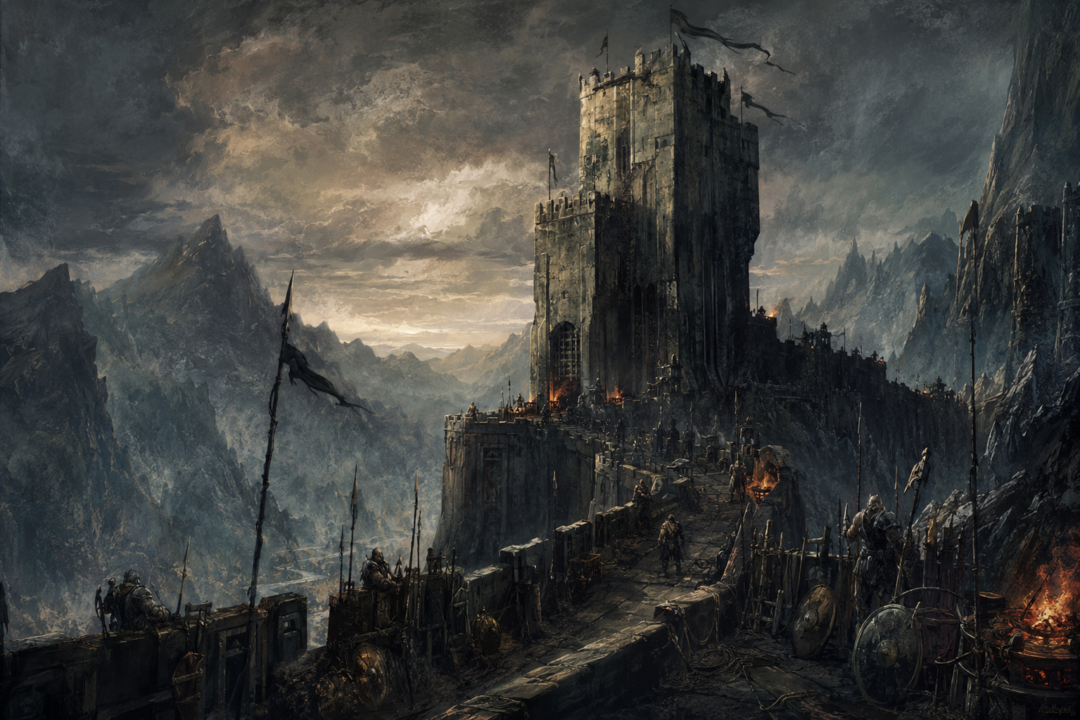
The map of Middle-earth is full of names that seem to belong naturally to the peoples who live beneath them. The Shire sounds Hobbitish because it is a lived-in country of farms, lanes, villages, and families. Khazad-dûm bears a Dwarvish name because the Dwarves shaped it into the centre of a civilization. Gondor is crowded with named cities, provinces, rivers, roads, and fortresses because generations of Men inhabited and organized its landscape.
Orcs leave a different linguistic footprint.
They certainly dwell in places. They dig tunnels, hold fortresses, establish garrisons, control mountain passes, and sometimes dominate regions for centuries. But surprisingly few major locations in the stories carry securely attested Orcish names. Again and again, Orc power appears inside places that already have histories and names of their own.
That distinction matters. The geography associated with Orcs often looks less like a settled homeland being described from within and more like a network of seized strongholds, military routes, slave systems, mines, watch-posts, and inherited ruins.
The Strange Silence of Orcish Geography
The first difficulty is simple: we know very little Orcish vocabulary.
Orcs spoke different tongues among themselves, while the Black Speech was devised by Sauron and never became the universal everyday language of all Orc-kind. During the War of the Ring, Orcs of different groups frequently rely on the Common Speech when they need to understand one another. That alone makes it dangerous to examine every sinister-looking place-name and assume it must be Orcish.
One of the clearest exceptions is Lugbúrz, the name used by Sauron's servants for Barad-dûr. It is one of the small number of surviving Black Speech forms connected with an important location. The Orcs at Cirith Ungol speak of Lugbúrz not merely as a building but almost as a synonym for the distant authority governing them—the place from which orders, spies, and punishment may come.
Encyclopedia of Arda
That is revealing. One of the strongest genuinely hostile-language place-names we possess does not identify an Orc village, ancestral district, or homeland. It identifies the centre of imperial command.
The linguistic evidence is thin, but what survives disproportionately points toward hierarchy and control.
Cirith Ungol: Orcs Inside Someone Else's Fortress
The Tower of Cirith Ungol provides an almost perfect example of occupation layered over older history.
Its name is Sindarin, not Orcish. More importantly, the fortress itself was originally part of Gondor's watch upon Mordor. Gondor constructed defences after Sauron's defeat in the War of the Last Alliance, guarding the approaches so that evil should not return unnoticed. In the long decline of Gondor that watch failed, and the fortress eventually passed into the power of Sauron's servants.
By the time Sam reaches it, the Tower is unmistakably an Orc military installation. Shagrat commands its garrison. Gorbag arrives with Orcs from Minas Morgul. There are orders, patrols, ranks, rival commands, equipment, prisoners, and fear of higher authority.
Yet the bones of the place are not theirs.
This produces one of the grimmer patterns in Mordor's borderlands: the Enemy does not always need to create a new landscape. He can reverse the purpose of the old one. A tower raised to contain Mordor becomes a tower serving Mordor.
The name survives while allegiance changes.
That is occupation in its purest form.
Moria Keeps the Memory of Its Makers
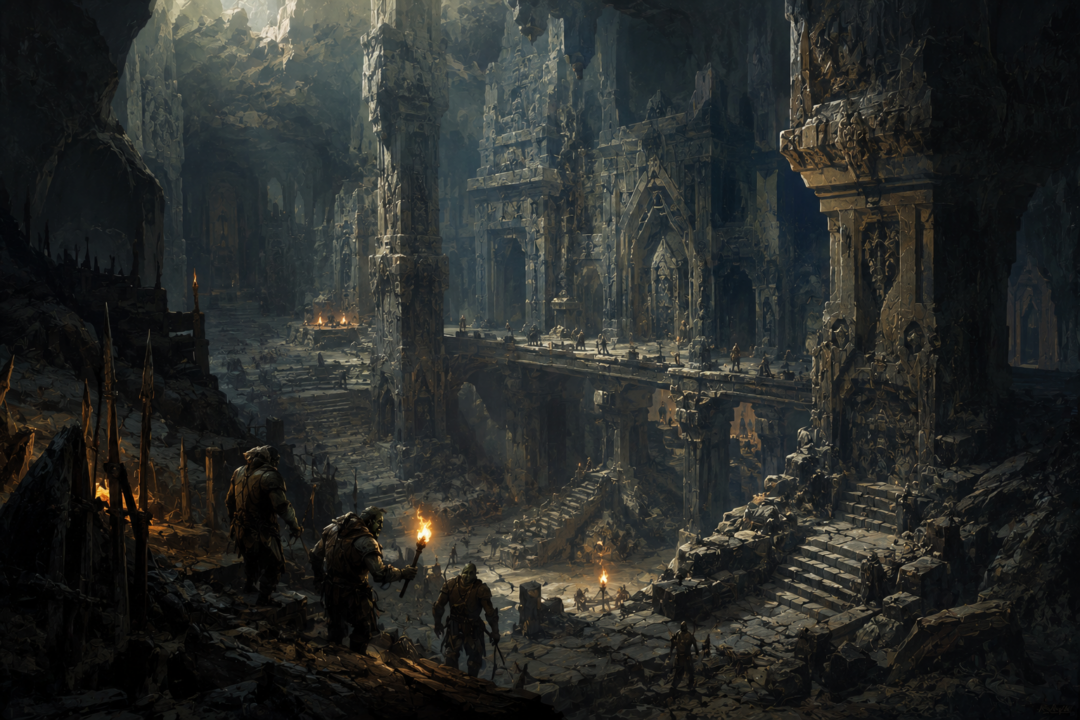
The same principle appears on a much greater scale in Moria.
The Orcs occupy Khazad-dûm after the fall of its Dwarvish kingdom, and later generations of Orcs establish themselves in and around the Misty Mountains. But nothing in the main narrative suggests that their long presence replaces the great Dwarvish identity of the place with a comparably developed Orcish one.
The names readers encounter remain Khazad-dûm, the Dwarves' own name, and Moria, its Sindarin name. Its chambers, roads, bridges, mines, shafts, and monumental architecture all testify to the people who built it. Orc occupation is historically important, but it sits upon a civilization whose physical memory is far deeper. Orcs entered the abandoned city after the Dwarves had been driven out and made use of what remained.
This is not evidence that Orcs were incapable of construction. They dig, tunnel, fortify, manufacture weapons, and operate extensive military infrastructure throughout the stories.
The distinction is subtler.
Moria never becomes textually legible as an Orc civilization in the way Khazad-dûm is legible as a Dwarvish one. The Orcs are occupants of its darkness, but the mountain's identity still points backward toward Durin's people.
Occupation can last a long time without becoming cultural ownership in the language of the map.
Even Gundabad Carries an Older Claim
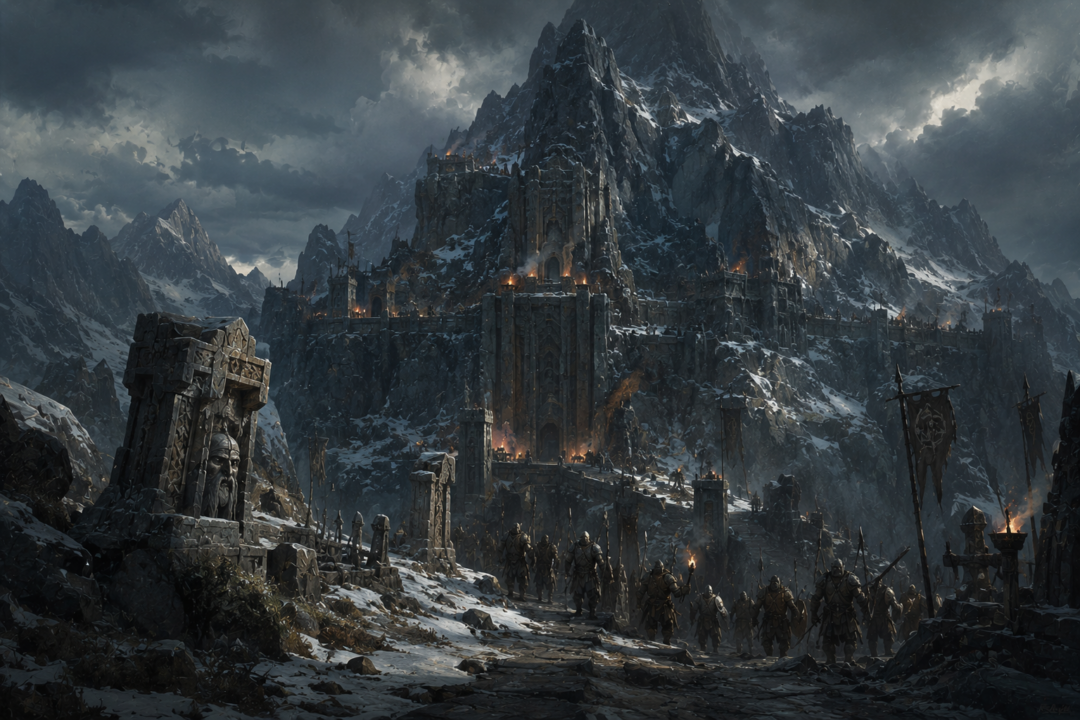
Mount Gundabad might appear to be the strongest objection.
It becomes a major centre of the Orcs of the North and is associated with their power in the Misty Mountains. In the wars between Orcs and Dwarves it is strategically and symbolically important.
Yet Gundabad itself carries a far older Dwarvish connection. Durin, eldest of the Fathers of the Dwarves, awoke there, and later linguistic material identifies Gundabad as a name Khuzdul in origin. The Orcs therefore occupied one of the most ancient sacred places in Dwarvish memory rather than giving the mountain an unmistakably Orcish identity of their own.
That makes its possession especially bitter.
Gundabad is not merely useful high ground. From a Dwarvish perspective, Orc control represents the seizure and defilement of something ancestral.
Once again, the inherited name preserves the identity of those whose claim came earlier.
Goblin-town Shows a Different Kind of Naming
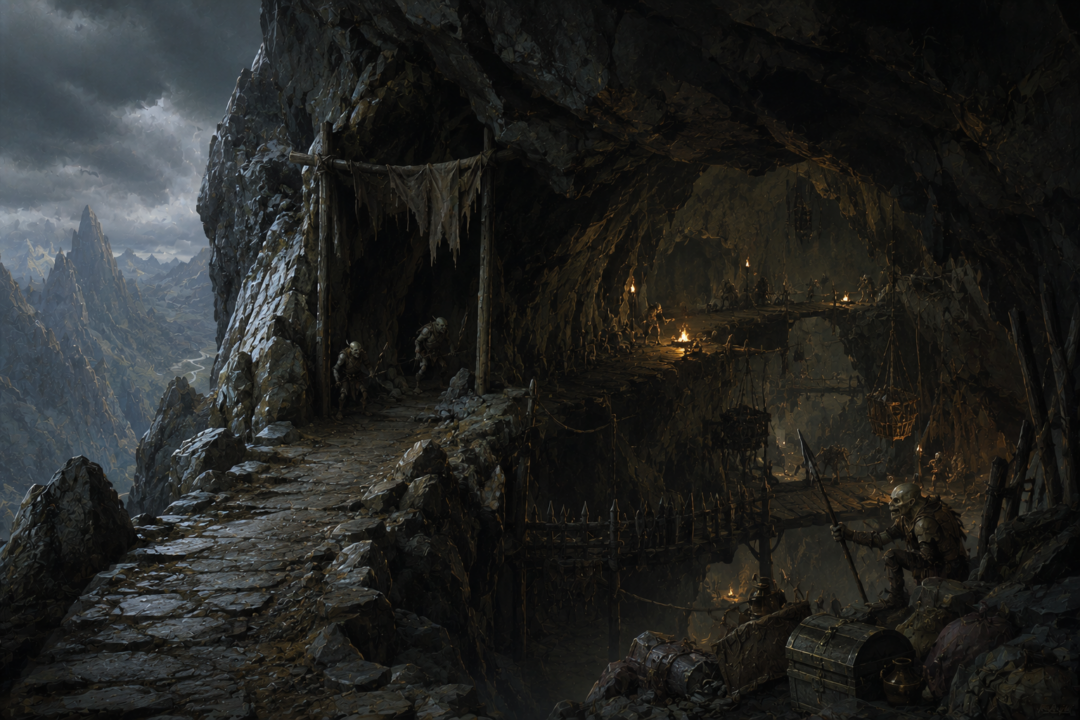
The Hobbit gives us a more intimate view of Orc habitation beneath the Misty Mountains.
Here the Goblins have extensive tunnels, entrances, passages, guards, a ruler, and enough organization to control movement beneath part of the range. This is clearly more than a temporary campsite. They have made the underground system usable for their own purposes.
Yet the names we receive are strikingly practical.
One cave opening used to capture travellers is called the “Front Porch.” The text presents this as the Goblins' name for the entrance. It is almost comic in its domestic language, but the function of the place is predatory: travellers shelter there, only to discover that it opens into the Goblins' underground ways.
This may be one of the best clues to how Orc naming operates within the translated narrative.
Rather than a grand civic geography, we glimpse functional labels attached to useful spaces: entrances, gates, roads, tunnels, towers, and points of command. The surviving evidence is far too limited to claim that Orcs never possessed richer local naming traditions. The texts simply do not provide them.
What they do provide is overwhelmingly practical.
Minas Morgul Shows How Conquest Rewrites Meaning
Minas Morgul is not properly an Orc-founded city either.
It began as Minas Ithil, a Gondorian city associated with Isildur's realm. In the Third Age the Nazgûl captured it, and it became Minas Morgul, the Tower of Sorcery. The new name itself is Sindarin rather than a preserved Black Speech or Orcish form.
Here conquest does produce renaming—but not a conventional Orc settlement-name.
Instead, the new identity announces corruption.
A city of Gondor becomes a seat of the Nazgûl. Its valley and road acquire the same Morgul association. The older landscape has not vanished physically; it has been taken and transformed until its familiar structures communicate the power now occupying them.
This is one of the Enemy's recurring signatures. Evil frequently appears not as creation from nothing but as possession, distortion, and repurposing.
The geography itself becomes evidence of that process.
Isengard Repeats the Pattern in the West
Saruman's Isengard offers a related example outside Mordor.
The fortress was not constructed as an Orc settlement. It was an ancient Gondorian stronghold, known in Sindarin as Angrenost, that eventually came under Saruman's control. He transformed its surroundings through industry, excavation, military preparation, and the breeding and organization of his forces. By the War of the Ring, Orcs and other servants fill a place whose older architecture and strategic position predate them.
Yet there is no prominent new Orcish name replacing Isengard.
The regime changes. The landscape is scarred. The population changes. The purpose changes.
The inherited place-name survives.
This is why naming alone should not be used to underestimate Orc presence. A map can remain linguistically Gondorian, Sindarin, or Dwarvish even while the actual fortress on that map has become hostile territory.
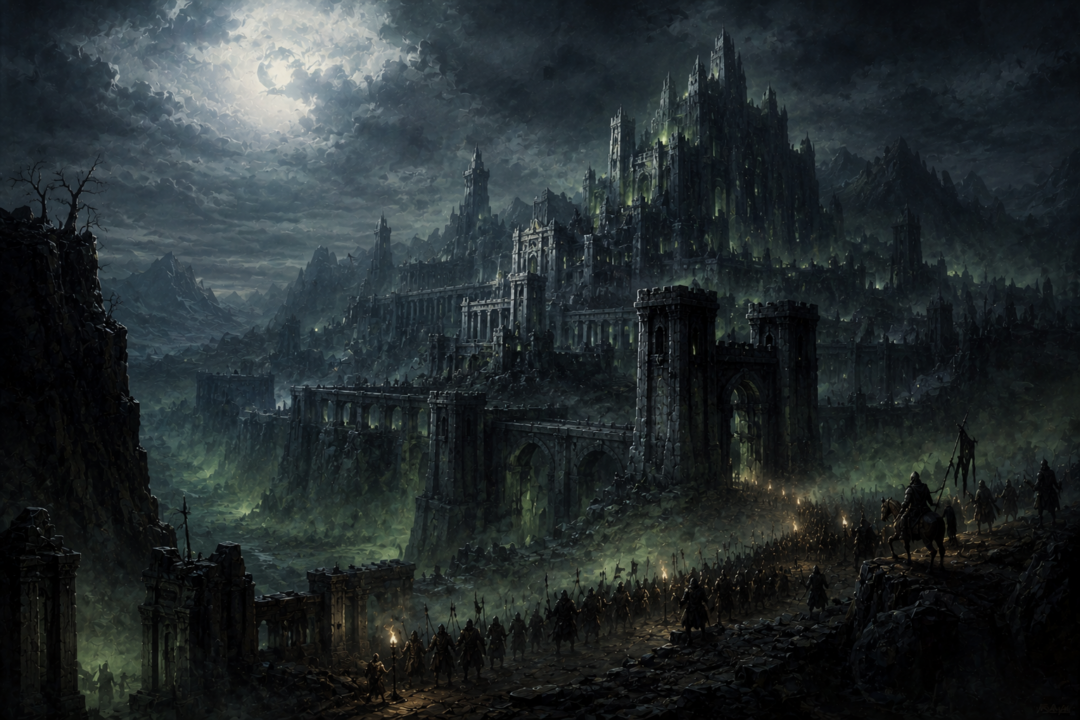
Occupation Leaves a Different Kind of Map
It would be too strong to conclude that Orcs never settled anywhere or never possessed meaningful local names. The surviving material is nowhere near complete enough to prove that.
What the texts allow us to say is narrower and more interesting.
The major Orc-held locations we encounter are repeatedly places of strategic value: mountain passages, underground roads, captured cities, towers, mines, fortresses, and centres of command. Their best-known names are frequently inherited from Elves, Dwarves, or Men. Even Gundabad, a great northern Orc centre, carries an older Dwarvish linguistic and sacred history. Lugbúrz, one of the clearest hostile-language exceptions, points directly toward Sauron's central authority.
The result is a geography of domination more than belonging.
Hobbiton tells us where Hobbits live. Khazad-dûm tells us what Dwarves built. Minas Tirith embodies generations of Gondorian continuity.
But when Orcs enter the map, the most telling question is often not, “What did they call their homeland?”
It is, “Whose stronghold are they occupying now?”
That is part of what makes Orc-controlled Middle-earth feel so unsettling. The Enemy's presence does not always erase the past. Sometimes the old name remains on the map while everything the name once protected has been turned against its makers.
Sources & Notes
- The Encyclopedia of Arda — Lugbúrz: reference entry on the Black Speech name for Barad-dûr and its use by Orcs for Sauron’s central fortress and authority — https://www.glyphweb.com/arda/l/lugburz.php
- The Encyclopedia of Arda — Tower of Cirith Ungol: history of the Gondorian watchtower later occupied and garrisoned by Orcs in Sauron’s service — https://www.glyphweb.com/arda/t/towerofcirithungol.php
- The Encyclopedia of Arda — Moria: historical reference tracing Khazad-dûm’s Dwarvish foundation, abandonment, and later Orc occupation without displacement of its older names and built identity — https://www.glyphweb.com/arda/m/moria.php
- The Encyclopedia of Arda — Black Speech: linguistic reference explaining Sauron’s constructed language and the fragmentary, non-universal linguistic landscape among Orcs — https://www.glyphweb.com/arda/b/blackspeech.php
Sources support the article’s distinction between rare hostile-language names and Orc occupation of older Dwarvish or Gondorian places, while documenting the limits of Black Speech as a shared Orc language.