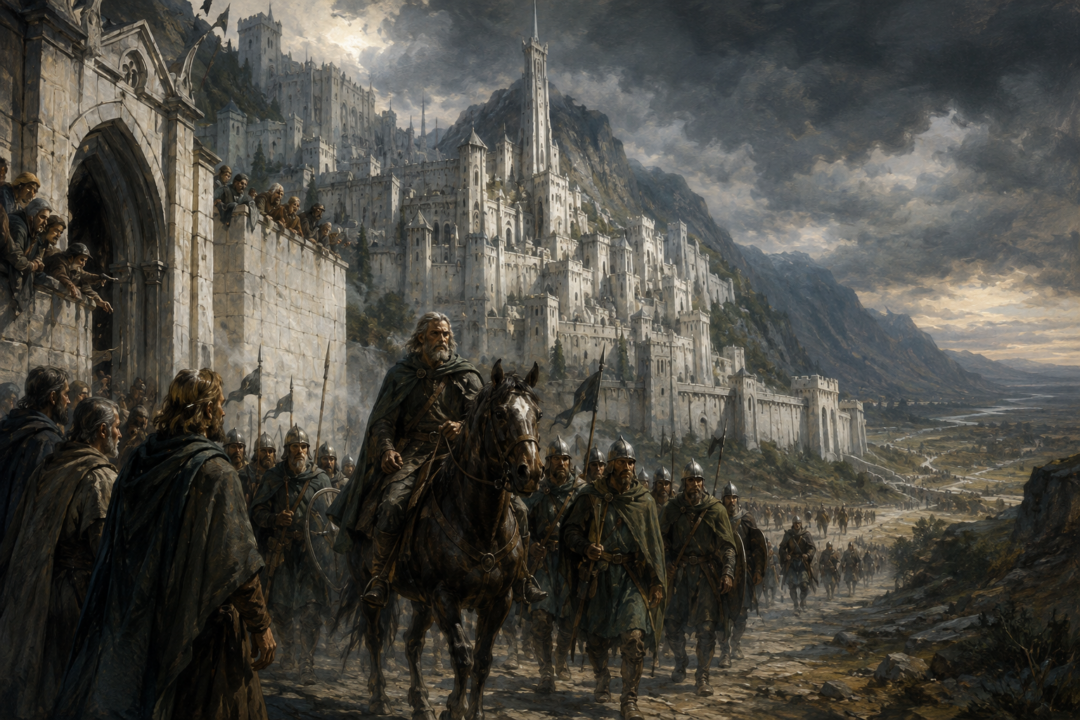
When the men of Lossarnach finally march into Minas Tirith, the citizens should be relieved. Instead, they are disappointed.
Forlong, Lord of Lossarnach, has come. He has brought armed men. Gondor’s southern lands are answering the call.
But he has brought only two hundred.
The watchers had hoped for far more, and their explanation reveals one of the most important realities behind Gondor’s defense: Minas Tirith cannot simply summon every fighting man in the kingdom and concentrate them beneath its walls. The southern fiefs have their own lands, roads, rivers, coasts, settlements, and families to defend.
And now enemy ships are threatening them.
The result is one of the most revealing military episodes in The Lord of the Rings. Gondor possesses more strength than the army initially gathered at Minas Tirith suggests. The problem is that Sauron and his allies have forced that strength to be scattered.
The question facing the fiefs is therefore not simply, “Will we defend Minas Tirith?”
It is: “How many men can we send north without losing our own homes in the south?”
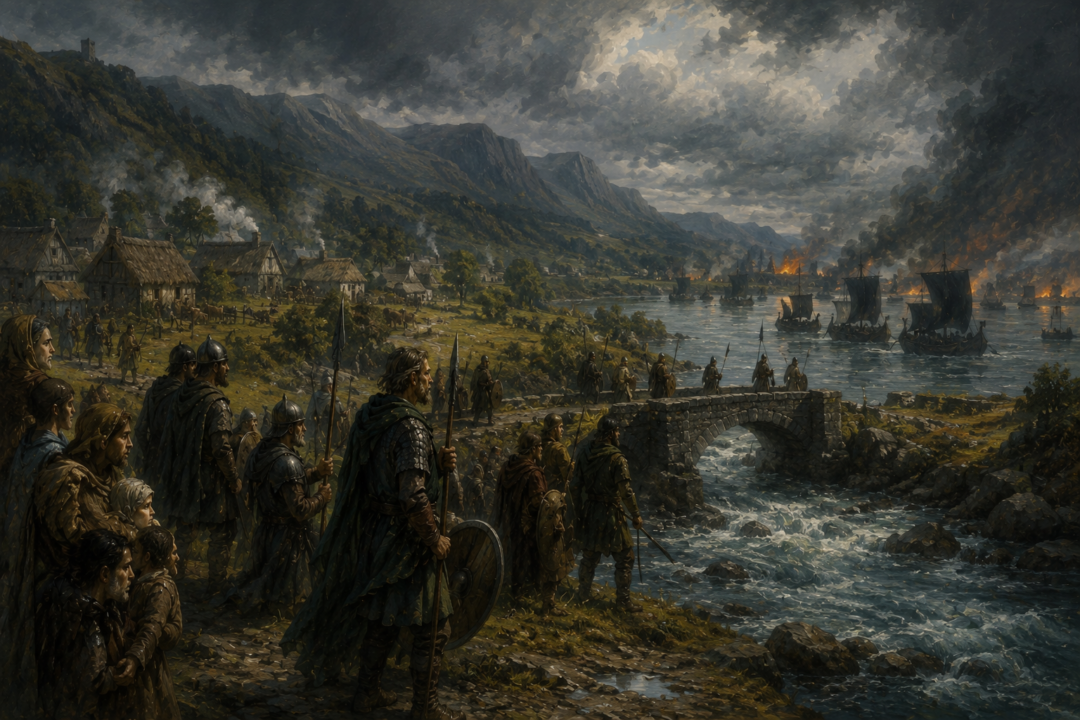
Gondor Is a Kingdom, Not Just a City
It is easy to picture Gondor as Minas Tirith surrounded by a few dependent territories. The narrative of the War of the Ring, however, repeatedly reminds us that the realm extends far beyond the White City.
South and west lie places such as Lossarnach, the Ringló Vale, the Blackroot Vale, Lamedon, Anfalas, Pinnath Gelin, Belfalas, and the lands around the mouths and lower courses of Gondor’s rivers.
These regions are not presented as identical administrative units, and the texts do not provide a constitutional handbook explaining exactly how every lord must answer a military summons. We should therefore be cautious about inventing a formal system of quotas.
What the story does show is something more practical.
Local lords command local men, and when Minas Tirith is threatened, contingents come from the Outlands under those lords or their representatives.
Forlong leads men from Lossarnach. Dervorin, son of the lord of Ringló Vale, leads three hundred foot soldiers. Duinhir of the Blackroot Vale comes with his sons and five hundred bowmen. Hirluin brings three hundred men from Pinnath Gelin. Prince Imrahil arrives from Dol Amroth with knights and seven hundred men-at-arms.
Others can spare much less.
That difference matters.
The Reinforcements Are Disturbingly Small
The arrival of the fiefdom troops in Minas Tirith is deliberately bittersweet.
The companies are welcomed, but the total is less than three thousand.
That is not because every southern district is militarily exhausted. In the case of Lossarnach, the people watching Forlong's arrival believe they understand why his contingent is so small: news of the enemy's Black Fleet has forced the southern lands to retain most of their strength.
Whether their estimate that Lossarnach has sent only a tenth of what it might otherwise have provided is exact should not be treated as an official census. It is spoken by observers reacting to what they see.
But their basic diagnosis is confirmed by events.
The south really is under threat.
Corsairs of Umbar and allies of Mordor are attacking Gondor's southern regions. Forces that might otherwise have marched toward Minas Tirith must remain where they are.
Sauron’s strategy is therefore doing more than attacking the capital. It is preventing Gondor from concentrating its defenders.
Every Fief Faces a Different War
The variation among the arriving contingents makes sense once geography is considered.
Lossarnach is comparatively close to Minas Tirith, yet even it sends only two hundred men with Forlong.
From the Ringló Vale come three hundred.
Duinhir brings five hundred bowmen from the Blackroot Vale.
The distant Anfalas sends a long and poorly equipped body of hunters, herdsmen, villagers, and the better-equipped household of their lord Golasgil.
Lamedon sends only a few hillmen, and notably they arrive without their captain.
From the Ethir come roughly a hundred or more fisher-folk who can be spared from the ships.
That word—spared—is the key to understanding the whole picture.
These are not necessarily the complete military resources of their homelands. They are the men who can be detached while other dangers remain.
The people of Gondor are fighting a war in which geography determines obligation.
A coastal community cannot behave as though the sea is safe. A lord facing enemies near his own borders cannot empty his territory merely because the capital is more famous.
Minas Tirith needs soldiers desperately.
So do the places sending them.
Lamedon Shows What “Too Few” Really Means
Lamedon provides perhaps the clearest example.
Only a few grim hillmen from Lamedon reach Minas Tirith with the early reinforcements, and they have no captain with them.
If we saw only that scene, we might conclude that Lamedon has little military strength.
Later events prove otherwise.
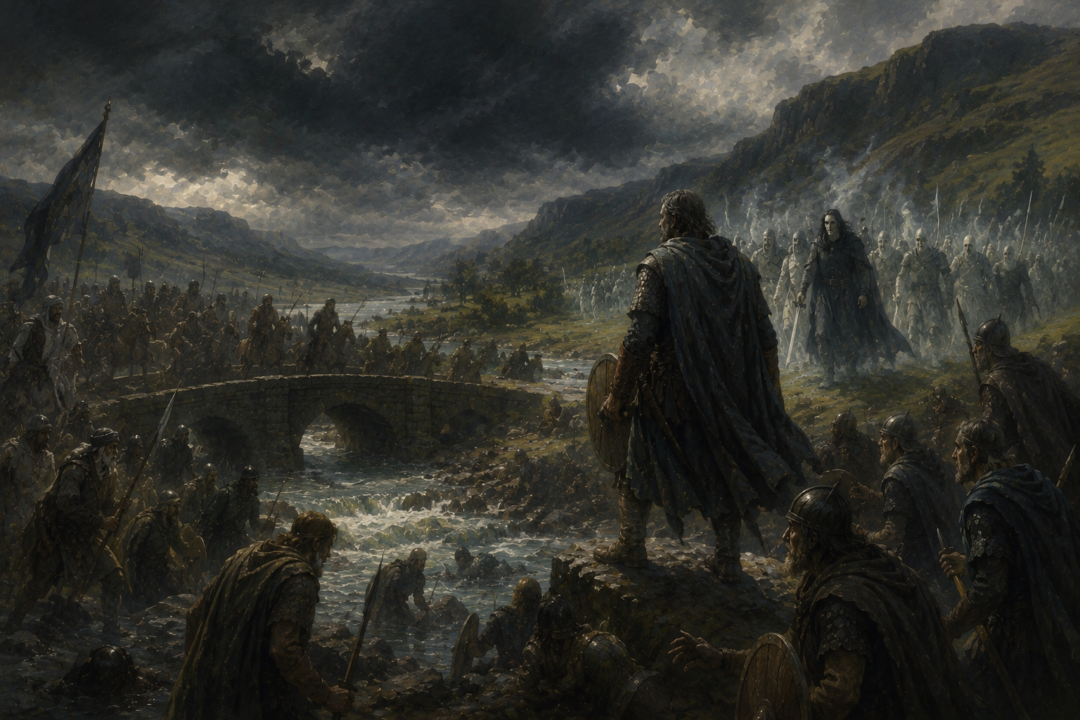
When Aragorn and the Grey Company travel through southern Gondor with the Dead, they reach fighting near Linhir. Men of Lamedon are among those resisting enemies from Umbar and Harad. Their lord, Angbor, remains when others flee before the terror of the Dead, and Aragorn commands him to gather his people and follow toward Pelargir.
The contrast is crucial.
Lamedon had not failed to participate in the war.
Its war was simply happening somewhere else.
Once the southern threat is broken, those forces can be redirected.
This is why counting only the soldiers who initially arrive at Minas Tirith gives a misleading picture of Gondor’s remaining strength.
The Black Fleet Is a Strategic Weapon Before It Fights
The Corsairs’ fleet matters even before its ships reach the decisive battlefield.
Its existence forces Gondor to defend the south.
That is a strategic victory for Sauron without requiring the Corsairs to breach Minas Tirith themselves.
A defender facing multiple threats must choose where to place limited forces. If every southern lord sends everything north, the coasts and riverlands may be exposed. If they keep too much at home, Minas Tirith may fall.
Sauron benefits from either choice.
This helps explain why the arrival of fewer than three thousand men feels so grim. The capital is not merely short of soldiers. It is watching the consequences of an enemy strategy designed to isolate it.
The southern contingents marching through the Gate are evidence of loyalty.
Their small numbers are evidence of pressure.
Both things are true at once.
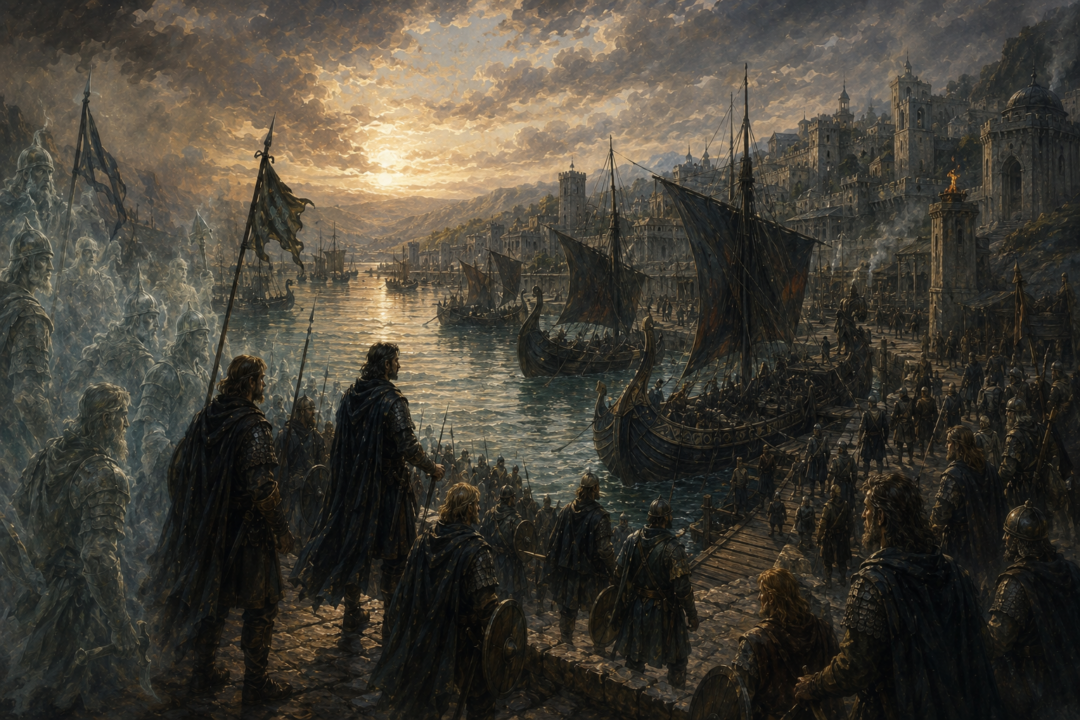
Dol Amroth Can Give More—But Not Everything
Prince Imrahil's contingent stands out among the reinforcements.
He arrives with a company of knights and seven hundred men-at-arms, making his force one of the strongest explicitly counted contingents from the south.
Yet the text does not say that Imrahil has emptied Belfalas of defenders.
It would be unsafe to calculate exactly what proportion of his total strength he brings. Gondor’s complete military establishment is never given in the detail needed for such arithmetic.
What can be said is that even the proud force from Dol Amroth exists within the same strategic crisis affecting the rest of southern Gondor.
The coastal threat has not disappeared.
This is why the fiefs should not be imagined as simply refusing Denethor men that belong at Minas Tirith. They are parts of the same realm confronting different portions of the same enemy design.
The apparent fragmentation of Gondor’s army is largely imposed by the battlefield.
Aragorn Changes the Equation
The decisive transformation comes not from a new order issued from Minas Tirith, but from removing the threat that has kept southern manpower pinned down.
Aragorn uses the Paths of the Dead and calls the Oathbreakers to fulfil their ancient oath. Their terror breaks the resistance opposing him in the south and, at Pelargir, the Corsairs are driven from their ships.
The Dead are then released from their oath.
The living must do the rest.
Men from southern Gondor can now be gathered. Aragorn takes the captured ships north toward Minas Tirith with forces from the south, while other men follow by land or in additional vessels.
Suddenly the strategic meaning of the fiefs changes.
They no longer need to hold so much strength against the Corsair threat.
What could not safely be spared before can now move.
This is the strongest answer the narrative gives to the question of how the fiefs “decide” what they can send. Tolkien never supplies a formal council scene in which each lord calculates his levy. Instead, events show that local defense requirements determine what is available for the capital.
Remove the local threat, and the available strength rises dramatically.
Four Thousand More Are Coming
After the Battle of the Pelennor Fields, Aragorn tells the Captains of the West that fresh strength is coming from the southern fiefs now that the coasts have been relieved.
Four thousand men have been sent marching from Pelargir through Lossarnach under Angbor's leadership, while still others have been told to follow by river in whatever craft they can gather.
This is powerful confirmation of what the earlier reinforcement scene implied.
The south had more men.
They simply were not free to come.
Before the Corsairs were defeated, Minas Tirith received fewer than three thousand from the Outlands.
After the southern danger is broken, thousands more can move toward the City.
The change is not best explained as a sudden surge of courage or loyalty. Those qualities were already present.
What changes is the military situation.

Gondor’s Weakness Is Also Its Strength
There is a tragic irony here.
Gondor’s size gives it resources, but its size also gives it more places that must be defended.
Minas Tirith protects the approaches from Mordor, yet Gondor cannot abandon its southern population merely to strengthen the capital. Rivers, coastlands, roads, settlements, and havens all become parts of the same war.
Sauron attempts to exploit that reality by attacking across multiple fronts.
But the structure that initially weakens Gondor also helps save it.
The fiefs are not empty provinces waiting helplessly for orders from the White City. They retain armed communities and leaders capable of resisting locally. When the southern threat is removed, that dispersed strength can flow back toward the center.
The Battle of the Pelennor Fields therefore reveals something larger than troop numbers.
Gondor survives because its defense is distributed.
Forlong’s two hundred men look painfully inadequate when they enter Minas Tirith. The few leaderless hillmen of Lamedon look even less impressive.
Yet those numbers do not measure the loyalty or total strength of the lands behind them.
They measure what those lands can afford to lose at that moment.
That distinction is the hidden logic behind Gondor’s fiefs.
They do not merely ask how many men Minas Tirith needs.
They must ask how many men can march away while there is still something left at home to defend.
Sources & Notes
- The Encyclopedia of Arda — Lossarnach: regional reference covering Forlong’s lordship and the contingent sent from this populous fief to defend Minas Tirith — https://www.glyphweb.com/arda/l/lossarnach.php
- The Encyclopedia of Arda — Ringló Vale: reference entry identifying the Gondorian vale and the force led to Minas Tirith by Dervorin during the War of the Ring — https://www.glyphweb.com/arda/r/ringlovale.php
- The Encyclopedia of Arda — Anfalas: account of the distant coastal fief, its exposed geography, and the mixed contingent led by Golasgil to the capital — https://www.glyphweb.com/arda/a/anfalas.php
- The Encyclopedia of Arda — Dol Amroth: reference on Belfalas’s principal city and Prince Imrahil’s substantial force of knights and men-at-arms at Minas Tirith — https://www.glyphweb.com/arda/d/dolamroth.php
Sources document the different Gondorian fiefs, their leaders and contingents, and the geographic differences behind how much each region could detach for Minas Tirith.