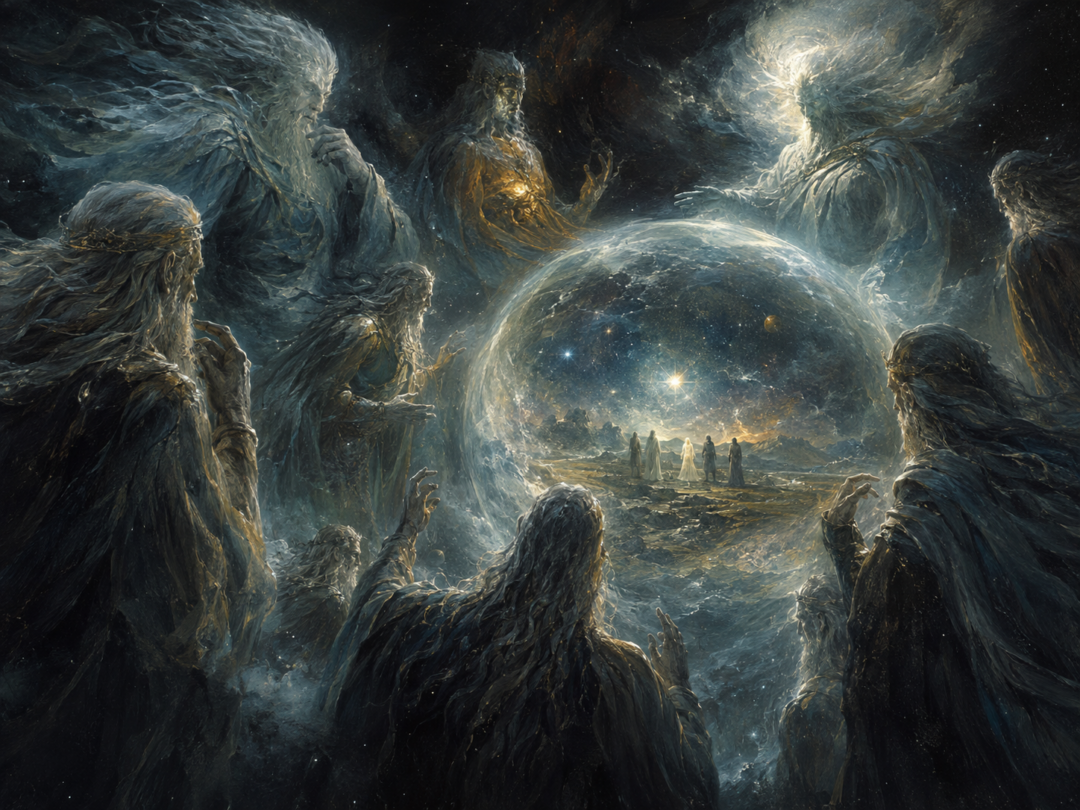
Before Elves ever opened their eyes beneath the stars, before Men awoke in the East, the Ainur had already seen them.
That sounds, at first, like almost perfect foreknowledge. In the Ainulindalë, Ilúvatar reveals to the Ainur a Vision in which the history of the World unfolds before them. They behold Arda, the habitation prepared within it, and eventually the arrival of the Children of Ilúvatar: Elves and Men.
Yet their reaction is not recognition.
It is astonishment.
The Children appear within a creation the Ainur have helped shape through the Great Music, but they are not the Ainur’s invention. The Ainur discover that they have been preparing a home for beings whose existence they had not previously understood. The Ainulindalë describes the Children as something new to them, arising from Ilúvatar’s thought alone.
This is one of the most important limits placed upon the great spiritual powers of Middle-earth. The Ainur can possess immense knowledge without possessing complete understanding.
And that difference explains much of what follows.
The Great Music Did Not Make the Ainur Omniscient
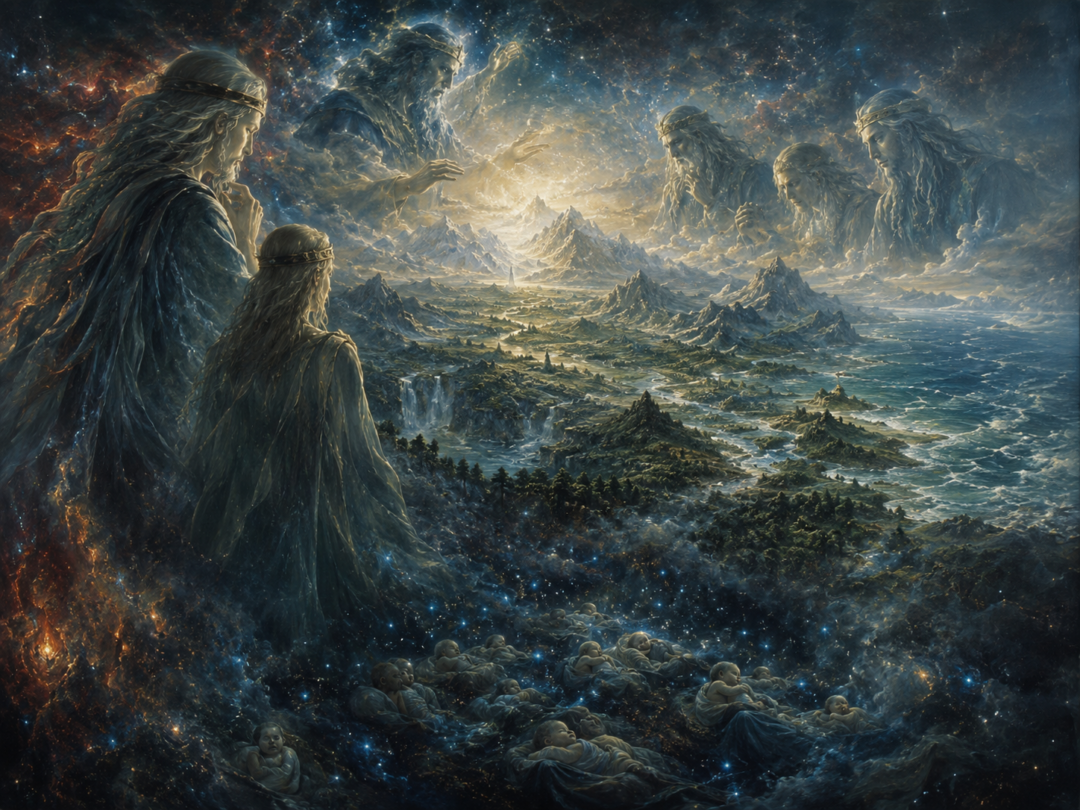
The Ainur existed before the physical World and participated in the Music from which Ilúvatar revealed its great pattern. Each Ainu understood something of Ilúvatar’s thought, but no individual Ainu possessed the whole of it.
Even together, their knowledge remained incomplete.
The Ainulindalë explicitly establishes that some things cannot be foreseen by the Ainur because Ilúvatar has not revealed everything he intends. New things can enter history that do not simply follow from what came before. The Children are the supreme early example.
That matters because the Vision is sometimes misunderstood as if the Ainur watched a complete recording of future history.
They did not.
They saw much. They learned much. They knew portions of things that would later occur. But the Vision itself was incomplete, and its end was hidden from them. The unfolding history they witnessed did not erase the possibility of surprise.
Their knowledge therefore resembles a vast but incomplete map.
And the Children appear on that map as something the mapmakers themselves did not design.
The Children Were Not the Ainur’s Creation
The distinction is sharper than merely saying that the Ainur had not met Elves or Men yet.
They had no part in making them.
The World had been shaped through the Music of the Ainur, but the Children entered through Ilúvatar’s design alone. The Ainulindalë associates their coming with the Third Theme and stresses that the Ainur did not participate in their conception.
This separates Elves and Men even from many extraordinary things within Arda.
Aulë, for example, could shape the bodies of the Dwarves, but he could not independently give them the kind of self-existing life possessed by the Children. That episode later reinforces a principle already present in the creation story: true rational persons cannot simply be manufactured by one of the Powers.
The Children belong directly to Ilúvatar.
That is why their appearance teaches the Ainur something.
They are not merely another species inside a familiar design. They reveal an aspect of Ilúvatar’s thought that had previously been hidden from the beings who seemed closest to him.
They Saw Them — and Learned From Them
One of the most striking details in the creation story is the response of the Ainur.
They do not resent the Children because they did not make them.
They love them more because they are different.
The text presents Elves and Men as beings whose freedom and otherness allow the Ainur to perceive something new about Ilúvatar. Their very existence expands the Ainur’s understanding of the mind from which they themselves came. Melopœia
That reverses the relationship a reader might expect.
The Ainur are older.
They are vastly more powerful.
They have witnessed realities beyond the physical world.
Yet the arrival of embodied creatures teaches them something they did not know.
Power, in Middle-earth, does not automatically produce complete wisdom.
Indeed, some of the greatest beings in the legendarium repeatedly encounter truths through creatures far weaker than themselves.
The Difference Between Elves and Men Deepened the Mystery
Even within the category of the Children, Elves and Men do not stand in exactly the same relation to the World.
Elves are bound to Arda for as long as its life endures. Men receive a different destiny: their lives within the World are brief, and after death they depart from it in a manner that remains mysterious even to the Valar.
The Silmarillion goes further. Men are granted a special freedom to shape their lives beyond the Music in a way that distinguishes them from the other inhabitants of Arda.
That makes humanity especially difficult for the Powers to comprehend fully.
The Valar may understand the structure of Arda better than any incarnate being. They may understand its elements, its history, its wounds, and much of what lies ahead.
But Men contain a destiny whose final meaning does not belong to Arda at all.
The Valar cannot simply examine the World more closely and discover the answer, because the answer lies beyond the boundaries of the World to which the Valar who entered Eä have become bound.
This is not a failure of intelligence.
It is a limit built into their place in creation.
The Vision Was Knowledge, Not Ownership
The story becomes darker when Melkor enters the picture.
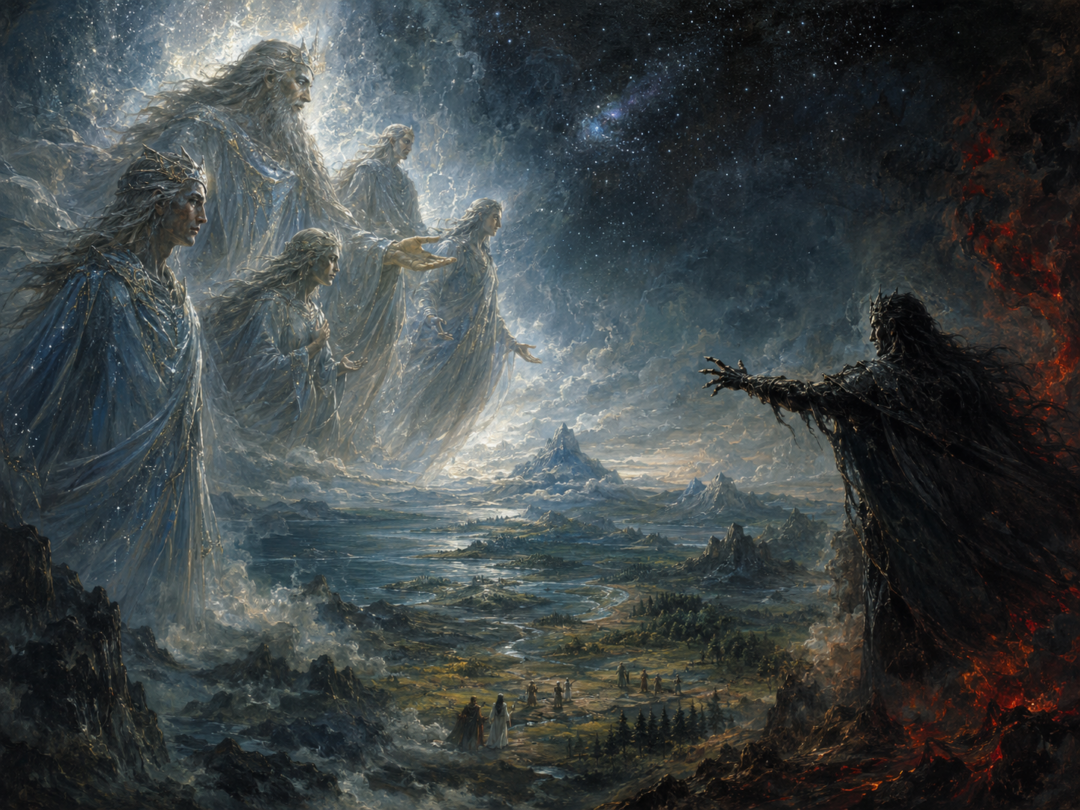
He too sees the Children.
But where other Ainur respond with love and wonder, Melkor’s desire turns toward possession. The Ainulindalë says that he wished to subject Elves and Men to his will and become master over other wills. Melopœia
That difference is crucial.
The Children are mysterious precisely because their wills are not extensions of the Ainur.
The righteous response to that mystery is reverence.
Melkor’s response is domination.
He cannot create independent life of the same order, so he seeks instead to control existing life. The moral divide is therefore present from almost the beginning: the Valar are called to prepare and guard a world inhabited by beings who do not belong to them, while Melkor wants those beings converted into instruments of himself.
His failure is not merely that he misunderstands the Children intellectually.
He refuses to accept their otherness.
Aulë Shows What Respecting That Boundary Looks Like
The making of the Dwarves provides perhaps the clearest later illustration.
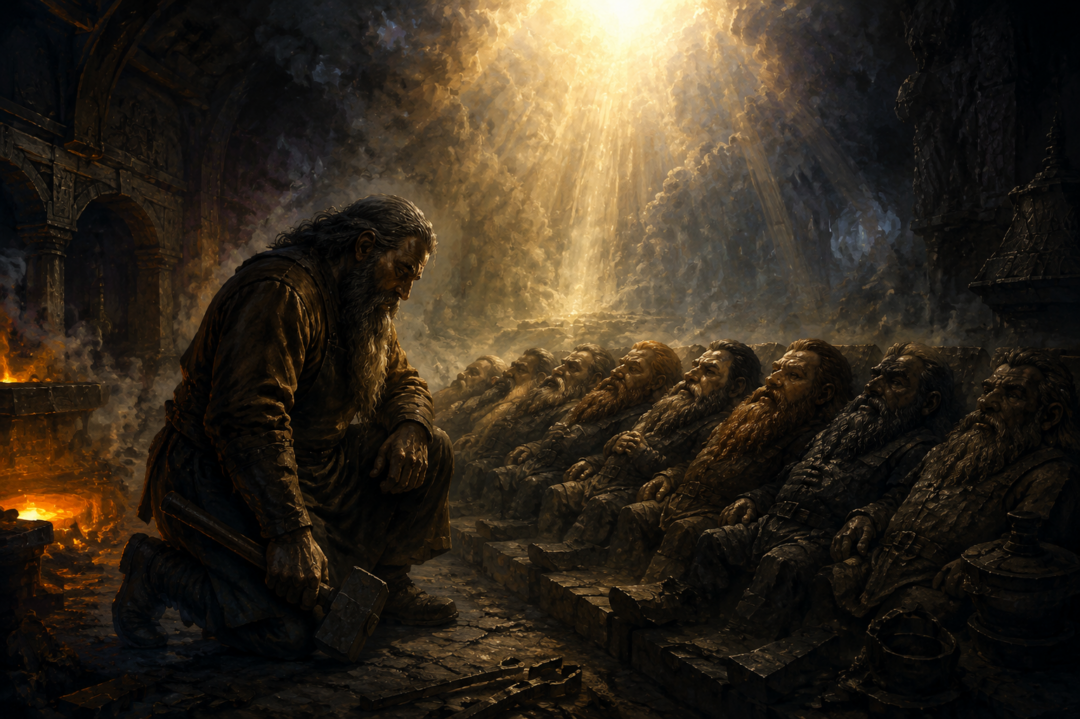
Aulë longs for pupils to whom he can teach his craft. In his impatience for the coming of the Children, he fashions the Fathers of the Dwarves.
But Ilúvatar confronts him with the fundamental limitation of his act.
Without Ilúvatar’s intervention, Aulë cannot give his creations genuinely independent being. They respond only according to his will. When Aulë immediately submits and prepares to destroy his work, Ilúvatar accepts his repentance and grants the Dwarves true life.
The episode does not mean Aulë understood nothing about incarnate beings. Quite the opposite: he understood enough to desire minds capable of learning from him.
But knowing what a person looks like is not the same as being able to create personhood.
That belongs to Ilúvatar.
The same distinction is already embedded in the Ainur’s first encounter with the Children.
They can see them.
They can love them.
They can guide them.
They can even take bodily shapes modeled after them.
But they cannot claim authorship over the mystery at the center of their existence.
Even the Valar Had to Learn Through History
Once the Valar enter Eä, the distinction between foreknowledge and understanding becomes even more important.
They had seen much of the World’s unfolding, but they still had to live through it.
They encountered Elves directly.
They debated what should be done for them.
They witnessed rebellion, exile, tragedy, heroism, mortality, and choices that no abstract vision could reduce to a simple mechanism.
That does not mean every decision of the Valar should be read as ignorance. Nor does the text provide a simple rule that every later disaster occurred because they misunderstood the Children.
The safer conclusion is narrower.
Their primordial knowledge never made them infallible readers of incarnate wills.
They were stewards inside a story whose deepest purposes remained larger than their own understanding.
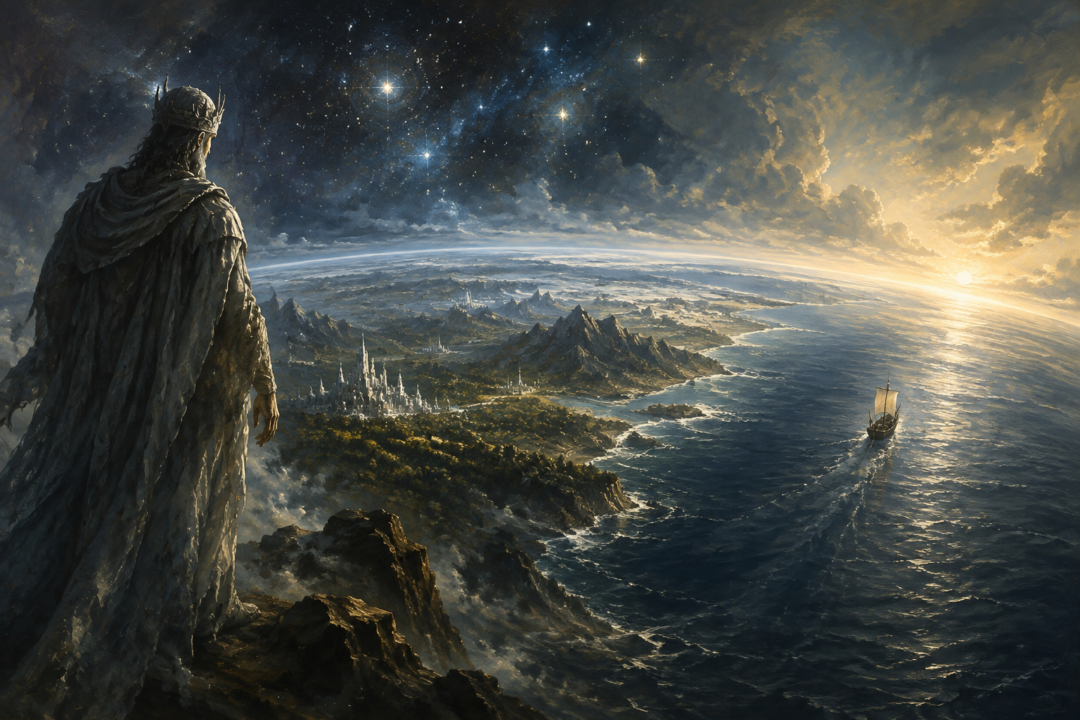
The Strange Freedom at the Heart of Middle-earth
The creation story begins on a cosmic scale: timeless spirits, unimaginable music, the Void, the first Vision of an entire universe.
Then its attention narrows toward something unexpectedly small.
A world.
Within that world, embodied lives.
And within those lives, wills the Ainur themselves did not devise.
That is the hidden contradiction at the heart of the Ainulindalë: the mightiest created beings can see farther than Elves or Men ever could, yet the Children still contain something mysterious to them.
The Ainur helped prepare the stage without knowing every actor who would enter it.
They could glimpse the story without possessing its final meaning.
They could behold the Children without having made them, and through beholding them they learned something new.
That is why the Children matter even before the first Elf awakens beside Cuiviénen.
Their arrival establishes a principle that echoes across all later ages of Middle-earth.
The greatest power is not the same thing as the greatest freedom.
Knowledge is not ownership.
And even beings who have seen the shape of history may still encounter something they never fully understood.
Sources & Notes
- https://www.glyphweb.com/arda/a/ainur.html — The Encyclopedia of Arda: the Ainur’s origin in Ilúvatar’s thought, participation in the Great Music, and differing degrees of knowledge
- https://www.glyphweb.com/arda/c/childrenofiluvatar.html — The Encyclopedia of Arda: Elves and Men as the Children of Ilúvatar, distinct from the Ainur and central to Arda’s design
- https://www.glyphweb.com/arda/a/ainulindale.html — The Encyclopedia of Arda: the Ainulindalë account of the Music, Vision, making of Eä, and the limits of what the Ainur were shown
- https://www.glyphweb.com/arda/i/iluvatar.html — The Encyclopedia of Arda: Ilúvatar as creator of the Ainur and Children and the source of independent life
Sources cover the Ainur, the Children of Ilúvatar, the Ainulindalë, and Ilúvatar’s unique creative role.