Why Barad-dûr’s Fall Did Not Erase Every Fortress of Mordor
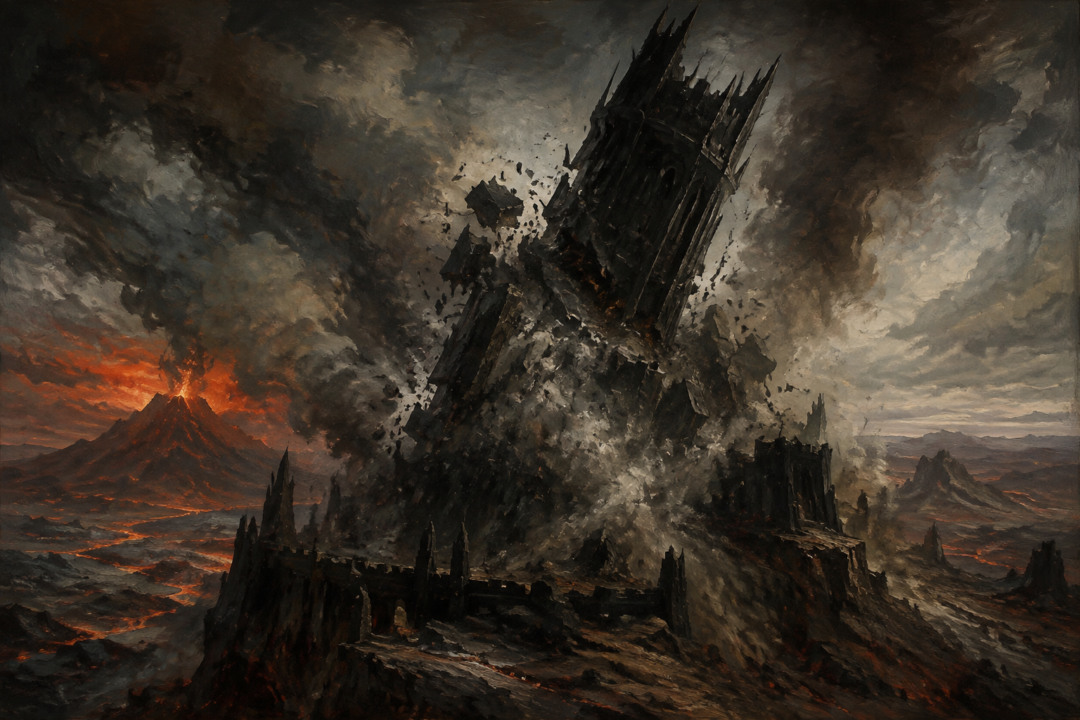
The Dark Tower of Barad-dûr was one of the most terrifying symbols in Middle-earth: a black fortress rising above the plains of Mordor, built and rebuilt through the long centuries of Sauron’s return. When the One Ring was destroyed in the fires of Orodruin, Barad-dûr collapsed in a moment that seemed to mark the end of the Dark Lord’s power. Yet a deeper question remains: if Sauron’s fortress fell, why did the rest of Mordor not simply disappear with it?
The answer reveals an important truth about the nature of evil in Tolkien’s world. The destruction of Barad-dûr was not the destruction of every work, tower, road, wall, and stronghold created under the Shadow. Sauron’s power was concentrated in the One Ring, and his defeat caused his own great works to fail — but the physical scars of his rule remained. Mordor was not a magical illusion waiting to vanish. It was a real land, shaped by centuries of war, labor, fear, and domination.
Barad-dûr Was Sauron’s Fortress, Not All of Mordor
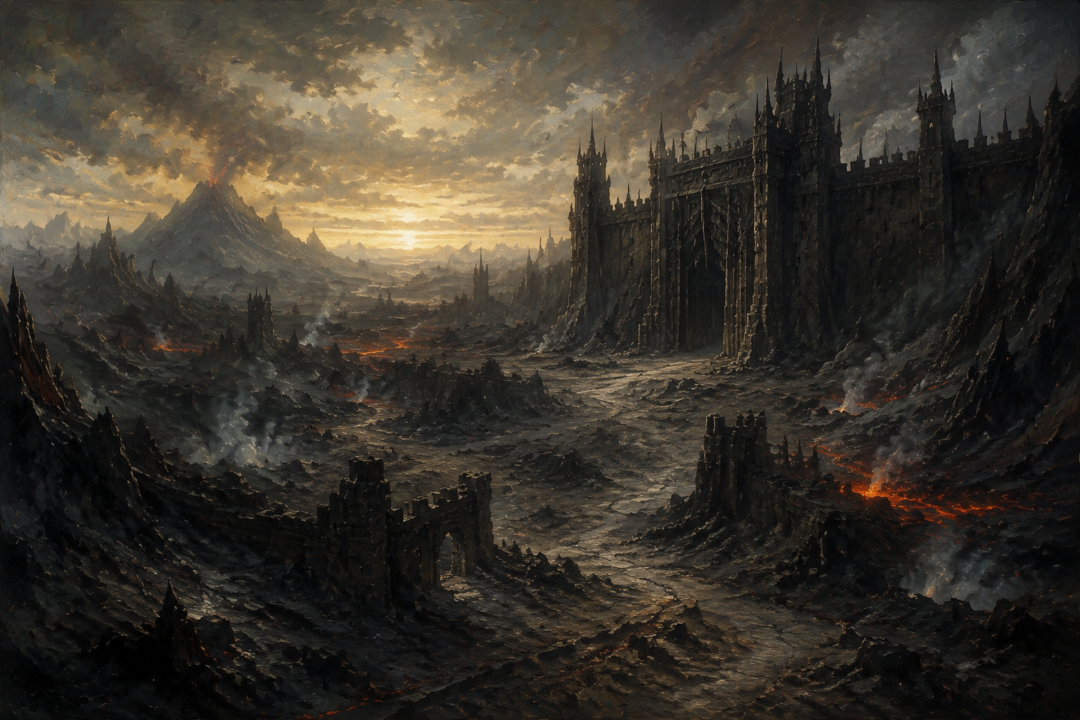
Barad-dûr was the greatest symbol of Sauron’s military power in the Third Age. The fortress stood near the eastern side of Mordor and served as Sauron’s main seat after his return from the East. The Lord of the Rings describes it as a vast stronghold that had been rebuilt after its earlier destruction at the end of the Second Age.
The tower’s history already shows that Sauron’s works were not automatically tied together as one single structure. After the defeat of Sauron in the War of the Last Alliance, Barad-dûr was taken down because the Ring was still in existence and Sauron’s power had been greatly weakened. However, the foundations could not be completely destroyed while the One Ring endured.
When Sauron regained strength in the Third Age, he rebuilt the fortress around those surviving foundations. Its existence was deeply connected to his own power and the Ring that carried a portion of his strength.
But Barad-dûr was only one part of Mordor’s defenses.
The land contained other fortifications, including the Black Gate of Mordor, known as the Morannon, and the Tower of Cirith Ungol. These places served different strategic purposes. The Morannon guarded the main entrance into Mordor from the northwest, while Cirith Ungol controlled a dangerous pass through the mountains.
Their survival after Sauron’s defeat demonstrates that the fall of the Dark Tower was not the same as the disappearance of every stronghold associated with the Enemy.
The One Ring Destroyed Sauron’s Power, Not His Entire Physical Legacy
The collapse of Barad-dûr happens because the One Ring is destroyed. The Ring was not merely a weapon or symbol of authority; it was the object into which Sauron had placed much of his own power.
When Frodo and Gollum’s actions bring about the Ring’s destruction, Sauron’s ability to maintain his dominance collapses. The Lord of the Rings describes the Dark Tower shaking and falling as Sauron’s will is broken.
However, this does not mean every stone shaped by Sauron’s servants was dependent on his survival.
A useful comparison is the downfall of Morgoth in the First Age. When Morgoth was defeated and removed from the world, the lands he had damaged did not instantly become untouched. The scars remained. Mountains, ruins, and corrupted places continued to exist as reminders of his ancient conflict.
The same principle applies to Mordor. Sauron’s defeat ended his command, but it did not reverse every consequence of his centuries of influence.
The destruction of evil in Tolkien’s world often requires more than defeating the source of corruption. The aftermath must be lived through by those who remain.
Mordor Was a Land, Not an Illusion
One of the most important details about Mordor is that it was a physical place long before the final defeat of Sauron.
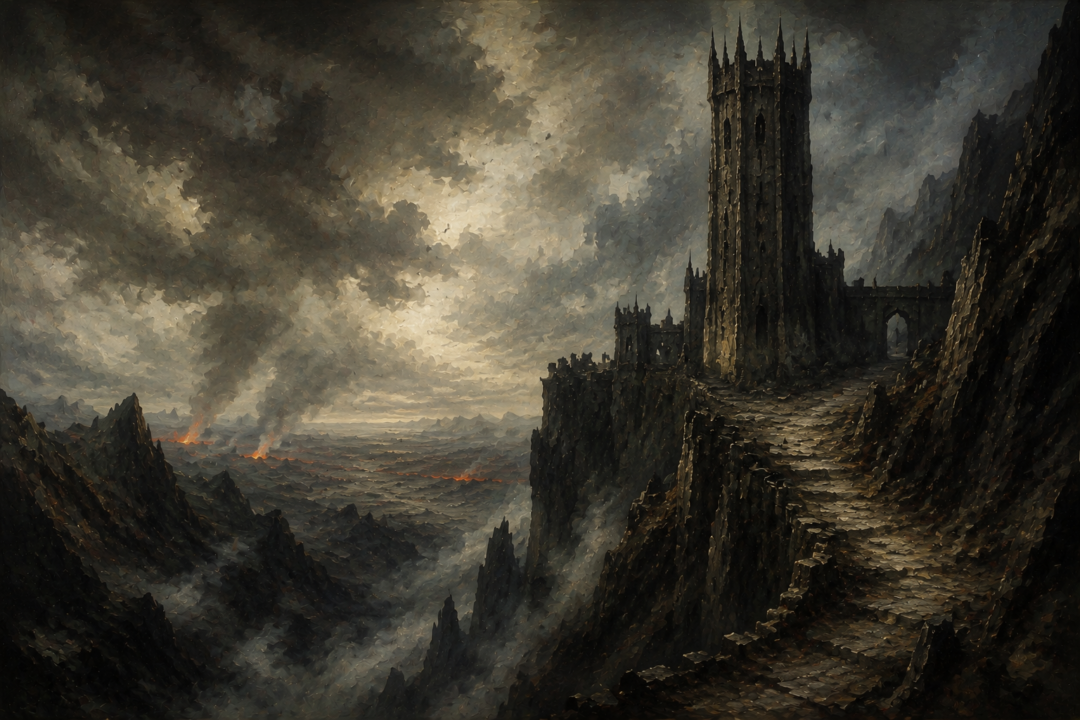
The land itself had natural boundaries: mountains surrounding it on several sides and the volcanic region of Orodruin within it. Sauron chose Mordor as his realm because it was already a harsh and defensible region.
His presence intensified its darkness, but he did not create the entire geography from nothing.
The Black Gate, Cirith Ungol, and other fortifications were built works of stone and labor. They were monuments to military control, not magical projections sustained only by Sauron’s existence.
This is why the armies of the West still had to deal with the practical reality of Mordor after the War of the Ring. A fallen tyrant does not automatically remove every weapon, fortress, or battlefield he leaves behind.
The same theme appears throughout Tolkien’s writing: history leaves ruins behind.
The Fall of Barad-dûr Was Symbolic Because It Represented the Shadow
Although other fortresses remained, Barad-dûr’s destruction carried enormous symbolic meaning.
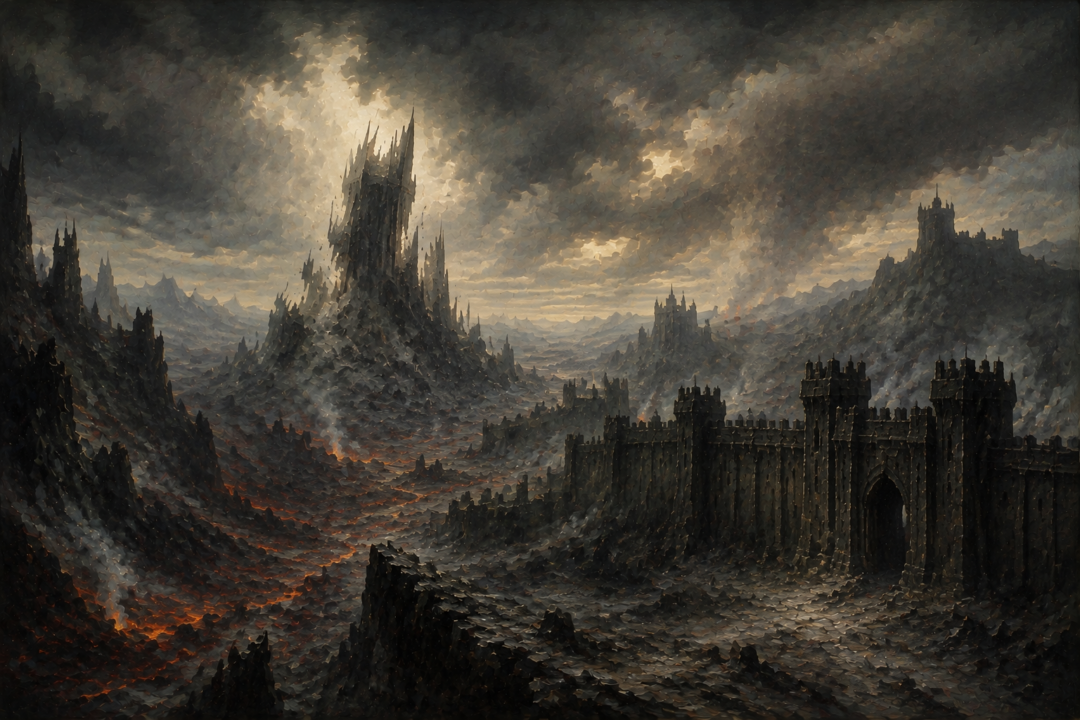
The Dark Tower represented more than a military headquarters. It was the visible expression of Sauron’s ambition to dominate Middle-earth. Its fall showed that the central force holding the Shadow together had been broken.
The contrast is important:
Barad-dûr fell because it was bound closely to Sauron’s own power.
Other fortresses remained because they were physical creations that could survive after their master was defeated.
This distinction reflects one of Tolkien’s recurring ideas: evil can build impressive things, but it cannot create a lasting order based only on domination. The structures of tyranny may endure for a time, but the will behind them can be defeated.
What Happened to Mordor After Sauron’s Defeat?
The books do not provide a detailed account of every fortress and structure in Mordor after the War of the Ring. Tolkien does not explicitly describe a complete rebuilding program or the fate of every stronghold.
However, the texts show that Mordor continued to exist as a place after Sauron’s fall.
Aragorn, as King Elessar, grants mercy to some of the defeated peoples who had been forced into Sauron’s service. The Fourth Age begins not with Middle-earth forgetting the damage of the Shadow, but with the difficult task of healing.
Mordor’s future was therefore not simply a matter of removing a villain. The land had to recover from generations of warfare and oppression.
The ruins of Sauron’s age would remain as warnings.
The Tragedy of Mordor’s Fortresses
There is a deeper irony in the survival of Mordor’s strongholds. Sauron created fortresses because he wanted permanence. He wanted his rule to appear inevitable, his power unbreakable, and his enemies powerless.
Yet the very survival of those ruins becomes a reminder of his failure.
Barad-dûr’s collapse was not important because every stone of Mordor vanished. It was important because the force that gave those stones meaning was gone.
A fortress can remain standing after its ruler falls. A wall can survive after the army behind it is defeated. A tower can cast a shadow long after the hand that built it has disappeared.
In Tolkien’s world, the defeat of evil is rarely the simple removal of darkness. The world must still carry the memory of what happened.
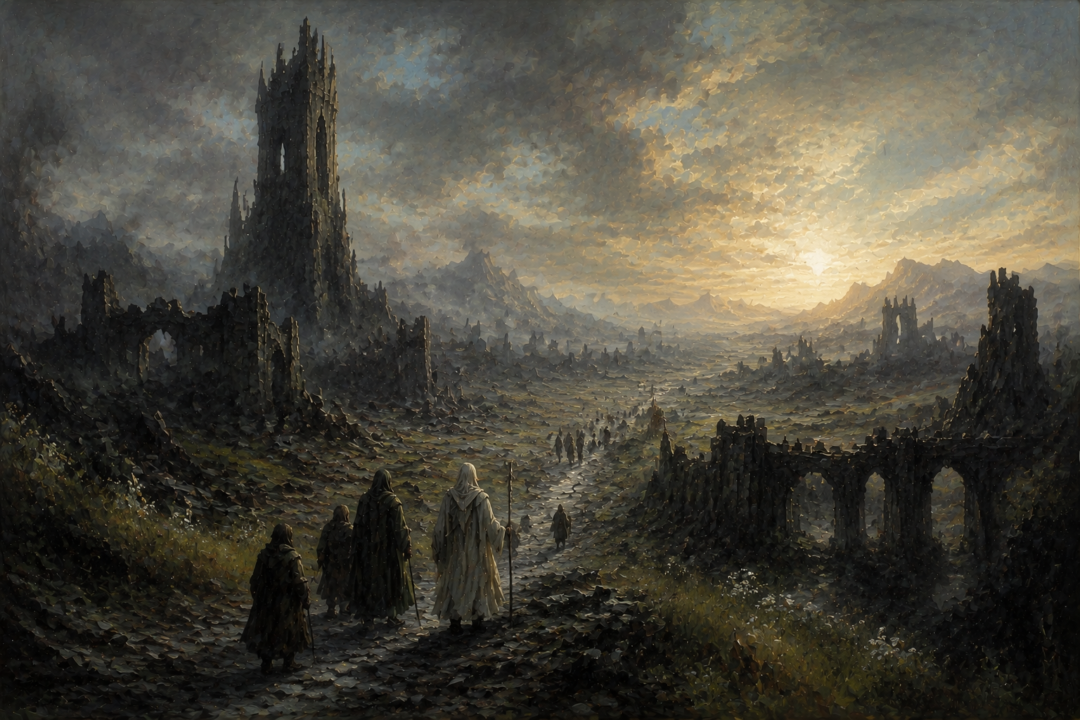
The Lasting Lesson of the Dark Tower’s Fall
The fall of Barad-dûr is one of the greatest images of victory in The Lord of the Rings, but its meaning is deeper than the destruction of a single building.
Sauron’s defeat did not erase Mordor’s history. It ended his power over that history.
The Black Gate, Cirith Ungol, and other remains of the Shadow could survive because they were part of the physical world. They were ruins waiting for a new age, not extensions of a living darkness.
The destruction of the One Ring broke the will that controlled Mordor. It did not erase the wounds left behind.
That is why Barad-dûr’s fall is both a triumph and a reminder: defeating evil may happen in a single moment, but healing the world afterward is a task for those who inherit it.
Sources & Notes
- The Encyclopedia of Arda, “Barad-dûr” — traces the Dark Tower’s construction, the Ring-dependent survival of its foundations after the Last Alliance, its rebuilding, and its final collapse when the Ring was destroyed. https://www.glyphweb.com/arda/b/baraddur.php
- The Encyclopedia of Arda, “Morannon” — documents the Black Gate as a distinct fortification guarding Mordor’s principal northern entrance, supporting the article’s distinction between Barad-dûr and Mordor’s wider defensive system. https://www.glyphweb.com/arda/m/morannon.php
- The Encyclopedia of Arda, “Tower of Cirith Ungol” — describes the separate watchtower and its strategic history at the pass, providing context for Mordor’s independently built border strongholds. https://www.glyphweb.com/arda/t/towerofcirithungol.php
- The Encyclopedia of Arda, “Mordor” — surveys Mordor’s physical geography, mountain boundaries, regions, roads, and strongholds, supporting the article’s treatment of it as a real defended land rather than a projection sustained solely by Sauron. https://www.glyphweb.com/arda/m/mordor.php
Sources checked against the article’s claims about Barad-dûr’s Ring-dependent foundations and fall, and the separate physical geography and fortifications of Mordor.