Why Mithril Became Almost Unobtainable After Moria Fell — But Never Truly Vanished
Frodo Baggins entered Moria wearing something more valuable than almost anyone around him understood.
Beneath his ordinary clothes was the small coat of mithril-mail that Thorin Oakenshield had given Bilbo after it was recovered from Smaug’s treasure. To Bilbo it had been a magnificent gift. To Gandalf, who understood what had happened to mithril since the fall of Khazad-dûm, its value was almost absurd: he tells the Fellowship that the coat was worth more than the Shire and everything in it.
That extraordinary valuation reveals an important distinction.
By the end of the Third Age, mithril was desperately scarce. But scarce did not mean extinct.
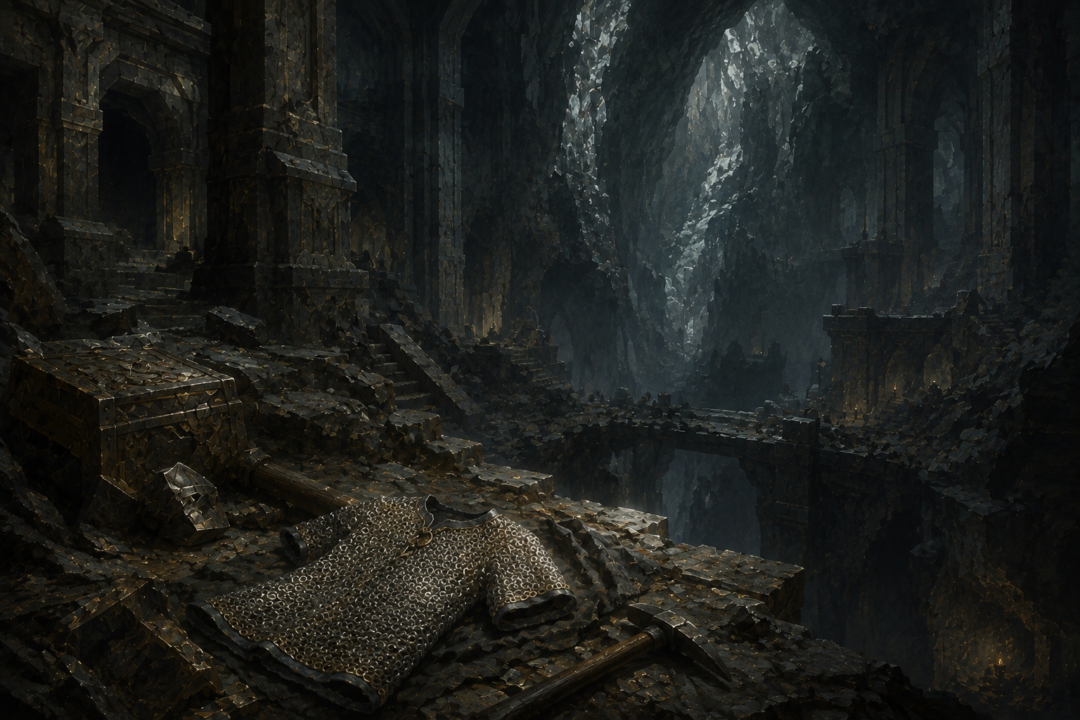
The fall of Moria had not caused every piece of mithril to disappear. It had destroyed something arguably more important: the only functioning source of new mithril known in Middle-earth at that time.
From then on, mithril increasingly became a material inherited, hoarded, plundered, rediscovered, and reused rather than routinely mined.
Khazad-dûm Was More Than a Mithril Mine
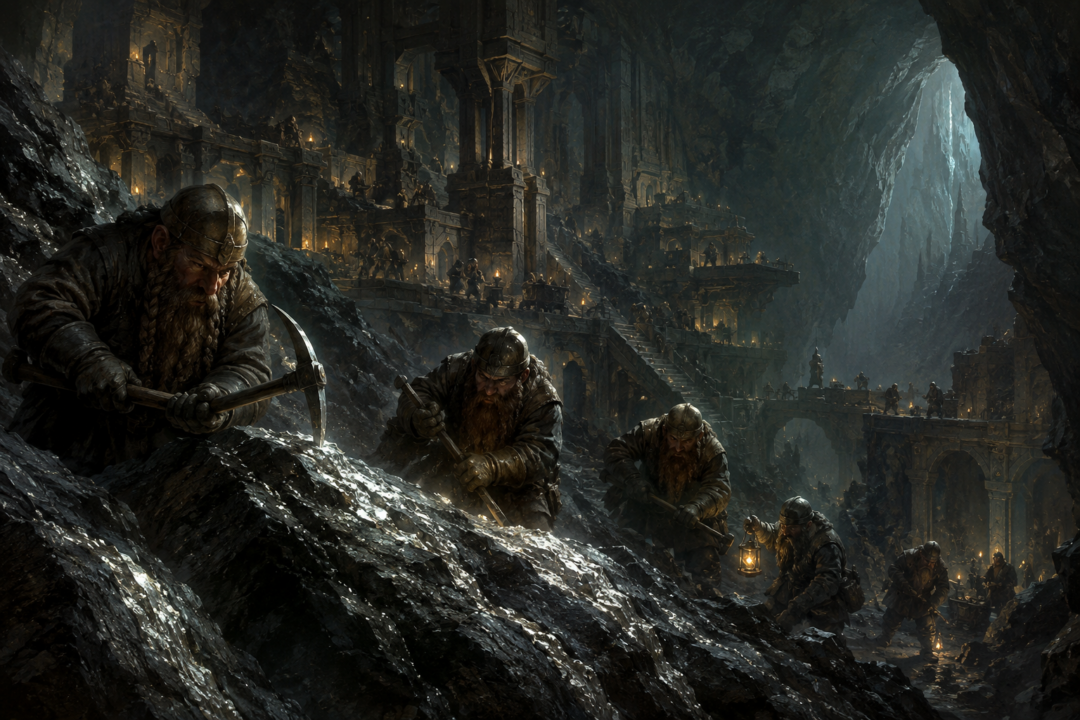
Before its ruin, Khazad-dûm was the greatest mansion of the Longbeards. Its halls stretched beneath the Misty Mountains, and its wealth supported both trade and craftsmanship on an extraordinary scale.
Mithril lay at the heart of that prosperity.
In The Fellowship of the Ring, Gandalf explains that the Dwarves did not depend upon Moria's gold, jewels, or even iron. Those materials could be obtained through trade. What made Khazad-dûm exceptional was Moria-silver: mithril.
Gandalf says that “here alone in the world” it was found.
That statement needs one qualification when the wider legendarium is considered. Unfinished Tales indicates that mithril had also existed in Númenor. The Elendilmir was set upon a mithril fillet, and an authorial note explicitly says that the metal was found in Númenor. Tar-Telemmaitë was also associated with seeking mithril.
But Númenor had been destroyed beneath the sea in the Second Age.
So Gandalf's statement works naturally from the perspective of the late Third Age: Khazad-dûm was the known surviving source of mithril in Middle-earth.
Once Moria ceased functioning as a Dwarven kingdom and mining centre, there was apparently no equivalent source waiting elsewhere to replace it.
That is the real beginning of mithril's later scarcity.
The Dwarves Had Followed the Mithril Too Deep
Mithril did not merely enrich Khazad-dûm. Its pursuit contributed to its catastrophe.
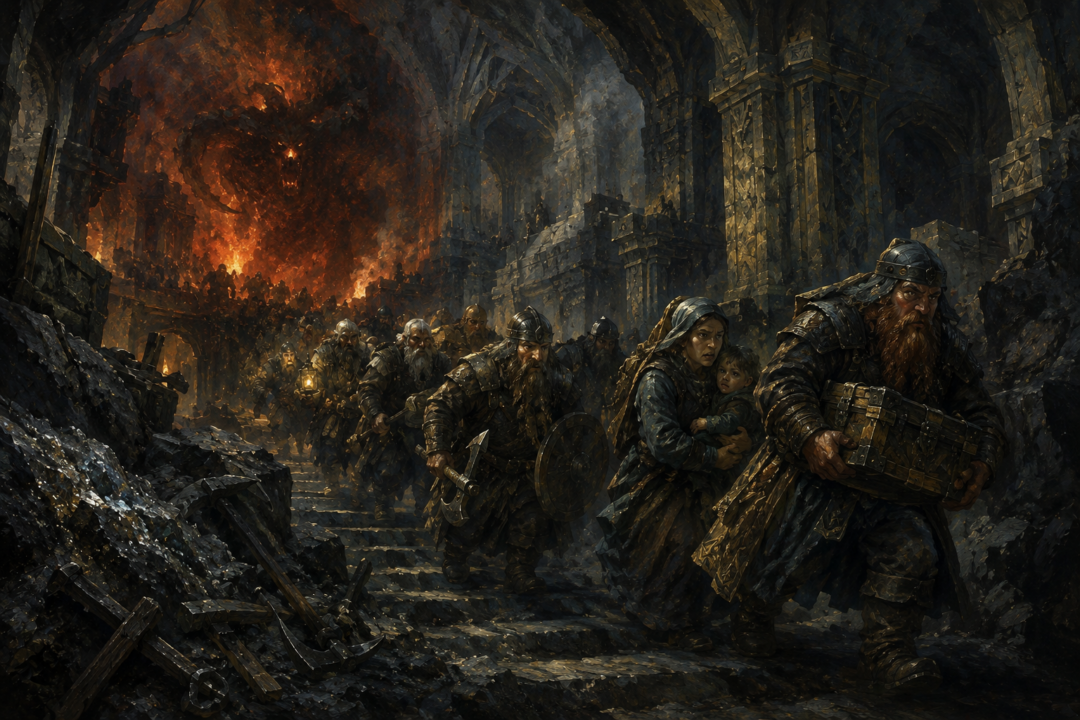
Gandalf says that the mithril lodes ran north toward Caradhras and descended into darkness. The Dwarves, driven by the immense value of the metal, delved increasingly deep.
There they awakened Durin's Bane.
The creature was a Balrog, a surviving terror from the Elder Days. In Third Age 1980 it slew Durin VI. The following year it killed his son Náin I, and the Dwarves abandoned Khazad-dûm.
This creates one of the darkest ironies in Moria's history.
The substance that had helped make the kingdom enormously wealthy also encouraged the digging that exposed the hidden danger beneath it.
The fall therefore created two related problems.
First, the Dwarven population capable of operating the mines fled.
Second, the richest remaining deposits were precisely in the depths that had become terrifyingly dangerous.
The mithril had not necessarily run out.
Access to it had collapsed.
Scarcity Is Not the Same Thing as Exhaustion
This distinction explains an apparent contradiction in the texts.
Gandalf says that little mithril remains “above ground,” yet he also describes the lodes continuing downward beneath the mountains.
That strongly suggests that the problem was not simply geological exhaustion.
Mithril apparently remained underground.
But reaching it required entering the deepest regions of Moria, where the Dwarves had encountered Durin's Bane. Even the Orcs who later occupied and plundered Moria did not dare to continue the deep mining.
That changes the economic meaning of scarcity completely.
Imagine a precious metal whose richest known deposits still exist, but whose mine has become effectively inaccessible. Existing objects made from that metal do not vanish. Stored ingots do not vanish. Heirlooms do not vanish.
But new supply nearly stops.
Every surviving object consequently becomes more precious.
This is essentially what happened to mithril.
Before Moria's fall, Gandalf says its value had been ten times that of gold. By the time the Fellowship entered Moria, he describes it as beyond price.
The difference was not that mithril had ceased to exist.
The supply system had died.
Orc Plunder Made the Shortage Worse
There was another pressure on the surviving supply.
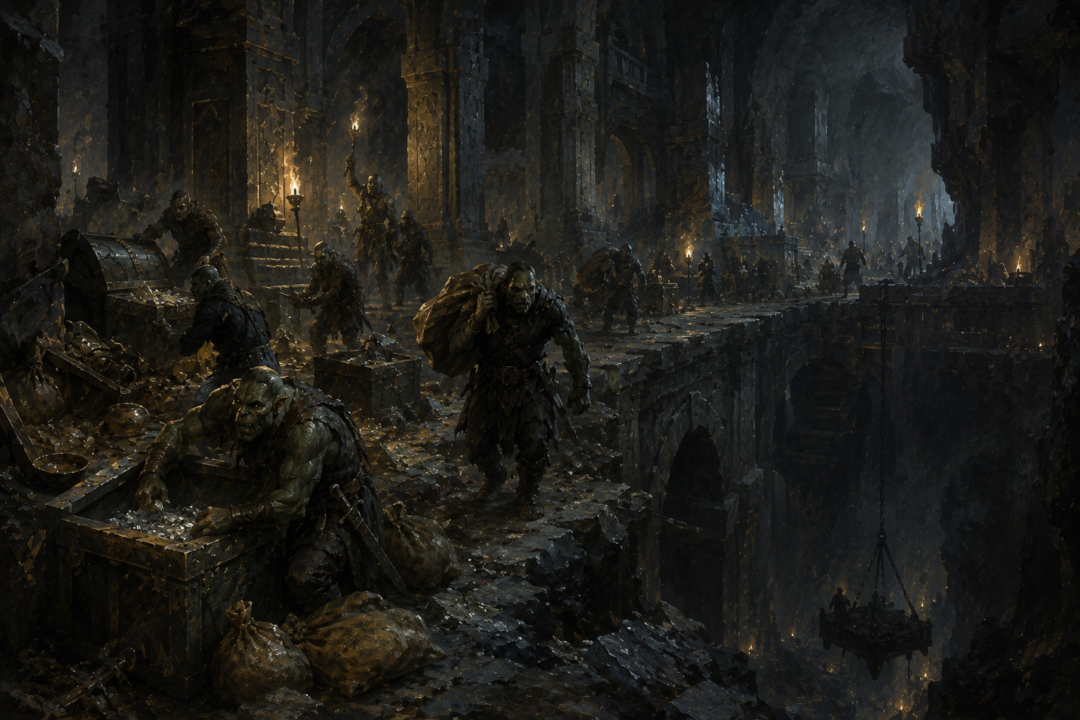
Moria did not remain untouched after the Dwarves fled. Orcs repeatedly plundered its accessible halls.
Gandalf says that the Orcs had gathered nearly all the mithril that the Dwarves had already brought to light and sent it as tribute to Sauron, who coveted it.
That detail matters enormously.
It means that much of the remaining accessible stock was not circulating through ordinary trade. It was being concentrated in the hands of the Enemy.
The texts do not establish exactly what Sauron ultimately did with all the mithril he acquired, so claims about a specific final purpose should be treated cautiously.
What is clear is the direction of movement.
Existing mithril was being removed from Moria and accumulated by Sauron, while new mining had effectively stopped.
For everyone outside his power, scarcity would therefore have become even more severe.
Yet Mithril Objects Continued to Survive
This is why it would be wrong to describe mithril as completely lost after Moria.
The clearest example is Frodo's coat.
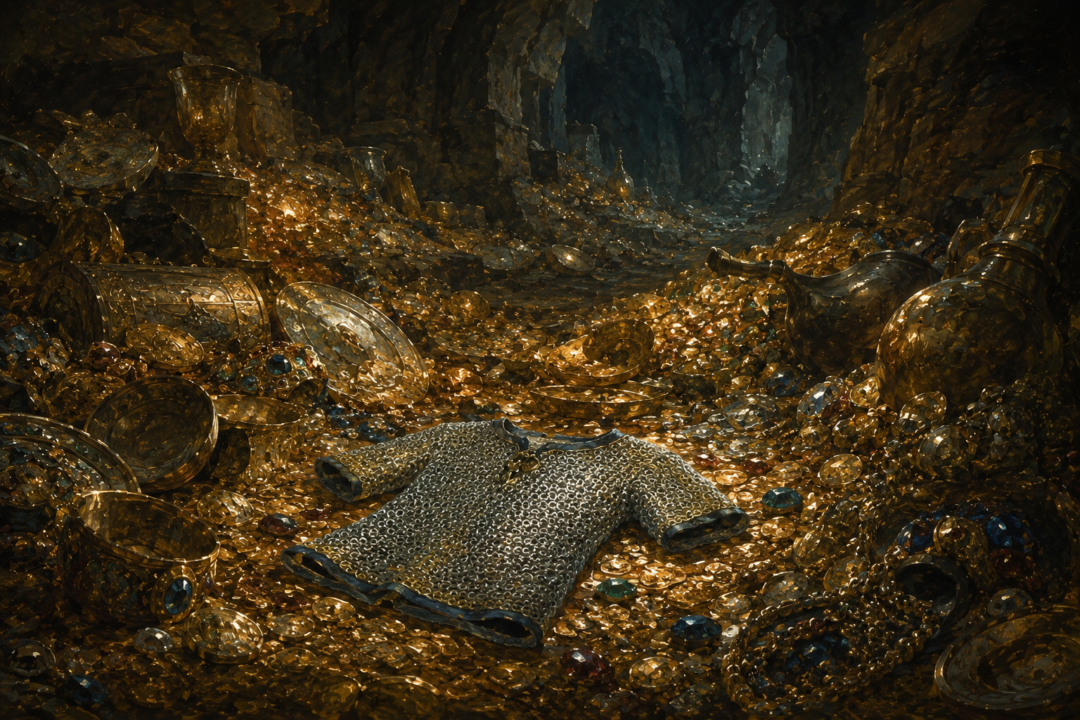
It had already been made long before Frodo received it. The mail had been fashioned for a young Elf-prince and eventually became part of Smaug's treasure beneath Erebor. Thorin later gave it to Bilbo, who eventually passed it to Frodo.
Its survival demonstrates exactly how mithril could remain in the world after production had largely ceased.
Finished objects could endure.
And mithril was exceptionally suited to enduring. Gandalf describes it as light yet harder than tempered steel, with a beauty like silver that did not tarnish or grow dim.
A well-made mithril object could therefore pass through generations, wars, ruined kingdoms, dragon hoards, and forgotten treasuries.
Mithril had become something closer to an heirloom resource than an actively supplied commodity.
Númenor Proves the History Was Larger Than Moria
The Númenórean evidence makes the situation even more interesting.
If mithril existed in Númenor, then Khazad-dûm was not necessarily the only place in the entire history of Arda where it occurred.
But Númenor's destruction removed that source from the world of Men.
This means the history of mithril contains two enormous supply catastrophes.
One source disappeared with Númenor beneath the sea.
The surviving famous source beneath the Misty Mountains became inaccessible after the awakening of Durin's Bane.
By the late Third Age, the world was living largely on what earlier ages had already produced.
That pattern appears repeatedly throughout Middle-earth: later peoples inherit wonders they can preserve but cannot easily replace.
Mithril fits that larger atmosphere of decline remarkably well.
Moria's Mithril Could Still Reappear
The War of the Ring provides one final clue that mithril scarcity was never absolute.
After Sauron's defeat, Gimli and the Dwarves of Erebor undertook great works in Gondor. In the account of the later history of the Fellowship, Gimli's people are said to have made a new gate for Minas Tirith from mithril and steel.
The text does not give us a detailed supply ledger explaining precisely where every quantity of mithril came from.
That absence matters. We should not invent a renewed mining industry that the narrative never describes.
But the gate confirms the essential point: usable mithril still existed after the fall of Moria and even after the War of the Ring.
Old stocks, recovered material, inherited treasures, or some combination of surviving supplies could still be worked.
Scarcity had become extreme without becoming absolute.
The Real Loss Was the Ability to Replace What Was Used
That is the key to understanding mithril in the late Third Age.
Moria's fall did not erase mithril.
It broke the chain that produced it.
Some remained in finished artifacts. Some had been carried away before the disaster. Some entered treasure hoards. Much of what remained accessible in Moria was seized by Orcs and passed to Sauron. More apparently remained deep beneath the mountains, beyond places anyone dared safely mine.
The result was a world containing mithril but possessing almost no dependable way to obtain more.
That is why Bilbo could own a mithril coat while mithril itself was “beyond price.”
The coat was not evidence that the metal remained common.
It was evidence of how much wealth from earlier ages could survive after the civilization that produced it had fallen.
Moria's deepest tragedy, then, was not that the last mithril disappeared with the Dwarves.
It was that enormous wealth could still lie beneath Caradhras while effectively belonging to no one.
The treasure remained.
The road to it had become darkness.
Sources & Notes
- The Encyclopedia of Arda, “Mithril” — https://www.encyclopedia-of-arda.com/m/mithril.html
- The Encyclopedia of Arda, “Khazad-dûm” — https://www.encyclopedia-of-arda.com/k/khazaddum.html
- The Encyclopedia of Arda, “Erebor” — https://www.encyclopedia-of-arda.com/e/erebor.html
Reference entries document the characters, places, events, and textual details discussed in this article.