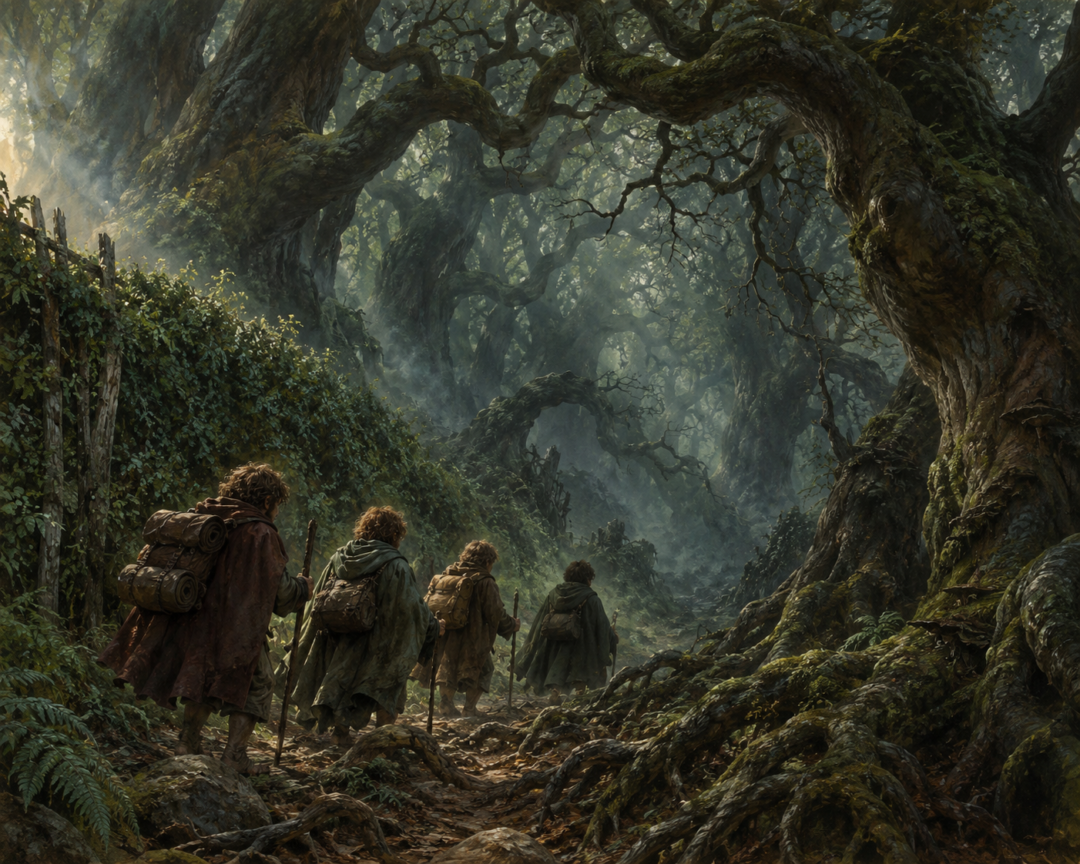
The four hobbits enter the Old Forest expecting trees. What they find instead is something closer to a wounded memory.
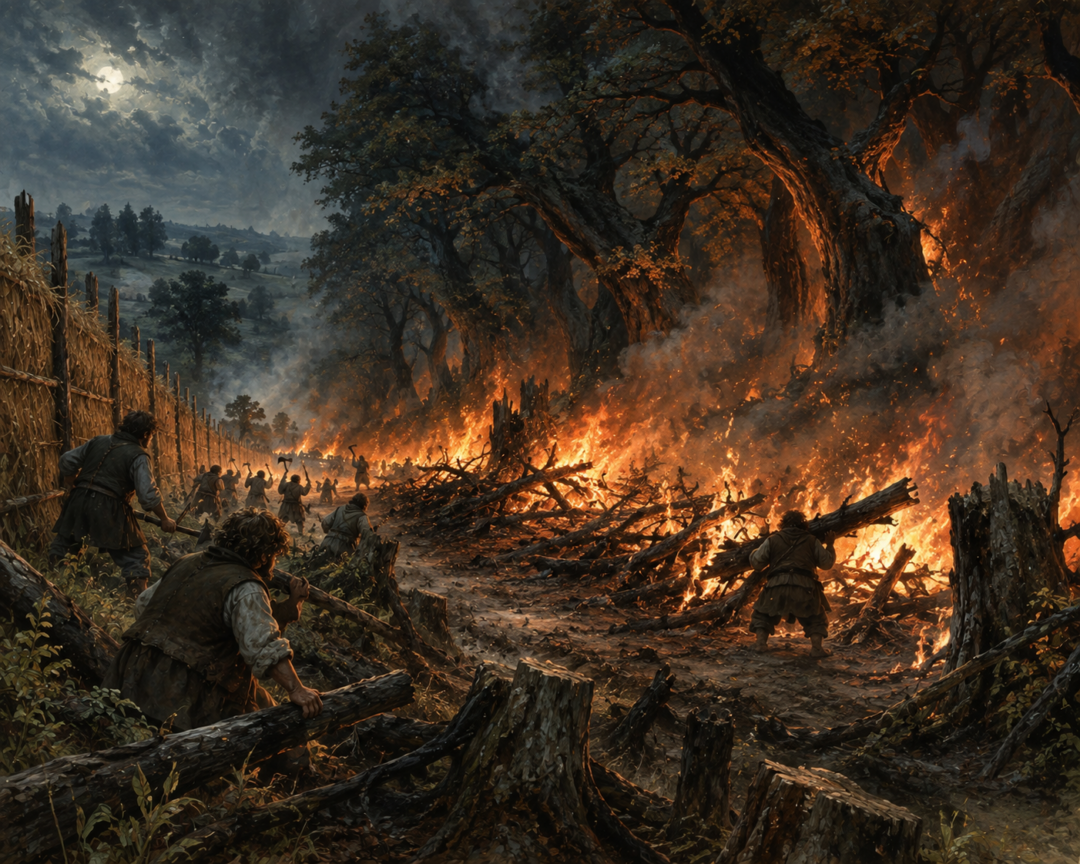
Branches seem to lean toward them. Paths refuse to remain trustworthy. The whole wood appears capable of pushing travellers where it wants them to go. Merry already knows that the trees can be dangerous, and his explanation includes an uncomfortable detail: the Bucklanders themselves once cut down hundreds of trees and burned them after the Forest pressed against their Hedge.
Much later, Merry and Pippin enter another ancient wood: Fangorn. There too the trees remember axes. There too destruction has accumulated into anger.
Yet the two forests respond very differently.
The Old Forest’s hostility has become broad and indiscriminate. Fangorn’s wrath, though immensely dangerous, can still distinguish between friend, stranger, and enemy. That difference reveals something important about memory in Middle-earth: suffering does not automatically produce wisdom. Memory can preserve justice—but it can also harden into suspicion, hatred, and domination.
Two Survivors of a Much Older World
The resemblance between the Old Forest and Fangorn is not accidental.
At the Council of Elrond, Elrond remembers a time when the forests of Eriador were so extensive that a squirrel could travel through trees from what became the Shire toward Dunland. Later, Treebeard remembers wandering through enormous western woods that have long since vanished.
The forests encountered in the late Third Age are therefore remnants of a much greener world.
That matters because both places possess memories far deeper than those of the people living beside them.
In the Old Forest, Tom Bombadil tells the hobbits about ancient trees that remember when they were effectively masters of the land. Some have grown dark-hearted through long ages. Their resentment is connected not merely to one recent enemy but to accumulated injuries and to the passing of a world in which trees once dominated vast spaces.
Fangorn carries a similarly enormous memory, but much of that memory has a voice.
Treebeard remembers landscapes that have disappeared. He remembers the Elves who taught the Ents language. He remembers trees individually. He remembers what was lost.
The distinction is subtle but crucial.
The Old Forest largely remembers injury as a condition.
Treebeard remembers injuries as events.
The Old Forest Has Learned to Distrust Walkers
Merry’s account of the Old Forest gives us one of the clearest examples of conflict between hobbits and trees.
The Bucklanders built the High Hay along their eastern boundary. According to Merry, trees eventually came close to the Hedge and leaned over it. The hobbits responded violently: they cut down hundreds of trees and made a great bonfire. They also burned a strip of ground inside the Forest.
The place became known as the Bonfire Glade.
This was not an invented grievance. The Forest really had suffered at the hands of hobbits.
But the hostility Frodo and his companions encounter is no longer directed only toward the specific Bucklanders responsible. The Forest appears suspicious of intruders generally. The hobbits feel watched, hemmed in, and deliberately guided away from the direction they want to travel.
Its memory has become collective.
This does not mean every tree in the Old Forest is equally malicious. The narrative is more complicated than that, and Tom’s later explanation places particular importance on the Withywindle valley and the Great Willow.
But it does mean that old injuries have become embedded in the character of the wood.
The Forest no longer needs to know whether these four particular hobbits have harmed it.
They walk on two legs.
They have entered.
That is almost enough.
Old Man Willow Turns Memory into Domination
The darkest difference between the two forests appears beside the Withywindle.
Old Man Willow is not simply an injured tree defending himself. Tom describes a being whose heart has become corrupt and whose influence has spread through much of the Forest. His thought and power extend outward until other trees fall substantially beneath his domination.
That changes the meaning of the Forest’s anger.
Old wounds may help explain its hostility, but they cannot excuse everything that follows.
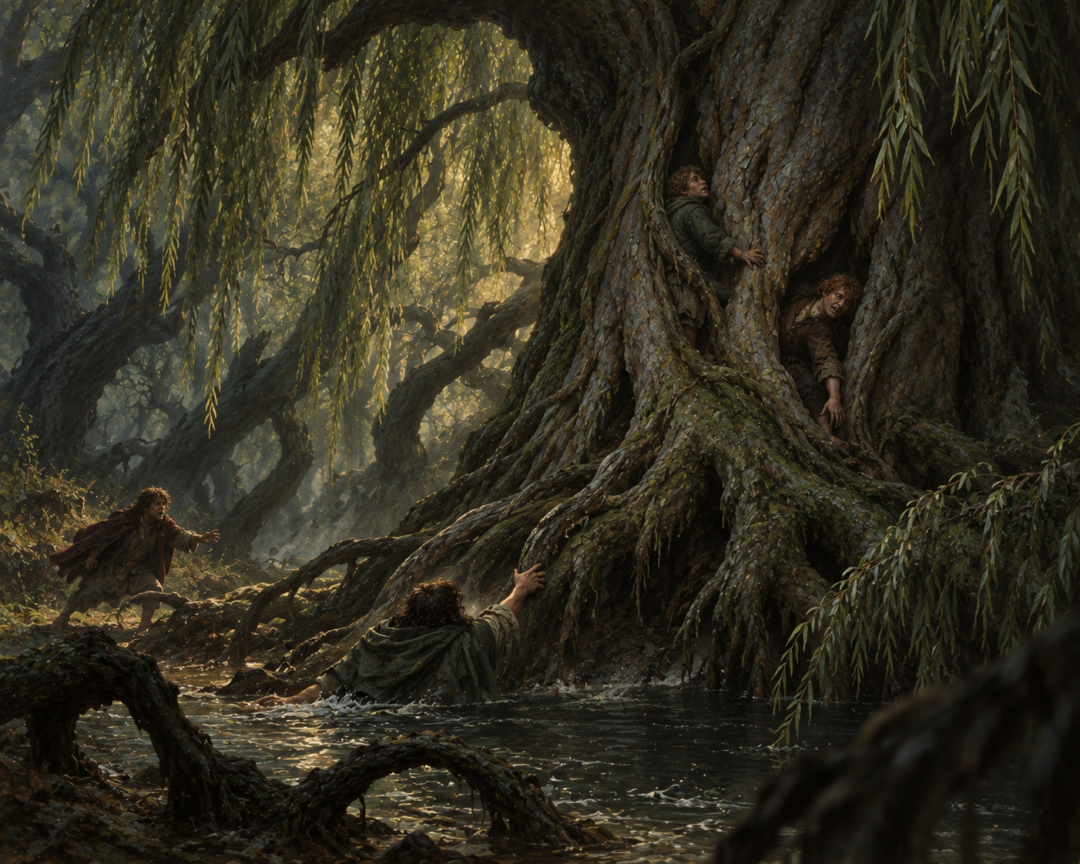
Old Man Willow attempts to kill travellers who had done nothing to him. Merry and Pippin are trapped inside him. Frodo is pushed into the water. His power works through enchantment, weariness, deception, and control.
This is memory transformed into something predatory.
The Great Willow does not merely remember violence.
He reproduces it.
That distinction is important because Middle-earth repeatedly separates understandable grievance from morally justified action. A being may have suffered genuinely and still become dangerous through what it does with that suffering.
Old Man Willow embodies that possibility in vegetal form.
Fangorn Remembers Names
Treebeard’s anger works differently.
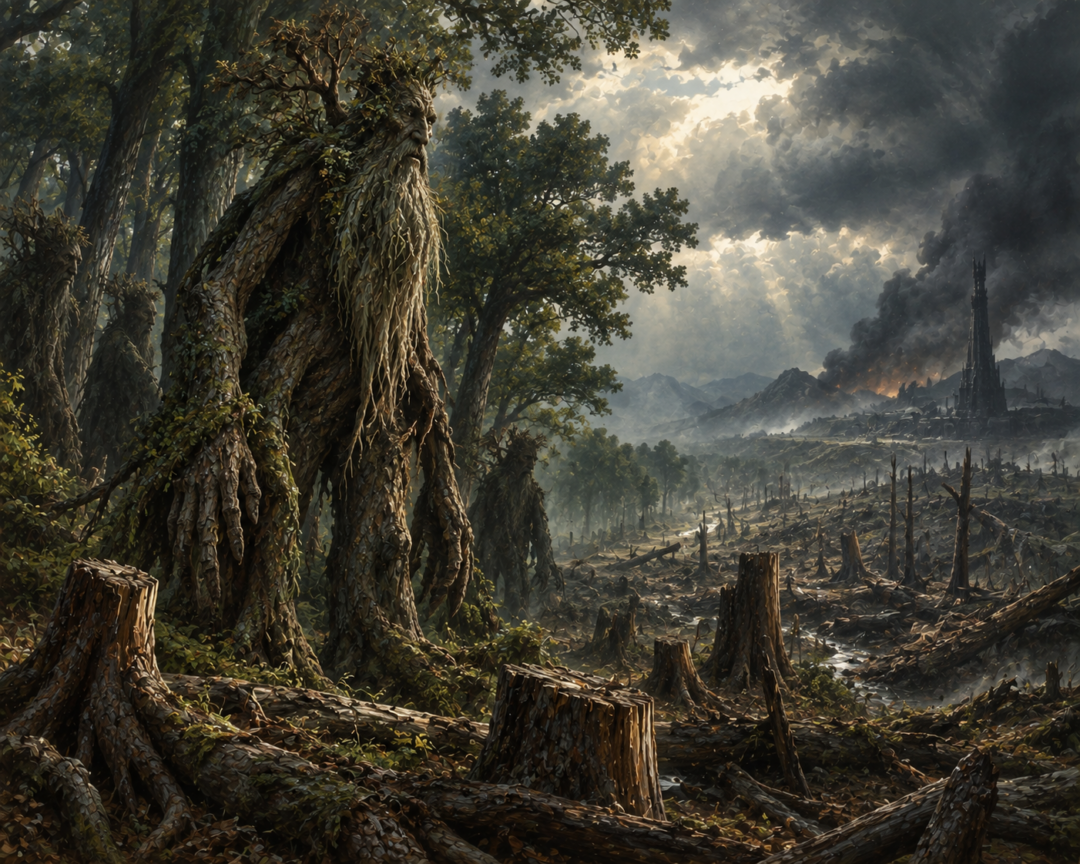
When he explains what Saruman’s servants have done, his grief is remarkably specific. Trees are being felled along the borders of Fangorn. Some are left to rot; others are taken away to feed the fires of Orthanc.
But Treebeard does not speak merely about lost timber or damaged woodland.
The trees were his friends.
He had known many from their beginnings. Some had voices that would never be heard again. Places that had once been living groves had become wastes of stumps and brambles.
Fangorn’s memory therefore remains personal.
That is one reason its anger can retain moral direction.
Treebeard knows who is committing the destruction. He understands Saruman’s responsibility. He recognizes the Orcs who have entered the Forest with axes.
He does not conclude that every creature walking on two legs deserves destruction.
Indeed, two small two-legged strangers are sitting in his company while he explains his grief.
Merry and Pippin Reveal the Difference
The same two hobbits help expose the contrast perfectly.
In the Old Forest, Merry and Pippin are potential victims simply because they have entered a hostile woodland. Old Man Willow makes no serious moral distinction between them and the people who once burned trees near the Hedge.
In Fangorn, Treebeard does distinguish.
He is cautious about the hobbits because he does not know what they are. But caution becomes conversation rather than immediate violence. He asks questions. He listens. He learns about them.
That capacity to judge individuals prevents ancient resentment from becoming universal hatred.
Fangorn is still perilous. Gandalf explicitly warns that the forest is dangerous, particularly to anyone too ready with an axe. Nor are all the beings beneath its trees as reasonable as Treebeard. The Huorns are mysterious and potentially terrifying, and Treebeard acknowledges that some parts of the forest have become wild.
But Fangorn possesses shepherds.
That may be one of the most important differences of all.
The Ents Give the Forest a Moral Memory
The Ents were created as shepherds of trees, and their role is more than physical protection.
They speak.
They deliberate.
They remember.
Treebeard can hold centuries of grief without immediately reducing the world to enemies and victims. When action finally comes, the Ents do not simply erupt.
They hold an Entmoot.
Their decision is extraordinarily slow by human standards, but that slowness matters. Wrath is forced through memory, speech, argument, and judgment before it becomes war.
When the Ents finally march, their anger has a destination: Isengard.
Gandalf describes Treebeard’s long wrath as overflowing, but importantly its tide is turned against Saruman and the axes of Isengard.
This is not harmless anger.
The assault on Isengard is catastrophic. Walls are torn apart, the industrial works are destroyed, and Saruman is trapped in Orthanc.
But it is directed.
The Ents know why they are fighting.
Fangorn’s Anger Is Also About Betrayal
Saruman’s crime is especially serious because he should have understood what he was destroying.
Treebeard had known him. Saruman had walked in Fangorn and spoken with him. He had gathered knowledge while increasingly turning toward machinery, domination, and war.
The destruction of the trees therefore carries an element of betrayal.
Saruman does not cut Fangorn because he is starving or desperately seeking shelter. His servants destroy living things to support an expanding war machine. Trees become fuel.
Some are not even used.
They are cut down and abandoned.
That apparently pointless destruction is particularly offensive to Treebeard. It is not merely exploitation but contempt.
Fangorn’s wrath emerges from recognizing that contempt and identifying its source.
The Old Forest’s hatred, by contrast, has become much harder to separate from the mere presence of outsiders.
Yet Fangorn Is Not Simply the “Good” Forest
It would be too simple to treat Fangorn as benevolent and the Old Forest as evil.
Both are ancient places where the boundary between ordinary vegetation and awakened life becomes uncertain.
Both contain beings capable of terrifying violence.
Both remember losses that younger peoples scarcely understand.
And both warn against assuming that forests exist merely for the convenience of those who walk through them.
The difference is not that Fangorn remembers while the Old Forest forgets.
Both remember.
The difference is what memory has become.
In the Old Forest, centuries of injury have contributed to an atmosphere in which strangers themselves are suspect, while the corrupt influence of Old Man Willow has spread through much of the wood.
In Fangorn, memory remains capable of naming what was loved, what was destroyed, and who destroyed it.
One memory has become generalized hostility.
The other can still become judgment.
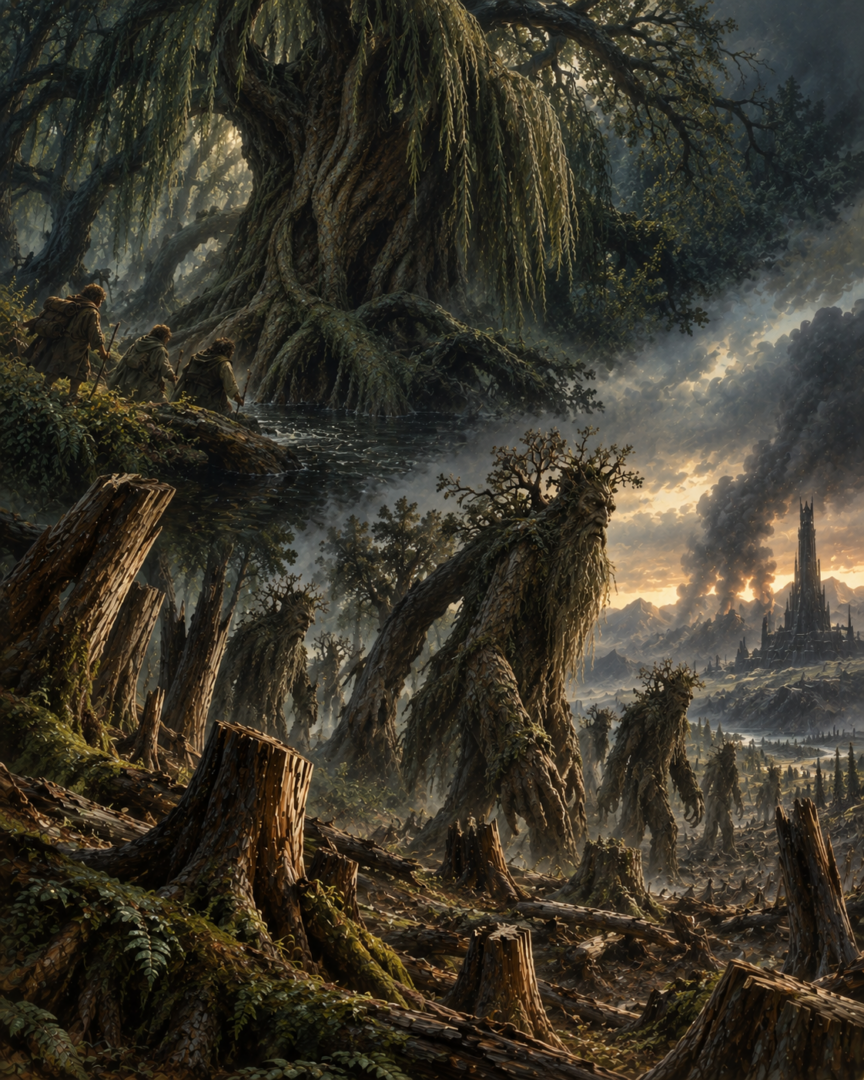
The Most Dangerous Thing a Forest Can Remember
There is a striking irony here.
The Old Forest lies beside the Shire, one of the safest and gentlest societies in Middle-earth. Fangorn stands beside Isengard, which under Saruman becomes one of the great centres of organized destruction during the War of the Ring.
Yet the forest beside the Shire nearly kills innocent travellers.
The forest beside Isengard eventually helps destroy the power that is consuming it.
The difference is not explained by the innocence of their neighbours. Hobbits really did burn part of the Old Forest, while Saruman’s servants really were destroying Fangorn.
Instead, the contrast lies in whether memory can still make distinctions.
Fangorn remembers trees as friends, Orcs as destroyers, Elves as ancient teachers, hobbits as unexpected guests, and Saruman as a betrayer.
Old Man Willow’s world has narrowed much further. His ancient strength has become entangled with control, resentment, and hunger for power over everything around him.
That may be why these two remnants of the ancient forests feel so different despite sharing such deep roots.
Fangorn shows memory becoming wrath without entirely losing wisdom.
The Old Forest shows what can happen when remembered injury outlives discrimination between the guilty and the innocent.
Both forests remember the axe.
Only one can still reliably ask whose hand is holding it.
Sources & Notes
- The Encyclopedia of Arda, “Old Forest” — https://www.encyclopedia-of-arda.com/o/oldforest.php
- The Encyclopedia of Arda, “Fangorn Forest” — https://www.encyclopedia-of-arda.com/f/fangornforest.php
- The Encyclopedia of Arda, “Ents” — https://www.encyclopedia-of-arda.com/e/ents.php
- The Encyclopedia of Arda, “Huorns” — https://www.encyclopedia-of-arda.com/h/huorns.php
Reference entries document the people, places, events, and textual details discussed in this article.