The secret door of Erebor depends on something far stranger than a date.
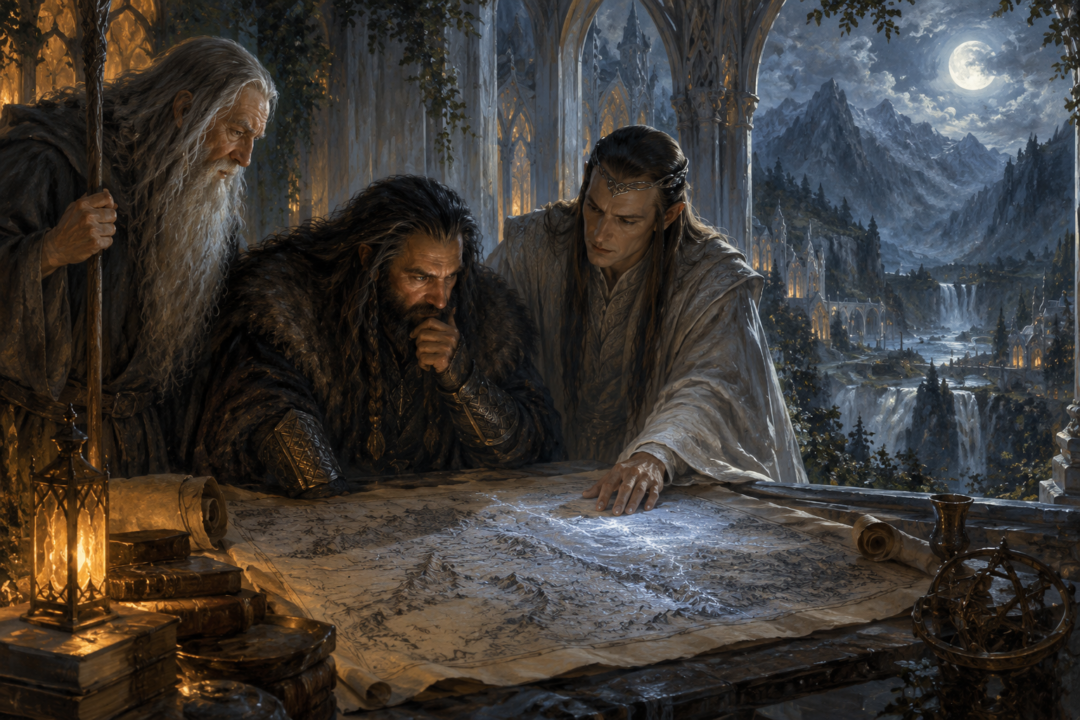
When Elrond reads the moon-letters on Thrór’s map, the instructions point toward Durin’s Day: the moment when the setting Sun will reveal the hidden keyhole in the Lonely Mountain. It sounds at first like a festival that ought to have a simple calendar equivalent. Find Durin’s Day, convert it into a modern date, and the mystery is solved.
But Thorin immediately reveals why that approach fails.
Durin’s Day is tied to the Moon, the season, and the simultaneous appearance of Moon and Sun. It is not presented as the Dwarvish equivalent of a fixed annual date such as January 1.
More importantly, even Thorin cannot simply calculate when it will occur.
That small admission exposes one of the most interesting pieces of calendar lore in The Hobbit: Durin’s Day belongs to a way of measuring time that does not fit neatly onto a modern fixed calendar.
What Thorin Actually Says About Durin’s Day
The crucial explanation comes in Chapter 3 of The Hobbit, after Elrond discovers the moon-letters on Thrór’s map.
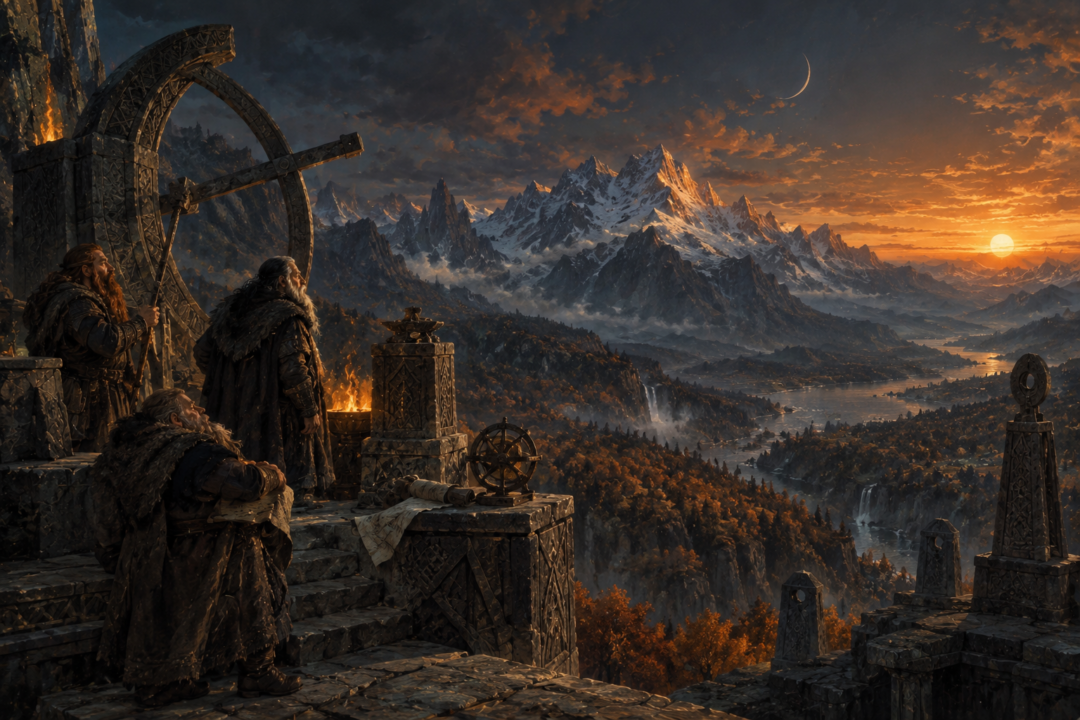
Thorin identifies the beginning of the Dwarves’ New Year as “the first day of the last moon of Autumn on the threshold of Winter.” Durin’s Day is the name retained for the occasion when that last moon of autumn and the Sun are together in the sky.
The wording matters.
Thorin does not give Elrond a numbered day in a numbered month. Instead, he defines the occasion through astronomical and seasonal conditions.
There are therefore several ideas bound together:
The Dwarvish New Year begins with a particular lunar cycle.
That lunar cycle is identified by its position near the end of autumn and beginning of winter.
Durin’s Day also involves the Moon and Sun being visible in the sky together.
This is fundamentally different from saying that Durin’s Day always falls on a particular modern calendar date.
A Lunar Rule Does Not Stay Fixed Against a Solar Calendar
The basic problem becomes clearer once the Moon is considered.
A lunar cycle is roughly 29½ days long. Twelve such cycles are therefore substantially shorter than an ordinary solar year. Unless a calendar introduces some method of reconciling lunar months with the seasons, lunar dates drift relative to a solar calendar.
But Thorin’s definition contains both lunar and seasonal elements.
The relevant moon must be the last moon of autumn, near the threshold of winter.
That means the Dwarvish rule cannot be reduced merely to “count twelve lunar months from the previous Durin’s Day” without knowing more about how their calendar reconciled lunar cycles with the seasonal year.
The Hobbit never supplies a complete mathematical specification for that calendar.
We know the criterion Thorin describes. We do not receive enough technical rules to reconstruct every Dwarvish year indefinitely and translate each one unambiguously into the Gregorian calendar.
That distinction is important.
Knowing what identifies a sacred or calendrical day is not necessarily the same thing as possessing the complete computational system once used to predict it.
“Autumn” Creates Another Problem
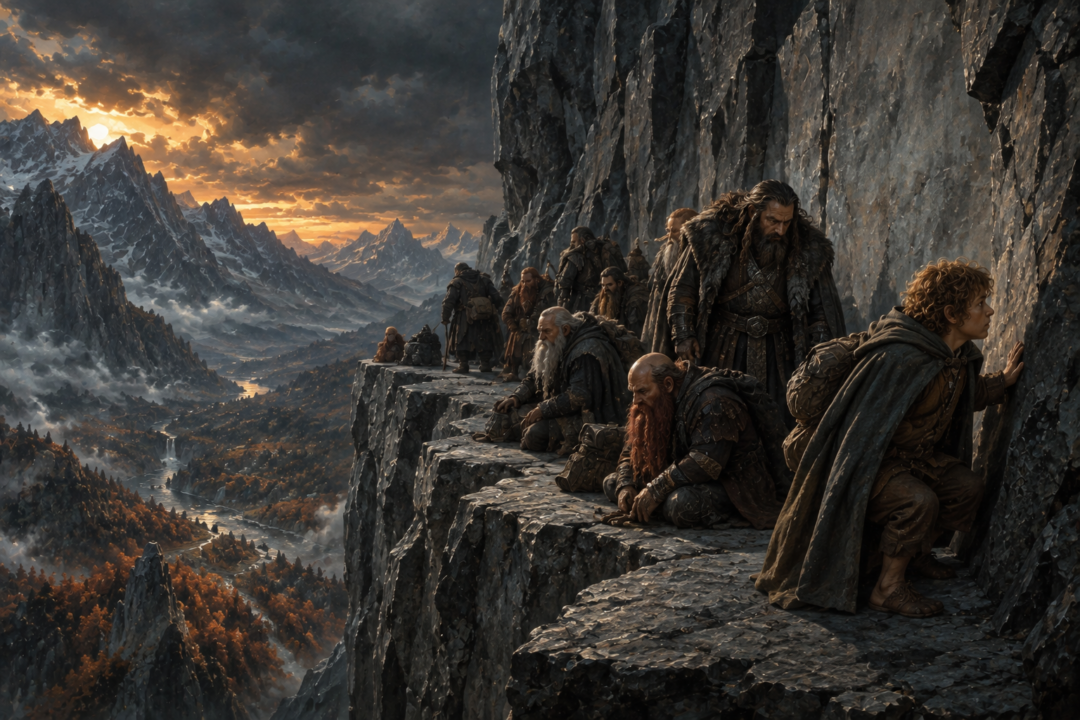
Even if the lunar cycle were calculated perfectly, another question remains: exactly what does “Autumn” mean in Thorin’s definition?
Modern readers can instinctively impose modern astronomical seasons on the phrase, treating autumn as the period ending at the December solstice. But the text does not tell us that this is how the Dwarves defined the boundary.
Middle-earth contains several calendrical traditions, and their divisions of the year should not automatically be equated with the modern Gregorian calendar.
Appendix D of The Lord of the Rings demonstrates just how seriously different peoples could organize the year differently. The Shire Reckoning, the calendars associated with the Dúnedain, and the Eldarin reckoning do not simply amount to modern months with unfamiliar names.
The Dwarvish calendar is much less fully described.
So while modern astronomy can identify new moons with extraordinary precision, astronomy alone cannot answer a cultural question the surviving description leaves undefined: which particular lunar cycle would the Dwarves themselves classify as the last moon of autumn “on the threshold of Winter”?
Any exact modern conversion requires assumptions.
Those assumptions may produce plausible reconstructions, but they remain reconstructions.
Thorin Himself Admits the Knowledge Has Been Lost
Perhaps the strongest warning against overconfident calculation comes from Thorin.
Immediately after explaining Durin’s Day, he says that the definition will not help them much because determining when such a time will come again “passes our skill in these days.”
That is remarkable.
Thorin is not an outsider trying to decipher an obscure Dwarvish custom. He is Durin’s heir, leader of the company, and a descendant of the royal house of Erebor.
Yet even he acknowledges that the necessary skill is no longer readily available to them.
This makes Durin’s Day part of a larger pattern surrounding the Dwarves in The Hobbit: knowledge has survived, but imperfectly.
Thrór’s map survives.
The key survives.
The moon-letters survive.
The secret door survives.
Yet the practical knowledge needed to connect all those things has become uncertain.
Durin’s Day is therefore not merely a date the company forgot to write down. It represents a fragment of inherited knowledge whose old precision has faded.
The Moon-Letters Follow the Same Pattern
The map itself reinforces this theme.
Elrond explains that moon-letters cannot simply be read whenever someone wishes. Ordinary moon-letters must be viewed under appropriate lunar conditions, and the particularly secret letters on Thrór’s map can be seen only under the same Moon and season in which they were written.
That is why Elrond happens to discover them on midsummer’s eve.
The information is physically present, but access to it depends upon celestial timing.
The same principle governs the secret entrance.
The keyhole is not obvious throughout the year. The instructions require the company to stand by the grey stone when the thrush knocks, while the setting Sun on Durin’s Day supplies the final revealing light.
Dwarvish craftsmanship has therefore joined landscape, astronomy, memory, and secrecy into one mechanism.
A printed calendar alone cannot open Erebor.
Bilbo Does Not Calculate Durin’s Day
This becomes especially important when the company finally reaches the hidden door.
They do not arrive with a confidently calculated appointment.
Instead, after finding the doorstep, they wait.
Their efforts to force or discover the entrance fail. Time passes, hopes decline, and the company begins contemplating departure.
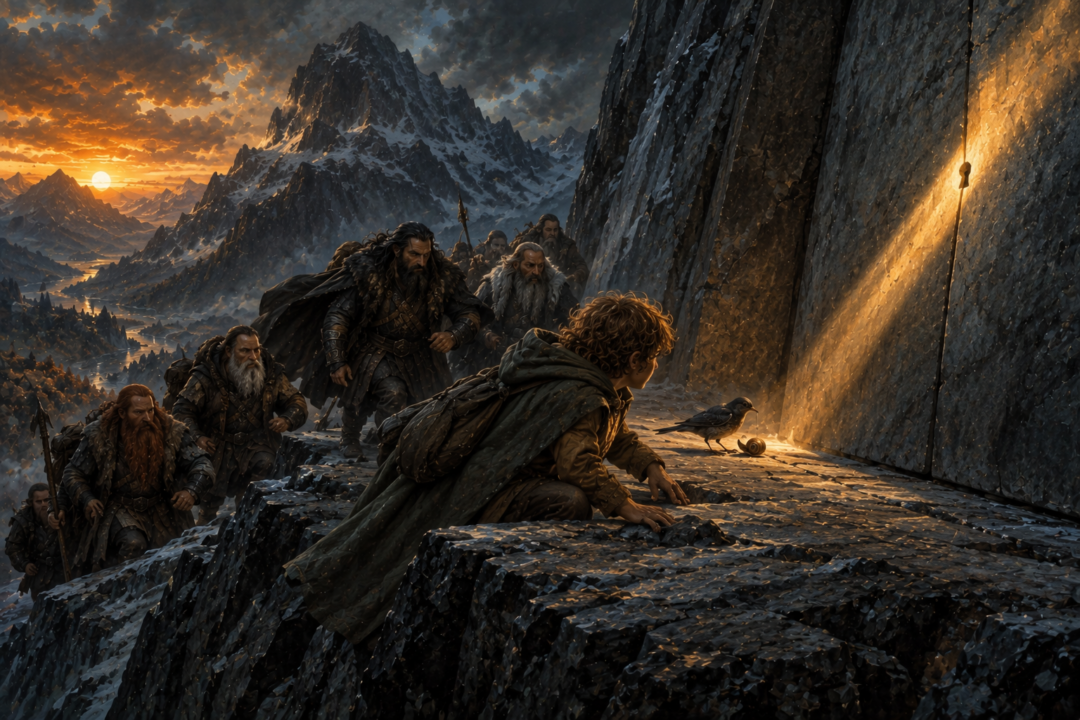
Then Bilbo remains outside.
He notices the thrush.
The bird knocks a snail against the stone.
At that moment Bilbo remembers the moon-letters and calls the Dwarves back. The Sun sinks, its final light reaches the correct place, and the keyhole appears.
The prophecy is fulfilled through recognition at the correct moment, not through possession of a modern-style date conversion.
That difference is central to the scene.
The company knows the signs before it knows the day with certainty.
Could Modern Astronomy Calculate Something Similar?
Certainly.
Given a geographical location and a chosen definition of the seasonal boundary, modern astronomy can calculate lunar phases, sunset, and the relative positions of Sun and Moon.
It would therefore be possible to construct proposed modern dates satisfying a chosen interpretation of Thorin’s description.
But that is not quite the same as proving, from the texts alone, “Durin’s Day is always October X” or “Durin’s Day is always November Y.”
The astronomical calculation may be exact while the underlying Tolkien-specific assumptions remain uncertain.
A reconstruction has to decide what constitutes the “first day” of the moon, precisely how the Dwarves recognized the beginning of a lunar month, what seasonal boundary defines the final moon of autumn, and how their calendar handled the mismatch between lunar cycles and the year.
The surviving description does not provide a complete answer to all of those questions.
That is why different modern attempts can reach different results without the text necessarily giving us enough evidence to declare one universal Gregorian date.
Durin’s Day Is a Condition, Not Just a Number
The safest way to understand Durin’s Day is therefore not as a lost Middle-earth equivalent of October 19, November 1, or any other permanently fixed modern date.
It is an astronomical-calendar condition.
A particular lunar beginning must occur at the correct seasonal threshold, with the Sun and Moon sharing the sky as Thorin describes.
That also explains why a fixed modern annual celebration and the actual Dwarvish reckoning are two different things. Fans can choose a convenient recurring Gregorian date to commemorate Durin’s Day, but such a convention should not be mistaken for a date explicitly established by the text.
The distinction becomes even more significant because Thorin himself treats prediction as difficult.
The uncertainty is part of the story.
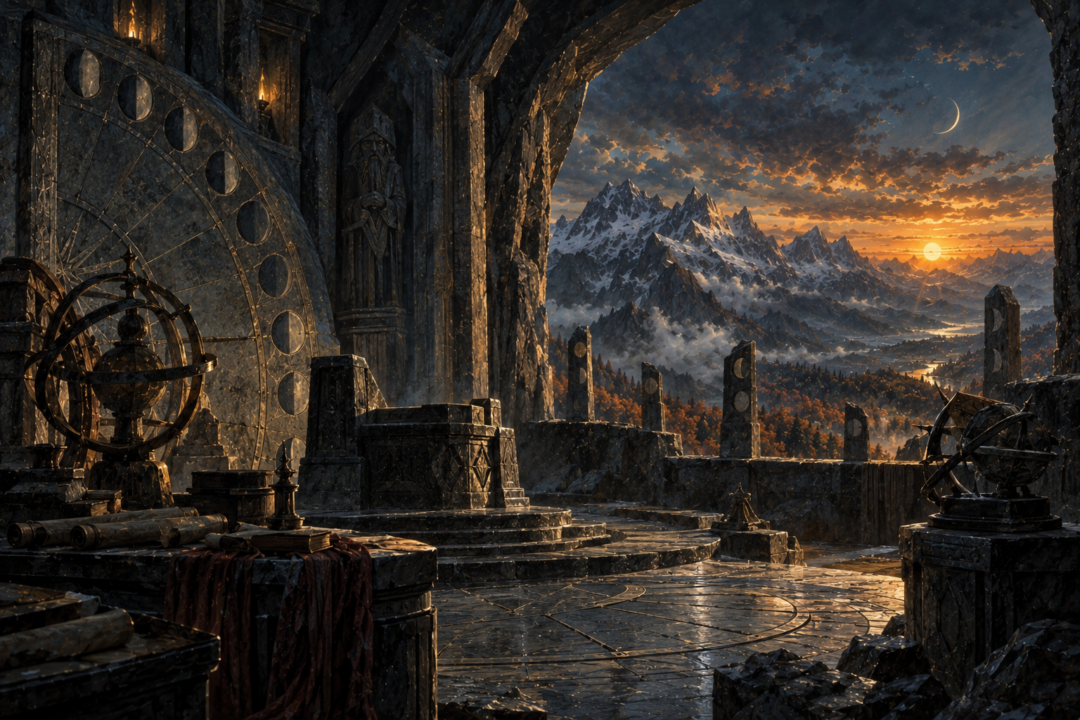
The Lost Calendar Makes Erebor’s Door More Meaningful
The hidden entrance into the Lonely Mountain is protected by more than stone.
Smaug can occupy Erebor. The Dwarves can be driven into exile. Generations can pass. Yet the door still answers to an old combination of inherited objects, natural signs, and celestial timing.
The company possesses Thrór’s map without initially knowing everything written upon it.
They possess the key without knowing where to insert it.
They know the definition of Durin’s Day without being able confidently to predict its return.
Only when all these fragments converge does the mountain open.
That is why converting Durin’s Day into a permanently fixed modern calendar date misses something essential.
Its uncertainty is not simply a gap waiting for a Gregorian spreadsheet to repair. The text deliberately presents a world in which old knowledge can survive in fragments: remembered in words, encoded in craft, and recovered only when the right signs return.
Durin’s Day is measurable.
It is astronomical.
It belongs to a calendar.
But the complete Dwarvish system needed to translate it into one universal recurring modern date was never given to us.
And in The Hobbit, even Durin’s heirs no longer fully possess it.
Sources & Notes
- The Encyclopedia of Arda, “Durin's Day” — https://www.encyclopedia-of-arda.com/d/durinsday.php
- The Encyclopedia of Arda, “Dwarves” — https://www.encyclopedia-of-arda.com/d/dwarves.php
- The Encyclopedia of Arda, “Thorin” — https://www.encyclopedia-of-arda.com/t/thorin.php
- The Encyclopedia of Arda, “Moon-letters” — https://www.encyclopedia-of-arda.com/m/moonletters.php
Reference entries document the people, places, events, and textual details discussed in this article.